

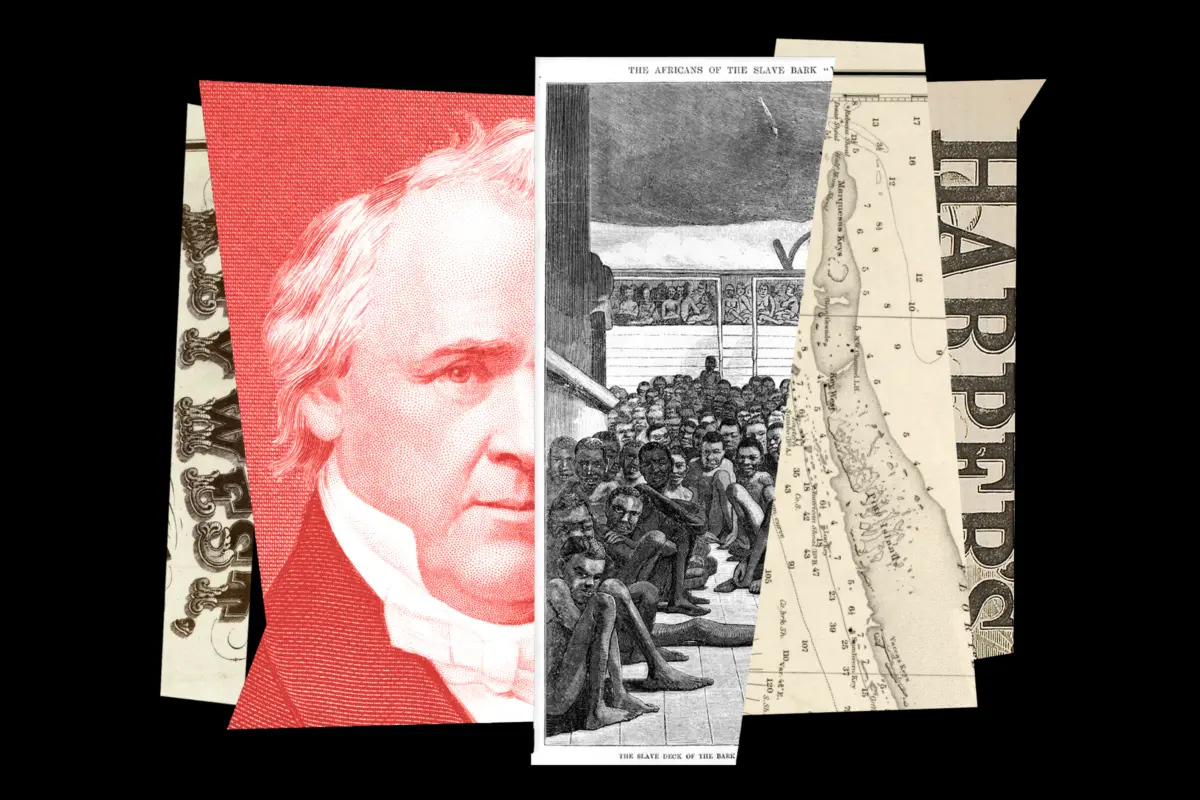
Editor’s note: This story is part of a special series by Princeton University journalism students reporting on the discovery of an African burial ground in Key West, Florida, and how the legacy of slavery still reverberates through the island community and beyond.
Executive Overview
Beneath the sun-drenched sands of Key West, Florida, where tourists routinely flock to snap photographs with the iconic southernmost point buoy, lies a deeply solemn and long-obscured chapter of American history. For decades, the true nature of Whitehead Spit and Higgs Beach remained hidden from public consciousness, overshadowed by the island’s reputation as a laid-back tropical paradise.
However, painstaking archaeological work, historical document recovery, and relentless investigative journalism have exposed a grim reality: this picturesque coastline served as a mass graveyard for hundreds of African men, women, and children who perished in 1860 after being liberated from illegal slave ships by the U.S. Navy.
The rediscovery of this sacred site—and the institutional indifference that allowed a dog park to be built atop displaced human remains—underscores a broader, uncomfortable truth about how America confronts the legacy of the transatlantic slave trade. As ownership of the beach park transitions between local government bodies, historians, preservationists, and descendants are locked in a vital debate: how to properly honor the victims, reclaim a suppressed history, and ensure that the foundational traumas of the nation are neither paved over nor forgotten.
Detailed Chronology: From the High Seas to the Shores of Key West
The saga of the Key West African burial ground began decades after the United States officially outlawed the transatlantic slave trade in 1808. Despite federal prohibitions, illicit trafficking persisted. American slavers routinely bypassed the law by transporting kidnapped Africans to Cuba and other foreign territories under the guise of the Spanish flag.
By 1859, however, the U.S. Navy intensified its interdiction efforts. The deployment of three advanced steamships capable of maintaining speeds of 10.5 knots proved to be a turning point. In 1860 alone, these steam-powered patrols intercepted six slave ships. Three of these vessels—the Wildfire, the William, and the Bogota—were towed to the nearest American soil: Key West. On board were 1,432 Africans, many of them critically ill, slated for temporary housing before repatriation to Western Africa.

The Interception of the Wildfire
On April 26, 1860, the USS Mohawk intercepted the Wildfire off the coast of Cuba. Lieutenant Tunis Craven, the 47-year-old captain of the Mohawk, boarded the vessel and documented harrowing conditions. In a later letter to U.S. Secretary of the Navy Isaac Toucey, Craven described finding 510 Africans “packed below in as dense a mass as it is possible for human beings to be crowded.”
During the journey to Key West, approximately 450 men and boys were brought on deck, huddled together with their heads resting on their bent knees, while women and girls remained trapped in the suffocating hold.
Key West, a city with a population of roughly 3,000 at the time, was entirely unequipped to absorb 500 new arrivals overnight. On the day the Wildfire docked, the 40 sickest individuals were taken ashore for medical treatment, fitted with clothing provided by U.S. Marshal Fernando J. Moreno. The remaining healthy individuals were detained aboard the ship for two days until Moreno constructed a sprawling, nine-room, 225-by-25-foot barracoon at Whitehead’s Point.
A Rapidly Expanding Crisis
As additional vessels arrived—the William carrying 550 Africans on May 11, followed weeks later by the Bogota—Key West’s population spiked by 50 percent in less than a month. The humanitarian and logistical strain was unsustainable.
On May 21, 1860, Secretary of the Interior Jacob Thompson wrote to President James Buchanan, stressing “that early measures be taken for [the Africans’] removal from Key West.” Buchanan subsequently warned the House of Representatives that Key West, “both on account of a deficiency of water and provisions, and its exposure to yellow fever, is one of the worst spots” for housing the survivors.
President Buchanan’s assessment proved tragically accurate. The first casualty occurred on May 1, 1860: a six-week-old infant born to a mother “barely in her teens,” according to the local Key of the Gulf newspaper. Recorded accounts describe a poignant funeral attended by roughly 100 Africans who sang, chanted, and wailed in traditional ceremonies on a beach thousands of miles from their homelands, before the small coffin was lowered into a shallow grave.

Over the next 85 days, death became a daily reality. Only four days passed without a recorded fatality. The toll was devastating:
- The William: 171 deaths
- The Wildfire: 96 deaths
- The Bogota: 28 deaths
Local carpenter Daniel Davis handled the interments, while U.S. Marshal Moreno meticulously cataloged the dead by the ships they arrived on—records that would lie dormant for nearly 140 years until rediscovered by modern historians.
Supporting Context & Metrics: The Archaeological Rediscovery
On June 14, 2002, Dr. Corey Malcom, a historian and director of archaeology at the Mel Fisher Maritime Museum, set out across Higgs Beach equipped with a ground-penetrating radar (GPR) detector. Guided by 1860 archival records documenting the 295 deceased Africans, Malcom walked the dunes. When the GPR’s radio waves struck objects deep underground, unique hyperbolic reflections appeared on the monitor.
“We started getting parabolas again and again and again through here,” Malcom recounted. Processing the data revealed 15 distinct graves aligned in three orderly rows, matching an 1861 historical map with uncanny precision. Yet, this initial find raised an agonizing question: if only 15 graves were accounted for, where were the remaining hundreds of victims?
The Civil War Disruption
The mystery deepened when examining the land’s subsequent history. By August 1861, as the Civil War fractured the nation, Key West remained a strategic Union stronghold. To protect the island, military planners designed a series of defensive fortifications, including the West Martello Tower—slated to be built directly over the African burial site.
U.S. Army Captain E. B. Hunt formally protested to his superiors in Washington in September 1861, noting, “There are two minor objections to your site No. 2… 1st it is the burying grounds where some 300 Africans were buried last year.”

Despite Hunt’s warnings, construction commenced in 1862. Excavation crews struck decomposing bodies and skeletal remains, releasing foul odors and touching off a yellow fever outbreak across the island. The dual crises of disease and wartime pressures forced construction to halt, leaving the red-brick fort half-finished.
Modern Surveys and Uncovering the Dog Park
In 2010, Monroe County sponsored secondary surveys led by Dr. Malcom’s team. Researchers identified roughly one hundred additional graves west of the fort and just north of its perimeter. Crucially, they discovered that a 120-by-60-foot patch of grass—utilized as a local dog park—contained mass reinterments and an ossuary pit filled with intermingled bones. These were the bodies hastily exhumed and relocated during the 1862 fort construction, treated with profound disrespect.
“This was a dog park,” Malcom remarked, reflecting on the profound shock of watching domestic animals scamper across consecrated, tragic ground. “We were surveying, [and] there were dogs running all around us. And it became pretty clear: You can’t have a dog park on the burial ground.”
Official Statements and Institutional Responses
The rediscovery of the Higgs Beach African Cemetery prompted incremental institutional responses, though administrative hurdles and jurisdictional shifts have consistently complicated preservation efforts.
- Memorialization Efforts: In 2007, the initial discovery site was fortified with a cement foundation featuring a mural depicting the transatlantic journey from the Congo to Key West. Sculptural columns adorned with West African symbols were erected, serving as philosophical and spiritual representations of the lives commemorated there.
- Geographical Reductions: Following the 2010 surveys, the dog park’s perimeter fence was pushed back to clear the specific patch of grass housing the ossuary. A 2011 Monroe County proposal aimed to relocate a nearby roadway northward to fully encompass and protect the cemetery boundaries, but the plan stalled and was never implemented.
- Recent Administrative Transfers: On May 1, ownership of the Clarence S. Higgs Memorial Beach Park officially transferred from Monroe County to the city of Key West. The transfer agreement included a $3 million fund designated for long-term beach maintenance, seawall repairs, and structural upgrades to the West Martello Tower. However, specific protections or long-term Master Plans for the unmarked cemetery remain undefined under the new municipal oversight.
Future Outlook: Memory, Trauma, and Accountability
As Key West navigates its future under consolidated city management, experts and advocates argue that physical preservation is only part of a much larger societal obligation. The historical amnesia surrounding the island’s African cemetery is symptomatic of a broader national reluctance to confront the foundational horrors of chattel slavery.
Kamau Sadiki, a retired civil engineer, certified SCUBA instructor, and researcher of sunken slave ships, emphasizes that society must actively document and engage with the transatlantic slave trade, regardless of the discomfort or historical trauma it evokes.

“These 15 to 20 million people that had this experience — deep, deep trauma… We can see it manifest in our society today, among descendants of those individuals,” Sadiki notes. “We have to engage it. We have to remember. We have to deeply understand it if we want to come up with solutions that we all can live with going forward.”
Ultimately, Sadiki’s philosophy serves as both a warning and a guiding principle for Key West and the nation at large: “Without memory, there’s no future.” As the sands shift at Higgs Beach and administrative control changes hands, the fate of the 295 souls resting beneath the palm trees remains a test of society’s commitment to historical truth, dignity, and restorative justice.