

Executive Overview
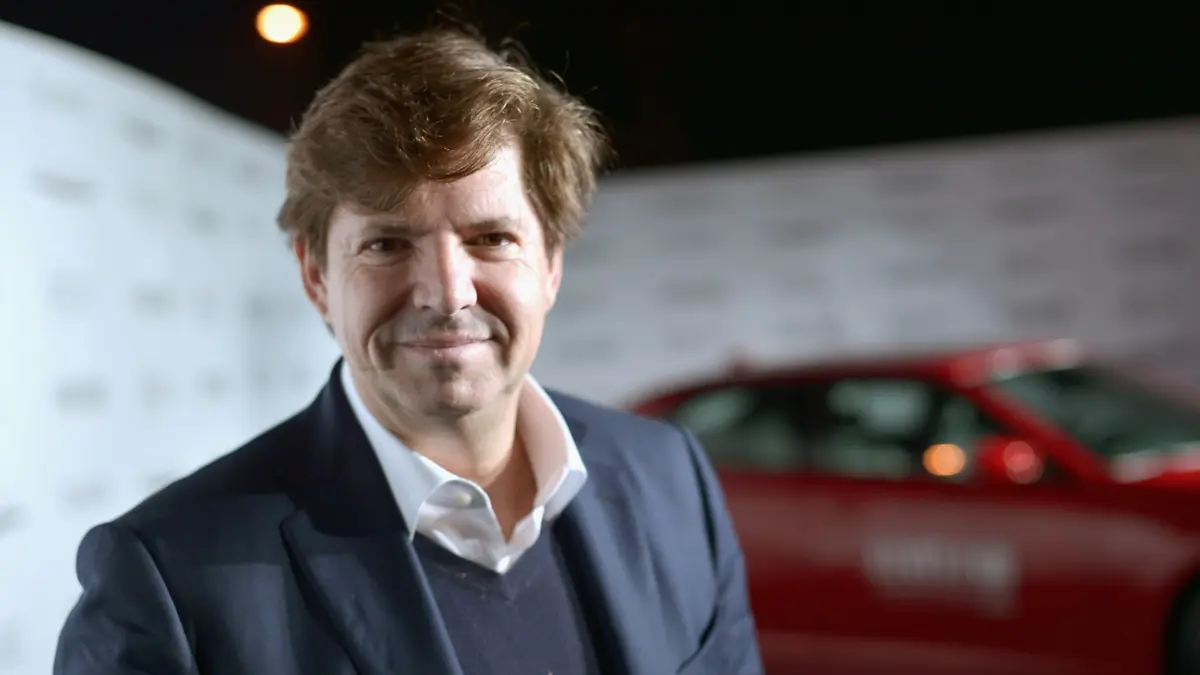
In a seismic shift for the global automotive landscape, Olivier François—the creative force behind some of the most daring, culturally resonant, and audacious Super Bowl commercials of the past twenty years—has officially stepped down from his dual posts as Chief Executive Officer of Fiat and Chief Marketing Officer (CMO) at Stellantis. This departure marks the conclusion of one of the longest, most illustrious, and unconventional marketing careers in modern corporate history.
François did not merely advertise cars; he conceptualized rolling cultural statements, political manifestos, and emotional touchstones that often overshadowed the actual metal sitting on showroom floors. From enlisting Eminem to soundtrack the grit of post-recession Detroit with "Imported from Detroit," to casting Bob Dylan in a patriotic meditation on American manufacturing, François elevated automotive advertising to high art and high-stakes drama.
Stepping into the colossal vacuum left by François is Arnaud Belloni, a seasoned automotive marketing veteran who spent 16 years steering marketing operations for Stellantis’s European nameplates before a notable stint at rival Renault. Belloni’s return signals a major operational pivot for Stellantis as the sprawling multinational conglomerate—which houses 14 distinct brands under its corporate umbrella, including American staples Chrysler, Dodge, RAM, and Jeep, alongside European icons Fiat, Lancia, and Abarth—grapples with a shifting global market, slowing electric vehicle (EV) adoption curves, and intense margin pressures.
While François’s exit from his day-to-day executive responsibilities closes a definitive chapter in automotive branding, he will not be severing ties with the automaker entirely. According to an official corporate statement released by Stellantis, François will transition into a new role as a Stellantis Strategic Advisor, ensuring that the company retains access to his legendary creative intuition during a critical period of corporate restructuring.
This deep-dive investigative report examines the legacy of Olivier François, analyzes the structural and strategic implications of Arnaud Belloni’s homecoming, explores the metrics and challenges facing Stellantis’s diverse portfolio of 14 brands, and forecasts the future trajectory of the automotive marketing paradigm in a post-François landscape.
Detailed Chronology: The Rise and Reign of Olivier François
To understand the magnitude of Olivier François’s departure, one must trace a career defined by calculated risks, artistic audacity, and an uncanny ability to tap into the socio-political zeitgeist of the Western world. François’s ascent within the automotive hierarchy is a masterclass in modern brand stewardship.
The Early Years and the Genesis of the Fiat Revival
Long before Stellantis was forged from the merger of Fiat Chrysler Automobiles (FCA) and Groupe PSA in 2021, François was carving out a reputation as a turnaround artist for heritage brands. Taking the reins of Fiat in 2005, François inherited a brand that was structurally stagnant, creatively uninspired, and struggling to find its footing in an increasingly hyper-competitive European market.
Rather than leaning into dry, spec-sheet-heavy European advertising tropes, François repositioned Fiat as a lifestyle brand intrinsically tied to Italian culture, accessible joy, and historical resilience. He famously resurrected the iconic Fiat 500, transforming a nostalgic nod to post-war Italian motorization into a chic, highly profitable global urban accessory. The marketing campaigns surrounding the modern Fiat 500 established the template for François’s career: blending high fashion, pop culture, and emotional resonance to sell mobility rather than horsepower.
The Chrysler-Fiat Merger and the Golden Age of Super Bowl Advertising
When Fiat acquired a stake in Chrysler following the American automaker’s government-backed bankruptcy reorganization in 2009, Sergio Marchionne—the late, visionary CEO of FCA—tasked François with reviving a dying American corporate icon. Chrysler was perceived by many consumers as a relic of a bygone industrial era, plagued by quality perception issues and stale design.
François’s response was nothing short of revolutionary. Recognizing that traditional automotive spots would fail to move the needle for a brand on life support, he bet the house on the 2011 Super Bowl—and permanently changed the playbook for sports marketing.
- "Imported from Detroit" (2011): Starring hip-hop icon Eminem and featuring the haunting, church-bell-laden chords of "Lose Yourself," this two-minute cinematic triumph did not just sell the Chrysler 200; it sold the resurrection of an entire American city. It was gritty, unvarnished, deeply patriotic, and completely unexpected from a brand on the brink of collapse. It won numerous industry accolades and instantly restored cultural relevance to Chrysler.
- "Halftime in America" (2012): Doubling down on his cinematic formula, François enlisted Hollywood titan Clint Eastwood for the 2012 Super Bowl. The spot, which aired at the macroeconomic height of the Great Recession’s aftermath, framed the American auto industry not just as an economic engine, but as the beating heart of national perseverance. The commercial sparked intense political debate, drawing both fierce praise and partisan criticism—yet from a purely marketing standpoint, it achieved absolute saturation, dominating global news cycles for weeks.
- "Farmer" (2013): Utilizing legendary radio broadcaster Paul Harvey’s famous 1978 "So God Made a Farmer" speech, François crafted a six-minute digital and broadcast tribute to American agricultural workers for RAM Trucks. The ad struck a profoundly emotional chord, transforming RAM—formerly integrated under the Dodge banner—into an independent, fiercely proud titan of the American pickup truck segment.
Through these masterworks, François proved that automotive marketing could transcend commerce and enter the realm of cultural mythology.
The Stellantis Era and the Complexities of Brand Management
Following the 2021 creation of Stellantis under CEO Carlos Tavares, François’s portfolio expanded dramatically. As CEO of Fiat, Abarth, and Lancia, while simultaneously serving as the overarching CMO for Stellantis, François was tasked with a near-impossible balancing act: preserving the distinct identities of legacy European brands while pushing the entire conglomerate toward electrification and digital transformation.
Under his watch, Lancia—long considered a dormant, tragic casualty of corporate neglect—was prepped for an ambitious European revival centered around electrification and sustainable luxury. Meanwhile, Fiat continued to pivot aggressively toward urban EV solutions, anchored by the runaway success of the electric Fiat 500e.
However, the automotive landscape of the mid-2020s has grown increasingly hostile. Sluggish consumer adoption of battery-electric vehicles (BEVs), macroeconomic pressures, inventory gluts in North America, and mounting friction between dealers and corporate leadership have placed intense strain on Stellantis’s financial metrics. It is against this backdrop of corporate consolidation and strategic recalibration that François has decided to step down from his executive operating roles.
Supporting Context & Metrics: The Stellantis Corporate Garage
To fully grasp the challenges awaiting Arnaud Belloni, one must examine the sprawling architectural footprint of Stellantis. Managing marketing and brand identity for the conglomerate is widely considered the most complex and demanding communications job in the global industrial sector.
The 14-Brand Portfolio
Stellantis controls an extraordinarily diverse stable of 14 brands, each with distinct heritage, geographic loyalties, and target demographics. The corporate garage is divided into distinct regional and philosophical pillars:
- North American Core: Chrysler, Dodge, RAM, and Jeep. These brands have historically driven the lion’s share of Stellantis’s global profitability, relying heavily on internal combustion engines (ICE), high-powered muscle cars (Dodge), heavy-duty pickup trucks (RAM), and off-road capability (Jeep).
- European Heritage & Mass Market: Fiat, Citroën, Peugeot, Opel, and Vauxhall. These brands operate in fiercely contested European segments where margin compression, stringent emissions regulations, and fierce competition from Chinese EV manufacturers present acute existential threats.
- Premium & Luxury Icons: Alfa Romeo, Maserati, and Lancia. These storied marques represent the high-margin, low-volume spearhead of the company’s design and technological ambitions.
- Specialist & Mobility: DS Automobiles and Free2move. These brands focus on avant-garde French luxury and shared-mobility ecosystems.
The Marketing Challenge: Balancing Global Scale with Local Soul
The core tension within Stellantis has always been operational efficiency versus brand purity. In an era where automotive groups must share vehicle platforms, battery architectures, and software stacks to achieve economies of scale, the marketing challenge is to prevent distinct marques from feeling like carbon copies with different badges stamped on the grille.
Olivier François was a master at maintaining brand illusion—making consumers believe that a Fiat, a Jeep, and a Chrysler inhabited entirely different moral and cultural universes, even as structural components were shared beneath the skin.
As François transitions to a strategic advisory role, industry analysts are closely monitoring how Stellantis plans to navigate softening demand in North America. RAM and Jeep, in particular, have faced headwinds due to high dealership inventory levels and pricing strategies that critics argue alienated core working-class buyers. For Belloni, the immediate task will not merely be creating memorable advertisements, but aligning the marketing machinery directly with concrete sales velocity and inventory management.
Official Statements and Industry Reactions
The announcement of François’s transition triggered widespread commentary across the international automotive and advertising industries, underscoring his status as an institutional giant.
In its official corporate communication, Stellantis formally acknowledged François’s monumental contributions while outlining the strategic continuity represented by Arnaud Belloni’s return:
"Stellantis confirms the appointment of Arnaud Belloni as CEO of Fiat, Abarth, and Lancia, and Chief Marketing Officer for Europe, effective immediately. Olivier François, who has led Fiat with distinction and shaped the global marketing identity of our brands for nearly two decades, will assume the role of Stellantis Strategic Advisor. In this new capacity, François will continue to provide invaluable high-level strategic counsel to executive leadership, ensuring that the creative vision and brand heritage that have defined our corporate success remain preserved during our ongoing transition toward sustainable mobility."
Industry peers have been quick to pay tribute to François’s unique blend of corporate diplomacy and artistic showmanship. Unlike many contemporary automotive executives who came up strictly through finance, engineering, or supply chain management, François approached marketing as a cultural anthropologist. He understood that buying a car is rarely a rational, spreadsheet-driven decision; rather, it is an emotional projection of identity, freedom, and aspirations.
Arnaud Belloni, stepping back into the Stellantis fold after his tenure at Renault, enters the arena with an equally impressive pedigree. During his previous 16 years leading European marketing for Stellantis legacy brands (including PSA-era operations), Belloni earned a reputation as a pragmatic, digitally savvy operator who understands how to maximize retail performance without diluting brand equity. His mandate will be to bridge the gap between François’s grand artistic vision and the rigorous, data-driven demands of modern multi-brand portfolio management.
Future Outlook: What François’s Departure Means for the Future of Auto Marketing
As the dust settles on this major executive reshuffle, the broader question facing the automotive industry is whether the era of the "auteur" CMO—the visionary executive who can single-handedly greenlight multi-million-dollar cultural gambles like the Super Bowl masterworks—is drawing to a close.
1. The Shift Toward Data-Driven Performance Marketing
Modern automotive marketing is increasingly dominated by programmatic media buying, targeted digital personalization, performance metrics, and customer acquisition cost (CAC) calculations. As automotive brands grapple with compressed margins driven by the expensive transition to electric vehicles and software-defined vehicles, corporate boards are demanding rigorous, quantifiable returns on every marketing euro and dollar spent. While François’s cinematic epics generated priceless earned media and brand equity, proving direct, short-term sales attribution for a six-minute poetry recitation on agricultural labor is notoriously difficult.
2. The Electric Pivot and Brand Identity
Stellantis, like its global competitors, is navigating a complex transition period where consumer demand for pure electric vehicles has fallen short of aggressive regulatory mandates. This has forced automakers to adopt a flexible multi-energy strategy—offering ICE, hybrid, plug-in hybrid (PHEV), and BEV variants simultaneously. For a brand like Fiat, which François positioned as a torchbearer for urban electrification, marketing must now walk a tightrope: inspiring consumers to embrace zero-emission technology without alienating budget-conscious buyers who are hesitant to make the leap from internal combustion.
3. The Legacy of the Advisor Role
By retaining Olivier François as a Strategic Advisor, Stellantis CEO Carlos Tavares has demonstrated a shrewd understanding of corporate continuity. François will not be writing scripts or directing crews on set anymore, but his institutional memory and peerless intuition regarding global consumer psychology will remain a secret weapon for the executive suite. Whether this advisory role will be actively utilized to shape high-level campaigns or serve as a graceful bridge to retirement remains to be seen, but the psychological reassurance for the brand is undeniable.
Conclusion
Olivier François’s stepping down as Fiat CEO and Stellantis CMO closes a remarkable, cinematic chapter in automotive history. From the ashes of bankrupt industrial empires to the global stage of prime-time television, François proved that cars could be imbued with soul, poetry, and political resonance.
As Arnaud Belloni takes the wheel of European operations and brand stewardship, Stellantis faces a challenging horizon defined by economic volatility, technological disruption, and shifting consumer loyalties. Yet, the enduring foundation built by François—one where brands are defined not just by steel and rubber, but by narrative, emotion, and cultural relevance—will continue to reverberate through the corporate garage of Stellantis for years to come.
