

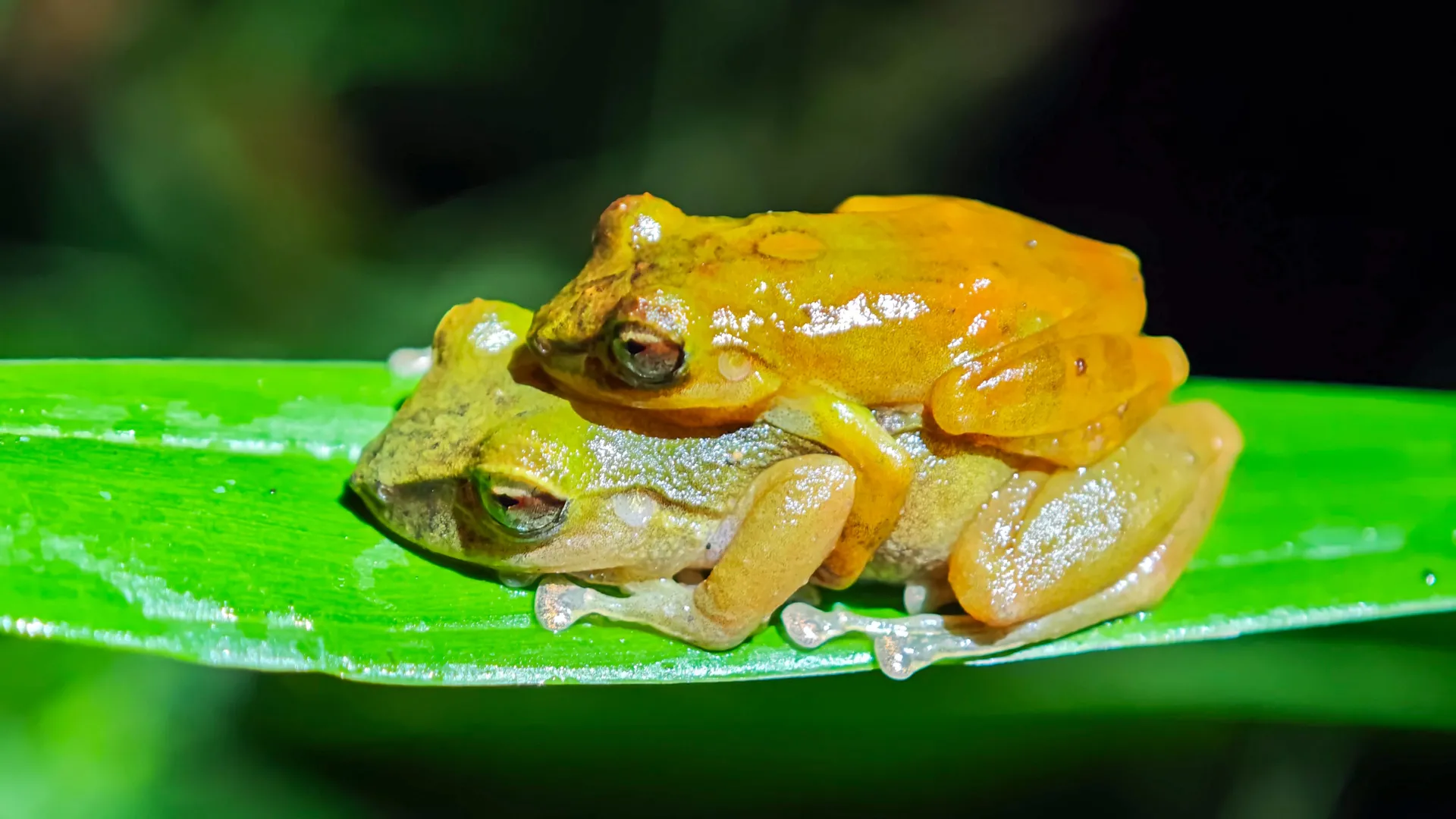
Executive Overview
In the sprawling, climate-controlled archives of the Natural History Museum in London, preserved specimens sit quietly in glass jars, acting as silent archives of nineteenth-century exploration. For generations, these historical artifacts—collected during the dawn of modern biological exploration in South America—remained largely undisturbed, viewed as static snapshots of a bygone era. However, a team of researchers from the Pontificia Universidad Católica del Ecuador (PUCE) has demonstrated that these historical collections are far from obsolete. By bridging the gap between Victorian-era taxonomy and twenty-first-century field biology, scientists have solved a century-old case of mistaken identity, formally describing Pristimantis milpe, a widespread and acoustically prominent amphibian that has hidden in plain sight for more than a hundred years.
The newly recognized species, commonly known in its native range as the Milpe Robber Frog (Cutín de Milpe), shatters the conventional narrative surrounding newly discovered taxa. Typically, science unveils new species from remote, inaccessible, or hyper-restricted habitats where fragile endemic populations cling to narrow ecological niches. Pristimantis milpe defies this paradigm entirely. It is abundant, easily detected by its sharp, distinctive nighttime vocalizations, and broadly distributed across more than 67,000 square kilometers of the Chocó rainforests in western Ecuador and southern Colombia.
Despite its high visibility and frequent encounter rates by field biologists, amateur naturalists, and ecotourists alike, the frog lived under a false taxonomic identity for over a century. The resolution of this puzzle, published in the international biodiversity journal ZooKeys, underscores a profound reality of modern conservation science: even as human pressures accelerate biodiversity loss worldwide, our fundamental catalog of planetary life remains incomplete. More importantly, it highlights the irreplaceable value of natural history museums, proving that answers to contemporary ecological mysteries often lie buried in historical archives waiting for the right questions to be asked.
Detailed Chronology: Unraveling the 100-Year-Old Taxonomic Knot
To understand how a common, vocal amphibian could evade formal scientific recognition for over a century, one must trace the winding path of nineteenth-century natural history exploration and the subsequent bureaucratic inertia of museum taxonomy.
The Nineteenth-Century Foundation
During the 1800s, European naturalists mounted numerous expeditions to the Neotropics, fueled by the Victorian obsession with cataloging the natural world. Explorers, missionaries, and hired collectors scoured the dense, impenetrable rainforests of Ecuador, gathering mammals, birds, insects, and amphibians. These specimens were meticulously packed, preserved in spirits, and shipped across the Atlantic to major institutions such as the British Museum (now the Natural History Museum in London).
Among the specimens dispatched from Ecuador during this era were several small, terrestrial frogs belonging to the genus Pristimantis—a hyper-diverse group of direct-developing frogs that bypass the free-swimming tadpole stage entirely, hatching directly into miniature adults. At the time of their arrival in London, early taxonomists faced an overwhelming influx of novel material. Working with limited comparative frameworks, rudimentary preservation techniques, and a complete lack of understanding regarding acoustic traits, genetics, or live coloration, these early scientists were forced to make morphological snap judgments.
In this case, nineteenth-century authorities examined the collected frogs and erroneously linked them to a pre-existing, distinct species already described in the scientific literature. Once stamped with this incorrect moniker, the specimens were cataloged, shelved, and effectively locked away in taxonomic purgatory. Because subsequent generations of scientists deferred to these historical classifications—and because living populations of the frog were routinely misidentified under the same umbrella name—the true identity of the animal was obscured for generations.
The Breakthrough Investigation
The unravelling of this century-old knot began not in the damp understory of the Chocó, but in the sterile, archival quiet of the Natural History Museum in London. Santiago Ron, a prominent herpetologist and researcher at PUCE, embarked on a focused investigative mission to England to resolve a persistent classification bottleneck that had plagued Ecuadorian herpetology for decades.
Dr. Ron focused his efforts on the original "type specimens"—the physical animals upon which the original, historical species descriptions were based. By meticulously examining these 19th-century specimens, he sought to reconcile discrepancies between historical taxonomic keys and the modern amphibians he and his students were encountering in the field.
Back in Ecuador, PUCE research teams had spent years documenting the acoustic repertoires, microhabitats, and morphological variations of living amphibian populations in the Andean foothills and lowland Chocó rainforests. Time and again, field researchers noted a remarkably common frog whose loud, clicking calls echoed through the nocturnal canopy. Yet, when attempting to match these living organisms to historical literature and museum records, the pieces refused to fit logically.
Bridging Past and Present
The turning point arrived when Dr. Ron compared the physical morphology, preserved proportions, and diagnostic traits of the London museum’s historical types directly against high-resolution data gathered from contemporary living populations in the Ecuadorian Chocó. The comparison revealed an undeniable truth: the historical specimens did not belong to the species to which they had been assigned a century ago. They represented an entirely distinct, undescribed lineage that had never received a proper binomial scientific name.
Armed with this definitive evidence, the research team assembled the formal taxonomic description required to rectify the historical oversight. By uniting archival museology with modern integrative taxonomy—incorporating morphological analysis, geographic distribution mapping, and behavioral ecology—the team successfully resurrected the true identity of Pristimantis milpe, officially introducing it to the global scientific community in the pages of ZooKeys.
Supporting Context & Metrics: The Ecology and Distribution of Pristimantis milpe
The formal recognition of Pristimantis milpe is significant not only for its historical correction, but also for what it reveals about the ecological dynamics of one of the planet’s most threatened biodiversity hotspots.
Geographic Range and Habitat
Pristimantis milpe is far from a delicate, localized endemic. Its verified geographic distribution spans an expansive area covering more than 67,000 square kilometers. The species inhabits the Chocó biogeographic region, a continuous swathe of hyper-humid tropical rainforest that stretches from western Ecuador northward into southern Colombia, bound between the Pacific Ocean and the Andean cordillera.
The altitudinal range of the Milpe Robber Frog is similarly broad, extending from sea-level lowland rainforests up to elevations of approximately 1,200 meters along the Andean Andean slopes. This wide vertical and horizontal distribution means the frog successfully navigates a mosaic of microclimates, from steaming tropical lowlands to cooler, cloud-kissed premontane forests.
Behavioral Ecology and Acoustics
In the wild, Pristimantis milpe is strictly nocturnal. As daylight fades over the Chocó, the forest transforms, and the acoustic landscape is dominated by the calls of male frogs advertising for mates.
- Males typically position themselves several meters above the forest floor, clinging to the upper surfaces of broad leaves on understory shrubs, ferns, and bromeliads.
- Their vocalizations are loud, sharp, and highly distinctive, producing an acoustic output closely resembling a mechanical "click."
- This rhythmic clicking sound serves as the primary mechanism for species recognition and territorial defense, allowing researchers to readily detect the frog’s presence even when dense foliage conceals it from sight.
Sexual Dimorphism and Morphological Traits
Beyond its auditory signatures, Pristimantis milpe exhibits pronounced sexual dimorphism—distinct physical differences between males and females:
- Females: Tend to be larger and boast striking, vibrant coloration patterns concentrated around the groin and inner thighs. In these regions, brilliant flashes of orange or light blue contrast sharply against bold black spotting, a feature likely serving as a visual signal during courtship or predator deterrence.
- Males: Generally smaller in stature with more uniform, cryptic dorsal and ventral coloration, prioritizing camouflage against the mottled browns and greens of the forest leaf litter and perching vegetation.
Official Statements and Expert Perspectives
The publication of this discovery has drawn widespread attention from the international herpetological community, highlighting the collaborative nature of modern taxonomy and the profound lessons to be drawn from historical oversights.
"That such a common species has gone unnoticed under the wrong name for decades highlights the importance of correctly connecting scientific names with living populations in nature,"
— Jhael Ortega, PhD student at Virginia Tech and co-author of the study.
Ortega’s observation strikes at the heart of contemporary taxonomic challenges. In an era where funding and scientific focus frequently drift toward high-tech genomic sequencing or the discovery of exotic, highly restricted micro-endemics, foundational taxonomy—the rigorous matching of names to physical organisms in their natural habitats—remains an urgent, unfinished task.
Dr. Santiago Ron, lead author of the study and professor at PUCE, emphasized the emotional and scientific weight of walking through historical museum aisles to solve modern ecological puzzles:
"When you stand in a museum like the Natural History Museum in London, surrounded by millions of specimens collected centuries ago, you realize you are looking at ghosts of ecosystems past. Bringing those specimens into conversation with the living frogs singing in the Chocó tonight is the ultimate bridge across time. It reminds us that our knowledge of biodiversity is built brick by brick, and sometimes the foundational stones were laid 150 years ago by collectors who had no idea what they were holding."
Conservation biologists working within the Chocó region have also welcomed the formal description. Securing an accurate, recognized scientific identity for widespread indicator species like Pristimantis milpe provides crucial baseline data for environmental impact assessments, protected area planning, and regional conservation strategies. When an ecosystem’s inhabitants are properly named and understood, policy frameworks can more effectively advocate for the preservation of their native habitats.
Future Outlook: The Resurgence of Natural History Collections
The unmasking of Pristimantis milpe serves as a powerful case study for the future of biodiversity research. It demonstrates that natural history museums are not dusty mausoleums of dead animals, but dynamic, active libraries of planetary life whose pages are only beginning to be fully read.
The Integration of Past and Present
As analytical technologies advance—encompassing high-resolution micro-CT scanning, non-destructive ancient DNA extraction, and sophisticated geometric morphometrics—historical museum collections are experiencing a renaissance. Researchers worldwide are increasingly turning to century-old type specimens to untangle complex taxonomic knots, resolve sibling species complexes, and track historical shifts in morphology and disease prevalence over time.
For institutions holding vast colonial-era or historical collections, such as the Natural History Museum in London, the Smithsonian Institution, and major European hubs, studies like the PUCE team’s validate the immense financial and logistical investments required to curate and maintain these archives. Every preserved specimen represents an irreplaceable physical voucher of a specific time, place, and evolutionary lineage.
Conservation Implications for the Chocó Rainforest
Looking forward, the formal description of Pristimantis milpe carries vital implications for the conservation of the Chocó biodiversity hotspot—a region heavily impacted by deforestation, agricultural expansion, mining, and infrastructure development.
While Pristimantis milpe is currently categorized as widespread and relatively common, many amphibians within its shared habitat face severe existential threats, including habitat fragmentation and the lethal amphibian chytrid fungus (Batrachochytrium dendrobatidis). By establishing a clear taxonomic baseline for this clicking frog, scientists ensure that future ecological monitoring programs can accurately track population health, assess environmental degradation, and advocate for the preservation of Chocó ecosystems across both Ecuador and Colombia.
Ultimately, the story of Pristimantis milpe is a humbling reminder of the mysteries still hidden within our global ecosystems. It proves that nature can harbor surprises right under our noses, and that solving the planet’s remaining biological riddles often requires a harmonious partnership between the historical archives of the past and the field biologists of the present.
