

Executive Overview
In the hyper-competitive landscape of modern search engine optimization (SEO), data-driven decision-making is no longer a luxury—it is a fundamental prerequisite for survival. With search engine algorithms continuously evolving to prioritize user intent, topical authority, and semantic depth, digital marketers and business owners must move beyond rudimentary keyword planning. Enter Semrush, an industry-leading all-in-one marketing platform that has cemented its status as an indispensable powerhouse for comprehensive organic and paid search strategies.
Boasting an expansive database housing over 24 billion keywords, Semrush provides digital strategists with a suite of robust, highly integrated instruments designed to decode search behavior. From uncovering untapped ranking opportunities hidden within your existing content footprint to dissecting competitor architectures and constructing sophisticated topical clusters, this platform streamlines the entire SEO lifecycle.

This comprehensive manual provides an exhaustive, step-by-step masterclass on how to harness the full potential of Semrush’s core keyword research modules—specifically the Keyword Manager, the Keyword Magic Tool, and the Keyword Gap tool. Whether you are scaling an e-commerce empire, optimizing a local service business, or building a high-yielding affiliate marketing blog, mastering these workflows will fundamentally transform your organic visibility, accelerate traffic acquisition, and maximize bottom-line revenue.

Detailed Chronology of a Modern Keyword Research Workflow
Effective SEO execution requires a structured, multi-phase methodology. Rather than casting a wide, indiscriminate net, successful marketers follow a precise chronological blueprint that begins with low-hanging fruit and progressively expands into aggressive competitor acquisition and structural topic clustering.

Phase 1: Capitalizing on Existing Keyword Opportunities
When optimizing a website that already features an established content footprint, the most lucrative strategy is not chasing entirely new terms, but rather capturing quick organic traffic gains from queries where the domain is already ranking on the cusp of page one.

- Access the Organic Positions Report: Navigate to the Semrush SEO Toolkit, proceed to Organic Research, and open the Positions report. This will yield a comprehensive ledger of every keyword your domain currently ranks for within Google’s top 100 search results.
- Apply Advanced Filters for "Striking Distance" Rankings: To isolate the highest-value opportunities, implement targeted filters. Focus primarily on keywords where your domain sits in positions 4 through 15 (page one and early page two). Pair this with a minimum search volume threshold tailored to your niche and a controlled Keyword Difficulty (KD) ceiling to filter out hyper-competitive anomalies.
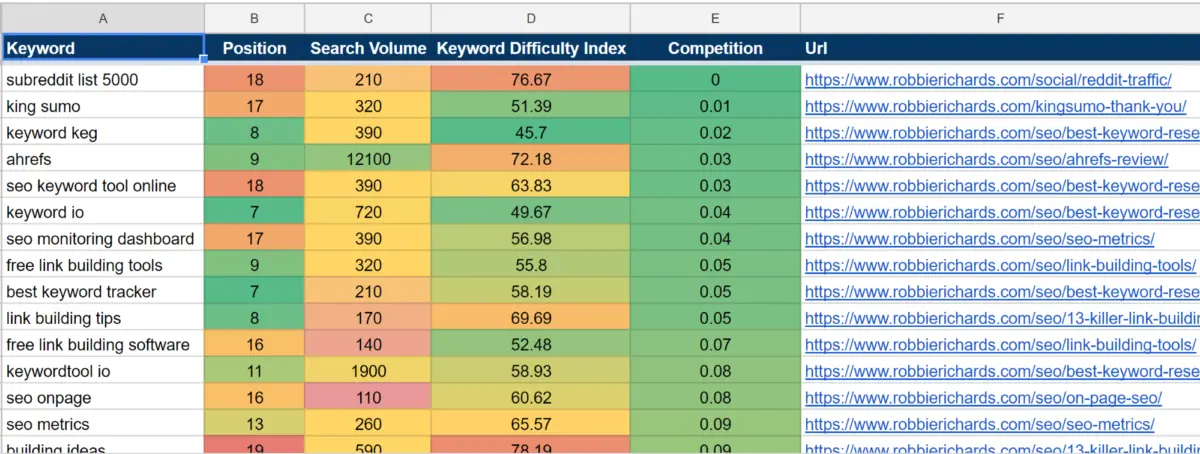
- Build and Segment Keyword Lists: Review the resulting terms and allocate them to dedicated lists inside Semrush, segmenting them into Existing and New categories. For analysts who prefer offline data manipulation, export these positions into a customized spreadsheet template. Automated formulas will sort the opportunities by descending search volume and apply conditional color-coding, allowing you to instantly pinpoint low-competition terms sitting right outside the top three rankings.
Phase 2: Uncovering High-Intent Competitor Intelligence
Once immediate internal gains have been secured, the focus shifts outward to competitor analysis. Dissecting the organic strategies of industry rivals provides a fast-track blueprint to proven, high-converting keyword targets.

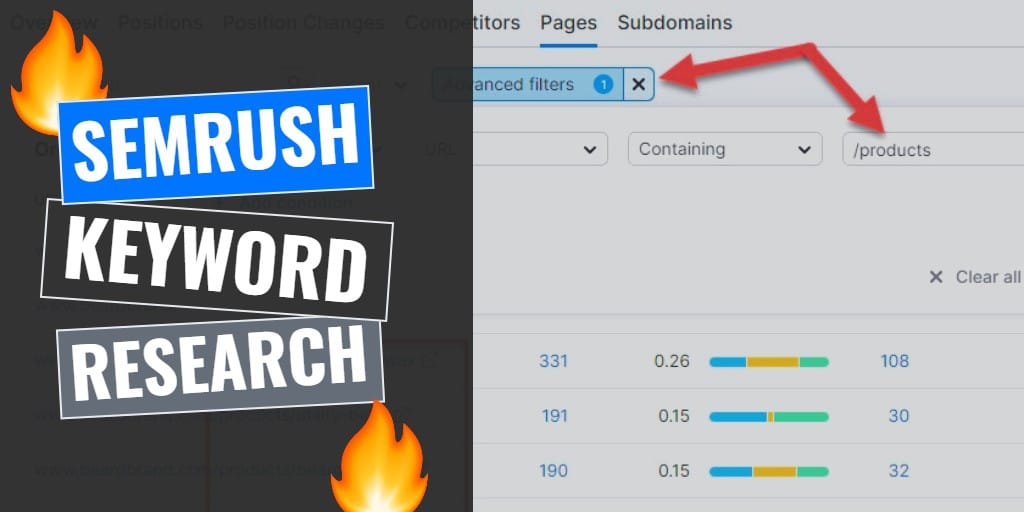
- Top Pages and Subfolder Analysis: Enter a primary competitor’s domain into the SEO Toolkit and navigate to the Organic Research >> Pages report. This reveals the URLs driving the lion’s share of their organic traffic. For e-commerce sites, isolate product-related traffic by applying a URL filter such as
/products/. For service-based businesses, such as a law firm, filter by service subfolders like/legal-services/to inspect precisely which practice-area landing pages generate inbound traffic. - Keyword Modifiers for Niche Targeting: If competitors lack clean subfolder structures, deploy keyword modifiers. By filtering for commercial intent terms—such as "best," "review," "software," or "vs"—you can instantly isolate lucrative middle- and bottom-of-funnel queries ideal for affiliate monetization or high-intent lead generation.
Phase 3: Executing Comprehensive Keyword Gap Analysis
To systematically outperform market rivals, you must identify precisely where your competitors are winning and where your own domain falls short. Semrush’s Keyword Gap tool automates this intelligence-gathering process.

- Configure the Tool: Input your domain alongside up to four competitor domains into the Keyword Gap tool.
- Analyze Missing and Weak Categories: Review the Missing keywords tab to discover terms for which all entered competitors rank, but your domain does not. Next, examine the Weak keywords tab to identify queries where your current ranking position trails behind your competitors, signaling an urgent need for on-page optimization or content expansion.
- PPC-Organic Gap Integration: Leverage the platform’s unique capability to analyze paid search metrics alongside organic data. By filtering for keywords where your organic position sits outside the top three but your competitors are actively bidding in paid search, you can deploy targeted PPC campaigns to provide "air cover" while your organic SEO efforts catch up.
Supporting Context & Metrics: Unlocking Scale with Advanced Toolsets
As your keyword research matures, transitioning from raw data lists to structured, topical ecosystems requires leveraging Semrush’s specialized architectural utilities.

Generating Topical Ideas with the Keyword Magic Tool
The Keyword Magic Tool serves as the engine room for raw ideation. By inputting a foundational seed term, users unlock thousands of related queries. However, the true utility of this tool lies within its sophisticated left-hand sidebar grouping and advanced modifier filters.

- Funnel-Stage Filtering: Filter queries by user intent (Informational, Navigational, Commercial, or Transactional) to align keyword acquisition with specific buyer journey stages. For consideration-stage content, combine category seeds with comparison modifiers (e.g., "Ahrefs vs Semrush") to capture high-intent traffic actively evaluating solutions.
- Question-Based Targeting: Isolate conversational queries by selecting the "Questions" tab within the tool. These low-competition, long-tail variations—often formatted as "how," "what," or "why"—frequently capture featured snippets and drive highly qualified traffic across all stages of the marketing funnel.
Constructing Topical Clusters via Keyword Manager
Publishing isolated, disjointed articles is no longer sufficient to appease modern search algorithms. Search engines reward topical authority—the comprehensive coverage of a subject within a logical content hierarchy.

Semrush’s Keyword Manager allows users to upload custom keyword lists or generate clusters from scratch using seed terms. The tool automatically groups related queries based on search engine result page (SERP) similarity, yielding structured topical clusters accompanied by key metrics:

- Search Volume & KD%: Aggregate volume metrics combined with difficulty scores.
- High Ranking Potential Flags: Automated tags highlighting low-hanging fruit with high search demand and manageable competition thresholds.
- Content References: An invaluable metric indicating whether competitors are ranking for these clusters using a single centralized URL or distinct, dedicated sub-service landing pages. This data directly informs your site architecture and internal linking strategies.
Official Statements and Platform Integration
The true hallmark of an enterprise-grade SEO platform is seamless workflow integration. Semrush has systematically engineered its suite of tools to function as a unified ecosystem rather than a collection of isolated applications.

Industry experts and power users frequently emphasize the friction-reduction achieved through platform interconnectivity. As highlighted in professional deployment frameworks, once a validated target keyword list has been curated within the Keyword Manager or Keyword Gap modules, users are not forced to export, reformat, and upload data to secondary applications.

Instead, marketers can seamlessly transfer selected keywords directly into the Position Tracking tool to monitor ongoing rank fluctuations or route them instantly into the SEO Writing Assistant. This latter integration bridges the gap between keyword research and content production, providing writers with real-time optimization guidelines, readability scores, and semantic keyword recommendations directly within their editing interfaces. This streamlined pipeline eliminates operational silos, empowering marketing teams to scale content production workflows efficiently while maintaining strict adherence to data-backed SEO best practices.

Future Outlook: The Evolution of Intent-Driven Search Optimization
As artificial intelligence and machine learning continue to redefine the search engine results page, the role of advanced keyword research platforms like Semrush will only grow more critical. With search engines increasingly relying on natural language processing, semantic search, and zero-click SERP features, traditional volume-chasing metrics are giving way to hyper-granular intent analysis.

Looking ahead, marketers must increasingly lean into automated topic clustering, subfolder intelligence, and multi-channel gap analysis to maintain a competitive edge. Platforms that bridge the gap between raw data extraction and actionable content execution—exemplified by Semrush’s tightly integrated suite—will remain foundational to digital marketing success. By systematically implementing the workflows outlined in this blueprint—moving from existing asset optimization to aggressive competitor intelligence and structured topical authority—businesses can future-proof their organic strategies, capture sustained inbound traffic, and secure long-term digital dominance.
