

Executive Overview
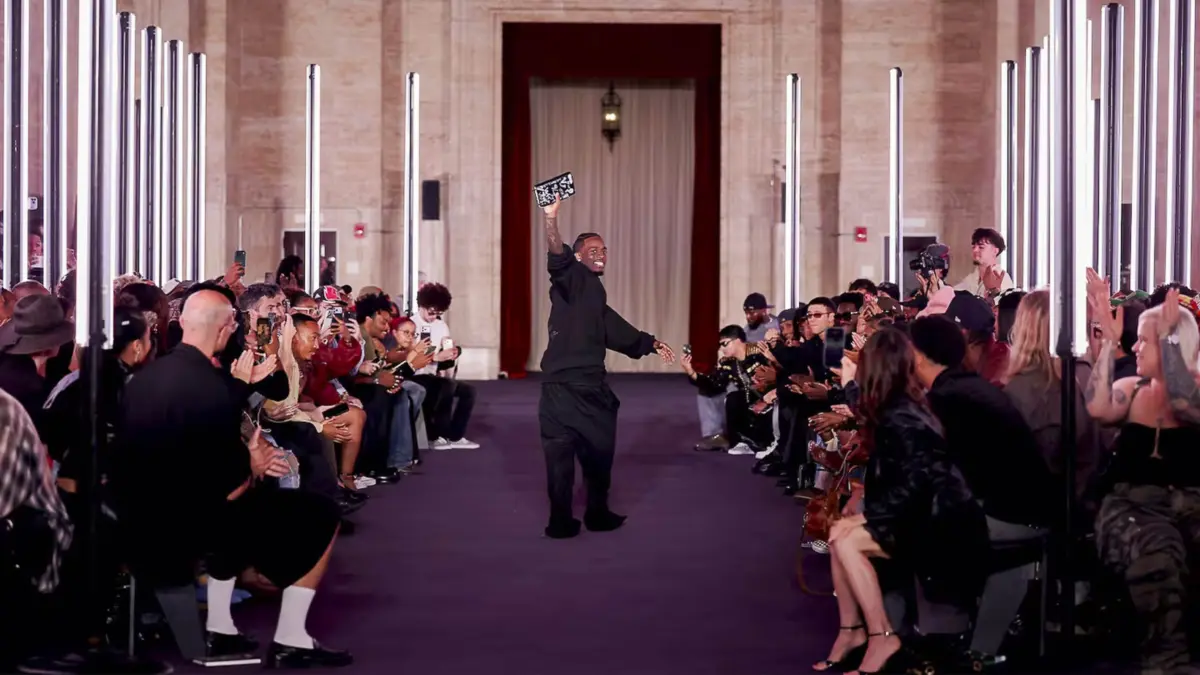
In the rapidly evolving landscape of contemporary pop culture, the boundaries separating digital entertainment from traditional high art continue to dissolve. Few events in recent memory have encapsulated this paradigm shift quite as vividly as the runway debut of Vivet, the inaugural fashion label by mega-Twitch streamer and content creator Kai Cenat. Staged against the opulent, neo-Renaissance backdrop of Cipriani down in Lower Manhattan—historically a bastion for establishment luxury and the staging ground for Alexander Wang’s iconic 2013 shows—Cenat’s presentation transformed what many internet skeptics dismissed as a fleeting vanity project into a genuinely compelling sartorial statement.
The evening drew an eclectic confluence of industry insiders, traditional fashion critics, high-profile celebrities, and digital-age influencers. Luminaries such as Jaden Smith, Luka Sabbat, and Lauryn Hill mingled seamlessly with top-tier streaming royalty like Jasontheween, Rakai, and Duke Dennis. For fashion historians and industry veterans, the atmosphere outside the venue bore an uncanny resemblance to the pre-pandemic days of SoHo streetwear fervor—specifically evoking the golden era of VFiles and the early, disruptive shockwaves of Kanye West’s YZY presentations.
Yet, Cenat’s entry into high fashion is far more than a digital novelty. Backed by months of rigorous, hands-on apprenticeship and material study in Italy, Vivet’s debut collection—spanning menswear, womenswear, outerwear, and footwear—challenged the rigid gatekeeping of the traditional fashion establishment. By anchoring his collection in a deeply personal narrative of self-doubt, perseverance, and evolution, Cenat has forced critics to take his creative ambitions seriously, proving that the digital generation of creators can command the runway just as effectively as they do the streaming metrics.
Detailed Chronology: From Digital Backlash to Runway Triumph
The Genesis and the Gaps: Learning the Craft
The journey of Vivet did not begin in a corporate boardroom or a premier design studio, but rather in the raw, unfiltered spaces of self-education. Long before models walked the runway at Cipriani, Kai Cenat embarked on a quiet, arduous learning curve that he openly, and often vulnerably, shared with his millions of followers.
Initially conceptualized under the moniker Eterna—a name abandoned after discovering trademark conflicts, as documented by polaroids and handwritten notes in the guests’ journals—the brand eventually settled on Vivet. Derived from the Latin root meaning “he, she, or it will live forever,” the name signaled Cenat’s long-term commitment to creating garments that transcend seasonal micro-trends.
Cenat’s transition from observer to creator required physical endurance and humility. Commencing with private sewing lessons, the creator confronted the frustrating realities of hand-stitching. In his personal journal entries distributed at the show, he admitted to initial bouts of profound impatience, describing how hand-sewing wounded his hands and tested his limits. Yet, this friction became the bedrock of his understanding. He learned to appreciate the nuances of closing structural gaps and finishing elements that industrial machinery could not reach.
Following months of technical immersion, material sourcing, and manufacturing studies in Italy, Cenat crafted the Beginner Hoodie—the very first piece he ever sewed entirely by hand. This piece would symbolically open the runway show, setting a tone of raw authenticity.
The Backlash and the Blueprint
When Cenat first began posting snippets of his design education and textile explorations online during a brief hiatus from streaming, the internet’s reaction was characteristically unforgiving. Rather than receiving encouragement, Cenat found himself the subject of widespread memes, with digital commentators dismissing his venture as inauthentic or a cash-grab gimmick.
This skepticism is hardly novel in the annals of fashion history. When Kanye West launched his womenswear line in 2011, critics like The Telegraph’s Lisa Armstrong famously panned it as "the equivalent of Karl Lagerfeld launching a hip-hop career: i.e., absurd." However, the vitriol aimed at Cenat carried an underlying tone of disdain specifically reserved for streamer culture—a generalized cultural bias against digital entertainers attempting to cross traditional class and artistic divides.
Undeterred, Cenat channeled these exact cycles of frustration into the structural narrative of his collection. A handwritten chart preserved in the show’s accompanying journal outlined the psychological arc of the creative process:
- Stage 1: Characterized by "Self Doubt," "Overthinking," "Rough Seams," and "Tears."
- Stage 2: Transitioning through technical refinement and material mastery.
- Stage 3: Culminating in "Self Belief," "Confidence," and unyielding creative execution.
This three-stage psychological mapping directly dictated the flow of the runway presentation.
The Runway Narrative Unfolds
The fashion show itself was structured as a dramatic three-act progression mirroring Cenat’s personal evolution.
- Act I (The Genesis of Doubt): The presentation opened with deliberately misshapen silhouettes, heavy oversized hoodies, and sweatpants with exposed, raw seams. Worn open with an intentional lack of polish, these pieces visually represented the confusion and vulnerability of a novice creator finding his footing.
- Act II (The Technical Ascent): As the music shifted and grew in complexity, the garments evolved. The collection transitioned into heavy leather overcoats, structured skinny denim, and robust footwear. The palette remained grounded in warm earth tones, occasionally punctuated by stark flashes of white, silver, mustard, and blue.
- Act III (Mastery and Resolution): The final act showcased the full breadth of Cenat’s design capabilities, featuring impeccably tailored suiting, rich silks, and buoyant faux-fur outerwear. Models moved with hypnotic authority, their coats swaying rhythmically under the grand neo-Renaissance ceilings. In this final phase, previously open jackets were firmly closed, symbolizing a unified, confident vision.
Supporting Context & Metrics: The Business and Cultural Footprint
While many debut designers prefer to test the waters with a tightly edited capsule collection of five to ten pieces, Vivet defied convention by launching a comprehensive, full-scale line. The inaugural drop encompassed complete wardrobes for both men and women, alongside sophisticated outerwear and footwear options.
Material Integrity and Craftsmanship
Skeptics who anticipated flimsy, branded merchandise were met with an unexpected level of tactile quality. The collection relied on a sophisticated material base comprising cotton canvas, technical neoprene, heavy denim, and supple leather.
Of particular note was a waxed cargo jacket constructed from custom-dyed heavyweight canvas. Industry critics in attendance observed that the garment’s hardware, weight, and intricate construction rivaled heritage, material-obsessed luxury houses like Loro Piana. The application of hand-applied waxes and varnishes across various outerwear pieces demonstrated a tactile obsession that extended far beyond surface-level branding.
The Digital-Physical Synergy
The event also served as a case study in modern audience integration. While designers like Elena Velez have recently experimented with casting controversial internet personalities as ironic runway gimmicks, Cenat took a radically honest approach. By populating his front rows and casting circles with his actual peers—creators who built the digital ecosystems alongside him—Cenat maintained absolute cultural transparency.
"You have to be honest with who you are and what world you stem from," Cenat reflected in a post-show interview. "So it was just very honest to include those people in the world."
This ethos bridged the gap between elite fashion editors from publications like The New York Times and the younger, highly engaged digital demographic tuning in through secondary social channels. The synergy proved that the modern luxury consumer no longer demands distance and exclusivity; they crave narrative transparency and authentic cross-pollination.
Official Statements & Industry Perspectives
The reception inside Cipriani shifted palpable skepticism into cautious, highly enthusiastic optimism. Veterans of the fashion press acknowledged that Cenat had achieved something remarkably rare for a first-time designer stepping outside their primary industry.
"When I first saw this space, I was in awe," Kai Cenat shared backstage, reflecting on the historical weight of the venue that once hosted Alexander Wang’s landmark 2013 showcase. Emphasizing the holistic nature of his presentation, he added, "Perception is just as important as everything—the clothes, the music, everything."
Discussing the emotional core of the collection, Cenat emphasized the importance of staying true to one’s creative roots:
"I just was honest with myself. The way I was writing in my journal is exactly what I wanted to put on the runway… from act one being lost and not knowing what to do and using simpler items, to the clothes getting stronger and stronger and stronger."
Industry observers noted parallels between Cenat’s multidisciplinary leap and the early career trajectory of the late Virgil Abloh. Much like Abloh—who systematically dismantled the invisible walls separating graphic design, DJ culture, skateboarding, and haute couture—Cenat is leveraging his influence to expand the boundaries of who gets to participate in the global fashion conversation.
Future Outlook: Where Does Vivet Go From Here?
As the dust settles on Lower Manhattan and the immediate social media metrics are tallied, the true test for Vivet begins now. Moving from a highly curated, emotionally resonant runway debut into a sustainable, commercially viable global luxury brand presents a steep set of operational hurdles.
Strategic Roadmap for Vivet
- Supply Chain Scaling: Transitioning from bespoke Italian prototyping and limited hand-stitched runs to global manufacturing without sacrificing the tactile quality praised by critics will be Cenat’s primary logistical challenge.
- Retail Strategy: Establishing strategic retail partnerships—potentially bridging high-end concept boutiques (akin to the legacy of VFiles) with high-volume digital drops—will dictate the brand’s long-term commercial viability.
- Creative Evolution: Having successfully metabolized his initial self-doubt into a debut collection, future seasons will require Cenat to move beyond personal autobiography and establish an independent design vocabulary that stands entirely on its own aesthetic merits.
Ultimately, Kai Cenat’s runway debut marks a watershed moment for modern creator culture. By committing the time, capital, and emotional vulnerability required to learn garment construction from the ground up, he has successfully closed the distance between the digital screen and the global fashion stage. As summarized by the guiding philosophy inscribed in his journal: "Don’t be boxed in! You can do anything in the world." With Vivet, Cenat has proven that for the digital generation, those words are no longer just aspirational—they are wearable.
