

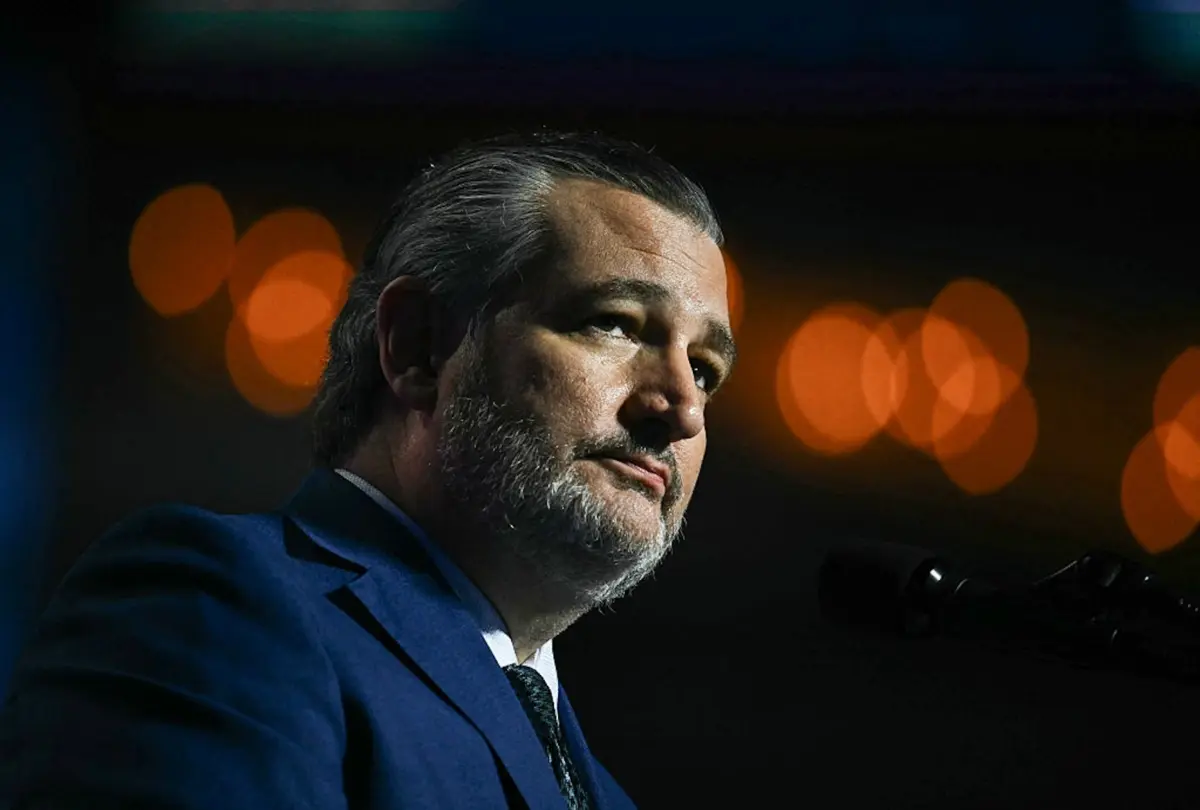
In the high-stakes theater of modern sports broadcasting, corporate self-preservation frequently supersedes journalistic integrity, cultural branding, and even audience satisfaction. This dynamic was laid bare during an autumn Saturday morning on the University of Texas campus, where ESPN’s flagship program, College GameDay, became the unlikely backdrop for a tense political confrontation. As Texas Senator Ted Cruz took the stage to champion the controversial Protect College Sports Act, he was greeted not by eager sports fans, but by a deafening, unyielding chorus of "Ted, you suck!" chants that drowned out host Rece Davis and swallowed any substantive policy discussion whole.
To the casual observer, the booking appeared baffling. Why would Disney—ESPN’s parent company, historically viewed as culturally progressive and often at loggerheads with conservative politicians—hand ten minutes of prime, uninterrupted broadcast real estate on its most-watched college football program to a polarizing lawmaker? Why subject its premier sports brand to an awkward, universally rejected political lecture? The juxtaposition became even starker when viewed alongside concurrent decisions across the Disney empire, such as ABC pulling Texas Democratic Senate nominee James Talarico from Jimmy Kimmel Live! over purported regulatory anxieties.
Yet, a deeper investigative look reveals that these disparate events are not contradictions; they are symptoms of the same corporate reflex. The spectacle on College GameDay was never about partisan favoritism, accidental booking oversights, or political appeasement. It was a calculated, high-stakes move driven by existential economic panic. Facing mounting antitrust challenges that threaten to dismantle the very foundation of collegiate sports broadcasting, Disney and ESPN require a statutory lifeline from Washington. To secure it, the network was more than willing to subject its audience—and its signature show—to ten minutes of national embarrassment.
Detailed Chronology: The GameDay Confrontation and Corporate Fallout
The friction at the University of Texas began long before the cameras rolled, rooted in a coordinated legislative push orchestrated by lawmakers, athletic conferences, and major sports networks.
The Austin Showdown
Ahead of the high-profile matchup between the Texas Longhorns and the Ohio State Buckeyes, College GameDay set up its iconic stage in Austin. The atmosphere was electric, saturated with the traditional pageantry of college football. However, the mood curdled the moment Senator Ted Cruz was introduced to discuss the Protect College Sports Act—legislation he argues will "bring order to chaos" in the shifting landscape of Name, Image, and Likeness (NIL) compensation and the transfer portal.
For nearly ten minutes, as host Rece Davis attempted to steer a one-on-one interview, several hundred students standing directly behind the set engaged in a sustained, rhythmic chant of "Ted, you suck!" The audio feed struggled to isolate the senator’s remarks over the roar of the crowd. While the clip instantly went viral as a piece of choice political schadenfreude, it completely overshadowed the policy debate Cruz intended to spark.
The Editorial Justification and Backlash
In the days following the broadcast, internal and external criticisms mounted. When pressed by The Athletic regarding the decision to host Cruz, an anonymous ESPN source defended the move as an "easy decision" dictated by current news cycles, adding nonchalantly that no opponents of the bill had requested a comparable platform.
This rationale immediately drew sharp rebukes from media critics and civil rights organizations alike. The assertion that a network has no obligation to seek out opposing viewpoints unless they proactively knock on the door flies in the face of basic journalistic standards. Critics were quick to point out that opponents of the Protect College Sports Act are far from invisible. Major labor and civil rights groups—including the AFL-CIO, the Congressional Black Caucus, and the NAACP—have vocally opposed the legislation. They argue that the bill’s proposed compensation caps and eligibility restrictions disproportionately burden Black athletes in revenue-generating sports like football and basketball.
By the following week, the NAACP formally demanded equal time, requesting that its president, Derrick Johnson, be given a platform to outline why the bill is "dangerous to Black athletes and the Black community" when GameDay travels to Oxford, Mississippi.
Supporting Context & Metrics: The Economic Imperative Behind the Act
To understand why ESPN risked the wrath of its core demographic, one must examine the multi-billion-dollar business model underpinning modern collegiate athletics.
The Crumbling Conference Cartel
ESPN’s collegiate sports empire rests upon a structural foundation built over decades: signing massive, exclusive media rights contracts with athletic powerhouses like the Southeastern Conference (SEC) and the Big Ten. These blanket agreements allow the network to lock down entire ecosystems of content, guaranteeing inventory across linear and streaming platforms for years to come.
However, this lucrative model is facing an existential threat. Federal courts and ongoing antitrust litigation—epitomized by landmark legal challenges such as the House v. NCAA settlement—are increasingly treating collegiate athletic conferences as anti-competitive cartels engaged in price-fixing. If courts systematically dismantle the collective bargaining power of conferences, the alternative would require media conglomerates to negotiate and purchase rights on an individual, school-by-school basis. Such a decentralized marketplace would cause ESPN’s operating costs to skyrocket, potentially rendering its current financial model unsustainable.
The Legislative Lifeline
Enter the Protect College Sports Act. Co-sponsored by a bipartisan coalition of lawmakers, the bill is designed to amend the 1961 Sports Broadcasting Act. Its primary objective is to hand athletic conferences and schools a targeted antitrust exemption, legally protecting their ability to pool and sell media rights jointly.
For media giants like ESPN, Fox, and Amazon—alongside the NCAA itself—this legislation represents an indispensable shield. Public lobbying disclosures compiled by OpenSecrets reveal that these entities have poured millions of dollars into Washington lobbying efforts to push the bill across the finish line.
This legislative lobbying campaign has permeated ESPN’s programming organically over successive weeks. Prior to Cruz’s appearance, GameDay staples Nick Saban and Pat McAfee spent a dedicated segment grading the legislation as "80% good" and publicly demanding that Congress cut short its recess to pass it. Cruz himself subsequently floated the prospect of Donald Trump signing the bill into law live on the GameDay set during the fall season.
Official Statements and Institutional Responses
The dual spectacles involving Disney-owned properties—pulling Democratic Senate candidate James Talarico from Jimmy Kimmel Live! on ABC to mitigate regulatory anxieties, while simultaneously platforming Ted Cruz on ESPN—have forced the media conglomerate into an uncomfortable spotlight regarding its editorial independence and political alignment.
+-----------------------------------------------------------------------------------+
|                         THE DISNEY PARADOX OF INFLUENCE                           |
+------------------------------+----------------------------------------------------+
| ABC (Regulatory Defense)     | Pulled a Democratic candidate to navigate FCC      |
|                              | pressures and minimize over-the-air scrutiny.      |
+------------------------------+----------------------------------------------------+
| ESPN (Economic Survival)     | Platformed a polarizing conservative senator to    |
|                              | lobby for antitrust exemptions protecting media    |
|                              | rights contracts.                                  |
+------------------------------+----------------------------------------------------+
| Underlying Motive            | Cold-blooded corporate self-preservation and       |
|                              | financial protection above all else.               |
+------------------------------+----------------------------------------------------+
For years, conservative critics have targeted Disney as an aggressively ideological actor, citing its corporate stances on cultural and social policy. Conversely, progressives have frequently accused the company of capitulating to political pressures from the right. The events in Austin and Hollywood, however, strip away these simplistic partisan narratives.
As industry analysts have noted, Disney is neither a progressive activist organization nor a conservative sympathizer. It is a pragmatic, profit-driven enterprise navigating a complex web of regulatory oversight and economic survival. The company’s leadership is currently performing a delicate balancing act: playing regulatory defense with Federal Communications Commission (FCC) leadership on its over-the-air television assets, while simultaneously fighting to preserve the legislative scaffolding of its sports broadcasting revenue.
When an ESPN executive justified the Cruz booking by citing convenience, they inadvertently revealed a deeper truth: the network would have welcomed any lawmaker, regardless of party affiliation, onto that stage if they held the legislative keys to preserving conference media deals. Ted Cruz simply happened to be the senator carrying the water for the sports broadcast cartel.
Future Outlook: The Intersection of Politics, Sports, and Law
As the legislative battle over the Protect College Sports Act intensifies in Washington, the relationship between sports media and federal policy is entering a turbulent new era.
- Heightened Scrutiny on Access: ESPN and its parent company face mounting pressure to balance editorial independence with commercial interests. The public backlash in Austin demonstrates that sports fans increasingly reject overt corporate lobbying disguised as journalistic sports analysis.
- The Antitrust Battleground: The ultimate fate of college sports media rights rests in the hands of federal legislators and the judiciary. If Congress fails to pass the antitrust exemption sought by the NCAA and its broadcast partners, ESPN and other networks will be forced to restructure how they acquire sports inventory, likely leading to a contraction in broadcast spending.
- Activism and Equal Time: Civil rights groups like the NAACP have signaled that they will no longer allow major sports platforms to serve as unchallenged echo chambers for industry-backed legislation. Future broadcast appearances concerning the economic structure of college sports will likely face coordinated campaigns demanding equal representation for impacted athletes and labor organizations.
Ultimately, Disney’s recent maneuvers ask the public to accept two contradictory narratives: that the company is a nervous, over-regulated broadcaster forced to silence political figures on late-night television, and simultaneously a public square willing to hand a polarizing senator an unvetted platform to lobby for corporate enrichment.
Both narratives are true—and both are driven by a single, unyielding corporate imperative. In the modern media landscape, when the bottom line is threatened, even a sacred broadcasting institution like College GameDay can become collateral damage in the fight to save an empire.