

Executive Overview
The modern retail landscape is increasingly driven by celebrity culture, where the line between personal brand and commercial enterprise often blurs into non-existence. When an A-list celebrity launches a direct-to-consumer (DTC) or lifestyle brand, the initial launch phase is typically met with immediate, high-volume consumer interest. A ready-made audience, fueled by millions of social media followers and built-in media coverage, provides an invaluable launchpad that would cost traditional startups tens of millions of dollars in customer acquisition costs (CAC) to replicate.
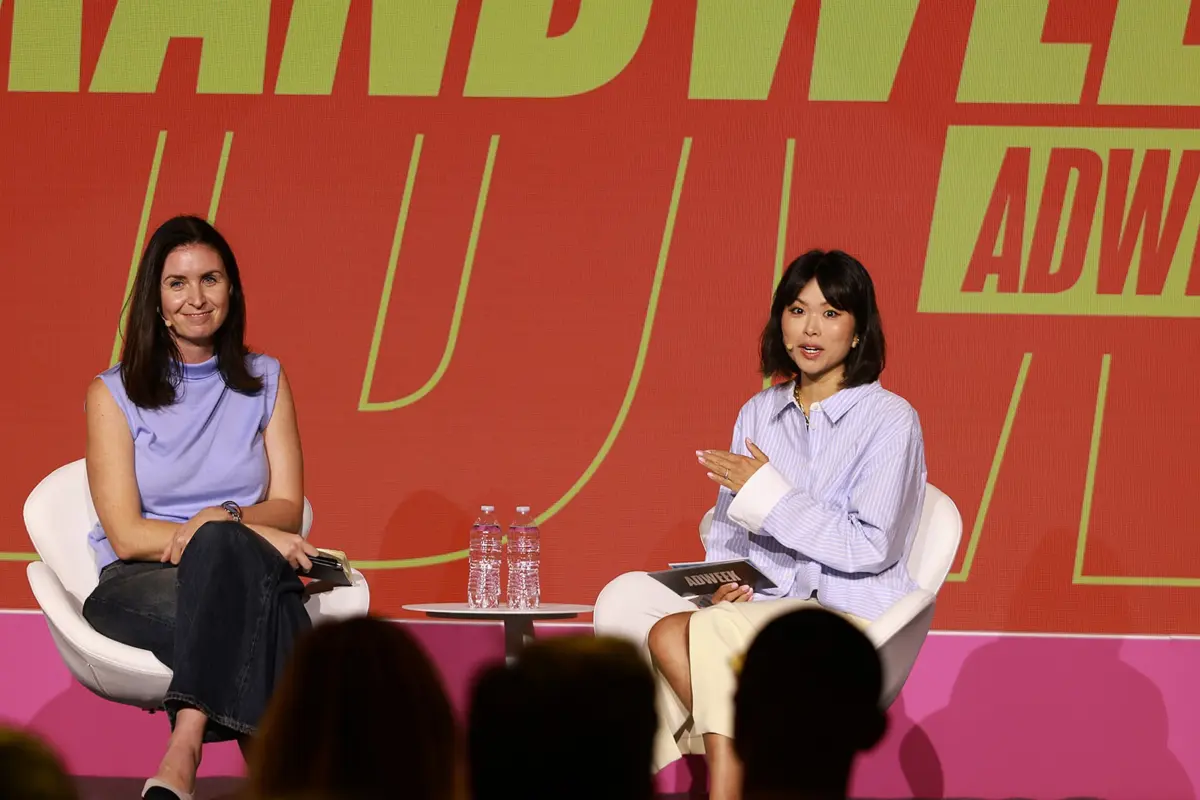
However, as Jeannie Yoo, the Chief Executive Officer of Draper James—the Southern-inspired lifestyle and apparel brand founded by Academy Award-winning actress Reese Witherspoon—recently revealed at the Brandweek conference in Atlanta, the very feature that guarantees an explosive launch can quickly morph into an operational bottleneck.
The core strategic dilemma facing celebrity-backed brands is twofold: leveraging the founder’s star power to establish an initial market footprint while simultaneously engineering a sustainable business model that can thrive independently of the founder’s daily bandwidth. For Draper James, this challenge is magnified by Witherspoon’s hyper-active career trajectory. As a prolific producer, writer, actress, and cultural advocate, Witherspoon operates with a famously full plate.
This article explores the nuanced journey of scaling a celebrity-founded enterprise past its initial halo effect. Through an investigative lens, we examine the structural evolution of Draper James, the economics of founder dependency in modern retail, the strategic pivot toward product-led growth, and the broader implications for the celebrity-brand industrial complex. By dissecting Yoo’s strategic roadmap, industry data, and historical precedents, we provide an authoritative analysis of how lifestyle brands can transition from vanity projects into enduring, institutional commercial assets.
Detailed Chronology: From Nashville Roots to Corporate Maturity
2015: The Genesis of Southern Chic
The Draper James story began in May 2015, when Reese Witherspoon launched the brand in her hometown of Nashville, Tennessee. Named in honor of her grandparents, Dorothea Draper and William James Witherspoon, the brand was conceived as an homage to Witherspoon’s Southern heritage, characterized by polite hospitality, bright patterns, classic silhouettes, and an unapologetically cheerful aesthetic.
From day one, the brand leveraged Witherspoon’s personal brand equity. Early marketing campaigns featured the actress herself modeling the gingham dresses, totes, and home goods. The initial consumer response was overwhelming. Media outlets across the globe covered the launch, turning a regional lifestyle concept into a national talking point overnight. The immediate halo effect generated millions of impressions, allowing the company to bypass the grueling, grassroots brand-awareness phase that plagues traditional apparel startups.
2018–2020: Expansion and Investment
As the brand gained traction, it required institutional backing to scale operations, expand its product lines, and optimize its supply chain. In early 2020, Draper James received a strategic investment from Forerunner Ventures, a prominent venture capital firm known for backing successful DTC disruptors like Warby Parker, Glossier, and Bonobos.
This funding injection signaled a shift from a passion project backed by a celebrity to a professionally managed enterprise. Leadership began focusing heavily on digital infrastructure, inventory management, and strategic retail partnerships. While Witherspoon remained the emotional core and visual anchor of the company, the backend operations began to professionalize rapidly, establishing the groundwork for the structural decoupling that would become necessary later in the decade.
2023–Present: The Strategic Pivot to Product Independence
By the mid-2020s, under the executive leadership of CEO Jeannie Yoo, Draper James entered a new era of maturity. Recognizing the limits of Witherspoon’s availability—exacerbated by her production company, Hello Sunshine, and heavy slate of film and television projects—Yoo and her executive team initiated a deliberate operational pivot.
The focus shifted away from relying on Witherspoon’s real-time involvement for daily marketing beats. Instead, the team began leaning into product-market fit, rigorous pricing strategies, and licensee-driven expansion. As Yoo articulated during her Brandweek presentation, the modern mandate for Draper James is no longer just about capturing attention through star power; it is about engineering products that resonate so deeply with consumers that they sell on their own merits.
Supporting Context & Metrics: The Economics of the Celebrity Halo
To understand the strategic maneuvers of Draper James, one must examine the macroeconomic and consumer behavior metrics governing celebrity-backed enterprises over the past decade.
The Mathematics of Customer Acquisition Costs (CAC)
In the digital marketing landscape of the 2020s, customer acquisition costs have skyrocketed. Privacy updates on mobile operating systems, the saturation of social media advertising channels, and rising inflation have made it increasingly expensive for brands to acquire new shoppers.
| Acquisition Metric | Traditional Startup | Celebrity-Backed Brand (Launch Phase) | Mature Celebrity Brand (Post-Halo) |
|---|---|---|---|
| Initial CAC | High ($40 – $80+) | Extremely Low ($5 – $15) | Moderate ($20 – $45) |
| Organic Reach | Low to Moderate | Massive (Driven by Founder) | Declining (Requires Paid Media) |
| Trust/Credibility | Built over years | Immediate | Maintained via Product Quality |
| Scalability Limit | Bound by marketing budget | Bound by founder’s schedule | Bound by market demand |
As illustrated above, a celebrity founder effectively subsidizes the initial customer acquisition phase. Witherspoon’s social media reach—spanning tens of millions of followers across Instagram, X, and TikTok—acts as a free, high-conversion media channel. However, this subsidy creates a dangerous reliance. When the founder is occupied with external professional obligations (such as filming a season of a major television series), organic marketing touchpoints dry up, forcing the brand to absorb higher paid-acquisition costs to maintain sales velocity.
The Licencing Ecosystem and the "Brand Halo"
A critical revenue driver for lifestyle brands like Draper James is licensing. Rather than managing every facet of manufacturing and distribution in-house, lifestyle brands license their intellectual property to specialized partners across categories such as eyewear, home decor, footwear, and activewear.
Herein lies the structural tension identified by Jeannie Yoo: licensees do not sign up merely for a logo; they invest in the "brand halo." They pay licensing fees based on the expectation that the celebrity founder will continuously generate cultural cachet, press coverage, and consumer desire.
Yoo’s challenge as CEO is twofold:
- Sustaining the Halo: Maintaining enough of Witherspoon’s visibility to keep licensing partners confident and motivated.
- Decoupling the Transaction: Ensuring that the end consumer buys the product because of its inherent design, quality, and price point—not solely because Reese Witherspoon posted a photo wearing it.
Official Statements and Industry Insights
The discourse surrounding founder dependency has become a central theme among retail executives navigating the post-pandemic economic environment. Speaking candidly at Brandweek in Atlanta, Jeannie Yoo elaborated on the delicate balancing act required to run a high-profile lifestyle brand.
"The obvious perk of having a high-profile founder is that you have a ready-made audience at launch. The obvious setback, however, is growing the business beyond that—inevitably, very busy—individual."
— Jeannie Yoo, CEO of Draper James
Yoo’s remarks offer a rare, behind-the-scenes look at the operational realities of celebrity commerce. While consumers often assume that brands backed by household names run effortlessly on the fuel of fame, executives understand that fame is a volatile and exhaustible resource.
"Where I really try to focus my time is on the brand halo, because that’s really what’s going to create desire for all of our licensees. And that part has a very heavy reliance on Reese. My job is to figure out with my team ‘how do we decrease that dependency and make sure that the products and the pricing are compelling enough to sell on their own.’"
— Jeannie Yoo, CEO of Draper James
Industry analysts have praised this pragmatic approach. In an era where many celebrity brands experience rapid spikes followed by sudden irrelevance once the novelty wears off, Draper James’s emphasis on structural product integrity represents a mature, long-term survival strategy. By treating the celebrity founder as an inspirational North Star rather than an operational crutch, management is building a resilient business model capable of weathering shifts in pop culture.
Future Outlook: The Next Frontier for Celebrity-Backed Retail
As the celebrity-brand industrial complex matures, the playbook established by brands like Draper James will serve as a definitive case study for future market entrants. The coming years will present both unique opportunities and distinct hurdles for lifestyle brands seeking to outlive their founding era.
1. Product-Led Storytelling
To successfully reduce dependency on a founder, brands must master product-led storytelling. This involves shifting the marketing narrative from "Look who is wearing this" to "Look how this solves your lifestyle problem, fits your aesthetic, and offers superior value." For Draper James, this means doubling down on the distinct markers of Southern style—versatile fabrics, thoughtful tailoring, and timeless charm—so that the product identity exists independently of Witherspoon’s filmography.
2. Diversification of Brand Ambassadors and Community Building
While Reese Witherspoon will always remain the emotional heart of Draper James, the brand has increasingly turned toward micro-influencers, community-driven campaigns, and everyday consumers to model its collections. By decentralizing the imagery and featuring a diverse array of real women embodying the brand’s ethos, Draper James normalizes the brand experience beyond a single famous face.
3. Data-Driven Pricing and Assortment Architecture
In her Brandweek address, Yoo explicitly highlighted pricing as a critical lever for independent sales viability. As economic pressures influence consumer spending habits, lifestyle brands cannot rely on emotional purchasing alone. Competitive pricing strategies, transparent value propositions, and meticulous assortment architecture ensure that customers return for the product quality rather than a fleeting cultural moment.
Conclusion
The journey of Draper James underscores a vital truth in modern commerce: fame can open doors, but only operational excellence, disciplined pricing, and compelling product design can sustain a business. Under the strategic guidance of Jeannie Yoo, Draper James is proving that it is possible to honor a celebrated founder while quietly building a self-sustaining commercial enterprise. As the brand navigates its next chapter, its evolution offers a masterclass in how to outgrow the very star power that brought it to life.