

Executive Overview
Across the globe, the fundamental human necessity of safe drinking water remains precariously out of reach for billions. According to United Nations estimates, approximately 2.2 billion people live without access to safely managed drinking water. As climate change accelerates, populations swell, and traditional freshwater aquifers dwindle, municipal planners from drought-stricken California to the arid landscapes of the Middle East increasingly turn to desalination. This industrial process converts boundless ocean water into life-sustaining fresh water, serving as a technological lifeline for parched regions.
However, conventional desalination methods present profound ecological and economic compromises. The two dominant approaches—reverse osmosis, which forces pressurized water through specialized synthetic membranes, and thermal distillation, which relies on intense heat to vaporize and separate fresh water from saline solutions—are notoriously energy-intensive. Furthermore, these methods require extensive pre-treatment and post-treatment chemical processing, and they generate a highly concentrated, toxic liquid waste known as brine. When returned to marine environments, this dense brine plummets to the ocean floor, increasing local salinity, depleting dissolved oxygen, and devastating delicate marine ecosystems.
Enter a transformative technological paradigm developed by a team of researchers at the University of Rochester’s Institute of Optics. Led by Professor of Optics and Physics Chunlei Guo, a senior scientist at URochester’s Laboratory for Laser Energetics, the team has engineered an innovative solar thermal desalination system. Published in the prestigious journal Light: Science & Applications, this new methodology bypasses the traditional pitfalls of desalination. It operates entirely on renewable solar energy, requires zero chemical pre-treatment of incoming water, eliminates the production of liquid brine entirely, and yields solid, harvestable minerals—including high-value materials like lithium.
This comprehensive report examines the mechanics of this breakthrough, the scientific hurdles overcome by Guo and his colleagues, the dual-purpose recovery of critical minerals, and the broader implications for a world facing severe resource scarcity.
Detailed Chronology: From Ultrafast Lasers to Sustainable Desalination
The genesis of this breakthrough lies at the intersection of ultrafast laser physics and materials science, building on years of foundational research into how light interacts with modified metal surfaces.
The Power of the Femtosecond Laser
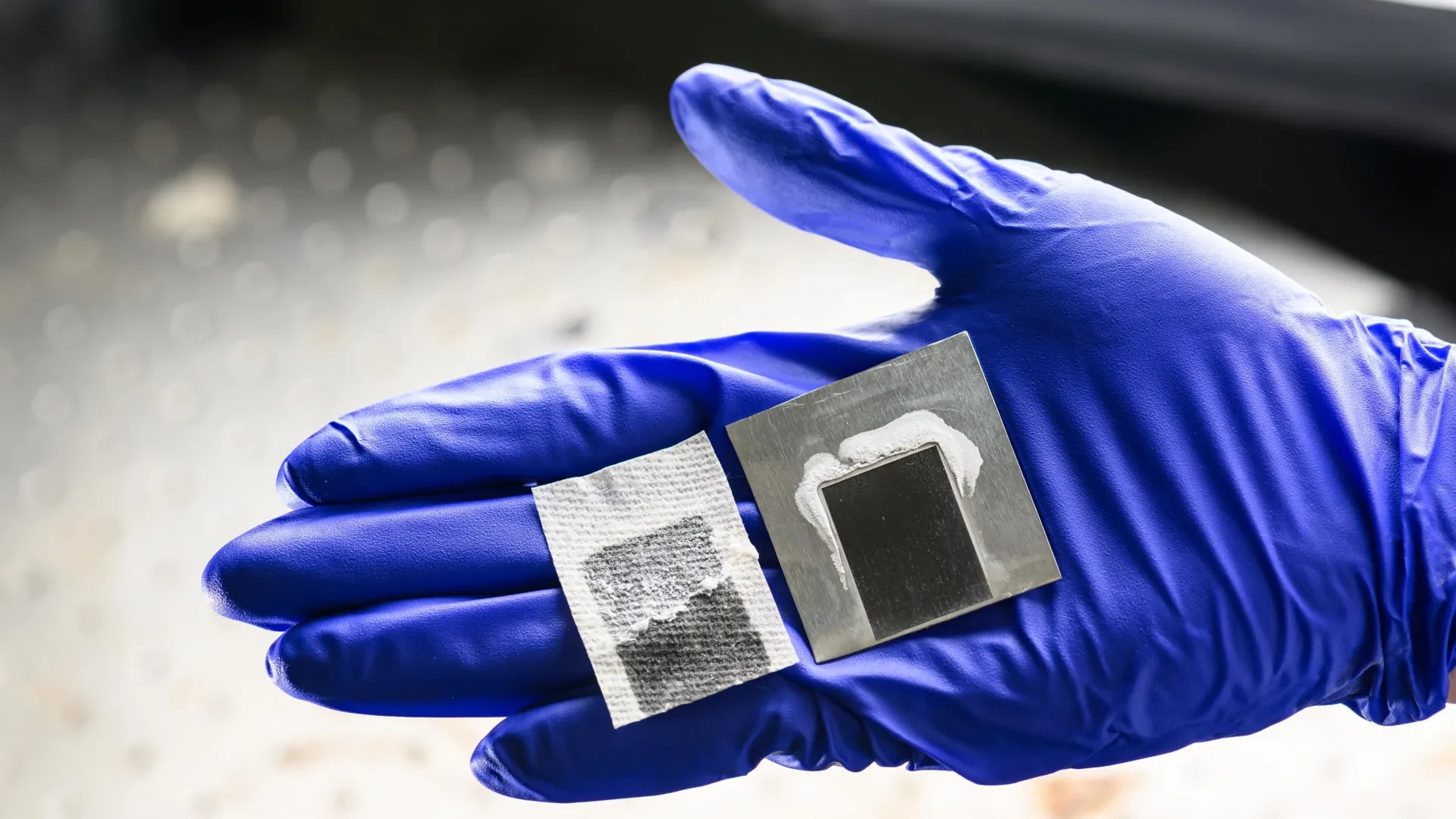
At the core of the University of Rochester technology are solar panels fabricated from ordinary black metal, which are then treated using femtosecond lasers. To understand the precision of this process, one must consider the scale: a femtosecond is an unimaginably brief interval of time equal to one quadrillionth of a second ($10^-15$ seconds).
When pulsed at this ultrafast timescale, laser beams can fundamentally alter the topography and chemical properties of a material’s surface without damaging its structural integrity. The laser pulses carve intricate microscopic and nanoscale structures into the metal. These engineered textures radically transform how the material interacts with both light and liquids. Specifically, the laser treatment endows the metal with two vital characteristics:
- Near-Total Optical Absorption: The treated black metal captures nearly 100 percent of incoming solar radiation across the visible and infrared spectrums, converting light into thermal energy with extraordinary efficiency.
- Superwicking Properties: The surface becomes exceptionally hydrophilic, or water-loving. Instead of beading up due to surface tension, water spreads rapidly and uniformly across the metal in an ultra-thin layer.
Developing the Self-Cleaning Mechanism
Building on these material properties, Guo’s team constructed a solar thermal desalination panel containing an active region and a passive region. The active zone draws a microscopic layer of seawater across the solar-heated metal, driving rapid evaporation while leaving dissolved salts and minerals behind.
In traditional systems, this accumulation of minerals spells disaster. However, the Rochester team utilized microscopic grooves engineered into the metal alongside a physical phenomenon known as the coffee ring effect. Much like a spilled drop of coffee leaves a concentrated dark ring of suspended particles at its perimeter as it dries, the panel’s surface design harnesses capillary action and evaporation dynamics. Instead of crusting over the active evaporation zones, the system purposefully guides salt crystals toward untreated peripheral areas designated as passive regions.
Moving from Lab Simulants to Real Seawater
A critical milestone in the chronological development of the technology was shifting from synthetic laboratory brines to authentic, complex ocean water. Earlier academic attempts at solar thermal desalination frequently relied on simplified solutions of pure water and sodium chloride ($textNaCl$). When sodium chloride crystallizes, it forms a loose, grainy, and porous matrix through which water can continue to seep, making salt management relatively straightforward.
Real seawater, however, is a complex geochemical cocktail containing dissolved magnesium, calcium, sulfates, and hundreds of other trace compounds. When these compounds precipitate during rapid evaporation, they form dense, rock-hard scales—reminiscent of the stubborn mineral buildup found inside residential shower heads or thermal kettles, but magnified by orders of magnitude.
By refining the microfluidic grooves on the laser-treated panels, Guo and his team successfully tested seawater harvested directly from the Pacific, Atlantic, and Indian Oceans. The panels consistently maintained high evaporation rates without efficiency losses, continuously shunting complex mineral deposits into the passive collection zones.
Supporting Context & Metrics: Scaling Efficiency and Mineral Recovery
To contextualize the breakthrough, it is helpful to examine the operational metrics and chemical realities governing modern desalination and mineral extraction.
Operational Metrics of the URochester System
- Energy Source: 100% solar thermal energy (eliminating external electrical grid dependencies).
- Liquid Waste Generation: 0% (zero liquid discharge, completely avoiding toxic brine outfalls).
- Solid Salt Extraction: Nearly 100 percent of dissolved solids are recovered in solid, dry form rather than liquid brine slurries.
- Lithium Recovery Rate: Approximately 50 percent of the lithium present in hypersaline test samples (such as those from the Great Salt Lake) was successfully captured in proof-of-concept trials.
The Mineral Mining Imperative
The transition toward renewable energy and portable electronics has created an unprecedented global demand for critical battery metals, chief among them being lithium. Traditional land-based lithium extraction—whether through hard-rock open-pit mining or brine evaporation ponds in arid flats like those in Chile and Argentina—is environmentally degrading, highly water-intensive, and carbon-heavy.
Recognizing that desalination plants process millions of gallons of mineral-rich brine daily, Guo’s team investigated whether their technology could serve a dual purpose. In a companion study published in the Journal of Materials Chemistry A, the researchers demonstrated that the superwicking solar panels can be functionalized by embedding hydrogen titanate nanoparticles directly into the microscopic metal grooves.
These embedded nanoparticles act as selective molecular sieves, chemically isolating lithium ions from the complex mixture of sodium, magnesium, and calcium salts deposited during the desalination process. By integrating this step, future coastal desalination facilities could transform from single-output water plants into dual-output municipal assets that supply both fresh water and critical green-energy materials.
Official Statements and Expert Perspectives
The research team emphasizes that the project bridges fundamental physics with urgent global sustainability needs.
Reflecting on the challenges of natural seawater processing, Professor Chunlei Guo noted the severe limitations of previous laboratory-bound models:
"When you use artificial seawater made of just sodium chloride, the salt crystals are grainy and porous. Water can still move through them, which makes them easier to manage. But real seawater is far more complicated. It contains magnesium, calcium, and other compounds that form hard, dense deposits—much like the mineral scale in a teapot—which quickly clog conventional systems."
Explaining how the team solved this fluid dynamics challenge through biomimicry and everyday physics, Guo elaborated on the application of the coffee ring effect:
"If you drop coffee on a surface, eventually the water evaporates and there’s a ring left at the outer edge that is the concentrated coffee particles. We use that same principle to advance the salts to the passive region, keeping the active evaporation zone clear and continuously efficient."
Addressing the broader environmental and industrial potential of harvesting battery-grade materials directly from saline solutions, Guo emphasized the ecological necessity of reimagining waste streams:
"Mining lithium from the earth has proven to be very taxing from an energy and environmental standpoint, so pulling lithium directly from saltwater could be a very important future route. If successfully scaled, this approach addresses two major challenges at the same time: producing more fresh water for a growing global population while reducing the environmental burden associated with both desalination waste and mineral extraction."
Future Outlook and Commercialization Roadmap
While the technology has achieved remarkable milestones in proof-of-concept laboratory trials, significant steps remain before commercial deployment can take place.
Current Limitations and Scale-Up Hurdles
At present, the demonstrations have been conducted using relatively small-scale prototype panels. Transitioning from centimeter-scale laboratory devices to square-meter industrial arrays requires rigorous engineering trials to ensure mechanical durability against harsh marine environments, biological fouling (such as algae growth), and continuous wave action. Furthermore, optimizing the lifespan of the laser-treated black metal surfaces under long-term exposure to saline mist and intense ultraviolet radiation will be a primary focus for upcoming engineering phases.
A Blueprint for Circular Infrastructure
Despite these developmental steps, the inherent scalability of the laser-texturing process offers immense promise. Industrial ultrafast laser machining has advanced rapidly in recent years, making high-speed surface texturing economically viable for large-scale manufacturing.
Looking ahead, the integration of solar thermal desalination with selective mineral extraction could redefine coastal infrastructure. Instead of viewing the ocean as an infinite sink for toxic brine, future coastal cities could utilize closed-loop, solar-powered facilities that simultaneously quench municipal thirst, protect fragile marine ecosystems, and secure the domestic supply chains for the critical minerals powering the green energy transition.
The research was generously supported by funding and grants from the National Science Foundation, the Bill & Melinda Gates Foundation, and the Worldwide Universities Network. Key co-authors from the University of Rochester Institute of Optics include Senior Scientist Subash Singh, alumnus Ran Wei ’24 (PhD), doctoral candidates Luheng Tang and Tainshu Xu, and researcher Mingjiang Ma.