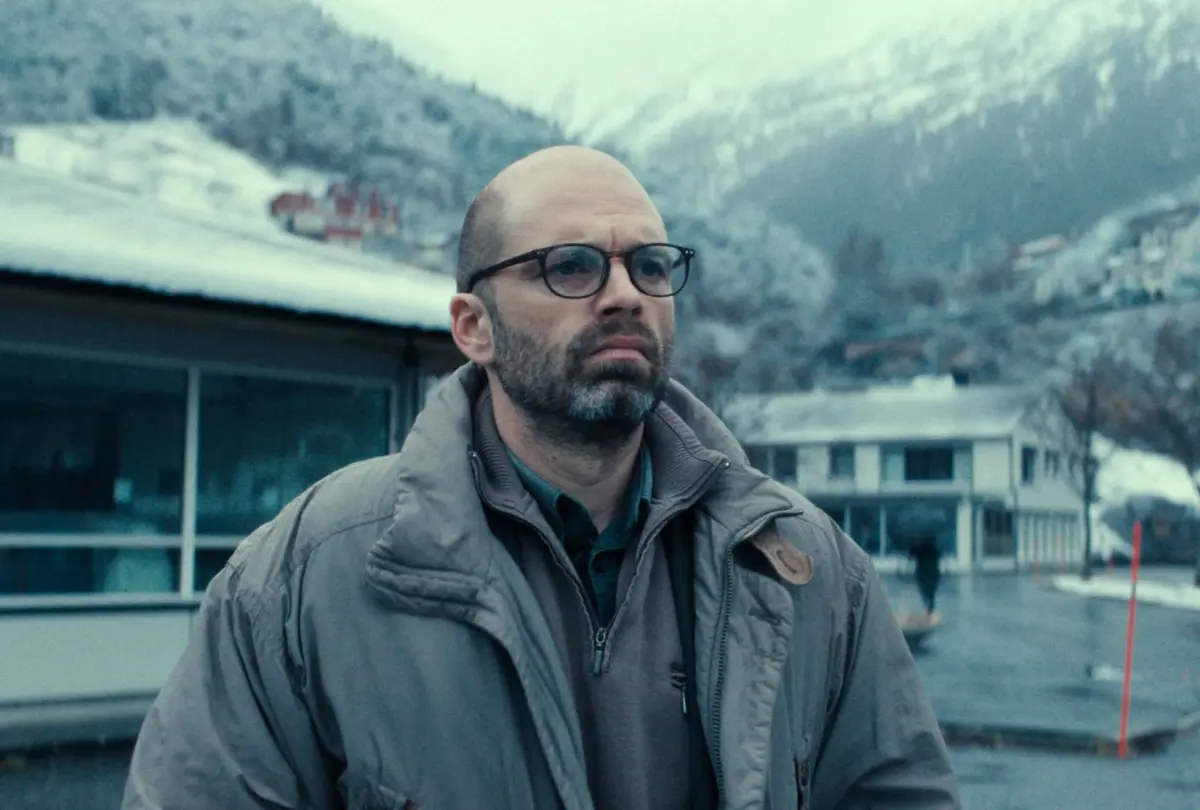
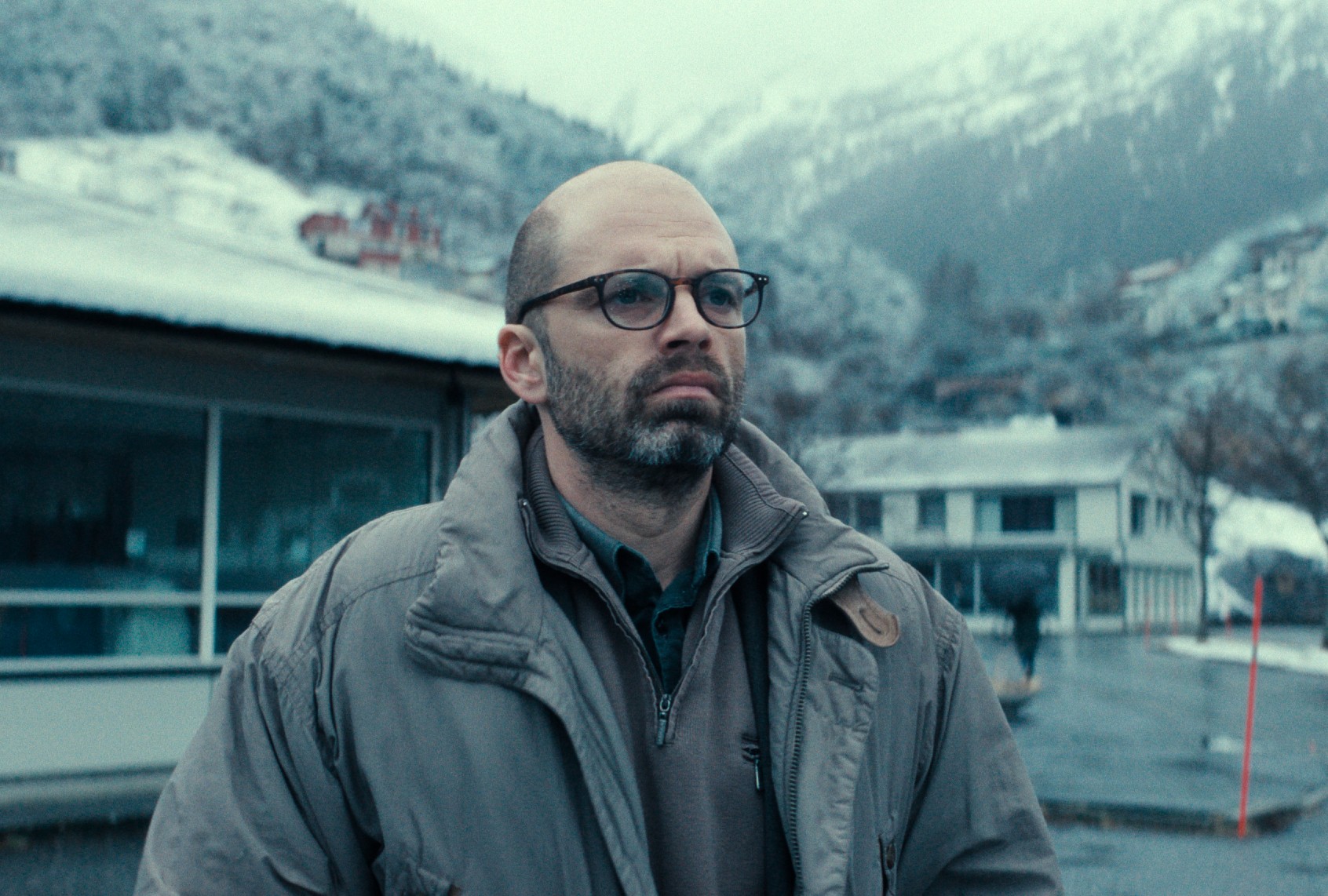
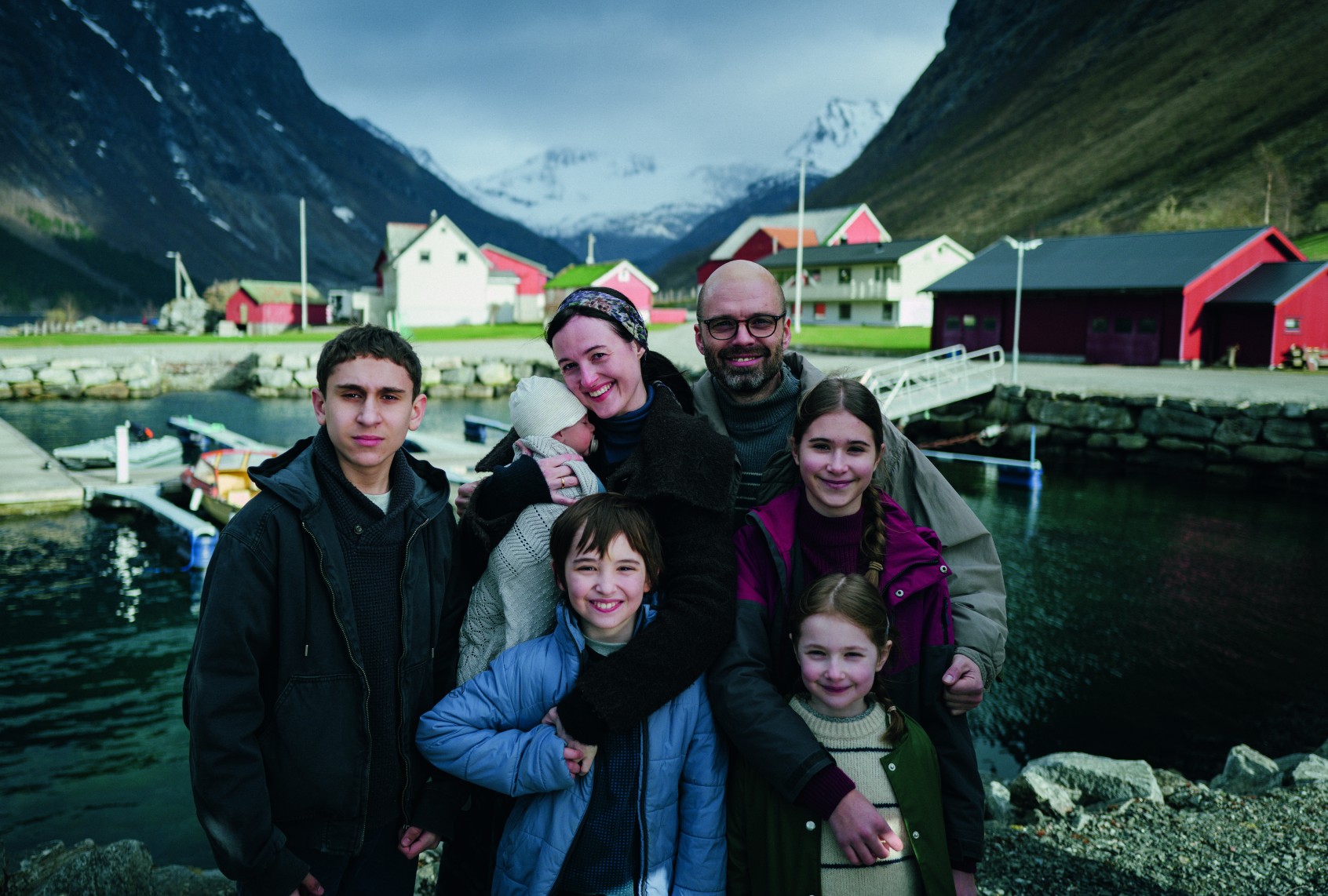
In an era defined by hyper-polarized cultural discourse and an insatiable public appetite for moral certitude, visionary Romanian filmmaker Cristian Mungiu has delivered a masterclass in ambiguity. His latest stoic drama, Fjord—which captured the prestigious Palme d’Or at the Cannes Film Festival earlier this summer and is currently generating significant Oscar buzz following its screening at the New York Film Festival—acts as both a gripping narrative and a sociological trap.
Starring Sebastian Stan as Mihai Gheorghiu and Renate Reinsve as his wife Lisbet, Fjord is loosely inspired by the harrowing 2015 real-life case of Ruth and Marius Bodnariu. In that instance, a devout Christian immigrant family in Norway had all five of their children removed by the state’s child protection agency, Barnevernet, amid suspicions of physical discipline and mistreatment. The ensuing international uproar drew heavy fire from global Christian fundamentalist organizations, who framed the intervention as an egregious assault on religious freedom by an overreaching progressive state. Conversely, defenders of the Norwegian welfare system hailed the move as a vital, child-centric safeguarding measure.
Rather than taking a definitive stance or offering clean moral resolutions, Mungiu plunges headfirst into this ideological chasm. Fjord walks a razor-thin line between holding systemic power accountable and inadvertently stoking partisan propaganda. By refusing to validate either the dogmatic certainty of the religious right or the technocratic hubris of the progressive state, Mungiu has crafted a cinematic puzzle. It is an experiment designed to test whether contemporary audiences can still tolerate the uncomfortable, gray expanses of human experience without demanding a hero, a villain, or a neat ethical takeaway.
Detailed Chronology: From Real-World Trauma to the Silver Screen
To fully grasp the intricate cultural machinery behind Fjord, one must look backward to the geopolitical and social friction points that inspired it, and forward to its trajectory through the global film circuit.
The Real-World Catalyst: The Bodnariu Case (2015)
In the autumn of 2015, the idyllic backdrop of rural Norway became the epicenter of a fierce international culture war. Ruth Bodnariu, a Norwegian nurse, and her husband Marius Bodnariu, a Romanian engineer—both devout Pentecostal Christians—found their family life upended when local school officials noticed signs of physical discipline (specifically, mild corporal punishment) on their children.
The Norwegian child welfare agency, Barnevernet, swiftly intervened, removing all five children—ranging from infants to adolescents—from the home. What followed was a seven-month legal and public relations nightmare.
The Conservative Outcry: Christian fundamentalist networks across Europe and the United States mobilized rapidly, organizing mass protests outside Norwegian embassies. They argued that the state was systematically targeting immigrant families and conservative religious values under the guise of child protection.
The Institutional Defense: Norwegian authorities and child advocates maintained that the interventions were color-blind, culture-blind, and strictly anchored in the nation’s absolute legal prohibition against physical violence toward minors—regardless of domestic religious dogma.
Though the children were eventually returned to their parents in the summer of 2016 following intense diplomatic and public pressure, the cultural scar tissue remained. The case exposed a deep ideological fault line between traditional parental autonomy and state-enforced child welfare standards.
The Cinematic Adaptation and Festival Circuit (2026)
Taking inspiration from the Bodnariu framework, Cristian Mungiu spent years developing Fjord, transposing the narrative to a progressive, picturesque Norwegian coastal town where an immigrant Romanian couple, Mihai and Lisbet Gheorghiu, suddenly find their family dismantled by bureaucratic red tape and suspicion.
May 2026:Fjord premieres in Competition at the 79th Cannes Film Festival, stunning critics and juries alike with its clinical detachment and psychological intensity. It is awarded the festival’s highest honor, the Palme d’Or.
September 2026: The film makes its North American premiere at the New York Film Festival, drawing packed houses and intense critical debate regarding its political alignment.
October 2026: Neon sets a wide theatrical release for October 9, positioning the film as a heavyweight contender for the upcoming Academy Awards season.
Supporting Context & Metrics: The Anatomy of a Cultural Lightning Rod
Fjord is engineered to provoke. From its opening frames—where soft piano chords play a melancholic rendition of "Amazing Grace"—the film establishes a motif where grace is never freely given, but rather tightly rationed by institutional paperwork and municipal protocol.
The Metrics of Polarization
The film’s marketing and distribution strategy by Neon relies heavily on the discourse of controversy. Early box office tracking and festival engagement metrics indicate that Fjord is over-indexing among older, arthouse demographics, while digital discourse on cultural forums is already fractured along ideological lines:
The Right-Leaning Reception: Evangelical and traditionalist outlets have begun embracing the film as a long-overdue cinematic reckoning with secular state overreach.
The Left-Leaning Reception: Progressive critics and social welfare advocates have expressed cautious anxiety that the film’s narrative structure risks validating anti-government conspiracy theories or downplaying the necessity of rigorous child protection laws.
The Performance Paradigm: Restraint as a Weapon
At the heart of the film’s success are lead actors Sebastian Stan and Renate Reinsve. Playing Mihai and Lisbet respectively, both performers must navigate an extraordinarily restrictive emotional landscape.
Stan’s Mihai: Must project the warmth of a devoted father while hiding the internal resentment of a man whose traditional authority is being dismantled by a foreign legal system.
Reinsve’s Lisbet: Acts as the emotional bridge between her conservative Romanian husband and her progressive Norwegian heritage, forced to modulate every sigh, plea, and tear to avoid playing into the hands of watchful social workers.
If either actor displays too much passion, religious zealotry, or overt anger, the audience—and the fictional Norwegian authorities—will instantly label them guilty. Conversely, if they appear too cold, they risk forfeiting audience sympathy. This delicate tightrope walk forces the viewer into a state of perpetual hyper-vigilance.
Official Statements and Critical Discourse
The debate surrounding Fjord extends far beyond film criticism, touching on the fundamental responsibilities of artists in a fragmented society. In recent press profiles, including a widely read feature on Sebastian Stan in New York Magazine, Cristian Mungiu addressed the deliberate ambiguity woven into his script.
"Because I don’t explicitly approve or condemn the positions that I bring to public debate, the supporters of these groups will always try to capitalize on that and claim this simple lack of firm judgment equals a ‘victory,’" Mungiu noted, acknowledging the weaponization of his artistic neutrality.
Critics have seized upon this exact tension. Some argue that Mungiu’s insistence on absolute neutrality occasionally falters, subtly tipping its hand against the Norwegian characters. For instance, in a sequence where Barnevernet representatives express genuine shock upon discovering that the Gheorghiu teenagers do not possess smartphones, do not use YouTube, and have no home internet access, the film risks alienating its analytical edge.
To a modern, hyper-connected audience, these moments can play like heavy-handed satire—framing the Norwegian officials as out-of-touch progressive caricatures while casting the conservative Gheorghius as noble, tech-resisting traditionalists. Yet, this exact friction is what elevates Fjord from a standard courtroom drama into an active psychological experiment. The film does not ask, "Did they abuse their children?" Instead, it forces a far more unsettling query: "So what if their disciplinary methods were flawed? How does a monolithic state apparatus measure human warmth, and at what point does protection curdle into persecution?"
Future Outlook: The Oscar Race and the Legacy of "Fjord"
As Fjord prepares for its wide theatrical rollout on October 9, 2026, and sets its sights on the upcoming Academy Awards, its cultural footprint is already expanding well beyond the traditional bounds of cinema.
The Awards Season Battleground
If Fjord secures the major Oscar nominations industry insiders are predicting (including Best Picture, Best Director for Mungiu, and lead acting nods for Stan and Reinsve), the winter months will undoubtedly be saturated with tedious, binary debates over whether the film is fundamentally "conservative" or "progressive."
However, cultural analysts argue that reducing Fjord to a political football misses the forest for the trees. Mungiu’s broader ambition is a bird’s-eye examination of how institutional systems—whether driven by party politics, secular bureaucracy, or religious dogmatism—invariably inflict collateral damage while pursuing utopian ideals.
A Mirror to Modern Discourse
Ultimately, Fjord holds up an unforgiving mirror to a modern public that has largely forgotten how to inhabit the spaces between black and white. In an information ecosystem that demands immediate moral categorization, Mungiu’s refusal to provide easy answers feels radical—and deeply unsettling.
By refusing to offer a clean ethical resolution, Fjord ensures that the most important conversations about the film will not happen inside the theater, but rather in the difficult, messy spaces of the world outside.