

Executive Overview
In an international development that reshapes the geopolitical architecture of the High North, the United States, Denmark, and Greenland have reached a foundational security framework agreement. Touted by U.S. President Donald Trump as an “Infinite Life” deal conferring “permanent control” over the Arctic island’s defense, the pact has simultaneously been characterized by Copenhagen and Nuuk as a vital cooperative measure that strictly preserves Greenlandic self-determination and the territorial integrity of the Kingdom of Denmark.
Set to be finalized during the upcoming United Nations General Assembly in New York City, the agreement attempts to balance Washington’s mounting strategic imperatives in the rapidly thawing Arctic circle with the fierce autonomy of local Greenlandic populations. The deal addresses long-standing anxieties regarding foreign encroachment—particularly from adversarial nations like Russia and China—while navigating the persistent diplomatic friction ignited by Trump’s prior, highly publicized ambitions to formally acquire the world’s largest island.
Despite the grand rhetoric emanating from Washington, the accord leaves critical operational details shrouded in ambiguity. The full text of the agreement remains unreleased, leading to intense scrutiny over the true scope of the expanded U.S. military footprint, the legal boundaries of foreign investment restrictions, and the ultimate distribution of authority between American military planners and local authorities. As the text heads toward parliamentary review in both Denmark and Greenland, policymakers and international observers alike are left parsing the divergent narratives advanced by the signatories.
Detailed Chronology
The Re-emergence of Arctic Ambitions
The path toward the September 2026 security pact spans several years of escalating geopolitical competition in the Arctic, supercharged by President Donald Trump’s renewed focus on the region. Long before the current agreement, Trump repeatedly voiced the desire for the United States to acquire Greenland—a semi-autonomous Danish territory—citing its indispensable location for continental defense and missile early-warning systems.
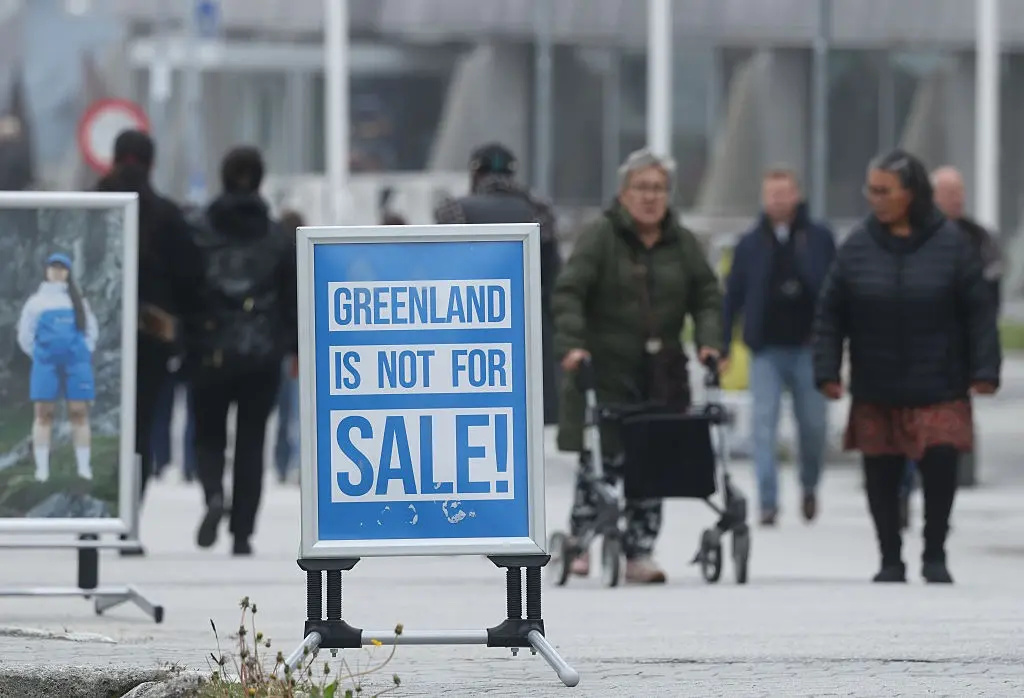
Trump’s earlier remarks, which famously refused to rule out the use of economic or military leverage to secure the territory, sent shockwaves through European capitals and alarmed NATO allies. Across Greenlandic towns, shops displayed placards bearing the defiant slogan "Greenland is not for sale!" capturing the local sentiment against foreign annexation. Yet, beneath the political theater, intelligence assessments shared among Western allies underscored a genuine vulnerability: the melting of Arctic sea ice was opening vital shipping lanes and resource-rich seabeds, drawing aggressive probes from Russian naval assets and heavy infrastructure investments from Beijing.
The Negotiations and the Truth Social Announcement
Through the spring and summer of 2026, backchannel diplomatic talks intensified between U.S. officials, the Danish Ministry of Foreign Affairs, and Naalakkersuisut (the government of Greenland). The negotiations sought to reconcile Washington’s demand for unhindered strategic access with Greenland’s fierce defense of its sovereignty and path toward potential independence.
The breakthrough arrived on Friday, September 19, 2026. Eschewing traditional diplomatic channels for the initial public reveal, President Trump took to Truth Social to announce what he termed a “dream come true.” In a lengthy post, Trump declared that the U.S. would “FOREVER have the complete ability to do what is necessary in Greenland” and outlined plans to immediately build out a “large Military presence” on the island. Furthermore, the U.S. president asserted a sweeping unilateral veto over foreign investments and military positioning, stating that no adversary would be permitted to establish a foothold on the island without explicit, written approval from Washington.
Immediate International Fallout and Clarifications
Within hours of the American announcement, European and Greenlandic leaders scrambled to calibrate their own messaging, keen to reassure domestic constituencies that the island had not been traded away.
Danish Prime Minister Mette Frederiksen issued a carefully worded statement emphasizing that the agreement explicitly recognizes the territorial integrity of the Kingdom of Denmark and honors Greenlanders’ inherent right to self-determination. Concurrently, the government of Greenland welcomed the security cooperation framework while reaffirming that its political sovereignty remains entirely intact.
As the dust settled, it became clear that the two sides had signed onto the same diplomatic document while interpreting its practical implications through fundamentally different lenses. The stage was thus set for the formal signing ceremony at the United Nations General Assembly, followed by rigorous domestic parliamentary hurdles.
Supporting Context & Metrics
Strategic Geography and the Pituffik Precedent
To understand the gravity of the 2026 security pact, one must examine the deep historical and military ties binding the United States to Greenland. Washington’s footprint on the island is not a novel invention; it is rooted in the 1951 Defense Agreement between the United States and the Kingdom of Denmark, drafted during the height of the Cold War.
Under this decades-old framework, the U.S. military has operated the Pituffik Space Base (formerly known as Thule Air Base) in northwestern Greenland. Situated roughly 750 miles north of the Arctic Circle, Pituffik serves as a critical node in the U.S. ballistic missile early-warning system and space surveillance network.
However, the 1951 framework was designed for a bipolar world dominated by U.S.-Soviet nuclear standoff. The 2026 agreement attempts to modernize this architecture for an era defined by multi-polar competition, where climate change has rendered the Arctic increasingly navigable and strategically contested.
+-------------------------------------------------------------------------+
                    THE ARCTIC DEFENSE ARCHITECTURE
+-------------------------------------------------------------------------+
|  Historical Foundation : 1951 U.S.-Denmark Defense Agreement            |
|  Key Strategic Asset   : Pituffik Space Base (Ballistic Missile Early-  |
|                          Warning & Space Surveillance)                  |
|  New 2026 Framework    : Permanent U.S. Security Access, Veto on        |
|                          Adversarial Investments, and Expanded Footprint|
|  Sovereignty Anchor    : Guaranteed Constitutional Integrity within     |
|                          the Danish Realm & Greenlandic Self-Rule       |
+-------------------------------------------------------------------------+
The Geopolitical Stakes: Mineral Wealth and Sea Lanes
Beyond ballistic trajectory calculations, Greenland represents an unprecedented prize in economic and geological terms. As global temperatures rise at rates twice the planetary average, the island’s receding glaciers are exposing vast, untapped deposits of critical minerals and rare earth elements—materials essential for advanced electronics, renewable energy infrastructure, and defense manufacturing.
- Rare Earth Elements: Greenland holds some of the world’s largest unexploited deposits of neodymium, praseodymium, terbium, and dysprosium.
- Shipping Corridors: The opening of the Northwest Passage and the Transpolar Sea Route significantly slashes maritime transit times between Asia, Europe, and North America, turning the Arctic into a premier geopolitical commercial highway.
- Foreign Investment Vulnerability: Prior to the new security pact, Chinese state-backed entities had made several aggressive bids to finance infrastructure projects—including civilian airports—on the island, triggering intense counter-lobbying from Washington and Copenhagen over potential dual-use military applications.
Official Statements
The dissonance between the Washington narrative and the European/Greenlandic perspective is best captured through the direct words of the principal actors involved.
"The United States will FOREVER have the complete ability to do what is necessary in Greenland, and we will immediately begin the process of developing a large Military presence there. No adversary will be allowed to establish a presence or make sensitive investments without our written approval. This is an Infinite Life deal and a dream come true for our national security."
— U.S. President Donald Trump, via Truth Social
In stark contrast, allied leaders labored to frame the pact as a cooperative multilateral arrangement rather than an American annexation or subjugation.
"This agreement firmly recognizes the sovereignty and territorial integrity of the Kingdom of Denmark, while fully respecting the fundamental right of the Greenlandic people to self-determination. We are strengthening our collective security architecture against shared threats, not ceding our sovereign governance."
— Danish Prime Minister Mette Frederiksen
Greenlandic official channels echoed this sentiment, emphasizing local agency while acknowledging the pragmatic need for robust defense partnerships in an increasingly volatile global security environment.
"Our partnership with the United States and Denmark ensures that our strategic location is defended against external aggression. However, let it be clear: Greenland’s future belongs to Greenlanders. Our sovereignty is non-negotiable, and this agreement operates firmly within that reality."
— Representative Statement from the Naalakkersuisut (Government of Greenland)
Future Outlook
As the international community prepares for the formal signing ceremony at the United Nations General Assembly in New York, significant hurdles remain before the "Infinite Life" security pact can be fully operationalized.
Parliamentary Hurdles in Copenhagen and Nuuk
Unlike executive agreements that can be enacted unilaterally by the White House, the pact faces strict domestic constitutional requirements within the Kingdom of Denmark. Both the Danish Folketing (parliament) and the Greenlandic Inatsisartut must debate and vote on the text.
Given the deep sensitivity surrounding national sovereignty in Greenland—where public opinion remains fiercely protective of local autonomy—parliamentary debates are expected to be contentious. Opposition lawmakers in both legislatures are likely to demand full transparency regarding the exact scope of the proposed "large military presence," seeking legally binding guarantees that local environmental regulations, labor laws, and indigenous hunting rights will not be sidelined by incoming U.S. personnel.
Operational Ambiguities and Strategic Implementation
If the pact successfully navigates parliamentary hurdles, defense planners will face the daunting task of translating broad political declarations into concrete military and economic realities. Key questions demanding immediate resolution include:
- Infrastructure Footprint: Where precisely will the expanded U.S. military forces be stationed, and will new facilities be constructed outside of the existing perimeter of Pituffik Space Base?
- Investment Veto Mechanics: How will the joint screening mechanism for foreign investments operate in practice? Will Nuuk retain veto power over Washington’s decisions, or does the U.S. hold ultimate unilateral authority over commercial vetting?
- Environmental and Social Impact: With Arctic ecosystems uniquely fragile, how will the influx of military personnel and construction projects be managed to prevent ecological disruption and safeguard traditional indigenous ways of life?
Ultimately, the Denmark-Greenland-U.S. security pact represents a pivotal turning point in Arctic governance. It underscores the undeniable reality that the High North has transitioned from a sleepy, ice-locked scientific frontier into one of the world’s most fiercely contested geopolitical arenas. Whether this new arrangement can successfully harmonize American global security demands with the proud, enduring sovereignty of Greenland will be one of the definitive international security tests of the coming decade.