

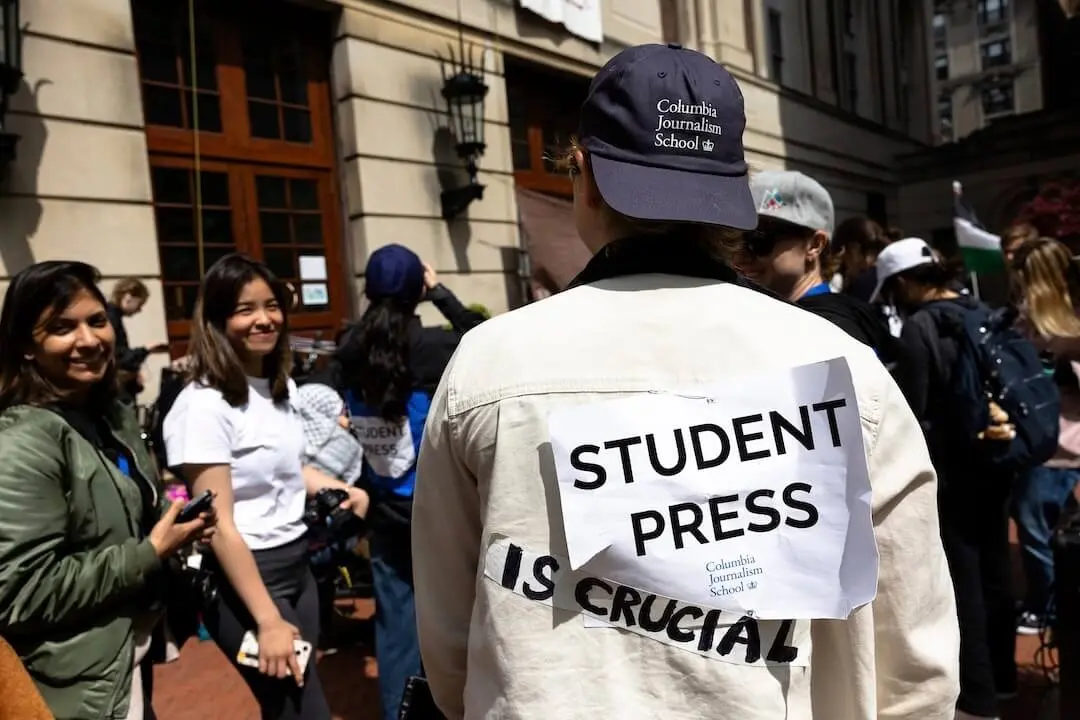
Originally published via the Student Press Report, a national news desk covering student media and journalism education in higher education.
Executive Overview
The architecture of American journalism is undergoing a seismic, structural transformation. While legacy and digital newsrooms alike grapple with contracting revenue models, shifting audience consumption habits, and the relentless creep of newsroom burnout, a parallel crisis is quietly unfolding on college campuses across the nation. Higher education, long the fertile crescent of investigative reporting and fearless storytelling, is feeling the severe pinch of tightening university budgets. Administrators facing fiscal constraints are frequently forced to deprioritize professional journalism training.
Yet, within these very institutions, undergraduate and graduate students are producing work that routinely rivals—and often surpasses—that of commercial news organizations. From the high-stakes investigative deep dives emerging from the Howard Centers at Arizona State University and the University of Maryland to open-source reporting initiatives at the University of Southern California and the University of Memphis, today’s student journalists are proving their mettle on the national stage.
The core challenge, however, is not a lack of talent or drive; it is a profound deficiency of sustainable, long-term support. While contemporary philanthropic efforts have made commendable strides in stabilizing local public media and plugging short-term municipal news gaps over the past one to five years, these bandages fail to address the systemic, generational needs of journalism education. To secure the future of the Fourth Estate, major donors, private foundations, and institutional investors must execute a paradigm shift: committing to 10-to-40-year funding strategies designed to cultivate the innovators, leaders, and muckrakers of tomorrow before today’s students ever step foot into a professional, high-pressure newsroom.
Detailed Chronology: A Reflection on the Crucible of Student Press
Understanding the absolute necessity of immersive, real-world journalism education requires examining how future reporters are forged in the crucible of unexpected crisis. The lessons that define a journalist’s career rarely emerge from a standard textbook lecture; they are seared into memory through the relentless, exhausting machinery of breaking news.
The Midnight Realization: September 11, 2001
Consider the experience of student journalists thrust overnight into historic events. In the early hours of September 12, 2001, just a few weeks into his tenure as the editor of The Post—the independent student-run newspaper at Ohio University—Mike Canan experienced a foundational awakening that encapsulates the reality of the profession.
Having spent the entirety of September 11 frantically mobilizing a student newsroom to assemble a comprehensive, heavily local edition documenting the historic tragedy, Canan returned to his apartment at approximately 3:00 a.m. Exhausted, emotionally drained, and physically spent, he prepared for sleep, feeling a profound sense of pride over the edition that would eventually hang framed in the hallway of The Post for decades.
Then, the existential weight of the profession hit him:
"Tomorrow (today, really, by this point), we have to do it all again. There will be more news. There will be follow-ups. The story is nowhere near put to bed just because we put to bed that one newspaper."
This realization—that the news cycle is an unbroken, relentless beast that does not pause for human exhaustion—is something traditional academic classrooms struggle to simulate. Standard university curricula, by design, operate on semesters, midterms, and relaxed assignment deadlines. Even standard campus media outlets do not always capture the hyper-accelerated cadence, the legal pressures, and the instantaneous ethical dilemmas of a modern commercial newsroom. Without deliberate, hands-on exposure to these realities early in their development, young journalists face a steep, sometimes demoralizing cliff upon graduation, risking early burnout and career abandonment.
Supporting Context & Metrics: The State of Journalism Education and Funding
The disparity between what journalism students need to thrive and what underfunded university administrations can provide has never been starker.
What Modern Student Journalists Require
To prepare students for an increasingly complex media landscape, academic programs require robust resources that extend far beyond a chalkboard and a syllabus. Industry insiders and educators point to five foundational pillars essential for student success:

- Cutting-Edge Technology: Students must have immediate, fingertip access to modern recording hardware, secure communication tools, data-scraping software, and high-performance editing suites.
- Project-Based Curricula: Classes must move away from theoretical exercises and toward immersive reporting projects where student output is published by real-world media outlets for actual public consumption.
- Evolving Pedagogical Frameworks: Curricula must continuously adapt to reflect emerging methods of information gathering, non-linear storytelling, and direct audience engagement across digital ecosystems.
- Trauma-Informed Training: As reporters increasingly cover mass violence, political extremism, and societal crises, students must be armed with psychological tools to combat burnout, manage secondary trauma, and practice mental self-care.
- Meaningful, Compensated Internships: Unpaid internships gatekeep access to the profession, shutting out socioeconomically disadvantaged students. Paid opportunities are essential to ensure equitable entry into the industry.
The Philanthropic Horizon: Short-Term vs. Long-Term
Philanthropic interventions in journalism have accelerated noticeably over the last decade. Foundations and donor-advised funds have stepped up to support newsrooms of varying scales, rescue ghost towns devoid of local reporting, and stabilize public broadcasting infrastructure.
However, a critical strategic misalignment persists. The vast majority of philanthropic grants are structured around short-term horizons—typically locking in funding for one to five years. While these infusions provide immediate oxygen to bleeding newsrooms, they fail to build the permanent, foundational endowments required to insulate higher education from shifting university budgets.
The path forward demands multi-decade endowments. Investing in a college freshman today is an explicit investment in the media ecosystem of 2045 and beyond. By fortifying the academic pipelines that feed the industry, donors can ensure that the next generation of reporters enters the workforce equipped not only with technical proficiency, but with historical context and professional resilience.
Official Statements & Industry Perspectives
The challenges facing journalism education have prompted frank assessments from leaders who straddle the line between academic instruction and institutional strategy.
Reflecting on half a decade of guiding journalism education funding initiatives through the Scripps Howard Fund and Foundation, program leaders emphasize that today’s undergraduates are categorically worth the financial gamble. Programs benefiting from major foundational support—such as the Howard Centers for Investigative Journalism at Arizona State University and the University of Maryland, the Roy Howard Community Journalism Center at the University of Southern Mississippi, and pioneering open-source investigative reporting units at USC and the University of Memphis—consistently demonstrate that students are capable of producing world-class accountability journalism.
Yet, leaders emphasize a sobering message when addressing students across the country, whether at elite media flagships or smaller liberal arts institutions with modest media departments:
"These are turbulent times in the industry. If you want stability, this isn’t the path. But with uncertainty comes opportunity. Opportunity to shape the future of journalism. Opportunity to rebuild a crucial profession. Opportunity to make your community a better place, to make the world a better place by exposing the wrongdoing and highlighting what’s right."
This perspective reframes industry instability not as an insurmountable deterrent, but as an open invitation for a passionate, tech-savvy generation to reinvent the rules of public-interest storytelling. As veteran educators frequently remind their lecture halls: "At the end of the day, you are going to be the ones who figure this out. You are going to be the ones who lead journalism’s future. The rest of us are simply trying to keep journalism alive."
Future Outlook: Nurturing the Storytellers of Tomorrow
The horizon of American journalism is simultaneously daunting and exhilarating. The generation currently inhabiting college newsrooms and investigative workshops is remarkably smart, fiercely passionate, and innately digital-native. They intuitively understand what contemporary audiences require and possess an instinctual grasp of where media consumption is heading next.
Nevertheless, raw talent alone cannot survive an unstable economic environment. Without intentional institutional scaffolding, financial backing, and rigorous, real-world preparation, the industry risks squandering a generation of bright minds to burnout or alternative career paths.
To ensure that the Fourth Estate remains a robust pillar of democracy for the next forty years, the blueprint is clear:
- Universities must ruthlessly prioritize practical, hands-on reporting programs despite administrative budget cuts.
- Philanthropists and major foundations must transition away from myopic, short-range funding models and commit to multi-decade endowments that permanently anchor journalism schools.
- The broader industry must actively mentor and compensate the incoming wave of professionals, treating them not as cheap labor, but as the designated architects of tomorrow’s newsrooms.
Ultimately, the future of journalism is not lost—it is simply sitting in university classrooms, waiting for the necessary investments to unlock its full, transformative potential.