

By the Editorial Desk | Special Partnership with Ammunition
Executive Overview
In the modern corporate landscape, few words are invoked with as much frequency—and as little standardized meaning—as the word "growth." It serves as the primary metric of corporate health, the centerpiece of quarterly earnings calls, and the ultimate objective of every strategic marketing initiative. Yet, despite its ubiquity, growth remains an elusive and frequently misunderstood concept. Ask five different executives within the same enterprise to define growth, and you are likely to receive five distinct answers: one points to top-line revenue, another to net profit margins, a third to customer acquisition velocity, and a fourth to market share expansion.
This lack of internal consensus is more than a mere semantic nuisance; it is a fundamental strategic vulnerability. When team members operate under divergent definitions of success, business strategies fracture, marketing investments misalign, and short-term tactics inadvertently cannibalize long-term value creation.
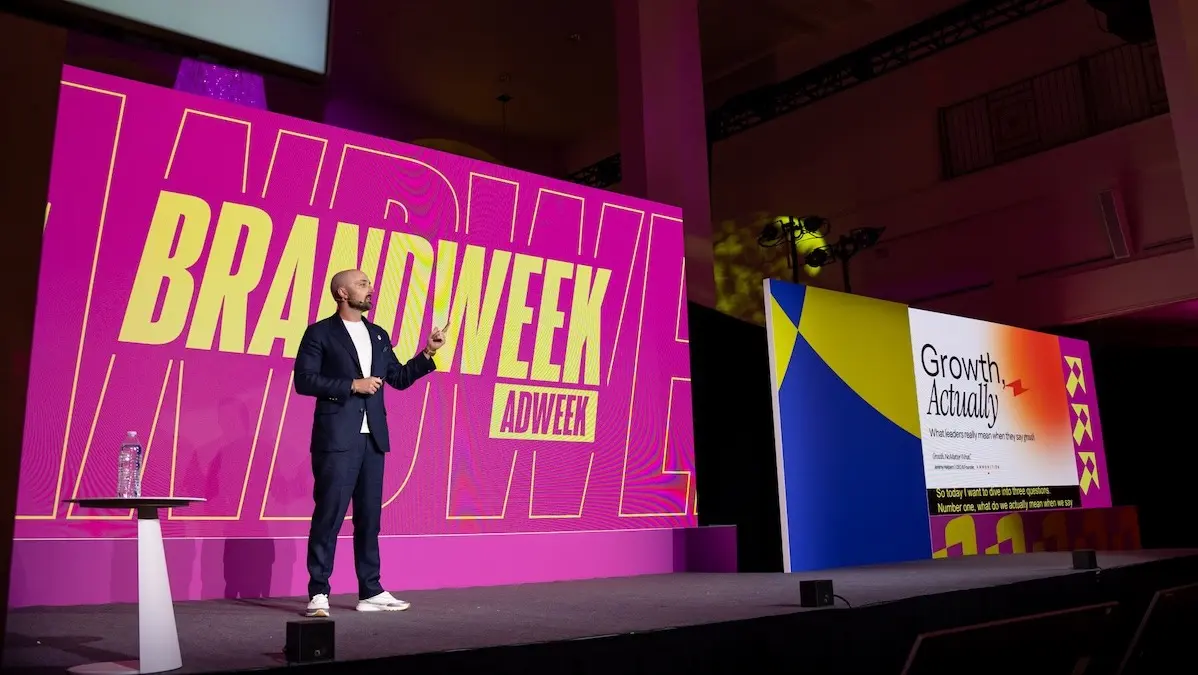
During a high-profile session at Brandweek 2026, co-hosted in partnership with strategic agency Ammunition, Jeremy Heilpern, CEO and founder of Ammunition, addressed this foundational challenge head-on. Heilpern argued that modern marketers and enterprise leaders must move past superficial metrics to forge a unified, organization-wide consensus on what growth truly entails. By balancing immediate commercial demands with long-term brand durability, businesses can transform growth from a volatile buzzword into a predictable, repeatable science.
This article provides an in-depth examination of Heilpern’s insights from Brandweek 2026, exploring the multifaceted nature of corporate growth, the inherent tensions between short-term performance and long-term sustainability, and the actionable frameworks—such as Ammunition’s Growth Alignment Score—that organizations can deploy to unify their leadership teams and secure sustainable market dominance.
Detailed Chronology: The Evolution of the Brandweek 2026 Discourse
The dialogue surrounding corporate alignment did not materialize in a vacuum; it was the culmination of mounting industry anxiety over shifting economic conditions, fluctuating consumer behaviors, and the tyranny of the quarterly earnings report. The Brandweek 2026 session curated by Ammunition served as a pressure valve for these tensions, charting a clear course through a series of progressive discussion points.
Setting the Stage: The Illusion of the Catchphrase
The session opened with an examination of Ammunition’s core corporate mantra: "Growth. No matter what." To the casual observer, such a tagline might sound like standard agency bravado—an aggressive promise designed to win accounts in a hyper-competitive landscape. However, as Heilpern explained early in the session, for Ammunition, the phrase represents a profound operational commitment rather than a hollow marketing slogan.
"If we’re going to make a promise that big, we’d better be pretty clear about what growth actually means and how we actually go about executing it," Heilpern told the audience. This opening thesis immediately reframed the conversation, shifting focus away from unbridled ambition and toward rigorous operational definition.
Unpacking the Disconnect
As the discussion progressed, Heilpern dissected the root causes of internal organizational friction. He highlighted how different departments naturally gravitate toward metrics that validate their specific functions. Sales teams equate growth with closed deals and volume; finance departments look closely at net margins, cash flow, and EBITDA; product teams measure adoption rates and feature engagement; and marketing leaders focus on brand equity, share of voice, and customer acquisition cost (CAC).
Heilpern emphasized that these varying perspectives are not inherently wrong, but when they operate in silos, they create strategic friction. A marketing campaign designed to maximize customer acquisition can easily strain customer service infrastructure and degrade retention rates if the underlying definition of growth has not been cross-departmentally harmonized.
Resolving the Tension: The Path to Alignment
The chronological climax of the session centered on the introduction of practical diagnostic tools. Heilpern walked attendees through the methodology of uncovering hidden misalignment among stakeholders. He detailed how bringing disparate leaders into a single room—often for the first time—forces uncomfortable truths to the surface, clearing the path for genuine strategic synchronization. This chronological progression from problem identification to structural resolution formed the core intellectual architecture of the Brandweek presentation.
Supporting Context & Metrics: Beyond the Vanity of Top-Line Numbers
To truly understand Heilpern’s thesis, one must examine the broader economic and analytical context surrounding corporate growth metrics over the past decade. For years, the prevailing corporate culture—particularly within the technology and direct-to-consumer (DTC) sectors—was dominated by a "growth-at-all-costs" mentality. Fueled by low interest rates and abundant venture capital, companies prioritized top-line revenue expansion and user acquisition numbers above all else, often subsidizing every transaction in the pursuit of market share.
However, macroeconomic tightening, rising capital costs, and market corrections have exposed the structural fragility of this approach. Modern business analysis increasingly demonstrates that numerical expansion does not automatically correlate with enterprise strength.
The Fallacy of the Vanity Metric
During his Brandweek session, Heilpern articulated this reality with stark clarity, outlining the dangerous disconnects that occur when organizations fixate on isolated numbers:
- The Revenue vs. Margin Trap: A company can experience explosive top-line revenue growth while its net profit margins quietly deteriorate due to unsustainable discounting, ballooning acquisition costs, or inefficient operational scaling.
- The Acquisition vs. Retention Illusion: Customer numbers can appear to grow rapidly on paper, masking underlying weaknesses in customer retention and lifetime value (LTV). If churn outpaces acquisition, the business is effectively pouring water into a leaking bucket.
- The Present vs. Future Paradox: Sales figures can spike dramatically in the short term through aggressive promotions, yet simultaneously exhaust market demand, leaving the enterprise starved for revenue in subsequent quarters.
Redefining the Metrics of True Value
To combat these traps, Heilpern advocated for a paradigm shift: organizations must evaluate growth through qualitative durability rather than quantitative volume. He outlined three foundational diagnostic prompts that leadership teams should use to audit their growth strategies:
- Value Creation: Is the organization genuinely creating more value for its customers and stakeholders, or is it merely shifting existing value around through aggressive pricing or financial engineering?
- Value Retention: Is the business successfully retaining the value it creates over time, fostering brand loyalty, and building enduring customer relationships?
- Operational Capacity: Is the enterprise building the structural, financial, and cultural capacity to "keep fighting another day," ensuring resilience against economic shocks and market disruptions?
By framing growth as an assessment of scale, quality, and durability, leaders can build business models capable of weathering volatility while continuing to compound value.
Official Statements and Industry Insights
The insights shared by Jeremy Heilpern at Brandweek 2026 resonate deeply within the broader marketing and executive leadership community. Below are key perspectives synthesized from his presentation and the operational philosophy of Ammunition:
"If we’re going to make a promise that big—’Growth. No matter what.’—we’d better be pretty clear about what growth actually means and how we actually go about executing it."
— Jeremy Heilpern, CEO and Founder of Ammunition
Heilpern’s observation underscores the accountability required of modern strategic partners. Agencies and internal marketing leaders alike can no longer afford to treat growth as a generic aspiration. It must be dissected, modeled, and agreed upon collaboratively.
Addressing the day-to-day reality of Chief Marketing Officers, Heilpern noted:
"For CMOs, I think that tension is one we live with every day. How do you capture the demand that exists right now while ensuring that you’re building an organization that is healthy and able to seize the opportunities tomorrow?"
This tension between the immediate operational imperative and the long-term strategic horizon is the defining challenge of modern executive leadership. According to Heilpern, resolving this tension requires breaking down internal silos and dragging hidden assumptions into the light.
"In order for us to be effective as a client-agency team, we need to get all of those kinds of secrets out on the table," Heilpern stated, emphasizing that transparency and rigorous alignment form the bedrock of successful client-agency partnerships.
Future Outlook: The Strategic Imperative for Alignment
As businesses navigate an increasingly complex and unpredictable economic future, the mandate for internal alignment will only intensify. The rapid evolution of artificial intelligence, shifting consumer privacy regulations, and macroeconomic instability mean that organizations can no longer rely on momentum or market tailwinds to drive expansion. Growth must be engineered with surgical precision.
The Rise of Diagnostic Alignment Tools
To meet this challenge, forward-thinking agencies and enterprises are moving away from rigid, one-size-fits-all strategic templates and toward diagnostic alignment frameworks. Ammunition’s development of the Growth Alignment Score is a prime example of this evolution. By guiding executive teams through three central questions—What does growth actually look like for us? Where is it going to come from? What do we need to invest in to create it?—tools of this nature bring much-needed scientific rigor to strategic planning.
The CMO as Chief Orchestrator of Growth
Looking ahead, the role of the Chief Marketing Officer is undergoing a profound metamorphosis. No longer confined strictly to brand messaging and campaign execution, the modern CMO must act as a cross-functional diplomat and chief orchestrator of growth. By bridging the gap between finance’s demand for margin efficiency, sales’ drive for volume, and product’s focus on utility, the CMO is uniquely positioned to forge the unified growth definition that Heilpern advocates.
Conclusion: The Uncompromising Pursuit of Sustainable Scale
Ultimately, the Brandweek 2026 session co-hosted by Ammunition delivered a timeless lesson wrapped in contemporary urgency. Growth is not an accident of market timing, nor is it merely a larger number on an end-of-quarter spreadsheet. It is a deliberate, synchronized discipline that requires absolute clarity of purpose, unwavering cross-functional alignment, and an uncompromising commitment to building durable enterprise value.
For brands willing to do the hard work of defining growth together, the reward is clear: the capability to capture the opportunities of today while successfully commanding the markets of tomorrow.