When a corporate branding initiative fails, the post-mortem rarely points to the final logo or color palette selection. Instead, the breakdown invariably traces back to the strategic incubation period—or rather, the lack thereof. At the core of many design failures is the uncritical acceptance of ambiguous, catch-all adjectives: words like "modern,""trustworthy,""premium,""friendly," and "disruptive" are bandied about in kickoff meetings without ever receiving precise operational definitions.
The result is a chasm of misalignment between what an enterprise believes its brand communicates and what a design team is tasked with executing. This critical operational gulf is what industry veterans define as the "pre-concept" phase.
Far too often, brand strategists and designers are handed a superficial creative brief, a handful of informal stakeholder transcripts, a scattered moodboard, and an unrealistic mandate to generate "the right" visual concept. But evaluating whether a design is "right" becomes an impossible task when a cross-functional team has failed to establish a shared semiotic framework.
This deep dive explores the mechanics of the pre-concept phase—the rigorous strategic work that occurs after project kickoff but before a single pixel is laid down in Figma. By rigorously analyzing brand context, interrogating stakeholder assumptions, and deliberately mapping shared intent into a concrete visual foundation, design teams can transform arbitrary subjective preferences into an objective, data-driven creative baseline.
Detailed Chronology: The Evolution of the Pre-Concept Framework
Navigating the transition from abstract business strategy to tangible visual identity requires a disciplined, chronological methodology. Rather than diving headfirst into asset creation, top-tier branding studios move through a structured sequence designed to eliminate ambiguity, surface contradictions, and forge a shared mental model among stakeholders.
Stage 1: Researching the Brand Context and Perception
A standard brand workshop covers the foundational business pillars: company history, commercial goals, core product architecture, competitive landscape, and target demographics. However, the true value of pre-concept research lies in shifting focus from static facts to dynamic perceptions.
As legendary brand architect Marty Neumeier famously posited in The Brand Gap:
"A brand is a person’s gut feeling about a product, service, or company."
Because a brand ultimately exists entirely within the subjective architecture of an audience’s mind, discovery sessions must actively interrogate the specific perception the enterprise intends to evoke. Consider a health tech enterprise aiming to market software to conservative government medical institutions. In initial workshops, the client executives insisted their brand identity needed to feel "disruptive."
To an inexperienced designer, "disruptive" serves as an immediate green light to deploy high-contrast neon palettes, asymmetric layouts, and unconventional typography. However, deeper contextual interrogation revealed a stark operational reality: for government medical bureaucrats, radical visual rebellion signals instability and risk. Their definition of "disruption" demanded maximum operational clarity, clinical efficiency, and unassailable institutional confidence. Visually, their version of "disruptive" had to look far more traditional than the vernacular definition implied.
Without unpacking these contextual nuances during the pre-concept phase, a design team risks delivering a visually striking identity that completely alienates the target user base.
Stage 2: Facilitating Stakeholder Alignment via Active Exercises
Passive strategy presentations allow stakeholders to nod along without confronting their internal biases. To force active engagement, the pre-concept phase relies heavily on tactile, participatory exercises that ground abstract concepts in reality.
Exercise 1: Competitor Perception Mapping
Before entering workshop sessions, design teams curate touchpoints from key competitors—websites, interface screenshots, collateral, and ad campaigns. During the workshop, stakeholders map these entities across a two-axis grid chosen specifically to highlight industry tensions.
For instance, a fintech startup balancing security with innovation might map competitors along axes ranging from Understated to Bold and Accessible to Exclusive. The ensuing debate—where one stakeholder reads a competitor as "progressive" while another labels it "generic"—serves as a vital diagnostic tool. It exposes the fractures in how a leadership team defines credibility and market positioning.
Exercise 2: Visual Brand Drivers
To bypass personal aesthetic biases, stakeholders participate in a metaphor-based exercise where they select representative images across unrelated categories (e.g., architecture, transport, fauna, typography, and furniture). The critical instruction: the imagery must represent the enterprise, not the individual’s personal taste.
When asked to select a vehicle or a piece of furniture for the company, executives must articulate why a high-speed train or a minimalist lounge chair mirrors their corporate ethos. This forces participants to articulate brand values through metaphor, exposing latent contradictions (e.g., one executive visualizing precise structural rigidity while another envisions warm, organic fluidity) that must be resolved before design execution begins.
Stage 3: Synthesizing the Visual Foundation
Once stakeholder assumptions are surfaced and cataloged, the team transitions to building a structured three-tier translation layer. This layer operates as the strategic bridge between textual strategy and physical assets:
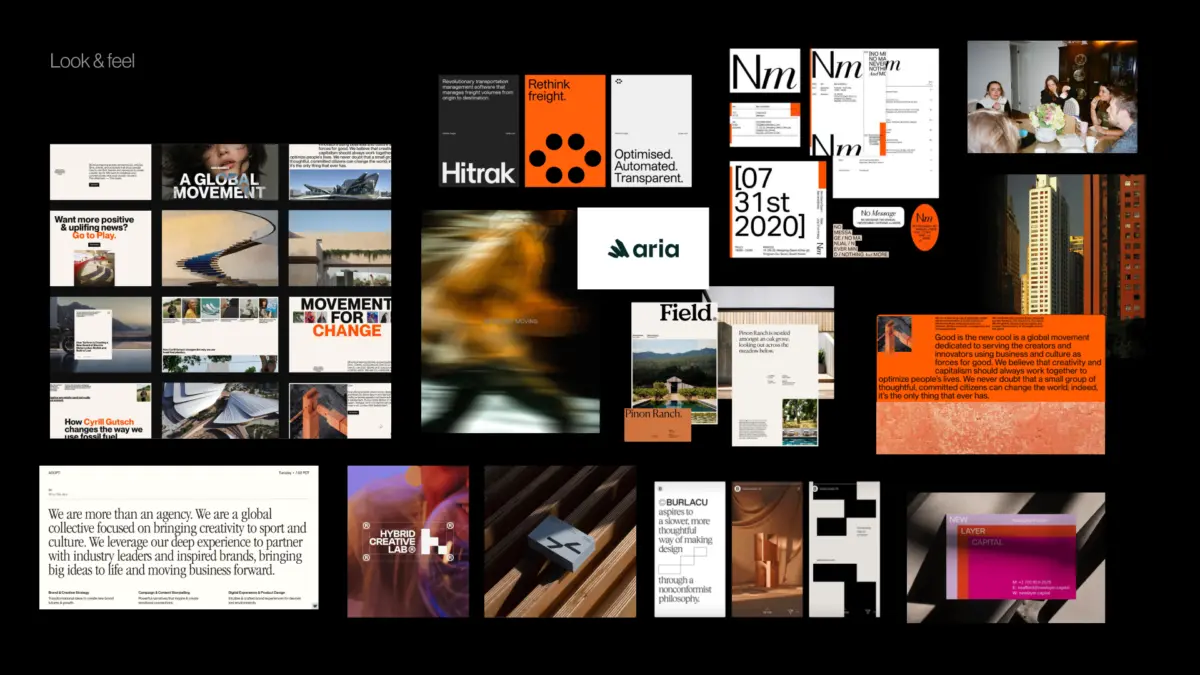
Look and Feel: Perception boards curated to help the client evaluate character, tone, and emotional resonance without getting bogged down in premature logo discussions.
Design Code: The translation of core brand strategies into actionable visual principles (e.g., translating "Research-backed support for real life" into infographic layouts, clinical photography, and clean data snapshots).
Brand Asset Direction: Early exploration of foundational building blocks—typography weights, chromatic temperature, and baseline graphic systems—establishing firm creative boundaries.
Supporting Context & Metrics: The Cost of Skipping the Pre-Concept Phase
The economic and operational implications of bypassing the pre-concept phase are severe. Industry benchmarks indicate that design revisions stemming from strategic misalignment account for up to 40% of wasted billable hours in early-stage corporate identity projects.
Furthermore, data from digital product agencies suggests that products launched with ambiguous brand identities experience a 30% higher churn rate during onboarding phases. Why? Because the digital interface communicates conflicting emotional signals to the end-user, eroding foundational trust before the core utility of the product can be experienced.
Strategic Phase
Focus Area
Primary Output
Risk of Omission
Traditional Kickoff
Business Goals & Demographics
Scope Document & Brief
Misunderstood adjectives, misaligned expectations
Pre-Concept Phase
Perception, Context, Metaphor
Design Code & Asset Direction
Wasted iterations, fragmented visual systems, user alienation
Concept Execution
Logo, Typography, Color Systems
Final Brand Guidelines
Subjective gridlock ("I don’t like it")
When teams invest time in pre-concept alignment, qualitative metrics improve dramatically. Stakeholder approval cycles during initial design reviews drop from an average of four rounds down to a single, highly focused iteration. The evaluation metric permanently shifts from arbitrary personal statements ("I like this blue") to objective strategic assessments ("Does this chromatic choice reinforce our commitment to clinical security?").
Official Industry Perspectives
Prominent design leaders and brand strategists emphasize that the commoditization of design tools—such as Figma, Illustrator, and AI generation suites—has accelerated the urge to execute prematurely.
Jake Knapp, creator of the GV Brand Sprint framework, underscores the necessity of tangibility early in the process:
"The point of these exercises is to make the abstract idea of ‘our brand’ into something concrete. When leadership teams are forced to interact with visual metaphors and perception maps, they stop treating branding as magic and start treating it as a strategic engineering problem."
Similarly, brand strategists note that modern digital products—spanning fintech, health tech, prop tech, and enterprise SaaS—must project complexity and reliability simultaneously. Without a robust pre-concept phase, design teams often default to category tropes (e.g., every cybersecurity firm relying on dark mode interfaces and neon green accents), failing to carve out defensible visual territory.
Future Outlook: The Intersection of Pre-Concept Strategy and AI
As generative artificial intelligence systems become deeply integrated into the creative workflow, the value of the pre-concept phase is poised to skyrocket rather than diminish.
With AI tools capable of generating thousands of logo variations, color palettes, and moodboards in seconds, the bottleneck in brand design is no longer execution capability—it is strategic curation and intent. Enterprises that fail to define their pre-concept boundaries will drown in a sea of hyper-fast, algorithmically generated options that lack contextual grounding or emotional resonance.
Conversely, studios that master the pre-concept phase will harness AI as a force multiplier. Armed with precise Design Codes, Competitor Perception Maps, and meticulously defined Visual Brand Drivers, strategists can direct AI engines to explore hyper-specific conceptual territories with unprecedented speed and accuracy.
Ultimately, the strongest visual concepts will continue to originate not from the blank canvas of a digital workspace, but from the rigorous, deeply human work of asking the right questions before a single stroke is drawn.