

Executive Overview
Between 2.5 and 2 billion years ago, Earth experienced the most profound chemical metamorphosis in its surface history. As molecular oxygen first began to accumulate in the atmosphere, it set into motion a cascade of environmental shifts that ultimately laid the biochemical groundwork for complex life, culminating in the rise of multicellular plants and animals roughly half a billion years ago.
A central pillar of this ancient timeline has long been the interpretation of unusual carbon-isotope signatures preserved in rocks dating from this era, known as the Paleoproterozoic. For decades, geoscientists have viewed these isotopic markers—found in ancient marine sediments across widely separated geographic regions—as undeniable evidence of a massive, planetwide disruption of the global carbon cycle. This epoch of intense environmental volatility has frequently been tied to the large-scale burial of organic microbial matter beneath the seafloor, trapping vast quantities of carbon in the Earth’s crust.
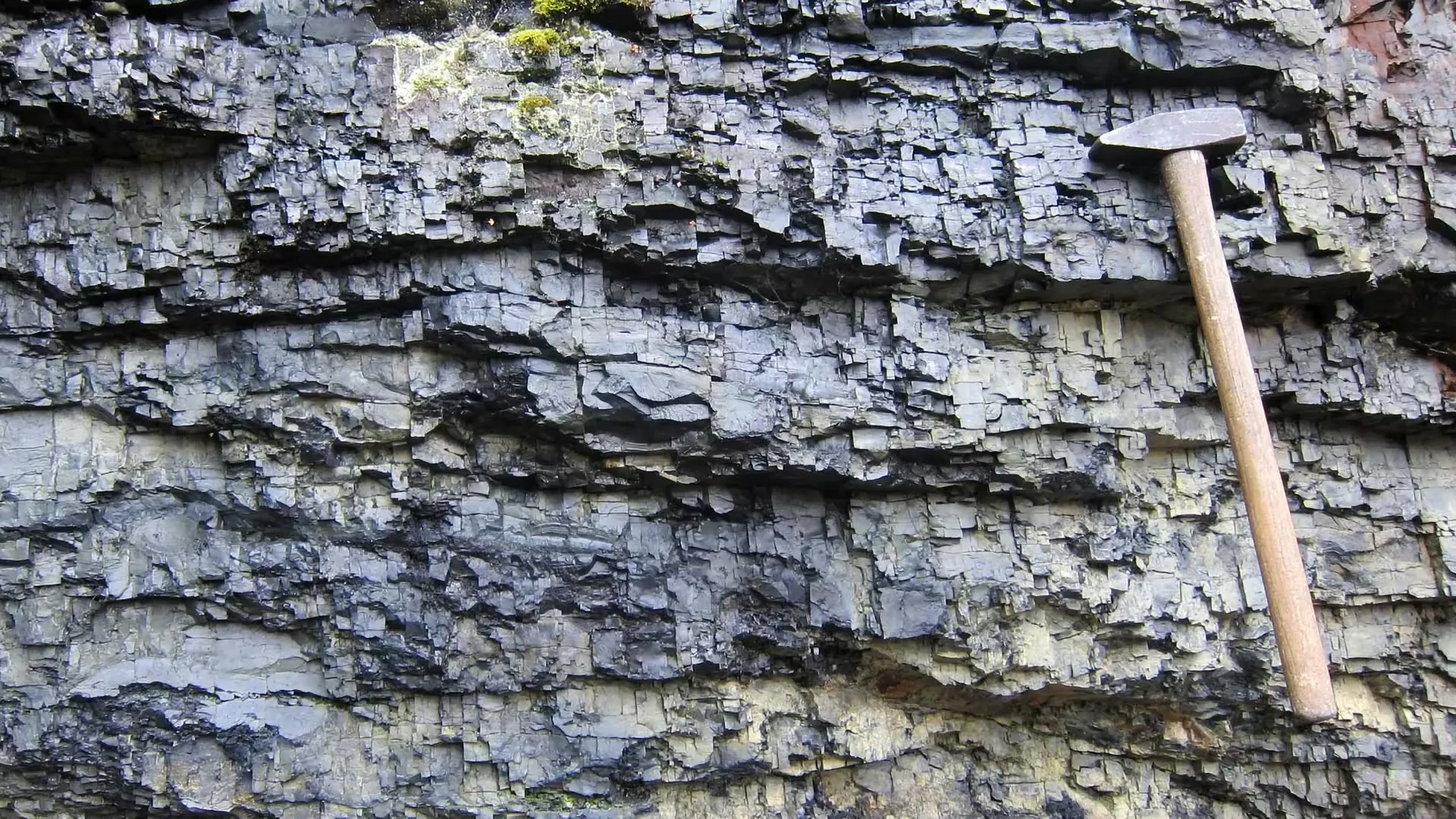
However, a groundbreaking study published in the journal Geology by researchers at the California Institute of Technology (Caltech) is upending this long-held consensus. By investigating microscopic gas pockets trapped within two-billion-year-old rocks from the Zaonega Formation in Karelia, Russia—one of the oldest known fossil oil fields on Earth—the research team has discovered that a foundational piece of this global puzzle can be explained entirely by local geological phenomena.
Rather than signaling a worldwide environmental catastrophe, the unusual carbon-isotope signature at this key reference site appears to be the local byproduct of ancient magmatic activity, thermogenic hydrocarbon generation, and microbial consumption restricted to a several-hundred-square-kilometer sedimentary basin. This revelation forces a critical re-evaluation of how geologists read planetary-scale signals in the ancient rock record, casting doubt on whether one of the era’s most famous geological anomalies was truly global in scope.
Detailed Chronology
The Dawn of Oxygen and the Rise of Complex Life
The overarching narrative of Earth’s oxygenation is marked by the Great Oxidation Event (GOE), which unfolded during the Paleoproterozoic era. Before this period, Earth’s atmosphere and oceans were largely anoxic. The metabolic activity of early photosynthetic organisms, primarily cyanobacteria, slowly pumped oxygen into the marine environment until it could finally begin accumulating in the atmosphere.
This monumental shift altered the redox state of the planet, changing the chemical behavior of iron, sulfur, and carbon. It created the evolutionary pressures and metabolic pathways necessary for the eventual emergence of complex, eukaryotic life.
The Shunga-Francevillian Event
As oxygen levels flickered and rose for the first time, enormous quantities of microbial biomass were buried beneath ancient seafloors. This massive burial sequestered carbon away from the surface cycle and left a distinct isotopic fingerprint in marine sedimentary rocks.
One of the most prominent expressions of this era is known as the Shunga-Francevillian event. Named after deposits found in the Zaonega Formation of Karelia, Russia, and the Francevillian Basin in Gabon, West Africa, this event is characterized by highly unusual carbon-isotope ratios. For decades, the geoscience community has pointed to these matching signals in Russia and Gabon as twin pillars of evidence proving that Earth experienced a sweeping, global-scale upheaval of its carbon cycle roughly 2 billion years ago.
Unlocking the Microscopic Past
To test the validity of this global interpretation, a collaborative team turned their attention back to the physical archives: drill cores of solid rock pulled from deep underground. The primary focus centered on the Zaonega Formation in Karelia, a site rich in pyrobitumen—an insoluble, carbon-rich residue formed when crude oil or kerogen is subjected to intense subsurface thermal baking.
The project catalyzed when Aivo Lepland, a researcher at the Geological Survey of Norway (NGU) in Trondheim, arrived at Caltech for a sabbatical. Lepland brought with him a novel, uninterpreted collection of isotope measurements extracted from gases trapped inside microscopic fluid inclusions within the Zaonega drill cores.
Concurrently, Caltech scientists Nivedita Thiagarajan and John Eiler had recently completed advanced research measuring precise isotope ratios in modern natural gases, developing a sophisticated analytical framework for tracking how hydrocarbon gases form and migrate. When the researchers integrated Lepland’s field data with Thiagarajan and Eiler’s geochemical expertise, a radically different narrative began to take shape.
Magma, Methane, and Microbes: Reconstructing the Local Engine
The team’s newly developed model replaces the concept of a planetary carbon crisis with a localized chain of events driven by subterranean heat:
- Magmatic Intrusion: Around 2 billion years ago, a sheet of molten magma forced its way laterally through layers of organic-rich marine sediment residing on the floor of a prehistoric ocean basin in what is now northwestern Russia.
- Thermal Cooking: The intense heat radiated by the magma baked the surrounding sediments, which were densely packed with ancient organic matter. This thermal maturation generated massive amounts of thermogenic hydrocarbons, including methane and propane.
- Upward Migration: Driven by pressure and buoyancy, these newly formed gases migrated upward through the permeable sedimentary layers.
- Microbial Consumption: The ascending methane eventually reached the seafloor, encountering specialized microbial communities living in the benthic zone. These microbes consumed the methane, metabolizing it into biomass.
- Isotopic Imprint: The biomass produced by these methane-eating microbes carried a distinctively light carbon-isotope signature. When preserved in the accumulating sedimentary rock, this localized biological and thermal processing successfully mimicked the anomalous signal previously attributed to worldwide environmental disruption.
Supporting Context & Metrics
To substantiate this local-basin hypothesis, the research team gathered hard thermodynamic and physical metrics from the geological samples stored at the Geological Survey of Norway:
- Thermal Gradient: Detailed temperature analyses revealed a massive thermal gradient radiating outward from the ancient magma intrusion. Temperatures peaked at approximately 350°C directly adjacent to the magma sheet.
- Asphalt Spill Boundary: Moving upward through the stratigraphic column, temperatures dropped progressively, reaching roughly 72°C at an ancient seafloor asphalt spill located approximately 300 meters above the intrusion zone.
- Spatial Scale: The geological processes responsible for the isotopic anomaly were confined entirely within a sedimentary basin spanning several hundred square kilometers—a microscopic footprint when compared to the planetary scale of the Earth’s surface.
- Global Reference Framework: The Zaonega Formation has long served as a primary reference site (or "type locality") for the Shunga-Francevillian event, meaning geologists around the world use its geochemical benchmarks to calibrate global models of Paleoproterozoic climate and ocean chemistry.
By demonstrating that local magmatic intrusion and thermogenic microbial recycling can generate these exact isotopic ratios, the study introduces a viable alternative mechanism that bypasses the need for a global carbon cycle meltdown.
Official Statements
The implications of the study are already rippling through the international geoscience community, prompting leading researchers to re-examine foundational assumptions about Earth’s early history.
"One major debate centers on an unusual carbon-isotope signal that has often been interpreted as evidence of a worldwide environmental change," explains Nivedita Thiagarajan, lead author of the study and senior scientific researcher in the lab of John Eiler at Caltech. "We studied gases trapped in microscopic pockets within rocks from the Zaonega Formation in Karelia, Russia, one of the world’s oldest known fossil oil fields, and found that the carbon-isotope signal at this key site can be explained by local phenomena that occurred in a several-hundred-square-kilometer sedimentary basin rather than across the entire globe."
Thiagarajan emphasizes the precision required for this type of geochemical sleuthing, noting that carbon isotopes—which exist in heavier or lighter atomic forms—act much like the growth rings of a tree, archiving the biological and environmental conditions of deep time.
Aivo Lepland of the Geological Survey of Norway, a co-author on the Geology paper, highlights the volatile nature of the era while stressing the absolute necessity of rigorous rock analysis:
"Earth, in a way, went crazy during that time interval when oxygen appeared in the atmosphere. What we are trying to assess are the causes and consequences of Earth oxygenation," Lepland says. "This information is archived in the rocks, so, in order to study what happened, you have to study rocks."
Reflecting on the broader consequences for the scientific community, Thiagarajan adds:
"Because Zaonega is a reference site for the Shunga-Francevillian event, our findings raise important questions about whether it should be considered a worldwide event."
Future Outlook
While the new data from the Zaonega Formation successfully deconstructs the Russian half of the Shunga-Francevillian paradigm, a critical question remains: Does the same local mechanism account for the matching isotope signals found thousands of miles away in the Francevillian Basin of Gabon?
To answer this, the international research collaborative is already mobilizing the next phase of investigation. The primary vehicle for this endeavor is the GOE-DEEP project, an initiative co-funded by the International Continental Scientific Drilling Program (ICDP).
The logistics of this global effort are moving swiftly. In the summer of 2025, co-author Aivo Lepland spent four intensive months stationed in Gabon, coordinating a major deep-drilling campaign designed to retrieve pristine core samples from the region’s ancient marine sediments. These newly harvested drill cores successfully arrived at the Geological Survey of Norway in February.
Plans are currently underway for an international research team representing scientists from 18 different countries to begin systematically sampling and analyzing the Gabonese cores later this year. By subjecting the Gabon samples to the same rigorous gas-inclusion and isotope analyses applied to the Zaonega rocks, the research team aims to determine whether local magmatic and hydrocarbon-generating events played out on both sides of the ancient world.
"Now we can really put things together by doing a similar type of study on the Gabonese rocks to compare the two sites," Lepland concludes. "This is how science moves forward."
As the scientific community awaits the results from the GOE-DEEP initiative, the Caltech-led study serves as a timely reminder of the complexities inherent in reading Earth’s deep history. By looking past broad global generalizations and diving into the microscopic, fluid-filled pockets of ancient rocks, researchers are refining our understanding of how our planet transitioned from a lifeless, anoxic sphere into a vibrant, oxygen-rich home for complex life.
Source Material Reference: The study, "Paleoproterozoic thermogenic hydrocarbon generation, Zaonega Formation, Russia," was published in the journal Geology by Nivedita Thiagarajan, Aivo Lepland, Florian Eichinger, Anthony Prave, and John Eiler.