

Executive Overview
The intersection of media, politics, and public accountability has reached a volatile flashpoint. In a political landscape defined by intensifying polarization, declining approval ratings, and deep structural mistrust, the relationship between the federal administration and the mainstream press has transitioned from adversarial to structurally combative.
At the center of this storm is President Donald Trump’s administration, which recently enacted one of the most brazen actions of his political tenure: barring prominent news outlets—including MS NOW, CNN, and Politico—from covering the administration and its inner workings. Simultaneously, the administration has rolled out a series of controversial, government-funded advertisements that critics and legal ethics experts argue cross the line from public service announcements into taxpayer-subsidized political propaganda.
Against this turbulent backdrop, media figures, legal analysts, and watchdogs are grappling with a fundamental question: How can a free and independent press effectively perform its constitutional duty when the executive branch actively seeks to restrict access, delegitimize reporting, and weaponize public funds for partisan messaging?
This report examines the unfolding crisis within the White House press pool, analyzes the legal and ethical fallout of the administration’s ad campaigns, and explores broader media developments, including MS NOW host Rachel Maddow’s candid assessments on the state of political discourse and Tim Tebow’s recent retreat from a controversial financial seminar group.
Detailed Chronology: The White House Press Ban and Pool Stand-Off
The ongoing crisis involving White House press credentials has unfolded in a messy, fluid series of events that highlight the fragile mechanics of presidential reporting.
The Legal Challenge and Temporary Restraining Order
The battle began when the administration blocked representatives from CNN, MS NOW, and Politico from accessing the White House complex. In response, the affected networks mounted a joint legal challenge, arguing that the administration’s arbitrary revocation of press credentials violated First Amendment protections and established precedents governing equal access for journalists.
A federal judge agreed, issuing a 14-day temporary restraining order that mandated the restoration of White House press passes for the barred outlets. While the ruling successfully forced the administration to return physical press credentials, it left a critical loophole regarding specialized, restricted-access spaces.
The Solidarity Boycott and the Air Force One Blockade
Following the initial ban, the major networks comprising the television pool—ABC, CBS, Fox News, and NBC—staged a unified display of solidarity. They agreed to completely boycott White House TV pool coverage until CNN’s credentials were fully reinstated. That collective boycott dissolved late last week when the administration officially complied with the judge’s order and restored CNN’s passes.
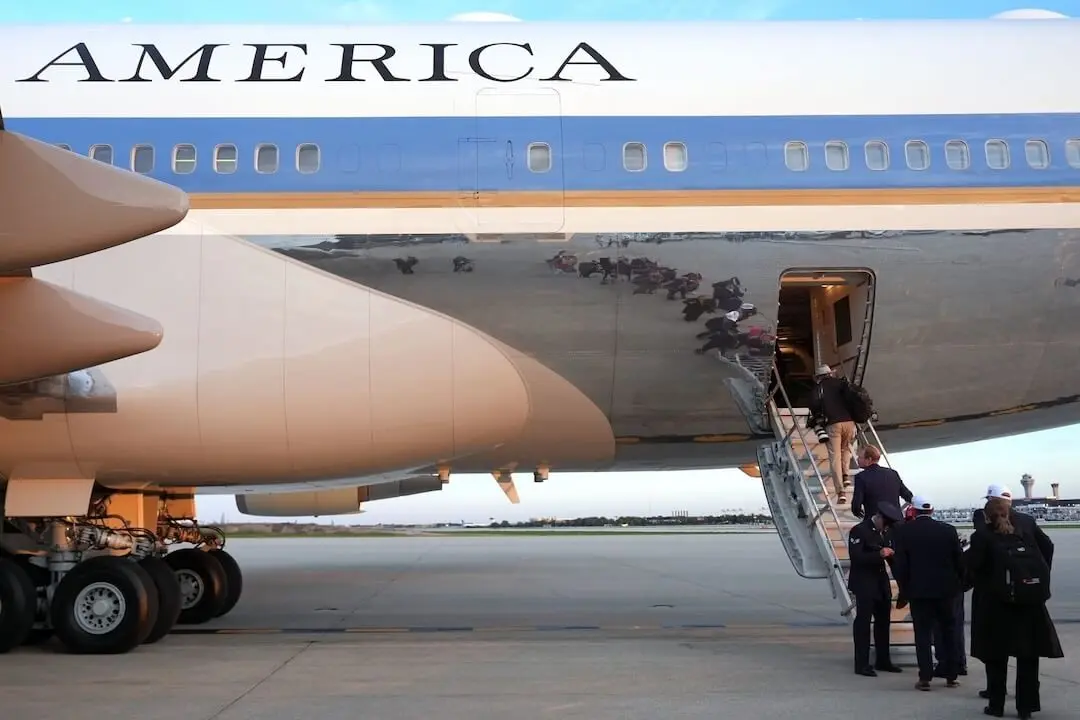
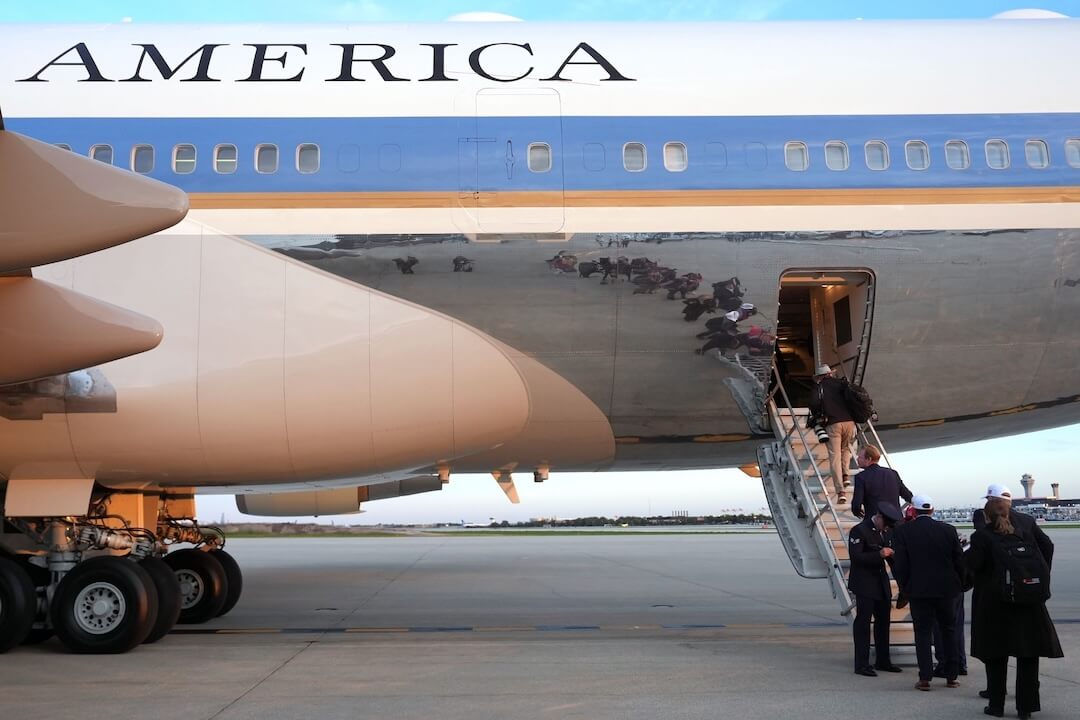
However, the uneasy truce immediately fractured. On Saturday, as President Trump traveled aboard Air Force One to attend a high-profile college football game in Knoxville, Tennessee, the administration blocked CNN from boarding the aircraft, effectively barring the network from fulfilling its scheduled pool duties.
Faced with this restriction, the other major networks were given the option to provide a substitute crew to replace CNN in the travel pool. They declined. As a result, no major network camera crews traveled with the president on Saturday, resulting in an unprecedented gap in independent aerial and travel documentation.
By Sunday, normal pool rotations resumed with Fox News taking the lead, sharing its coverage feed with the broader network pool, including CNN.
Navigating Future Press Access
Media reporters Michael M. Grynbaum and Erik Wemple of The New York Times highlighted the ongoing operational uncertainty, noting:
"Each time that CNN comes up in the pool rotation, the group of networks will decide whether to provide a substitute crew. Otherwise, CNN’s slot will be left unfilled, and Mr. Trump will not receive major network coverage."
Reporting for Status, Natalie Korach outlined the upcoming scheduling challenges:
"The pool rotates alphabetically, placing CNN back on the schedule Thursday. But Thursday is the second day of a presidential trip for which CBS News will serve as the travel pool throughout, meaning CNN’s inability to board Air Force One may have little practical effect on TV coverage that day. CNN’s next full day of duty would be the following Tuesday, and with the White House at the whims of Trump, plenty could change before then."
Legal scholars and media analysts emphasize that the core issue lies in the wording of the initial judicial intervention. As Grynbaum and Wemple pointed out, while the judge’s ruling restored CNN’s general White House press passes, it contained no explicit instructions compelling the administration to grant access to the tighter, high-security confines of the Oval Office pool or Air Force One. Consequently, the administration retains substantial de facto control over physical access, leaving the press corps in a perpetual state of strategic calculation.
Supporting Context & Metrics: Taxpayer-Funded Propaganda and Political Fallout
While the battle over physical press access dominates industry discussions, a parallel controversy has emerged regarding the financial underwriting of the administration’s political messaging.
The Government-Funded Campaign Ads
Over the past week, viewers watching major sporting events and Sunday morning news programs—including Fox News Sunday—were greeted by high-production advertisements bearing an unexpected disclosure in their closing seconds: "Paid for by the U.S. government."
The spots closely mirror campaign commercials produced during the 2024 election cycle. One notable ad features slow-motion, black-and-white footage of President Trump walking down a secure corridor with a stern expression, set to audio from a previous campaign rally:
"This is the final battle. With you at my side, we will demolish the deep state. We will expel the warmongers from our government. We will drive out the globalists. We will cast out the communists, Marxists and fascists. We will throw off the sick political class that hates our country. We will rout the fake news media. And we will liberate America from these villains once and for all."
This marks the second government-funded, pro-Trump advertisement to air within a single week. The prior spot featured imagery of the president juxtaposed against the song "Love Me" by independent artist JMSN. Following the broadcast, JMSN publicly disavowed the usage, stating that no authorization had been granted for his music to be appropriated for any political agenda.
Ethics Experts Sound the Alarm
The deployment of public funds for advertisements featuring overtly partisan rhetoric, attacks on political opponents, and the projection of the incumbent president has sparked swift bipartisan condemnation and fierce pushback from government ethics watchdogs.
Norm Eisen, who served as White House special counsel for ethics and government reform under President Barack Obama, offered a scathing assessment to The New York Times:
"The president and his administration have gone from breaking the law to trampling it. The prior ad was bad enough, but this one openly repurposes prior political conduct."
Richard Painter, a former White House ethics lawyer under President George W. Bush, added:
"This is very dangerous. We do not allow government-sponsored propaganda in the United States."
Despite these warnings, White House defenders have maintained that the broadcasts serve an educational purpose. A White House spokesperson defended the campaigns to CBS News, stating:
"These public service announcements are about reminding Americans to love their country and understand what makes it worth defending, at home, at our borders, and abroad. The ad is educational and unapologetically patriotic. We should be proud of our country."
Media critics, however, note the glaring discrepancy between the administration’s stated intent and the visual content of the spots. As Robert Mackey of The Guardian observed, the ads feature images not of America’s natural landscapes or diverse citizenry, but exclusively of the current president himself, directly coinciding with congressional election cycles where Trump has urged his base to treat him as though he were personally on the ballot.
Official Statements and Industry Reactions
The compounding controversies—ranging from media access restrictions to tone-deaf public displays—have generated fierce reactions across the political and media spectrum.
The Dan Scavino Controversy
Adding to the administration’s public relations challenges, White House Deputy Chief of Staff Dan Scavino faced intense backlash over a social media post featuring an AI-generated video. The digital clip depicted Scavino, alongside Eric Trump, Lara Trump, and Erin Elmore, riding through a grand hotel ballroom on a luggage cart while popping and spraying champagne in formal attire, with President Trump making a brief cameo appearance at the conclusion.
Scavino captioned the post in part: "Being some of the post State Dinner party has gotten out, I felt inclined to share mine as well, in complete transparency, with the American People. GOD BLESS THE USA!!!"
The post triggered an immediate revolt from conservative commentators and grassroots activists concerned about political optics ahead of the 2026 midterm elections. Conservative activist Carrie Prejean Boller wrote on social media:
"You really have no shame, do you? Many Americans can’t afford groceries, gas or their mortgage payment, and you post a tone deaf AI video of you and your buddies partying at the People’s House. MAGA is dead."
Media personality Meghan McCain echoed the sentiment, noting the deep disconnect between the administration’s celebratory imagery and the economic realities facing everyday citizens.
Rachel Maddow on the State of the Media
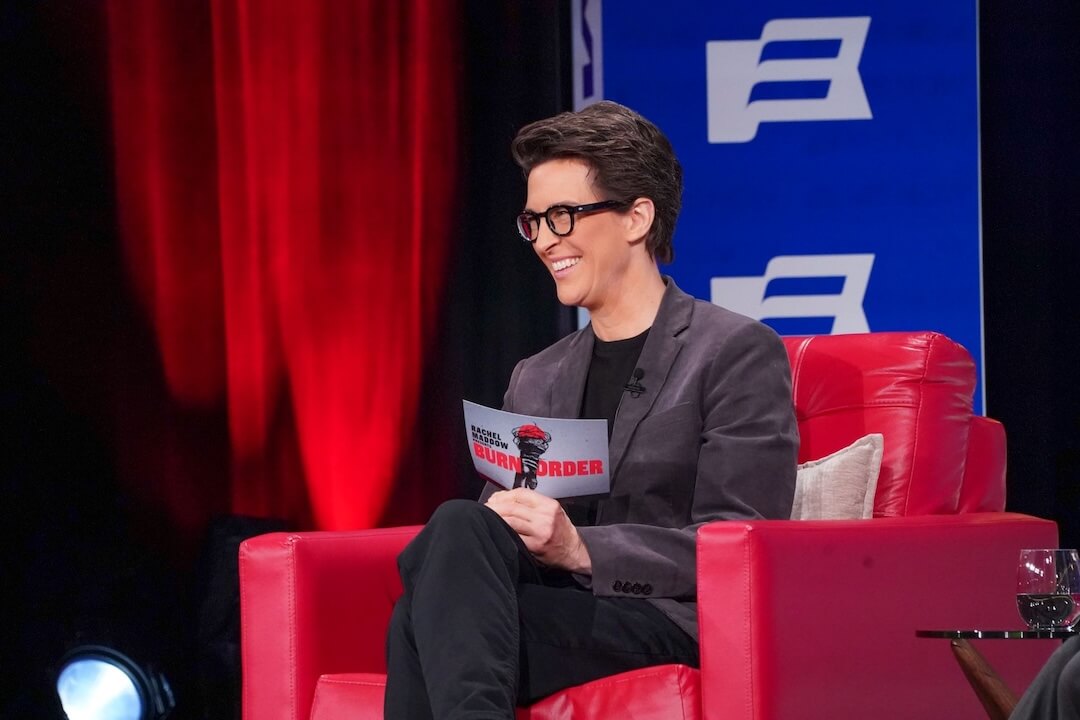
In the season seven premiere of The Poynter Report Podcast, prominent political commentator and host Rachel Maddow offered deep insights into the administration’s adversarial strategy toward the press. Discussing why the White House chose to implement a press ban against networks like MS NOW, Maddow stated:
"I think he’s frustrated on lots of levels, and his approval rating is as low as it has ever been in his entire political career. And so, what do you do? You play the hits. I think he thinks that taking a swipe at the media always works for his base, sort of unites his otherwise fractured coalition because everybody likes to hate reporters, and everybody likes to hate the media, and so I think he just thinks this is an easy bit of distraction and point scoring."
Maddow also discussed her evolving career, her decision to step back from a nightly hosting format, her new book concerning the Department of Justice, and a documentary project focused on the vital role of local journalism.
Tim Tebow Pauses Life Surge Relationship
In separate media developments, former college football star and prominent analyst Tim Tebow addressed investigative reporting from Pablo Torre and Mother Jones regarding Life Surge, a Christian financial seminar group accused of employing predatory tactics.
After investigations revealed that Tebow had spoken at numerous high-yield wealth seminars that allegedly exploited participants’ financial insecurities under the guise of faith, the analyst announced he was "pausing" his relationship with the organization. Speaking to the Gainesville Sun, Tebow stated:
"I think the allegations are extremely, extremely serious, and it’s something that we take very serious. And so, for us, we’re having our team do an investigation, but also pausing our relationship until we can learn more about the facts to be able to understand more."
Tebow maintained that he had been "caught off guard" by the disclosures, while investigative journalists confirmed that scrutiny into the organization’s practices will continue.
Future Outlook
As the dust settles on another tumultuous fortnight in American media and politics, the trajectory of press-state relations remains fraught.
The ongoing standoff over White House pool rotations signals that access journalism has entered a volatile new era. With major networks caught between the professional imperative to cover the executive branch and the ethical necessity of standing in solidarity with banned colleagues, the traditional norms of presidential reporting are being actively rewritten.
At the same time, the deployment of taxpayer-funded ad campaigns that repurpose partisan political messaging poses an unprecedented test for federal ethics oversight and constitutional guardrails. If government-sponsored communications can openly blur the line between civic education and political branding without substantive legal penalty, the baseline of democratic accountability will face severe structural degradation.
Ultimately, whether through the legal challenges winding through federal courts, the investigative reporting scrutinizing powerful public figures, or the ongoing adaptation of major news networks, the press continues to navigate a hostile landscape. The events of this month underscore a singular reality: the defense of a free press and the protection of factual integrity require constant, unflinching vigilance from journalists, legal scholars, and the public alike.