The intersection of American political theater and the media industrial complex reached a striking crescendo this week, underscored by a series of unprecedented attacks on the press, controversial taxpayer-funded public relations campaigns, and monumental corporate consolidation. President Donald Trump continued his relentless campaign against mainstream media institutions—this time taking direct aim at Fox News, a network frequently credited with cementing his political rise. Simultaneously, Defense Secretary Pete Hegseth delivered a blistering speech at Marine Corps Base Quantico, labeling certain journalistic practices as "treasonous" and framing media scrutiny as a national security threat.
These developments unfold against the backdrop of an aggressive White House strategy utilizing millions in diverted federal funds to air campaign-style promotional advertisements on major cable networks ahead of the midterm elections. Meanwhile, the corporate media landscape is undergoing a massive paradigm shift, highlighted by a federal judge approving Paramount’s staggering $111-billion acquisition of Warner Bros. Discovery. This report provides an exhaustive breakdown of the intersecting geopolitical, regulatory, and corporate forces reshaping the contemporary American media ecosystem.
Detailed Chronology
Mid-Week Political Maneuvering and Media Attacks
The week’s events were characterized by rapid-fire political announcements and administrative grievances directed firmly at journalistic institutions. President Trump delivered remarks at a Hispanic Heritage Month celebration, where he casually joked about his administration’s re-designation of the Gulf of Mexico to the "Gulf of America," noting to the assembled crowd that some attendees might find the branding contentious before brushing off the reaction.
However, the tone quickly shifted from lighthearted provocation to familiar media criticism. In a social media post on Truth Social, Trump turned his ire toward Fox News, questioning why the network routinely platformed prominent Democratic figures—specifically naming Chuck Schumer, Hakeem Jeffries, and The Five co-host Jessica Tarlov. Trump asserted that opposition voices received disproportionate airtime compared to pro-Republican figures, declaring that the "MAGA" movement would never embrace the network due to its perceived negativity.
This unexpected broadside against a historically sympathetic network caught media analysts off guard, particularly given Fox News’ foundational role in amplifying conservative populism. Later in the day, Trump doubled down on his media critique via a separate Truth Social post, arguing that the "Fake News Media" was deliberately suppressing the administration’s economic metrics.
Pentagon Rhetoric at Quantico
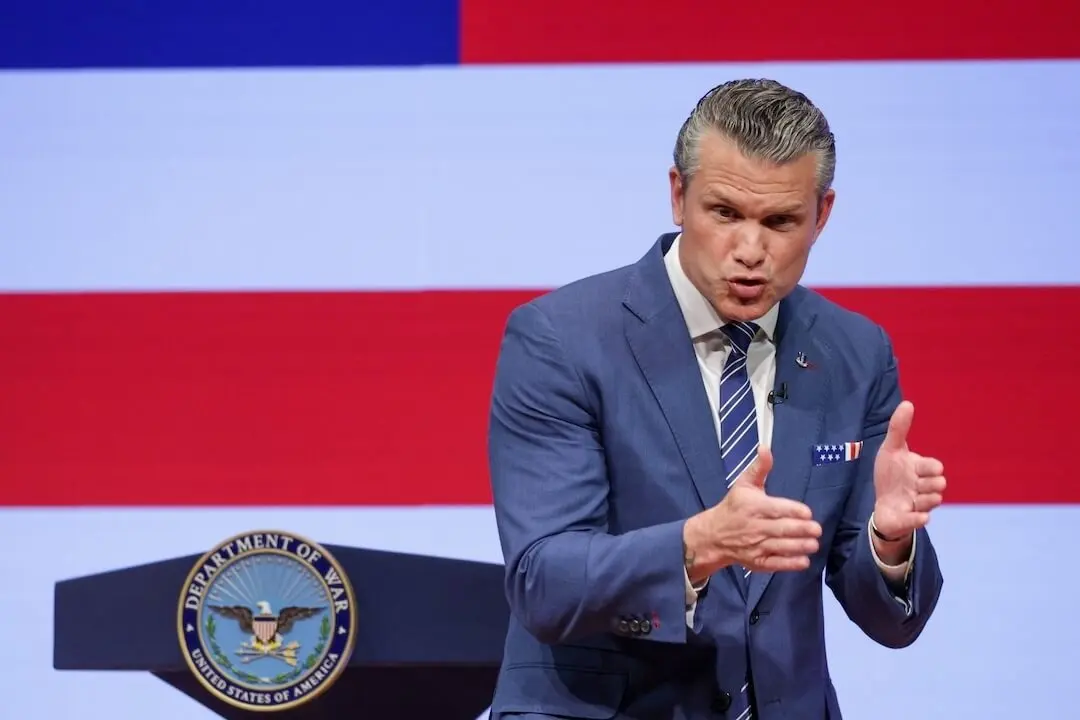
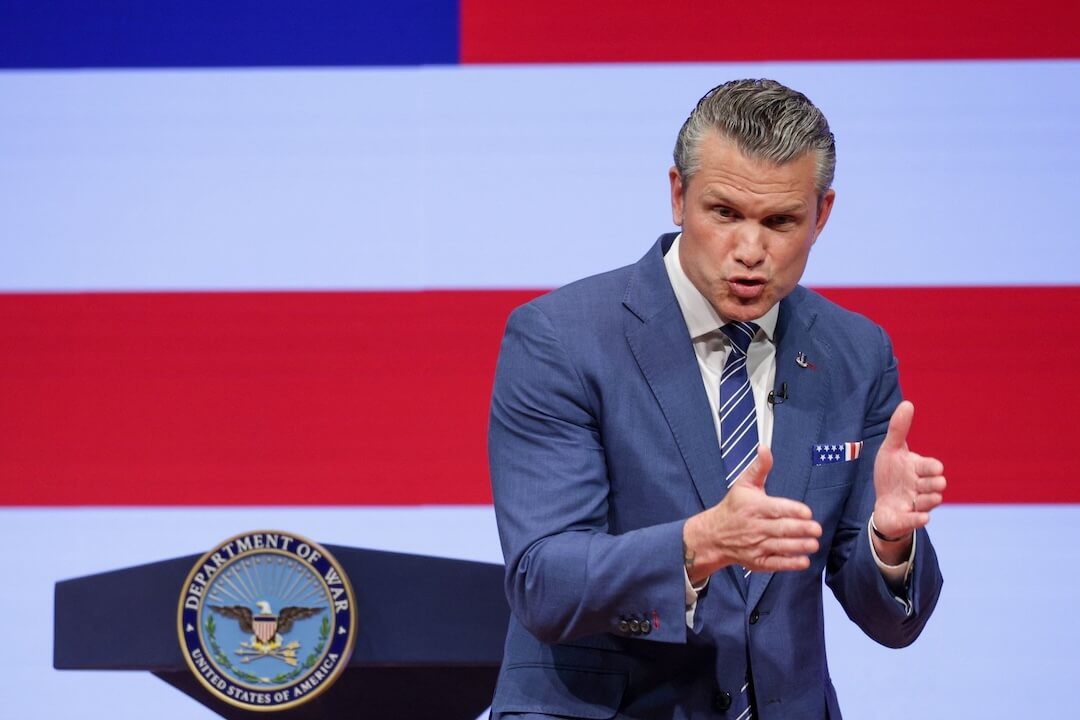
The anti-media crusade extended far beyond the digital musings of the executive branch. Defense Secretary Pete Hegseth took the podium at Marine Corps Base Quantico in Virginia to deliver a combative "State of the Force" address to approximately 600 assembled service members.
In a speech saturated with populist and nationalist rhetoric, Hegseth launched a full-scale assault on the integrity of the press, going so far as to equate critical reporting with subversion. Addressing the troops, the Defense Secretary acknowledged the theoretical importance of a free press while immediately undercutting the sentiment with severe accusations:
"A free press is, of course, important. But partisan activism that intentionally smears the troops and the historic mission they are undertaking is fundamentally anti-American. It’s sick. It’s a national betrayal. It’s treason, actually."
Hegseth’s remarks drew swift condemnation from media watchdogs, particularly his assertion that domestic journalists made "Iranian state media look reasonable." The address also touched upon internal military policies, with Hegseth signaling an aggressive restructuring of the armed forces focused strictly on combat readiness.
Supporting Context & Metrics
Taxpayer-Funded Ad Campaigns and Regulatory Flashpoints
The administration’s friction with the press is matched by an aggressive expenditure of public funds to bypass traditional journalistic filters. Investigative reporting has revealed that the White House transferred $20 million in Department of Homeland Security funds to finance a series of national television advertisements promoting the president’s agenda.
The campaign features three distinct spots, including "The Country He Loves" and "Final Battle"—the latter of which heavily recycles footage and messaging from Trump’s 2024 presidential campaign. These spots feature aggressive populist framing, with the president vowing to "cast out the communists, Marxists, and fascists" and "rout the fake news media."
Despite sharp pushback from Democratic lawmakers who argue that the campaign constitutes an illegal use of public resources to influence the upcoming midterm elections, the regulatory framework has offered little resistance. Federal Communications Commission (FCC) Chair Brendan Carr publicly stated that the advertisements did not cross regulatory lines or warrant FCC intervention. Conversely, Commissioner Anna Gomez offered a sharp dissenting view, characterizing the ad buy as an unprecedented effort by the administration to tip the scales of the electoral process.
The Paramount-Warner Bros. Discovery Mega-Merger
While political battles play out on cable news and military bases, monumental structural changes are redrawing the boundaries of Hollywood and journalism. A federal judge formally approved the settlement allowing Paramount Skydance to proceed with its historic $111-billion acquisition of Warner Bros. Discovery.
Spearheaded by CEO David Ellison, the deal consolidates an immense portfolio of cultural and journalistic assets under a single corporate umbrella. Alongside prominent entertainment brands holding the rights to iconic intellectual properties like Batman, Harry Potter, and Friends, the acquisition brings major news operations—including CNN—directly into the Ellison family’s sprawling media empire.
To satisfy antitrust concerns raised by attorneys general from a dozen states, the finalized settlement mandates strict structural concessions:
Theatrical Commitments: The combined entity must release a minimum of 30 theatrical films annually over a five-year period.
Production Funding: An additional $1.5 billion is earmarked for domestic film production.
Labor Support: A dedicated fund of $47.5 million will be established to assist industry workers adversely affected by consolidation.
Editorial Oversight: A five-member panel will ostensibly monitor the editorial independence of CBS News and CNN, though media critics remain skeptical given the Ellison family’s ultimate control over board appointments.
Official Statements
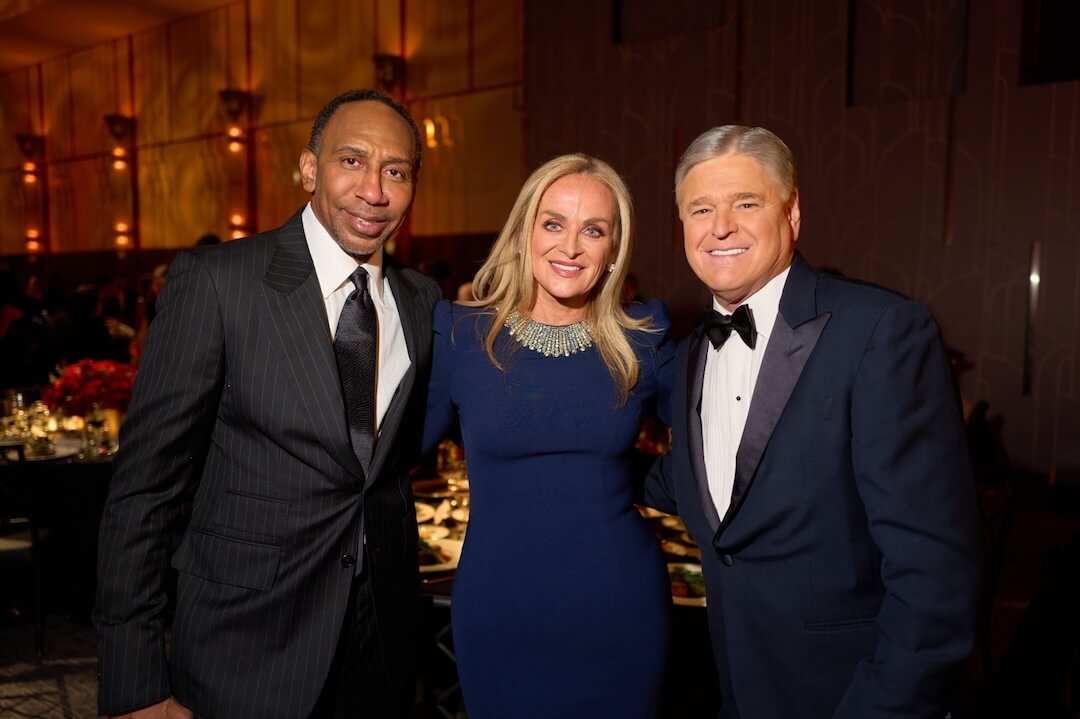
The widening chasm between the government and the press corps was vividly illustrated during the Broadcasting and Cable Hall of Fame induction ceremony in New York City. The event brought together leading figures from across the media landscape, who used the platform to address the mounting pressures facing the industry.
Suzanne Scott, CEO of Fox News Media—celebrating the network’s upcoming 30th anniversary—highlighted the evolving nature of media distribution and thanked Fox Corp. leadership Rupert and Lachlan Murdoch, whom she praised as "two true champions of free speech." Scott emphasized the network’s ongoing commitment to meeting diverse audience demands across traditional and digital platforms.
In stark contrast, CNN anchor Wolf Blitzer used his induction speech to sound an alarm regarding the sustained political attacks directed at the press corps:
"Undermining a free press in the United States of America is something I never thought would happen. And all of us must do everything we can to protect our constitutional right to a free press. It is vital to our democracy."
Future Outlook
As the nation barrels toward high-stakes midterm elections, the convergence of aggressive political communication, institutional skepticism, and massive corporate consolidation points toward a volatile media environment.
The deployment of federal resources for executive-branch advertising sets a controversial precedent for future administrations, raising persistent questions about the erosion of institutional guardrails. Simultaneously, the integration of CNN into the newly minted Paramount-Warner Bros. Discovery conglomerate will test whether multi-billion-dollar corporate structures can successfully insulate hard newsrooms from outside commercial and political pressures.
In the sports and broadcasting sector, talent movement continues to reflect the immense financial stakes of modern media. Industry updates reveal that Amazon Prime Video has extended the contract of Thursday Night Football analyst Kirk Herbstreit, while incorporating flexibility clauses to pursue high-profile targets such as NFL head coaches and retiring elite athletes. As veteran broadcasters like Al Michaels approach career milestones, the structural makeup of prime-time sports and news broadcasting is poised for generational turnover.
Ultimately, the friction between the state and the Fourth Estate shows no signs of abating. Whether through populist rallies, Pentagon addresses, or regulatory battles over public airwaves, the struggle to define the boundaries of political speech and journalistic accountability remains the defining media narrative of the decade.