

Executive Overview
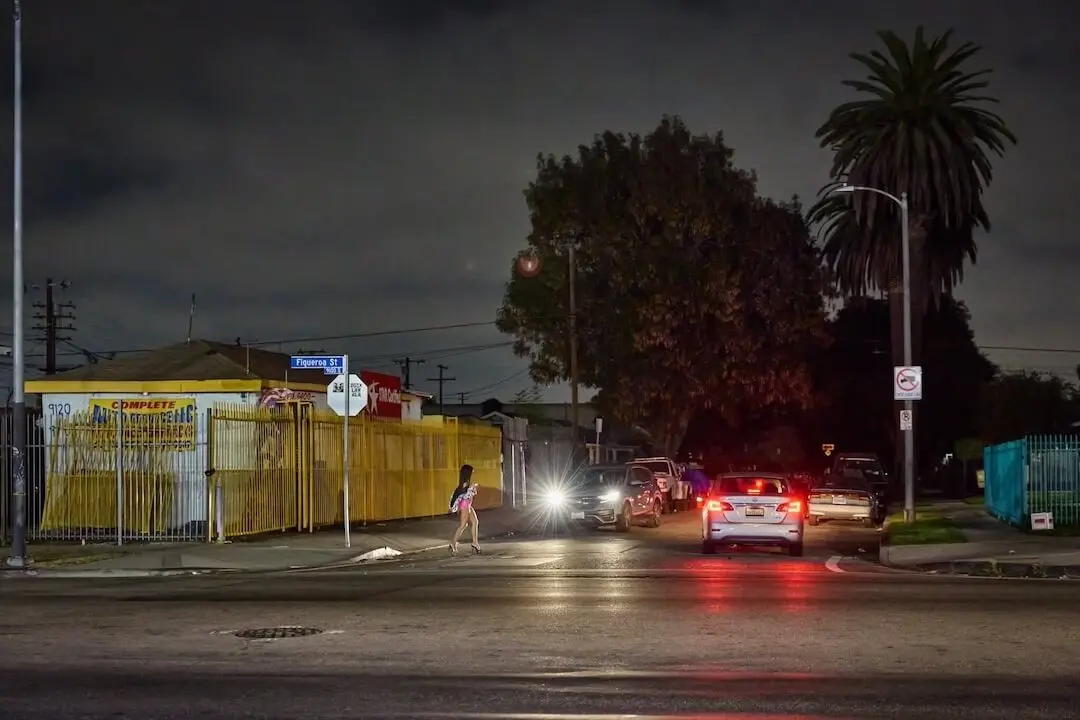
In the spring of 2023, Emily Baumgaertner Nunn, a national health reporter for The New York Times, received a tip from a high-ranking official grappling with an escalating crisis along a notorious 50-block stretch of Los Angeles known locally as "the Blade." Situated along Figueroa Street, this corridor had long maintained a reputation as one of the most prominent and troubled sex-trafficking zones in the United States. However, recent years had brought a deeply disturbing shift: an explosion in child sex trafficking, with underage girls systematically coerced or forced onto the pavement to sell sex.
The resulting feature, titled "Can Anyone Rescue the Trafficked Girls of L.A.’s Figueroa Street?" and published in October 2025, transcended standard investigative reporting. Through meticulous documentation, unprecedented on-the-ground access, and deep-seated empathy, Baumgaertner Nunn constructed a harrowing narrative that earned widespread critical acclaim. This spring, her work was honored with the prestigious Deborah Howell Award for Writing Excellence as part of the Poynter Journalism Prizes, and she was additionally named a finalist for the 2026 Pulitzer Prize in Feature Writing.
By shadowing law enforcement, interviewing survivors, and constructing a proprietary database from thousands of disparate public and private records, Baumgaertner Nunn delivered an unflinching look at a broken system—balancing the raw agony of victims with the relentless, often frustrating efforts of investigators attempting to stem the tide.
Detailed Chronology: From a Confidential Tip to Immersive Fieldwork
The investigation did not begin with a breakthrough document or a leaked government database; it began with profound frustration. Recognizing that the surge in child trafficking on Figueroa Street was not merely a timeless urban blight, Baumgaertner Nunn began quietly interviewing dozens of sources. Her initial outreach spanned experts, trafficking survivors, advocates, parents, teachers, and even the owners of motels whose properties were routinely co-opted by traffickers.
Gaining Access and Building Trust
When Baumgaertner Nunn first began reporting, she anticipated that her most damning evidence would emerge from clandestine digital chat rooms or restricted law enforcement files. Yet, stepping onto the Blade quickly dismantled those expectations. The brazenness of the operation was immediately apparent: scantily clad women and girls stood on street corners in broad view, navigating a deeply institutionalized underworld.
To accurately capture the mechanics of this exploitation, the journalist knew she needed sources embedded directly on the ground. She attended Los Angeles nuisance abatement hearings, where zoning administrators heard mounting community grievances regarding motels functioning as unregulated brothels. It was at one of these hearings that she crossed paths with Elizabeth Armendariz, a senior vice investigator with the Los Angeles Police Department’s 77th Street Division.
Earning Armendariz’s trust required over a year of persistent conversation and careful relationship-building. Eventually, the veteran officer agreed to let Baumgaertner Nunn accompany her and her colleagues. The journalist was permitted to observe—and ride along during—covert operations, including "juvie rescue ops" designed to intercept juveniles, pull them out of danger, and gather immediate intelligence on their exploiters.
Documenting Real-Time Realities on the Blade
Rather than relying purely on retrospective accounts, Baumgaertner Nunn’s immersive fieldwork allowed her to document the crisis as it unfolded. Her writing places the reader directly onto the asphalt of Figueroa Street alongside individuals like Ana, a 19-year-old survivor.
Born to an alcoholic mother and a violent father, Ana was first trafficked at the age of 13. Over the years, her face, neck, and hands had been systematically tattooed with the monikers of her traffickers—branded, as Baumgaertner Nunn observed, "as if she were cattle."
Ana had become intimately familiar with the rigid protocols of the Blade. She understood the mechanics of approaching cars from the passenger side to secure immediate payment upon entry. She knew which motels kept rooms vacant explicitly for trafficking operations, which nearby schools and businesses left their parking lots unlocked at night, and that she was required to return to the Blade every 30 minutes to meet a stringent $1,200 daily quota. The sheer monotony and relentless trauma of these routines left Ana with few distinct memories of the months and years that blurred together.
Supporting Context & Metrics: The Anatomy of a Broken System
To construct a narrative that avoided the pitfalls of being either overly lurid or detached, Baumgaertner Nunn rejected traditional investigative shortcuts. Instead, she immersed herself in the messy, imperfect reality of a municipal system struggling to cope with structural failures.
Constructing a Custom Database
Because no single repository could provide a comprehensive understanding of the crisis, the reporter took her research methods to extraordinary lengths. She built a personal database compiled from a vast array of records, including:
- Police arrest logs and case management documents
- Inter-departmental text messages and law enforcement WhatsApp group communications
- Social service records, indictments, and court minutes
- City council hearings, community meetings, and online platforms utilized by traffickers to advertise underage girls to customers
This exhaustive document-based research allowed her to cross-reference real-world events and reconstruct scenes with cinematic precision without sacrificing factual exactness.
Navigating Ethical Minefields
Reporting on active child sex trafficking presented severe ethical dilemmas. Victims who remained trapped on Figueroa Street faced immediate, life-threatening dangers from their traffickers if approached indiscriminately. Recognizing that walking up to vulnerable individuals on the street was fundamentally unsafe, Baumgaertner Nunn eschewed opportunistic interviews.
Instead, she relied on trauma-informed reporting methodologies. Every interview was preceded by long-term relationship-building, strict safety protocols, and rigorous negotiations over conditions to ensure subjects retained maximum agency. By practicing active listening and mirroring—reflecting subjects’ language back to them—she established a foundation of safety and mutual respect.
Official Statements and Critical Acclaim
The profound impact of Baumgaertner Nunn’s reporting resonated deeply within both journalistic circles and law enforcement communities. The Poynter Journalism Prizes judges commended the piece for its poetic yet unflinching execution, writing in their citation:
"This deeply reported, gripping and poetically told narrative about the harrowing experience of underage sex trafficking victims in Los Angeles offers insight into a world off limits to many readers. Not a single word is wasted, not a single detail superfluous. The reporter spent years gaining trust and embedded with investigators on undercover operations, resulting in a story suffused with care, compassion and humanity."
For Baumgaertner Nunn, receiving the Deborah Howell Award was a poignant affirmation of slow, deliberative journalism.
"This is an award that represents something that there is less and less of in journalism, which is the ability to spend time on the craft of writing, not just reporting, but also writing and being thoughtful about the way stories are formed," she noted.
Reflecting on her structural choices, the reporter emphasized that the story was fundamentally about the mechanics of a failing institution. Rather than focusing solely on villains and heroes, she aimed to depict dedicated individuals operating within a flawed ecosystem:
"I think we were aiming to capture the hope in a seemingly hopeless situation, and we did that in this case through the embodiment of two or, depending on your perspective, three courageous women who really chose to foil the status quo in order to address the issue."
Future Outlook: Confronting Systemic Vulnerabilities
The publication of Can Anyone Rescue the Trafficked Girls of L.A.’s Figueroa Street? and its subsequent recognition as a 2026 Pulitzer Prize finalist have cast an unyielding spotlight on the structural failures allowing child sex trafficking to persist in major American metropolitan areas.
The narrative deliberately highlights the complex dynamics between frontline responders—such as Officer Elizabeth Armendariz of the LAPD’s 77th Street Division—and the survivors they strive to protect. In one poignant scene depicted in the feature, Armendariz sits across from Ana in a vice unit interview room at 2:18 a.m., offering her an Oreo ice-cream sandwich. Gently acknowledging the immense difficulty of the situation, the officer underscores the reality that unraveling the systemic puzzle requires patience, empathy, and sustained intervention.
As city officials, law enforcement agencies, and social service providers grapple with the findings brought to light by Baumgaertner Nunn’s investigation, the path forward demands systemic reform. Addressing the root causes of juvenile trafficking on the Blade will require more than intermittent sting operations; it necessitates a coordinated civic response focused on housing security, mental health support, robust child welfare interventions, and the dismantling of the commercial networks that profit from the exploitation of children.