

Executive Overview
As the advertising industry pivots away from traditional summer campaigns into the high-stakes fourth-quarter media landscape, major brands are pulling out all the stops to capture consumer attention in an increasingly fragmented ecosystem. The contemporary marketing playbook is no longer defined by simple cross-channel repetition; instead, it demands cultural immersion, high-profile talent integration, and experiential content that blurs the lines between entertainment and commerce.
This week’s landscape offers a fascinating cross-section of this evolution. From high-fashion athletic endorsements and cinematic character-driven spots to full-scale, serialized game shows and tongue-in-cheek suburbia apparel, brands are treating consumers less like passive targets and more like active participants in a shared cultural narrative.
At the vanguard of this movement is KFC’s ambitious entry into long-form branded entertainment with its "Don’t Crack" game show—an extension of its multi-year "Believe in Chicken" platform. Simultaneously, athletic giants like On and Reebok are leaning heavily into star power, casting top-tier Hollywood talent in cinematic vignettes that redefine apparel and footwear marketing. Not to be outdone, casual dining stalwarts like Chili’s are harnessing the ironic nostalgia of suburbia to drive merchandise sales, proving that brand affinity can successfully cross over into unexpected retail verticals.
This report provides a comprehensive, investigative breakdown of the week’s most significant advertising developments. We analyze the creative strategies, production metrics, consumer psychology, and broader industry implications driving these campaigns, offering a definitive look at what it takes to break through the noise in today’s hyper-competitive marketplace.
Detailed Chronology of This Week’s Major Campaigns
1. On and Zendaya: The Action Hero Aesthetic
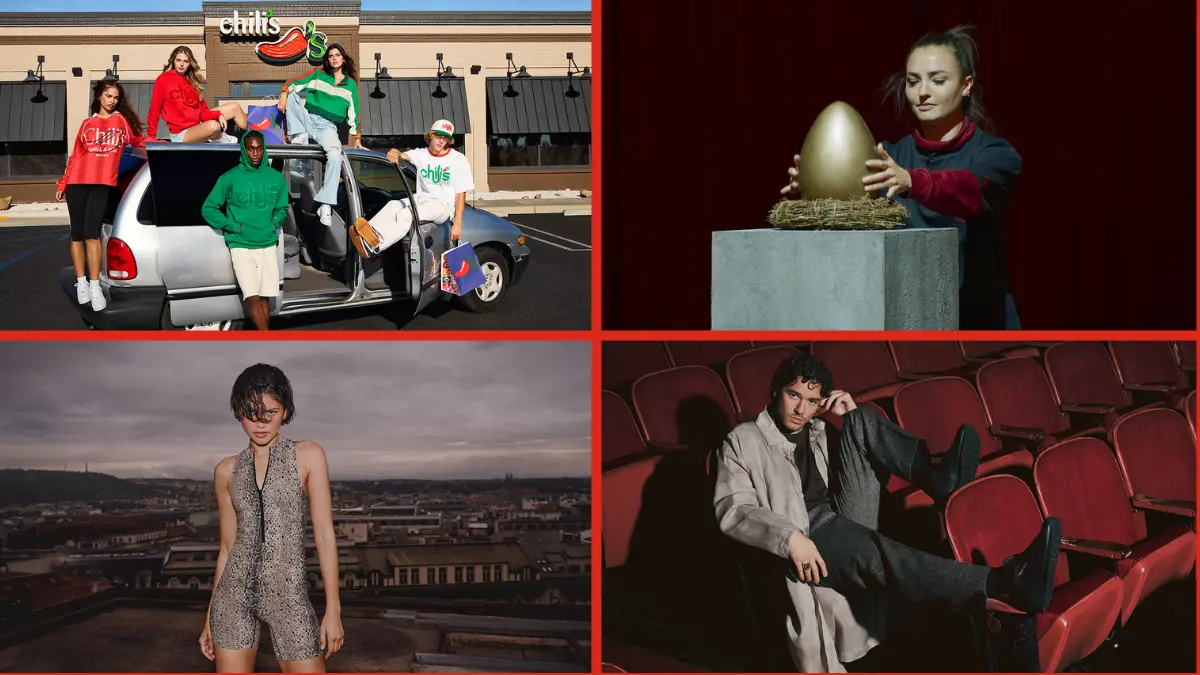
The intersection of luxury, mainstream celebrity, and performance athletic wear reached a new zenith this week with On’s latest campaign featuring global superstar Zendaya. Eschewing the traditional, sweat-drenched treadmill commercialism of the past, the campaign casts Zendaya in the role of a high-octane action hero.
The narrative-driven spot showcases On’s latest footwear and apparel through dynamic, cinematic sequences that feel more akin to a Hollywood blockbuster trailer than a standard product launch. By treating performance gear as the essential wardrobe of a modern action protagonist, On elevates its brand positioning from a niche running shoe to an authoritative lifestyle and performance hybrid. The pacing is relentless, the cinematography is razor-sharp, and the underlying message is clear: technical innovation and high-fashion aesthetics are no longer mutually exclusive.
2. Reebok and Belmont Cameli: Rhythm, Motion, and Nostalgia
Capitalizing on the cultural momentum of Gen-Z-focused television, Reebok tapped Off Campus star Belmont Cameli for a high-energy campaign centered around movement and self-expression.
Rather than leaning into rigid athletic training routines, the campaign drops Cameli into a vibrant, urban-inspired setting where the focus is shifted to rhythm, casual footwork, and effortless style. By leveraging Cameli’s rising star power, Reebok successfully bridges the gap between heritage athletic nostalgia and contemporary streetwear culture. The choreography is loose, expressive, and engineered specifically for social-first consumption, proving that legacy brands must remain culturally fluid to resonate with younger, trend-conscious demographics.
3. KFC’s "Don’t Crack": The 30-Minute Branded Game Show
Perhaps the most ambitious creative gamble of the week belongs to KFC and creative agency Mother, which launched an original, 30-minute game show titled "Don’t Crack."
Building upon the robust foundation of KFC’s three-year-old "Believe in Chicken" platform, the campaign elevates brand engagement from a passive viewing experience to an intense, high-stakes competition. The show features 30 die-hard chicken obsessives—selected through rigorous vetting processes for their unparalleled devotion to the brand—competing against one another for a grand prize of $67,000 and the coveted title of "The Ultimate Believer."
By committing to a full half-hour runtime, KFC is challenging conventional media formulas. Instead of interrupting entertainment, the brand is the entertainment. The production values mirror traditional network television game shows, complete with dramatic pacing, intense elimination rounds, and genuine emotional stakes for the contestants involved.
4. Chili’s Suburbia Chic: Apparel as Cultural Commentary
In the realm of casual dining marketing, Chili’s continues to push the boundaries of self-aware brand merchandising. This week, the restaurant chain released a limited-edition, suburbs-inspired apparel collection.
The collection taps directly into the cultural zeitgeist of suburban life, leveraging ironic humor, hyper-local Americana motifs, and the comforting familiarity of casual dining culture. By turning restaurant branding into wearable streetwear, Chili’s is capitalizing on a lucrative secondary revenue stream while dramatically deepening emotional engagement with its core customer base. It is a masterclass in modern merchandise marketing—turning everyday brand affinity into physical, statement-making fashion.
5. The Washington Post: Putting a Face to the Bylines
Shifting away from commercial consumerism, The Washington Post launched a notable creative initiative this week designed to spotlight the human element behind its journalism.
In an era dominated by algorithmic feeds, automated news aggregators, and rising skepticism toward media institutions, the campaign brings the reporters, editors, and investigative journalists out from behind the screen. Through intimate, profile-driven vignettes, The Washington Post reminds audiences of the rigorous, deeply human labor required to break major news stories. It is an authoritative exercise in brand trust-building, prioritizing institutional credibility and journalistic integrity over superficial engagement metrics.
Supporting Context & Metrics: The Evolving Media Landscape
To fully understand the weight of this week’s campaigns, one must examine the quantitative and qualitative shifts driving contemporary media planning. In partnership with EDO, our "Most Effective Ad of the Week" honors campaigns that successfully bridge creative brilliance with measurable consumer response—often serving as a bittersweet farewell to the summer season as brands transition into Q4 planning.
The Rise of Long-Form Branded Entertainment
For over a decade, the overarching trend in digital advertising has been compression—shorter pre-rolls, six-second bumper ads, and hyper-concise TikTok integrations designed to capture fleeting attention spans. However, campaigns like KFC’s "Don’t Crack" indicate a growing counter-trend: the appetite for immersive, long-form branded entertainment.
- Attention Economics: Studies show that while short-form video dominates top-of-funnel brand awareness, long-form content (ranging from 5 to 30 minutes) yields significantly higher brand recall and emotional affinity.
- The Streaming Convergence: As linear television viewership continues to fragment and streaming platforms embrace ad-supported tiers, brands are increasingly acting as executive producers, creating content that can seamlessly traverse traditional television, YouTube, and specialized streaming apps.
The Power of Subcultural Merchandising
The success of Chili’s apparel collection reflects a broader economic reality: merchandise is no longer just promotional swag; it is a primary driver of brand equity.
- Gen Z and Millennial consumers value authenticity, irony, and meta-branding. Wearing a casual dining chain’s hoodie or a retro tech brand’s windbreaker serves as a badge of cultural fluency.
- According to recent retail analytics, brand-to-consumer apparel collaborations generate an average return on investment that outpaces traditional digital banner ads by nearly 300% in terms of earned media value (EMV) and social shares.
Official Statements and Industry Insights
The divergence in strategies deployed this week—from Zendaya’s cinematic action sequences to KFC’s grassroots superfan competition—underscores a central truth of modern marketing: there is no longer a single template for success.
Industry leaders weighing in on this week’s developments have emphasized the critical need for adaptability.
"We are witnessing the death of the one-size-fits-all media plan," notes a leading New York-based brand strategist. "Consumers do not experience media linearly, and they certainly do not respond to advertising that treats them like a demographic monolith. When On casts Zendaya as an action hero, they are selling a cinematic fantasy. When KFC builds a 30-minute game show for chicken enthusiasts, they are building a community. Both approaches work, but only because they are executed with absolute authenticity to the brand’s core identity."
Furthermore, creative agencies are reporting an increased demand from clients for risk-taking concepts. The safe, predictable product-demo commercial is rapidly losing efficacy in an ad-saturated digital environment. Brands must either entertain, provoke, or provide genuine cultural utility to earn the consumer’s time.
Future Outlook: What Lies Ahead for Q4 and Beyond
As the industry looks toward the remainder of the year—highlighted by high-profile industry gatherings such as ADWEEK House: Advertising HQ in Midtown from October 5–8—several key trajectories are set to define the immediate future of advertising, commerce, and media:
- The Blurring of Commerce and Entertainment: Expect more brands to experiment with proprietary media formats. Game shows, docuseries, and branded narrative podcasts will increasingly replace standard commercial spots as brands seek captive, unskippable environments.
- Hyper-Targeted Niche Merchandise: The success of irony-driven apparel lines will prompt more non-traditional brands (from financial institutions to B2B tech companies) to launch consumer-facing streetwear and lifestyle collections as organic marketing tools.
- The Humanization of Institutional Media: As AI-generated content floods the internet, trust will become the most valuable currency in media. Campaigns like The Washington Post’s journalist spotlight represent the vanguard of a new era of trust-based marketing, where transparency and human authorship take center stage.
- Experiential and In-Person Integration: As digital fatigue sets in, physical activations—such as the upcoming ADWEEK House—will play an increasingly vital role in fostering real-world connections among the architects of modern commerce.
In conclusion, this week’s campaigns serve as a masterclass in modern brand stewardship. Whether through high-fashion athletics, high-stakes television, or self-aware suburban fashion, the message to the industry is unmistakable: evolve or become obsolete. The brands that will dominate the coming year are those bold enough to redefine the boundaries of what advertising can—and should—be.