

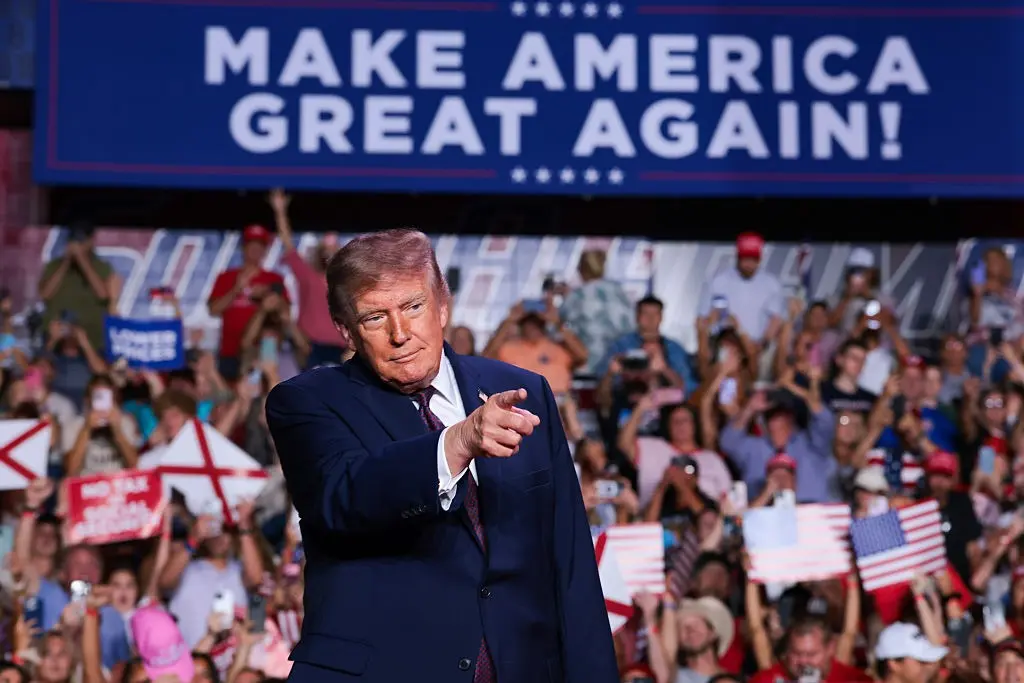
WASHINGTON — In a political maneuver deployed just weeks before the high-stakes November midterm elections, the Trump administration has announced a one-time $90 cash payment for more than 20 million Medicare recipients. Billed by the White House as a direct benefit for senior citizens, the modest payout arrives against a backdrop of fierce campaigning in deep-red states and has immediately ignited intense debate among economists, political analysts, and healthcare advocates.
Critics have pointed out that the $90 figure amounts to less than half the cost of a standard monthly Medicare Part B premium, which stands at $202.90 for 2026. Meanwhile, the announcement—unveiled via social media alongside a sweeping promise of a $5,000 "Trump Dividend" contingent on a Republican sweep of Congress—has raised profound questions regarding the unprecedented use of federal healthcare funds for pre-election cash distributions.
Executive Overview
The unfolding initiative involves pulling approximately $2 billion from the Medicare Improvement Fund—a congressional creation dating back to 2008—to issue direct payments to a vast swath of older Americans. While the White House portrays the move as a return of taxpayer funds to deserving seniors, fiscal watchdogs and political opponents view it through a more transactional lens: an overt pre-election effort to mobilize a crucial voting bloc.
This policy rollout does not exist in a vacuum. It follows closely on the heels of other recent administration cash initiatives, including announced $500 refunds for select Affordable Care Act enrollees, and is tied directly to promises of sweeping post-election payouts. As voters prepare to head to the polls on November 3, the intersection of federal entitlement administration, executive discretionary authority, and campaign-season economics has become the central focus of national political discourse.
Detailed Chronology
The timeline leading up to the rollout of the $90 Medicare payments highlights the swift intersection of executive messaging, agency mobilization, and campaign strategy.
- October 3, 2026 (Late Afternoon): President Donald Trump takes to Truth Social to announce what he describes as "Checks" of nearly $100 directed toward "wonderful Seniors." The post is framed as a direct intervention on behalf of older Americans.
- Shortly After the Social Media Announcement: The White House issues an official fact sheet and clarifying statements. Administration officials confirm that the eligible population—estimated at over 20 million Medicare recipients—will receive precisely $90, primarily delivered via direct deposit starting in early October.
- The Campaign Trail: Simultaneously, President Trump spends the final days of the midterm cycle campaigning heavily in deep-red states, pairing the announcement of the healthcare payments with broader political appeals and grand fiscal promises to his loyal base.
- Ongoing Legislative and Public Reactions: Throughout the immediate post-announcement window, financial analysts, healthcare advocacy groups, and congressional leaders begin dissecting the mechanics of the funding source—the Medicare Improvement Fund—questioning both its legality and its precedent.
Supporting Context & Metrics
To fully understand the scope and reception of the administration’s $90 payout, one must examine the hard financial metrics underpinning Medicare, the source of the funds, and the broader economic promises made by the White House.
The Math of the Payout vs. Standard Costs
The core arithmetic of the $90 payment has become a primary flashpoint.
- Standard Medicare Part B Premium (2026): $202.90 per month.
- The One-Time Benefit: $90.00.
- Proportional Value: The check covers less than 45% of a single month’s standard healthcare premium for Part B, which covers outpatient care, medical supplies, and preventive services.
The Source: The Medicare Improvement Fund
The funds for this initiative are being drawn from the Medicare Improvement Fund, a federal reserve established by Congress in 2008. Historically, the fund was designed to finance structural enhancements, efficiency upgrades, and improvements to Medicare’s traditional fee-for-service program.
According to White House disclosures, approximately $2 billion remained available within the fund. Prior to this announcement, the fund had never been tapped to issue direct, unconditional cash payments to individual beneficiaries.
Eligibility Realities
While the administration projects that more than 20 million seniors will see the funds hit their accounts via direct deposit in early October, the distribution is not entirely universal among Medicare participants:
- Included: Most standard Medicare Part B beneficiaries.
- Excluded: Individuals whose Medicare Part B premiums are covered entirely by state Medicaid programs.
- Excluded: Higher-income beneficiaries who are subject to the Income-Related Monthly Adjustment Amount (IRMAA).
The Broader Economic Promises
The $90 distribution is part of a broader pattern of recent administrative announcements aimed at providing direct financial relief. Earlier, the administration announced $500 refunds destined for nearly 1 million Affordable Care Act (ACA) enrollees, a move justified by claims that those individuals had been overcharged during the prior administration.
However, it was the simultaneous resurrection of the "$5,000 Trump Dividend" that captured the most headlines. In the same Truth Social communication introducing the Medicare payments, Trump assured citizens that every U.S. citizen would receive a $5,000 dividend "if, and when, the Republicans win the Midterm Elections!" To date, the administration has not released legislative text, budgetary offsets, or detailed economic modeling to explain how such a massive national payout would be funded or legally enacted.
Official Statements and Political Reactions
The administration’s deployment of the Medicare Improvement Fund has drawn starkly contrasting reactions from political allies and critics alike, reflecting deep ideological divisions over executive overreach and fiscal responsibility.
The White House Perspective
Defending the action, President Trump characterized the Medicare Improvement Fund as a "pointless ‘Slush Fund’" that had previously been vulnerable to misuse by political opponents. In his statements, Trump argued that redirecting the capital directly to seniors represents a far superior use of taxpayer-backed reserves than allowing the money to remain dormant or subject to bureaucratic administration.
White House officials have doubled down on the messaging, framing the direct deposits as a welcome financial cushion for older Americans navigating persistent cost-of-living pressures.
Opposition and Criticisms
Conversely, critics—including congressional Democrats, independent budget watchdogs, and healthcare policy experts—have sharply denounced the timing and nature of the payments.
- Election-Year Pandering: Opponents argue that distributing a nominal $90 check just weeks before voters cast ballots in the midterm elections is an overt, politically motivated gimmick designed to buy votes rather than enact meaningful healthcare reform.
- Depletion of Long-Term Reserves: Fiscal analysts have raised alarms over raiding a fund historically dedicated to systemic Medicare enhancements. Critics warn that dipping into the Medicare Improvement Fund for short-term political payouts strips away resources that could otherwise be utilized to stabilize or modernize the broader Medicare infrastructure.
- Scale Discrepancy: Democratic lawmakers have pointed out the vast disparity between the high cost of senior healthcare and the administration’s one-time check, noting that a $90 payment fails to address the structural affordability challenges faced by millions of older Americans, particularly regarding prescription drugs, long-term care, and rising monthly premiums.
Future Outlook
As the calendar ticks down to November 3, the immediate political fallout of the $90 Medicare payout remains a dynamic element of the midterm landscape. Whether the direct deposits will tangibly sway senior voters in key battleground districts remains to be seen.
Beyond the immediate electoral horizon, long-term questions linger. Legal and policy scholars are actively examining whether the executive branch’s utilization of the Medicare Improvement Fund sets a controversial precedent for bypassing traditional congressional appropriations processes to distribute pre-election cash benefits. Furthermore, as the promise of a $5,000 "Trump Dividend" hangs in the balance of the upcoming legislative outcomes, economists will continue to scrutinize the feasibility, inflation risks, and structural mechanics of promises involving direct federal cash transfers to the American public.
For now, over 20 million seniors can expect to see the modest $90 direct deposits reflect in their accounts—serving as both a tangible, if minor, financial injection and a major talking point in the final, heated weeks of the 2026 midterm election cycle.