

Executive Overview
Parenthood is a landscape of profound contrasts. It is an experience defined simultaneously by intense, round-the-clock exhaustion and fleeting moments of transcendent joy. Nowhere is this emotional pendulum more evident than in the seemingly mundane act of running daily errands with young children. Recent discussions sparked within parenting communities online have cast a brilliant, empathetic light on the shared trials of navigating grocery stores, retail aisles, and public spaces with infants, toddlers, and multiples in tow.
What might appear to an outside observer as a simple chore—buying a carton of milk or picking up fresh produce—transform into high-stakes expeditions for mothers and fathers worldwide. From the logistical nightmare of wrangling multiples through automatic sliding doors to the unexpected existential dread of separation anxiety when a parent finally ventures out alone, the modern parenting experience is as complex as it is universal.
This report examines the intricate social and psychological dynamics of early childhood caregiving. By analyzing firsthand accounts from parents of singletons, twins, and triplets, we explore the coping mechanisms families employ, the psychological phenomena of postpartum anxiety and identity shifts, the unexpected joys of community interaction, and the systemic pressures placed on modern families.
Detailed Chronology: The Evolution of the Erranch-Run Odyssey
To truly understand the modern parenting journey, one must trace the evolution of how families interact with the outside world from infancy through the school-age years.
Phase One: The Newborn Bubble and Curbside Confinement
For many new parents, particularly those navigating the postpartum landscape in the post-pandemic era, the initial months of a child’s life are characterized by hyper-vigilance. Grocery delivery apps and curbside pickups become the primary lifelines of domestic survival.
As accounts from caregivers indicate, the decision to shield infants from public spaces is often driven by a combination of health concerns, logistical intimidation, and sheer physical recovery. For parents of multiples, this period of isolation is magnified exponentially. Preparing for a simple trip outside requires tactical precision: coordinating car seats, double strollers, and diaper bags packed with emergency supplies.
However, a developmental shift typically occurs around the 8-to-10-month mark. As infants begin to sit upright, take in their surroundings, and express curiosity about the world, parents face a psychological turning point. The realization sets in that continuous indoor playdates and peekaboo sessions are insufficient; children need environmental enrichment, and parents desperately need a change of scenery.
Phase Two: The Baptism by Fire (First Solo Outings)
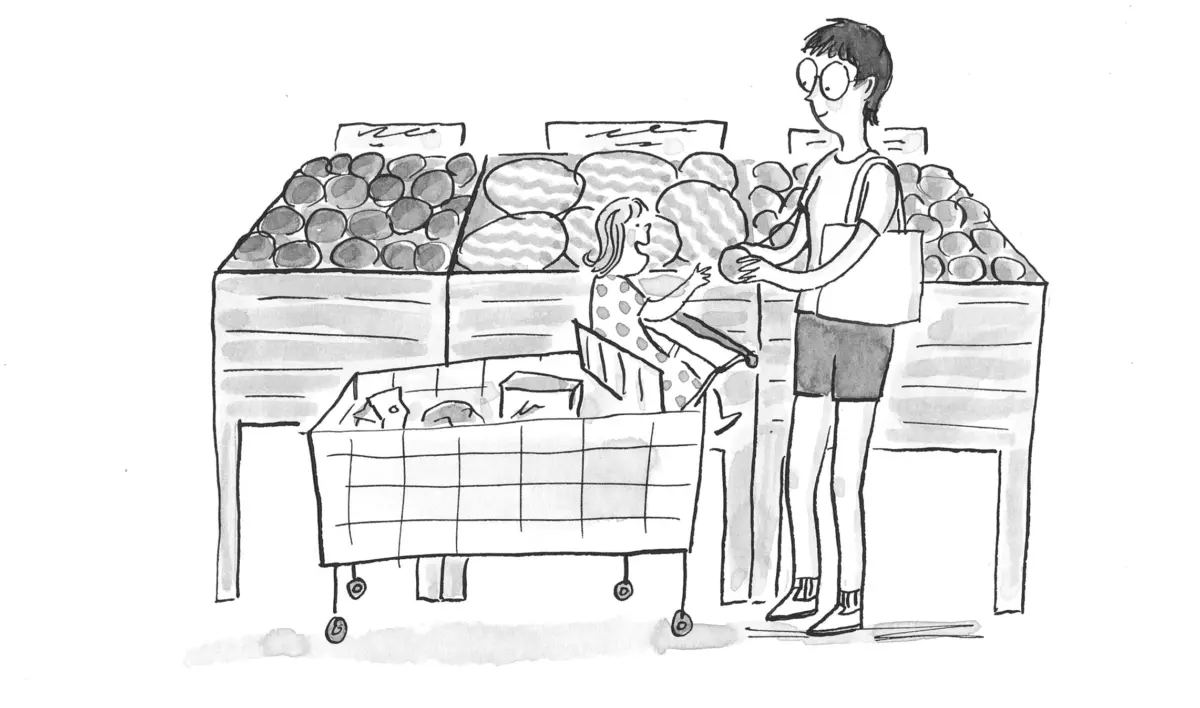
The transition from home-bound isolation to public excursions is rarely seamless. Many parents recount their first solo grocery store trips with a mixture of amusement and lingering trauma. Whether it is a baby screeching at the top of their lungs for no discernible reason, a toddler defiantly licking a germ-covered cart handle, or a preschooler loudly announcing that a cashier is "stealing our things" during checkout, the public sphere is fraught with unpredictability.
Consider the harrowing, yet darkly humorous, account shared by one mother of four children aged four and under: while attempting to maintain order in a specialty car-shaped shopping cart, a stranger casually tapped her on the shoulder to announce, "The one in the green shirt just threw up," before walking away.
These moments underscore the delicate tightrope walk of parenting in public. Yet, it is precisely within these crucible moments that resilience is forged.
Phase Three: The Revelation of the "Single-Child Date"
A recurring theme among parents of multiples—specifically twins and triplets—is the profound psychological shift that occurs when taking only one child out into the world.
For parents accustomed to operating in a state of perpetual triage, taking a single twin or triplet to Trader Joe’s or Target feels less like a chore and more like an unauthorized vacation. The workload is halved, the noise level drops dramatically, and the individual child, basking in undivided parental attention, often behaves with surprising cooperation.
Families have increasingly institutionalized this practice, utilizing weekend "divide and conquer" strategies where each parent pairs with a single child. This not only preserves parental sanity during the notoriously turbulent "threenager" phase—when children feed off each other’s behavioral energy—it also fosters rich, individualized bonds that are difficult to cultivate in a crowded household.
Supporting Context & Metrics: The Hidden Realities of Multiple Births and Postpartum Mental Health
While lighthearted anecdotes about grocery cart chaos dominate online forums, deeper psychological currents run beneath the surface of these discussions. Raising multiples and singletons alike places extraordinary demands on the human nervous system.
The Physics and Psychology of Multiples
Statistically, twin and triplet pregnancies represent a fraction of total births, yet their cultural footprint is massive. Parents of multiples operate in what clinical literature defines as chronic survival mode during the early years. The sheer logistics—such as finding a grocery cart that accommodates two infant seats or navigating checkout lanes designed for single-cart throughput—test the limits of municipal infrastructure and retail design.
Interestingly, community psychology research highlights a distinct linguistic and social phenomenon among multiple-birth families: the use of the term "singleton" to describe non-twin children, and an irresistible compulsion among parents of twins to broadcast their status to strangers. When venturing out with a single twin, parents frequently report an almost involuntary urge to inform cashiers, "He has a twin at home!" Psychologists attribute this to a deep-seated desire for validation—an unspoken plea for societal recognition of the monumental, unseen labor required to bring two human beings into the world simultaneously.
Postpartum Anxiety and the Paradox of Separation
Conversely, the narrative of relief when leaving children behind is complicated by the hidden epidemic of postpartum anxiety. While public health campaigns have historically focused heavily on postpartum depression, caregivers increasingly speak out about the paralyzing separation anxiety experienced by the parent.
Several accounts from parents reveal an intense, visceral panic when attempting their first solo grocery trips or date nights away from their infants. Symptoms include brain fog, decision paralysis in grocery aisles, and an inability to enjoy "me-time" due to an overwhelming, somatic need to be near the child.
Mental health professionals note that this phenomenon is entirely natural. The physiological bond between a primary caregiver and an infant creates an intertwined nervous system. For some, societal pressures to "get away" and practice self-care prematurely can exacerbate anxiety rather than relieve it. The consensus emerging from lived experience points to a vital truth: parents should follow their maternal or paternal instincts. If staying close to the child brings peace, it is a valid choice that requires no external validation or pathologizing.
Official Statements and Community Wisdom: The "Oh Honey" Phenomenon
The collective wisdom shared across generational lines plays a critical role in mitigating the isolation of modern parenting. Societal structures have shifted away from traditional multi-generational households, leaving many young parents to navigate the early years in nuclear isolation.
However, community spaces—both digital and physical—act as modern village squares. Veteran parents frequently step into the role of cultural anchors.
"My favorite part about taking babies and toddlers to the grocery store was what I called the ‘oh honeys’—older women who would tell me, ‘Oh honey, it gets easier,’ or ‘Oh honey, this is a hard phase’ when one of them was screaming," shared one mother now entering her own grandparent-adjacent stage of life.
This specific brand of empathetic mentorship stands in stark contrast to the toxic positivity of the "enjoy every second" mantra. Acknowledging that a phase is difficult, messy, and loud—while offering a reassuring glimpse into the future—provides invaluable psychological relief to overwhelmed mothers and fathers.
Furthermore, the role of supportive extended family cannot be overstated. Accounts of grandmothers acting as "pretend strangers" on a parent’s first solo grocery run with a newborn and a toddler—ready to intervene only if total collapse occurs—illustrate the gold standard of modern familial support. It bridges the gap between total independence and safety, allowing parents to build confidence incrementally.
Future Outlook: The Long View of Parenting in Public
As children grow from toddlers hiding under shopping cart seats to college-bound young adults leaving home for the first time, the texture of daily life shifts irreversibly.
Parents who once measured their days by the successful navigation of a Costco checkout line eventually find themselves standing in empty bedrooms, marveling at how quickly the chaos subsided. The frantic energy of toddlerhood—the unprompted commentary, the dramatic proclamations, the spilled milk, and the impromptu aisle dances—transforms into nostalgic memory.
Looking forward, urban planners, retail executives, and public health advocates must take note of the systemic needs of families. Grocery stores designed with spacious aisles, double-child carts, and welcoming staff create environments where community integration can happen naturally. Exposing children to public spaces not only teaches them how society functions outside the insular bubble of the family home; it reconnects isolated parents with the broader tapestry of humanity.
Ultimately, the collective discourse on parenting in public spaces teaches us that the journey cannot be rushed, nor should it be sanitized. Whether viewed through the lens of sheer survival, profound anxiety, or laugh-out-loud comedy, the shared experience of raising the next generation remains our most vital, unifying human endeavor.