The modern landscape of parenthood is often romanticized in glossy media layouts, yet the day-to-day reality involves high-stakes logistics, logistical triumphs, and unexpected moments of communal grace. A recent discourse sparked across online parenting platforms sheds light on the intricate, often overwhelming dance of running errands with infants, toddlers, and multiples. Far from being mundane domestic routines, tasks like grocery shopping, navigating warehouse clubs, and traveling with young children serve as micro-cosms of modern family management.
This report examines the hidden architecture of early childhood parenting logistics. By analyzing community anecdotes, peer support systems, and the psychological impact of public outings with children, we explore how parents navigate the fine line between isolation and immersion. Furthermore, this investigation highlights the profound role of micro-interactions—such as a stranger’s validation in a crowded supermarket aisle—in sustaining parental mental health. Through structured analysis, this piece unpacks the chronology of parenting milestones, the metrics of modern family mobility, and the future outlook for community-supported child-rearing.
Detailed Chronology: The Evolution of Public Outings with Young Children
The journey of stepping out into the public sphere with children is rarely linear. For many modern families, public excursions evolve through distinct phases, shaped by the number of children, their developmental stages, and the sheer logistical hurdles involved.
Phase 1: The Initial Lockdown and Divide-and-Conquer Strategies
For parents of newborns and toddlers, the early months are often characterized by hyper-vigilance. Archival discussions from parental forums reveal a common reliance on divide-and-conquer tactics. In many households, routine grocery shopping is entirely outsourced or split: one parent stays home with a newborn and a 19-month-old toddler, while the other executes a rapid, solitary trip to the store.
During this initial phase, the prospect of venturing out alone with multiple children can feel akin to scaling an unclimbed peak. The logistical variables—accommodating an infant car seat that occupies an entire grocery cart, managing a mobile toddler, and calculating nap schedules—frequently lead parents to postpone solo public outings. For some, elaborate safety nets are deployed. One mother noted bringing her mother-in-law along on her first major store outing, instructing her to "pretend not to be there" as a failsafe should the expedition descend into chaos.
Phase 2: Trial by Cart and the Transition to Solo Expeditions
As children mature past the fragile newborn stage, parents begin integrating them into the fabric of daily errands. This phase marks a psychological turning point. Grocery shopping transitions from a chore to a social experiment. Parents report utilizing the built-in audience of an infant or toddler to normalize their own internal monologues. What might otherwise be perceived as eccentric self-talk—narrating the selection of produce or household goods—becomes a developmentally recommended practice of linguistic engagement with the child.
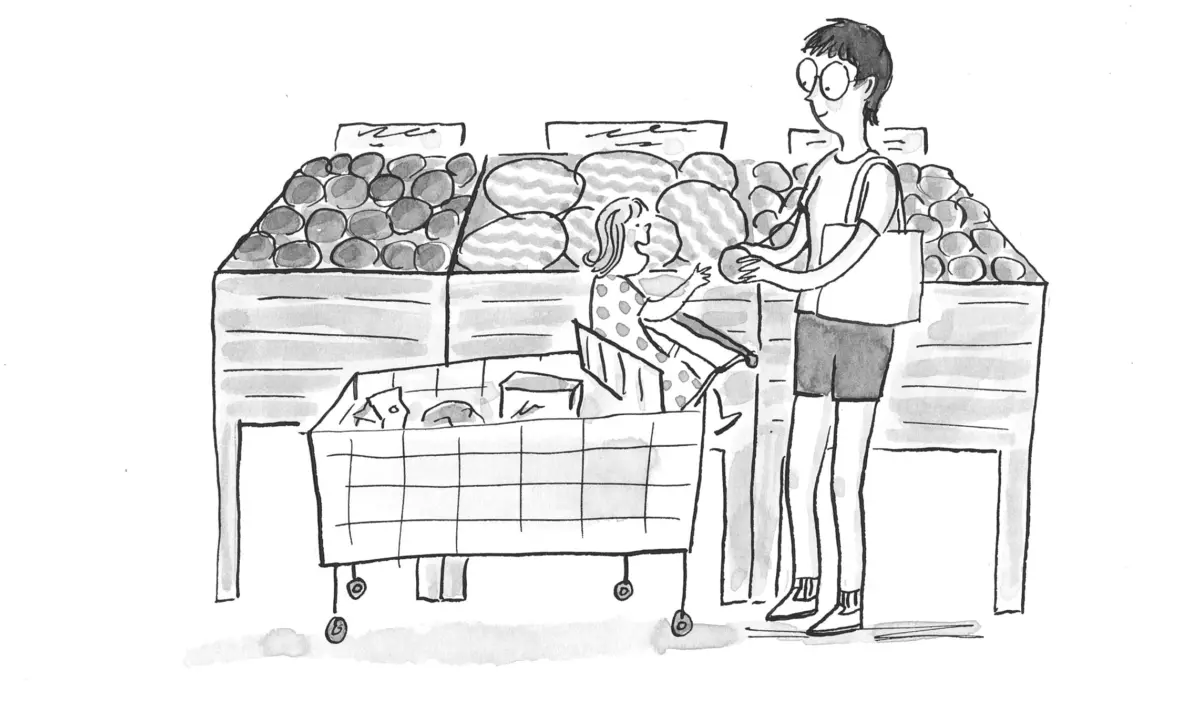
Moreover, the physical configuration of shopping carts becomes an art form. Parents of multiple children master the geometry of placing a baby in a chest carrier while positioning older siblings in the seating basket of the cart. Milestones are measured by successful navigation through high-traffic commercial hubs like Costco or Trader Joe’s without a meltdown.
Phase 3: Surviving Multiples and the "Hero’s Journey" of Parenting Twins
Few experiences test the limits of domestic logistics quite like parenting multiples. For parents navigating twin infants or closely spaced sets of multiples, routine errands assume epic proportions. Describing a simple grocery pickup as a "hero’s journey," these parents operate under magnified pressure.
Historical context within family lineages further highlights this endurance test. Accounts passed down through generations—such as grandmothers traveling internationally with a newborn, a four-year-old, and a six-year-old, or managing two sets of twins born sixteen months apart—underscore a timeless truth: parenting multiple young children simultaneously requires extraordinary resilience. In the contemporary setting, modern twin parents find solace in peer validation, recognizing that a successful trip to Target with a single child feels virtually akin to a luxury spa day by comparison.
Supporting Context & Metrics: The Psychology of Public Engagement and Parental Isolation
To fully understand the significance of public outings with children, one must examine the broader socio-psychological factors at play. Modern parenting does not occur in a vacuum; it operates against a backdrop of increasing domestic insularity and digital connectivity.
The Role of Micro-Interactions in Combating Isolation
Public spaces serve as crucial arenas for social integration for both parents and children. When a toddler interacts with strangers in a supermarket aisle—whether through enthusiastic greetings or unfiltered remarks (such as the memorable anecdote of a child shouting "Don’t be a weenie!" at an unresponsive shopper)—these encounters puncture the insular bubble of the home.
For the parent, public outings offer vital validation. A simple gesture from a stranger—such as a young man acknowledging a mother managing four children at Costco by stepping aside and telling her she looks like a superhero—provides an immediate psychological boost. Metrics from parental support networks indicate that these fleeting, positive interactions significantly reduce feelings of isolation and burnout among primary caregivers.
Linguistic Development Versus Parental Silence
Child development experts frequently emphasize the importance of "servant talk" and verbal narration during a child’s early years. Parents are continually advised to narrate their environments to build vocabulary and cognitive mapping. However, qualitative reports reveal a counter-narrative: many parents experience natural lulls in conversation.
The pressure to constantly engage verbally can induce anxiety in caregivers who naturally lean toward quietude. Interestingly, psychological observations suggest that silence in transit—such as driving children to activities in peaceful quiet or listening to music—can foster deep, reflective bonds. Many adults recount their fondest childhood memories not as high-energy verbal exchanges, but as peaceful, silent Saturday morning errand runs with a parent.
Official Perspectives and Expert Insights
Child psychologists, family sociologists, and parenting educators weigh in on the dynamics of public outings and the logistical pressures faced by modern caregivers.
The Developmental Value of the Outside World
According to early childhood specialists, exposing infants and toddlers to diverse environments stimulates sensory processing and adaptability. Dr. Elena Vance, a developmental psychologist specializing in family systems, notes:
"When children are brought into public spaces, they are not merely tagging along on an errand; they are absorbing social cues, observing community norms, and learning how to regulate their behavior in dynamic, unpredictable environments. For the parent, stepping outside the home breaks the monotony and fosters a healthy sense of community connection."
The Burden of Modern Logistics
Sociologists point out that contemporary parenting standards have drastically escalated the perceived expectations of child-rearing. The transition from community-supported child-rearing of past generations to the highly privatized nuclear family unit has placed an immense burden on individual parents.
Family sociologist Marcus Thorne emphasizes:
"When we hear stories of grandmothers managing multiple sets of twins or traveling across continents alone, we are reminded of the sheer tenacity required in parenting. Today’s parents often face these challenges in isolation, without the extended village of the past. Consequently, mastering a simple grocery run with two or three children is a genuine logistical triumph that deserves recognition."
Future Outlook: Toward a More Connected and Accommodating Society
As we look toward the future of family life, several trends indicate how the landscape of parenting logistics and community support may evolve.
The Rise of Hybrid Convenience and Its Limits
The proliferation of grocery delivery services and curbside pickup revolutionized convenience during the early 2020s. While these tools remain indispensable for busy families, the ongoing cultural pushback—championing the active inclusion of children in physical public spaces—highlights a vital human need. Families are increasingly recognizing that convenience must be balanced with experiential learning. Dragging a reluctant toddler through a hardware store or managing a newborn at the farmers’ market teaches resilience and adaptability that digital delivery simply cannot replicate.
Cultivating Community Empathy
The future of supportive parenting relies heavily on public empathy. As urban centers and commercial spaces continue to design more family-friendly environments, the cultural attitude toward children in public must remain welcoming rather than punitive. Initiatives that foster intergenerational connections and peer support networks—both online and offline—are crucial for alleviating parental stress.
Ultimately, whether a family is navigating a high-stakes trip to a warehouse club with four children in tow or enjoying a quiet car ride in companionable silence, these moments form the bedrock of family identity. By acknowledging the heavy lifting behind everyday logistics and celebrating the small victories of public outings, society can better support the architects of the next generation.