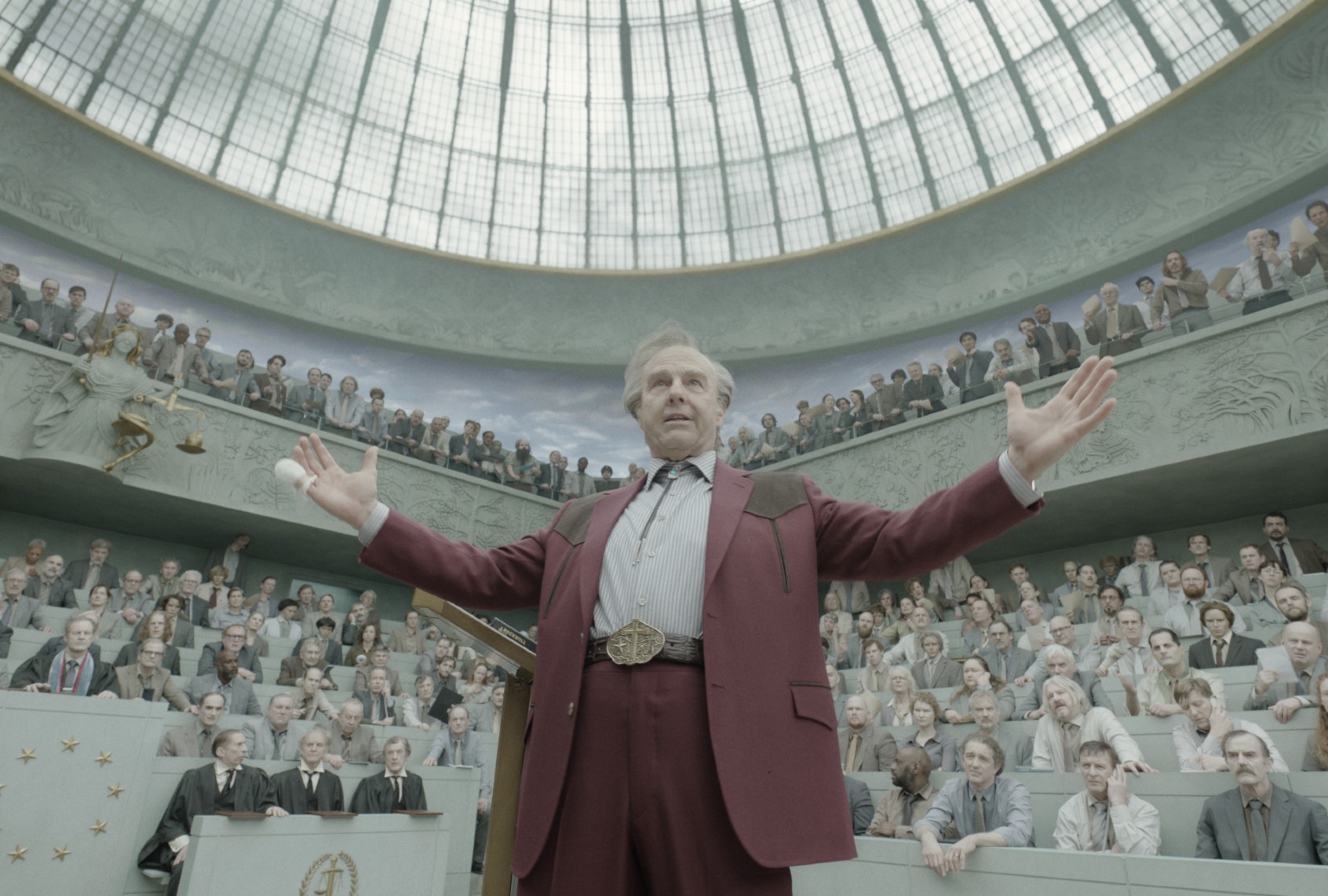
In the sprawling landscape of contemporary satirical cinema, few pairings could command as much immediate industry gravity as visionary auteur Alejandro G. Iñárritu and cinematic titan Tom Cruise. Their collaborative black comedy, Digger, arrives cloaked in immense ambition, monumental production value, and the unmistakable weight of late-stage capitalist anxiety. Centered on an aging oil tycoon hurtling headlong toward an ecological apocalypse of his own making, the film aims to skewer corporate greed, environmental collapse, and humanity’s desperate reliance on escapism.
Yet, for all its technical bravura and aggressive thematic posturing, Digger suffers from a fundamental miscalculation. Rather than functioning as a mirror held up to society, the film operates more like a bludgeon, indicting its audience for systemic failures while remaining stubbornly blind to its own artistic hubris.
From Tom Cruise’s widely publicized efforts to slash his daily six-hour prosthetic transformation down to a brisk sixty minutes—an anecdote emblematic of the star’s relentless drive—to Iñárritu’s meta-textual narrative turns, Digger plays as an exercise in supreme self-regard. By constructing a cinematic experience that actively resents its viewers, dismissing them as easily manipulated "seals" barking for catharsis, Iñárritu sacrifices emotional resonance for hollow intellectual superiority. As Digger marks a historic transitional chapter for Warner Bros. Pictures ahead of its corporate acquisition by Paramount-Skydance, the film stands as a cautionary tale of what happens when a blockbuster satire mistakes misanthropy for profundity.
Detailed Chronology: Unpacking the Meta-Narrative of "Digger"
To fully understand the friction Digger generates between screen and seat, one must examine the deliberate structural games Alejandro G. Iñárritu plays with his audience across the film’s runtime. The movie deliberately subverts conventional narrative pacing, using its opening acts to set up a deceptively straightforward premise before pulling the rug out from under the viewer.
The Setup: Oil, Ice, and Impending Doom
The film opens with an unmistakable theatricality, literally raising what initially appears to be a stage curtain—only for the camera to reveal it as a simple window shade. We are introduced to Digger Rockwell (Tom Cruise), an oil tycoon whose morning routine of trying to feed an eccentric, unresponsive cat is abruptly interrupted by a catastrophic explosion on his corporate oil rig in Greenland.
Enter Dr. Nirav Ganesh (Riz Ahmed), a frantic and deeply concerned scientist who warns Digger that the rig explosion has destabilized a massive ice shelf, sending it hurtling toward the coast of Norway and threatening hundreds of thousands of lives. Worse still, the seismic chain reaction triggers a secondary glacier headed directly for Alaska. To manage the looming public relations disaster and coordinate emergency protocols, Digger arranges high-level meetings with the President of the United States (John Goodman) and top military brass.
The Twist: A Play Within a Play
Approximately forty minutes into the film—just as viewers are beginning to settle into the rhythms of a high-stakes, global-collapse thriller—Iñárritu executes a jarring meta-textual pivot. As Digger and the President peer out a window during a strategy session, a flickering light reveals a falling artificial tree in the distance. Suddenly, a giant mechanical hand emerges from beneath the stage floor to manually reposition it.
The illusion shatters. The audience realizes that every scene witnessed thus far has merely been a rehearsal for a new theatrical production of Fossil Fools, a cult-classic play centered on a real-life climate catastrophe. Digger, the President, Dr. Ganesh, and every other character are not real-world power players; they are actors. Their bombastic shouting, over-the-top melodrama, and aggressive posturing are revealed to be stylistic choices mandated by the fictional play’s director, Kenny (Jesse Plemons).
The Climax and the Final Indictment
By moving this earth-shattering reveal less than an hour into a two-plus-hour runtime, Iñárritu effectively reframes the entire cinematic experience. The remainder of the film follows the chaotic preparations for opening night. Behind the scenes, Digger—clinging to his demands for absolute dramatic "truth"—clashes with Kenny, who cynically reminds him that the paying public does not care about genuine verisimilitude. They want catharsis; they want a villain to boo and a momentary release from their dreary, post-collapse reality.
When opening night finally arrives, the theatrical audience gets precisely the emotional cleanse they crave, cheering on Digger’s fictionalized downfall. But the relief is short-lived. The moment the curtain falls, an emergency klaxon blares through the theater, broadcasting a terrifying "Level 4" environmental warning.
Displaying the conditioned reflexes of a populace entirely broken by continuous crisis, the theatergoers calmly don their luxury corporate-branded personal protective equipment—dubbed "LUNGZ," complete with a stylized corporate "Z"—and march out into dystopian streets patrolled by automated drones and robotic law enforcement. As the credits roll, Iñárritu delivers one final, spiteful jab: ninety seconds into the end-track, the "Level 4" warning sounds again, directly targeting the audience walking up the aisles or leaving the theater.
Supporting Context & Metrics: Production Scale and Corporate Timing
The production history and industrial backdrop of Digger provide essential context for its cynical worldview. Manufactured on a grand financial and logistical scale by Warner Bros. Pictures, the film represents the absolute pinnacle of studio-backed auteur filmmaking—while simultaneously arriving at a moment of profound corporate upheaval.
Production Metric / Milestone
Detail
Director
Alejandro G. Iñárritu
Lead Actor / Producer
Tom Cruise (Digger Rockwell)
Supporting Cast
Riz Ahmed, John Goodman, Jesse Plemons
Prosthetic Innovation
Reduced from 6 hours to under 1 hour via intensive stopwatch drills
Final major Warner Bros. release before the Paramount-Skydance merger
Tom Cruise’s involvement in Digger carries immense meta-textual weight. Known industry-wide for his absolute dedication to physical performance and practical filmmaking, Cruise famously boasted on the global press tour about streamlining his rigorous six-hour prosthetic transformation into less than 60 minutes. By running daily drills with makeup artists using a stopwatch, Cruise embodied the very perfectionist work ethic that defines his real-world persona as the savior of modern cinematic exhibition.
Yet, within the narrative framework of Digger, this persona is weaponized. Cruise’s character is an explicit parallel to the actor’s real-life crusade for cinematic truth. By contrasting Digger’s artistic purism with the cold, cynical calculations of the play’s producer Kenny (Jesse Plemons), Iñárritu comments directly on the transactional relationship between blockbuster art and an exhausted public.
Furthermore, the release of Digger carries poignant historical irony. As Warner Bros. Pictures’ final major motion picture distributed prior to its absorption by Paramount-Skydance, the film functions as a cinematic tombstone for an era of bold, high-risk studio filmmaking. Unfortunately, rather than utilizing this monumental platform to offer genuine insight, the production squanders its historical moment on self-indulgent contempt.
Official Statements and Industry Reception
The critical reception surrounding Digger has been fiercely polarized, largely due to Iñárritu’s uncompromising and combative approach to audience engagement. While industry insiders have praised the film’s technical audacity and the fearless performances of its lead ensemble, cultural critics have increasingly taken aim at its condescending tone.
In interviews leading up to the film’s release, Alejandro G. Iñárritu defended the film’s abrasive pacing and bleak aesthetic choices, arguing that modern art must reflect the psychological decay of a world sleepwalking toward catastrophe.
"We are living in an era where tragedy has been commodified into background noise," Iñárritu noted in a recent press statement. "If a film makes you comfortable, it is lying to you. Art in the twenty-first century must either wake people up or expose them for choosing to stay asleep."
However, cultural commentators have pushed back against this defense, labeling it a convenient shield for sloppy narrative construction and sheer audience disdain. Prominent film critics have pointed out that treating the audience’s need for artistic escapism as a moral failing creates an insurmountable barrier between the screen and the viewer.
Tom Cruise, maintaining his customary diplomatic promotional stance, emphasized the collaborative and experimental nature of the project.
"Alejandro wanted to push every single one of us past our comfort zones," Cruise shared during a London screening Q&A. "We weren’t just making a movie about climate disaster; we were examining why we tell stories about disaster in the first place, and whether those stories actually change anything or just help us sleep at night."
Despite Cruise’s enthusiastic framing, box office analysts and early festival attendees report a distinct disconnect between the film’s intellectual ambitions and its visceral impact, noting that viewers frequently exit screenings feeling lectured rather than enlightened.
Future Outlook: The Legacy of Auteur Cynicism
As Digger makes its way through global theatrical windows and prepares for its eventual streaming home, its long-term cultural legacy remains precarious. The film arrives at a fascinating crossroads for modern Hollywood—a period defined by exhausted franchises, shifting studio conglomerates, and an increasingly fractured theater-going public.
The core failure of Digger may ultimately serve as a valuable lesson for major filmmakers attempting to tackle systemic global anxieties. Satire requires a delicate balance of critique and empathy; when a filmmaker views their audience not as fellow travelers navigating a chaotic world, but as complicit "seals" mindlessly applauding their own destruction, the satirical bridge collapses.
In the wake of Warner Bros.’ transition into the Paramount-Skydance era, the appetite for high-risk, multi-million-dollar existential black comedies may undergo a sharp contraction. Studios attempting to recapture the cultural zeitgeist will likely look to Digger as a prime example of narrative over-complication—a project that possessed all the right ingredients, from generational star power to visionary direction, yet ultimately lost its way in a maze of its own making.
Ultimately, Digger reminds us that art does not need to coddle its viewers to be effective, but neither should it contemptuously punch down. When a film spends two hours lecturing its audience about their inevitable doom while offering nothing substantive in return, the message ceases to be profound. It simply becomes noise.