

Executive Overview
In the autumn of 2017, veteran Rolling Stone journalist Janet Reitman sat in the living room of a shattered Ohio couple, Walter and Chris Oneschuk. Just two months prior, their 19-year-old son, Andrew, had been murdered. He was not the victim of a random street crime or a foreign battlefield skirmish; Andrew was a member of the Atomwaffen Division, a violent neo-Nazi terrorist cell, gunned down by a fellow member of the group.
As Reitman listened, the grieving parents grappled with a disorienting, agonizing reality. “They kept saying to me, ‘I don’t understand how this happened to us,’” Reitman recalls. “And then they also were like, ‘I don’t understand how this happened to America.’”
That haunting question serves as the foundational pulse of Reitman’s deeply reported, sweeping new book, The Inheritance: A Tragedy in Five Acts (Random House). Spanning decades of profound social, political, and cultural upheaval, the book explores how the United States transformed in the wake of the September 11 terrorist attacks. Rather than approaching this national fracture through dry political theory or macroeconomic data, Reitman traces the fault lines of modern American extremism through human stories—examining how a generation of disillusioned citizens found themselves drawn into radical subcultures, and how a security-obsessed government inadvertently laid the groundwork for domestic decay.
Detailed Chronology: Tracing the Roots of Upheaval
1992: The Harbinger at Ruby Ridge
Though the primary thrust of The Inheritance investigates the post-9/11 landscape, Reitman consciously pulls the timeline back to 1992, anchoring her prologue in the tragic FBI standoff at Ruby Ridge, Idaho. The incident—which resulted in the deaths of three people, including Vicky Weaver—is framed through Weaver’s premonitory psychology. Plagued by a profound sense that American society was fundamentally breaking down, Weaver and her family retreated to an isolated mountain cabin, seeking refuge from a world they no longer recognized.
Reitman views Weaver not merely as an isolated fringe figure, but as an early harbinger of a broader cultural neurosis. Over the subsequent three decades, that instinct to retreat, silo, and abandon shared civic spaces would spread across a wide cross-section of the American public. The heavy-handed federal response at Ruby Ridge also foreshadowed an increasingly militarized domestic security apparatus—a dynamic that would hyper-accelerate after the turn of the century.
The Turn of the Century: 9/11 and the Security State
When hijacked planes struck the World Trade Center and the Pentagon on September 11, 2001, the structural DNA of the United States shifted overnight. The nation reorganized itself around a singular, overriding directive: national security, counter-terrorism, and foreign retaliation.
Color-coded threat levels became fixtures of daily television broadcasts, airport security evolved into an invasive theater of compliance, and domestic laws expanded to grant unprecedented intelligence-gathering authorities. The federal government pivoted toward a massive, foreign-intelligence-focused apparatus, leaving domestic terrorism—historically viewed as an afterthought—to languish in bureaucratic blind spots.

Mid-2010s: The Parallel Radicals and the White Supremacist Resurgence
By the mid-2010s, this systemic pivot had created fertile ground for homegrown radicalization. Reitman highlights the chilling symmetry between two teenagers operating in parallel bedrooms: Andrew Oneschuk, radicalizing online into neo-Nazi ideologies, and Mariyam, a Chicago-area teenager who attempted to run away to Syria to become an ISIS bride.
While Mariyam and her brothers were immediately subjected to intense federal surveillance, wiretaps, and the looming threat of lengthy prison sentences—requiring the intervention of pioneering defense attorney Marlo Cadeddu to humanize her—white supremacist radicals like Andrew often slipped through the cracks. When family members warned law enforcement of Andrew’s escalating volatility, they were frequently told that authorities could intervene only after a violent crime had been committed.
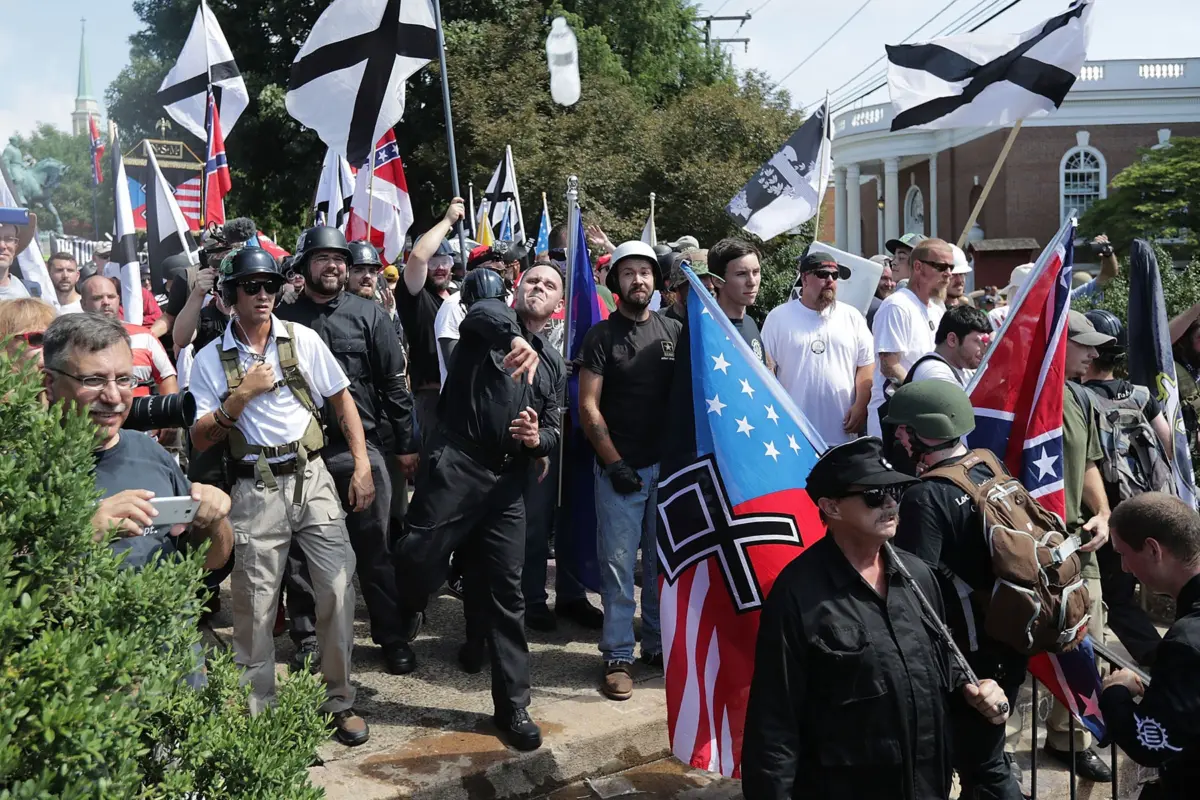
Concurrently, veterans returning from the quagmires of Iraq and Afghanistan—burdened by untreated post-traumatic stress disorder (PTSD) and profound alienation—became prime targets for extremist recruitment. Nathan Damigo, a Marine veteran of the Iraq War, emerged from prison radicalized, bridging the gap between raw white supremacist ideology and a more palatable, "intellectualized" defense of identity politics. Damigo coined slogans and aesthetics that would eventually manifest on the streets of Charlottesville during the 2017 Unite the Right rally, effectively rebranding far-right extremism for segments of the American mainstream.
Supporting Context & Metrics: The Human Cost of Policy Blind Spots
To understand The Inheritance, one must examine the institutional blind spots that allowed domestic extremism to metastasize while national security agencies focused exclusively on foreign jihadist networks.
- The Intelligence Shift: Post-9/11 legal modifications transformed the FBI from a reactive law enforcement agency into a proactive intelligence-gathering machine. However, legal frameworks largely restricted domestic surveillance unless tied to foreign terrorist organizations like Al-Qaeda or ISIS. Consequently, white supremacist networks—often operating under the guise of free speech or local militia organizing—enjoyed an unpoliced breeding ground.
- Veteran Trauma and Radicalization: The Department of Homeland Security issued warnings as early as 2009 predicting a rise in far-right extremism driven by alienated returning combat veterans. With the Department of Veterans Affairs (VA) chronically overloaded and veteran suicide rates skyrocketing, disillusioned service members like Damigo became vulnerable targets for extremist groups offering a warped sense of purpose, brotherhood, and grievance.
- The Two-Tiered Justice Reality: Reitman’s profiling of attorney Marlo Cadeddu—whose career spanned complex terrorism cases like the Holy Land Foundation prosecution—highlights a stark dichotomy in how the American legal and intelligence systems process threats. While Muslim Americans and foreign-linked suspects faced an aggressive, pre-emptive dragnet, domestic far-right networks operated with relative impunity until public violence made ignoring them impossible.
Official Statements and Perspectives
Reitman’s extensive interviews with law enforcement sources, defense attorneys, and the families of extremists reveal a systemic failure of imagination within American institutions:
"This isn’t some new phenomenon," Reitman shares, recounting a conversation with a former FBI agent. "This has been here, and it finds moments of weakness to emerge. That became a fascinating concept for me: The moments of weakness. If you write a book about white supremacy, you’re telling a story that can easily be marginalized. You have to connect it to everything else. You have to give it context, so that it feels like it’s part of America, because it is part of America."
Reflecting on the cultural shock of the 2017 Charlottesville rally—where clean-cut, well-dressed young men marched with tiki torches chanting "blood and soil"—Reitman notes that the event shattered illusions about the fringe nature of neo-Nazism in modern America:

"Sept. 11 completely upended this country, and it created an environment over many years that broke this country in a lot of ways. It created fissures and cracks and divisions, and when that happens, all this negative stuff that has been suppressed—such as racism or antisemitism or other forms of extremism—can come to the surface and flourish, unpoliced."
Rather than imposing heavy-handed authorial conclusions, Reitman structures The Inheritance as a mosaic of human vignettes, allowing readers to sit directly with the lived experiences of her subjects—whether grieving parents, defense attorneys, or radicalized veterans.
Future Outlook: What The Inheritance Tells Us About America’s Trajectory
As The Inheritance: A Tragedy in Five Acts hits bookshelves via Random House, its release arrives at a deeply precarious moment in American civic life. The book’s ultimate legacy may lie in its refusal to offer pat answers or comforting moral resolutions.
By refusing to demonize or sanitize her subjects—even profiling neo-Nazi figures with an unflinching human lens—Reitman challenges readers to confront uncomfortable truths about how national trauma cascades down to the individual level. The institutional reflexes formed in the immediate aftermath of 2001—rooted in suspicion, hyper-surveillance, and a security-first societal reorganization—have left deep, enduring scars on the American social fabric.
Ultimately, Reitman poses a quiet, lingering challenge to the reader: When a nation organizes its identity around fear, perpetual threat, and division, it inevitably breeds the very internal decay it seeks to guard against. Whether contemporary America can mend those 9/11-era fissures, or whether it will continue to retreat into increasingly isolated, polarized bubbles, remains the defining question of our time.