

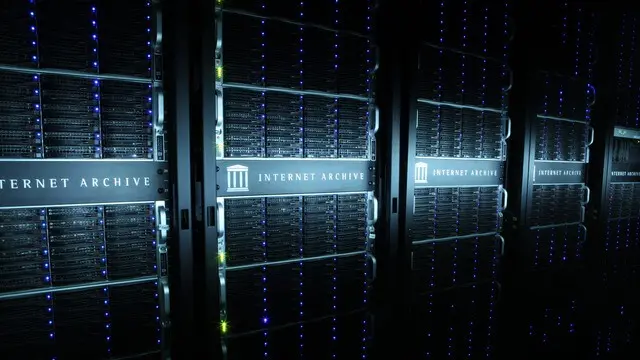
ST. PETERSBURG, Florida — In an era defined by rapid digital turnover, corporate media consolidation, and the growing threat of "link rot" and memory holes, the imperative to protect the historical record has never been more urgent. Recognizing this monumental challenge, the Internet Archive has announced that The Poynter Institute and Investigative Reporters and Editors (IRE) are the joint recipients of the prestigious 2026 Internet Archive Hero Award.
The dual-organization honor, formally announced on October 5, 2026, celebrates the groundbreaking collaborative initiative known as “Today’s News for Tomorrow.” This ambitious project addresses a quiet crisis unfolding across newsrooms worldwide: the systematic vanishing of local journalism from the digital landscape. By equipping news organizations with the technical infrastructure, training, and strategic frameworks needed to permanently preserve their archives, Poynter and IRE are ensuring that the digital age does not accidentally erase the foundational records of modern society.
Executive Overview: A Race Against Time for the Digital Record
The Internet Archive’s Hero Award is bestowed annually upon individuals, nations, and institutions that demonstrate visionary leadership in making information universally accessible for digital learners across the globe. Past recipients represent a pantheon of digital pioneers and public champions, including Sir Tim Berners-Lee, inventor of the World Wide Web; the sovereign nation of Aruba, for its digital heritage preservation initiatives; public information advocate Carl Malamud; copyright law expert Michelle Wu; and even the legendary rock band the Grateful Dead, recognized for their early adoption of viral digital sharing.
By joining this elite roster, Poynter and IRE are being recognized not just for their institutional excellence, but for confronting one of the most perilous vulnerabilities of modern journalism: the false assumption that the internet is permanent.
"Remember when we all thought that the internet was forever? Surprise. It’s not," said Kristen Hare, Poynter’s director of craft and local news, who spearheads the project for the institute.
The "Today’s News for Tomorrow" initiative directly counters the precarious nature of online publishing. Funded by Press Forward—the landmark national philanthropic movement dedicated to revitalizing local news—the initiative set an aggressive target: to bring digital preservation and web archive training to 300 news organizations throughout 2026 and 2027.
Through a structured curriculum of online and in-person instruction, participating newsrooms receive free access to critical tools, advanced digital preservation services, and sustained technical support. The core philosophy of the program is rooted in empowerment: preserving local journalism cannot be left solely to external actors; the creators of the news must be actively integrated into the preservation process.
Detailed Chronology: From Concept to Crisis-Driven Action
The genesis of "Today’s News for Tomorrow" did not emerge in a vacuum; it was born from a cascading series of structural failures within the media ecosystem over the preceding decade.
The Fragility of the Digital Ecosystem
In the early days of the World Wide Web, publishers cheered the transition from physical print to dynamic web pages. For the first time, local newspapers could broadcast their reporting instantly to a global audience, unconstrained by the physical limitations of ink and paper delivery trucks. However, this shift created a profound, unaddressed vulnerability. Unlike acid-free archival paper stored in climate-controlled temperature vaults, digital articles exist on fragile, ever-shifting platforms.
Over the last ten years, the vulnerabilities of digital-first publishing have been violently exposed. Major media conglomerates have folded, private equity firms have acquired and subsequently gutted historic newsrooms, and volatile corporate pivots have led to entire website domains being decommissioned overnight. When a corporate entity pulls the plug on a failing newsroom, decades of meticulous investigative reporting, community obituaries, local government oversight, and historical records routinely vanish into the digital ether.
March 2026: The Rollout of Instruction
Recognizing that waiting for systemic industry rescue was a fool’s errand, Poynter and IRE partnered with the Internet Archive to launch the instructional phase of "Today’s News for Tomorrow" in March 2026.
The program was designed with tiered intervention strategies. Newsrooms face daily financial and operational crises, making long-term planning a luxury few can afford. To combat this, the initiative integrated preservation training directly into workflows, showing editors and publishers how low-friction archiving tools could be embedded into daily publication pipelines without draining already-thin newsroom resources.
The instructional timeline spans the entirety of 2026 and continues through 2027, incorporating cohorts of news organizations ranging from hyper-local independent digital start-ups to legacy regional newspapers navigating digital transformation.
Supporting Context & Metrics: The Anatomy of "Today’s News for Tomorrow"
To truly understand the weight of the 2026 Internet Archive Hero Award, one must examine the staggering metrics and harsh realities facing modern newsrooms.
The Kitchen on Fire: Balancing Immediate Survival with Long-Term Preservation
Kristen Hare utilized a vivid metaphor to describe the challenge of convincing modern editors to prioritize archiving while their businesses are actively contracting:
"Working to convince local newsrooms to start planning and preserving their digital archives is a little like telling someone whose kitchen is on fire that there’s also black mold creeping across the attic."
The analogy strikes at the heart of the local news crisis. Newsrooms across the United States and globally are grappling with existential threats: plummeting advertising revenues, devastating layoffs, predatory corporate buyouts, and sweeping algorithmic changes by major tech platforms that have decimated referral traffic. In this hyper-urgent climate, asking a newsroom operating with a skeletal staff of three reporters to focus on a preservation strategy can feel disconnected from reality.
Yet, Hare notes that forward-thinking newsrooms are beginning to grasp the mortal danger of ignoring long-term preservation.
"Yes, there are urgent and pressing issues facing local newsrooms, but ignoring what happens to their work long term is equally dangerous… The newsrooms we’re working with get that. They’re looking for community partners, including universities, libraries and museums, considering building a preservation plan and recognizing that the internet won’t necessarily save their work for them."
Funding and Scale via Press Forward
The viability of "Today’s News for Tomorrow" is underpinned by Press Forward, a nationwide philanthropic coalition pooling resources to ensure the survival and health of local journalism. With Press Forward’s backing, Poynter and IRE have been able to remove financial barriers that traditionally prevent resource-constrained newsrooms from accessing enterprise-grade digital preservation services.
Participating newsrooms gain access to specialized archiving tools—such as those powered by the Internet Archive’s Archive-It service—allowing them to systematically capture and store their websites, multimedia projects, and databases in decentralized, permanent digital repositories.
Official Statements and Institutional Perspectives
The announcement of the 2026 Hero Award drew praise from across the international archival and journalistic communities.
In a joint statement, the Internet Archive commended the collaborative effort:
"In partnership with the Internet Archive, Poynter and IRE are helping newsrooms understand the importance of digital preservation and giving journalists the tools and training they need to protect their work for the future. The program recognizes that preserving local journalism cannot be left to chance: The people creating the news need to be part of preserving it."
Elaborating on the devastating impact of lost journalism, Kristen Hare highlighted the socio-political implications of disappearing digital archives:
"We’ve seen billionaires shut down newsrooms and disappear their websites, newsrooms lose decades of digital archives because of tech fumbles and attempts at rewriting history by wiping that history’s first draft. Internet Archive’s work is critical in preserving what’s on the internet, including the journalism. Poynter is truly honored to share this award with our partner, IRE, and to work with the Internet Archive, which fights every day to preserve our digital record."
The Poynter Institute: A Legacy of Journalistic Integrity
Headquartered in St. Petersburg, Florida, The Poynter Institute stands as a global beacon for journalistic standards, ethics, and education. Operating as a nonprofit organization, Poynter’s mission spans teaching journalism, covering media complexities, fostering community trust, and preserving press freedom in democracies worldwide.
Poynter’s expansive umbrella includes several powerhouse entities dedicated to truth and transparency, including:
- The Newmark Ethics Center
- The International Fact-Checking Network (IFCN)
- MediaWise (Poynter’s digital media literacy initiative)
- PolitiFact (the premier nonpartisan fact-checking organization)
By anchoring the "Today’s News for Tomorrow" initiative, Poynter reinforces its foundational belief that a healthy democracy requires an uncorrupted, accessible historical record. Support for Poynter and its programmatic entities directly safeguards the integrity of the free press and the U.S. First Amendment, fortifying public confidence in media at a time when institutional skepticism is at an all-time high.
Future Outlook: The Road Ahead for Digital Preservation
As the "Today’s News for Tomorrow" initiative pushes forward through its 2026 milestones and prepares for its 2027 curriculum, the urgency of its mission continues to accelerate. The digital landscape grows increasingly hostile to permanence, marked by unstable web platforms, shifting cloud infrastructure costs, and politically motivated efforts to alter or erase public records.
Expanding the Cohorts
Applications are officially open for news organizations seeking to join the 2027 cohorts of "Today’s News for Tomorrow." Independent newsrooms, digital-native publications, and legacy print outlets seeking to safeguard their digital assets are encouraged to apply through the official portal hosted via Archive-It.
Building a Resilient Network
Beyond individual newsroom training, the long-term vision of Poynter, IRE, and the Internet Archive is to build an interconnected ecosystem of community preservation. By forging alliances between newsrooms and local cultural institutions—such as university libraries, regional historical societies, and municipal archives—the project seeks to decentralize the guardianship of local history.
In doing so, these institutions are ensuring that future historians, researchers, legal scholars, and citizens will not be met with digital ghost towns when investigating the foundational events of our time. Through collective action, rigorous training, and unwavering institutional commitment, "Today’s News for Tomorrow" is proving that while the internet may not be automatically permanent, human vigilance and cooperation can make it so.
Media Contact & Further Information
For press inquiries, interview requests, or additional information regarding the 2026 Internet Archive Hero Award and the "Today’s News for Tomorrow" project, please contact:
- Jennifer Orsi
Vice President, Publishing and Local News Initiatives
The Poynter Institute
Email: [email protected]
Website: poynter.org