

The television landscape underwent a seismic shift with the conclusion of HBO’s critically acclaimed prestige series, Lanterns. Blending hardboiled procedural mystery with expansive space-opera mythology, the series finale not only resolved a decade-spanning murder mystery but fundamentally rewritten the ideological DNA of DC Comics’ Green Lantern mythos. At the center of this narrative triumph is Aaron Pierre’s commanding portrayal of John Stewart, a character who achieves his legendary destiny by explicitly rejecting the foundational dogma of the ancient Guardians of the Universe.
For decades, comic book lore and institutional television tropes dictated that heroism requires absolute fearlessness—an unyielding ability to focus willpower in the face of terror. Yet, Lanterns—steered by showrunner Chris Mundy, alongside executive producers Damon Lindelof and Tom King, with script contributions from writer Vanessa Baden Kelly—dared to ask a more radical question: What if the suppression of fear is not a virtue, but a fatal flaw?
Through a narrative spanning a parallel timeline between 2016 and 2026, the series explores the intersections of systemic racism, Black exceptionalism, generational trauma, and the weaponization of emotional suppression. By the time John Stewart crafts a revolutionary new oath to charge his ring, the series establishes a profound thesis: true heroism does not demand the erasure of fear, but its radical, empathetic embrace.
Detailed Chronology
The Seeds of Conditioning (2016)
The groundwork for the series’ thematic climax was laid in its 2016 timeline, where Aaron Pierre’s John Stewart and Kyle Chandler’s Hal Jordan operated as Earth’s designated Green Lanterns under the rigid oversight of the Guardians. During this era, John was shaped by strict institutional programming: he was trained to believe that a Green Lantern must be an unshakeable, emotionless instrument of cosmic order.
The tragic turning point of the 2016 arc involved a clandestine hunt for a rogue extraterrestrial identity later revealed to be Zoe (Portrayed by Poorna Jagannathan). Zoe, a synthetic "Manhunter" creation predating the Lantern Corps, had infiltrated Rushville, quietly embedding herself within the community. When John was ordered by the Guardians to terminate Zoe and forcefully strip Hal Jordan of his power, he executed the mandate with the cold, calculated focus required of his training. Yet, moments before her death, Zoe offered a cryptic smile—a chilling acknowledgment that her technological lineage had already outlived her.
The Murder in the Present (2026)
A decade later, the narrative shifts to 2026, where the fallout of the 2016 mission manifests as a gritty, small-town murder mystery. John Stewart is no longer a Green Lantern, having walked away from the Corps and the Guardians’ authoritarian control. Meanwhile, his former mentor, Hal Jordan, turns up dead, setting off a parallel investigation.
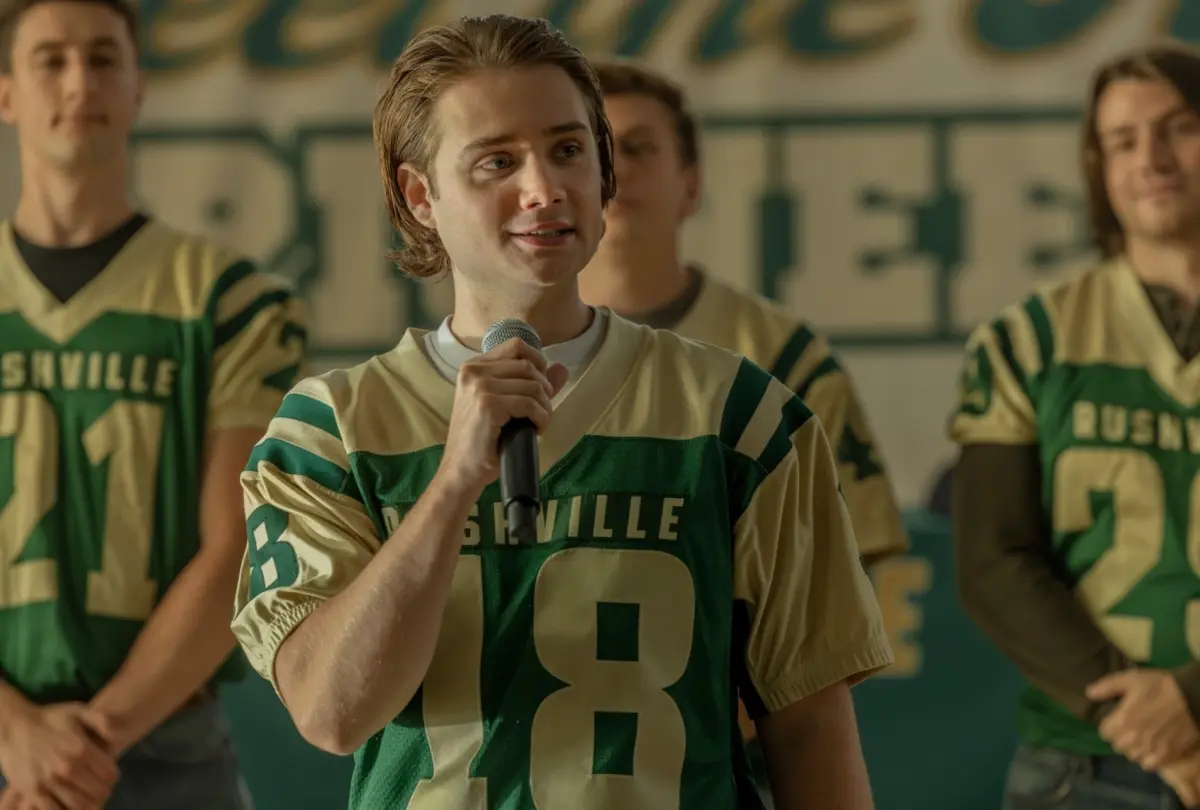
The murder investigation forces John into the orbit of local sheriff Kerry (Kelly Macdonald) and her high school athletic star son, Noah (Shea Pritchard). As the onion layers of the mystery peel back, John uncovers the dark truth: Zoe used alien Manhunter technology to impregnate Kerry, making Noah a synthetic hybrid and the biological heir to Zoe’s rogue legacy.
When Noah confesses to shooting Hal Jordan, his demeanor is marked by profound terror—not out of cowardice, but from the acute awareness of his own genetic programming pulling him toward political manipulation and ruthless ambition. However, the investigation reveals an even more startling twist: it was not Noah who pulled the trigger in cold blood to protect a monstrous legacy, but Kerry herself, acting out of the agonizing, protective terror felt by a mother shielding her child from a world designed to ostracize him.
The Final Confrontation and Rebirth
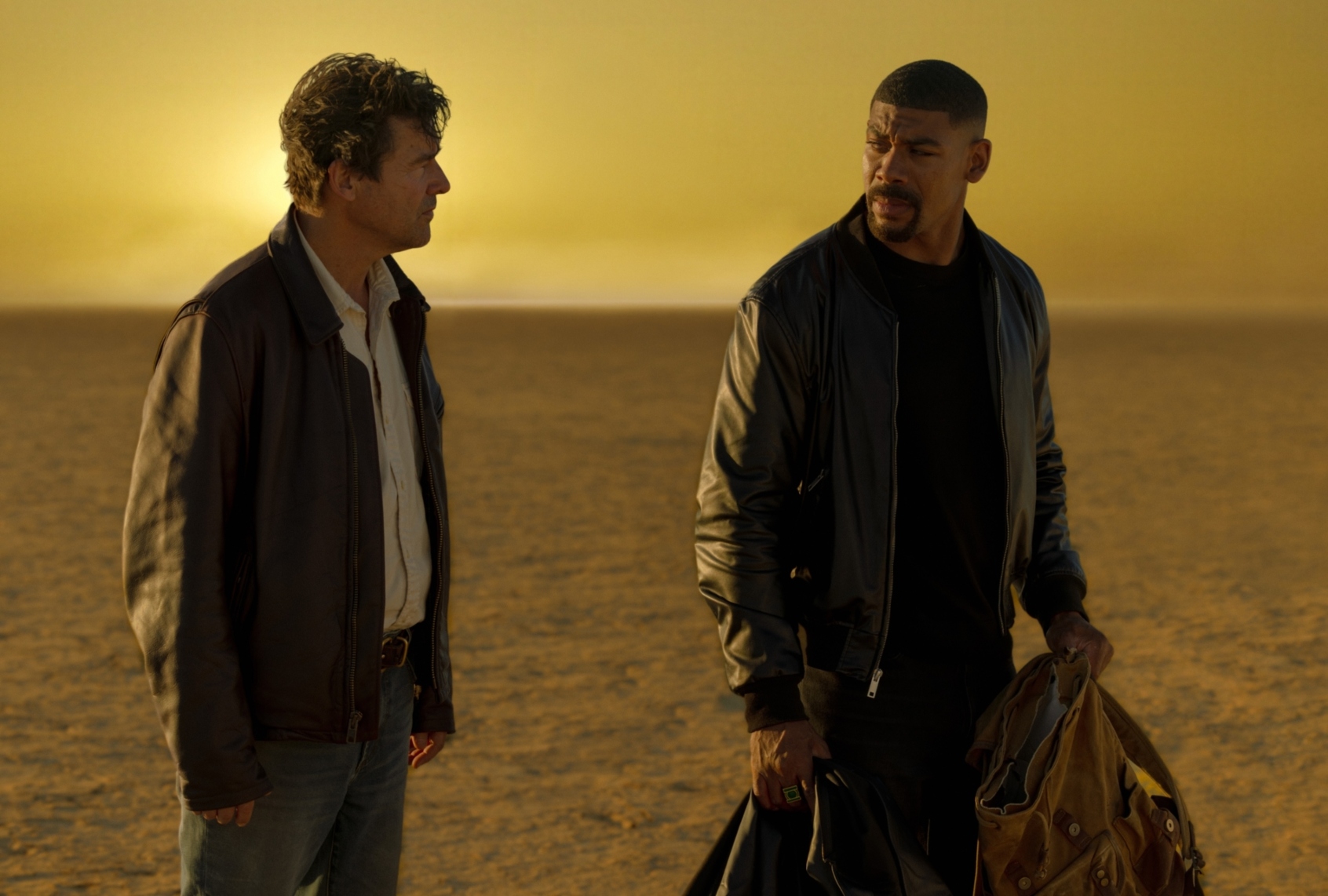
In the series finale, John faces a crossroads that mirrors his 2016 choices. Armed with the wisdom imparted by the exiled, fugitive Lantern Sinestro (Ulrich Thomsen) on a desolate dead world, John realizes that fear is not an enemy to be conquered, but an evolutionary intelligence. Sinestro’s insight—"Show me a species that’s fearless, I’ll show you something on the extinction list"—resonates deeply.
Instead of turning Noah over to face cosmic execution or exposing Kerry, John chooses empathy over dogmatic justice. He lets Noah live under the loving, nurturing guidance of his mother, ensuring that human care triumphs over synthetic programming.
Severing ties with the Guardians and dismissing the arrogant, establishment-backed Guy Gardner (Nathan Fillion), John establishes himself as an independent cosmic contractor. Standing amidst the dirt of Earth rather than the abstract clouds of the cosmos, John erases the guiding hologram of his deceased mentor, Hal Jordan, and charges his ring with a groundbreaking new mantra:
"In brightest day, in the darkest night / I’ll embrace my fear. I’ll do what’s right / I choose this ring, I choose this fight / In service to this lantern’s light."
Supporting Context & Metrics
The artistic risks taken by Lanterns produced a deeply polarized audience reception, sharply dividing viewers who tuned in strictly for traditional superhero spectacle from those who appreciated the show’s slow-burn, character-driven drama. While episode five delivered the requisite bombastic action, the rest of the eight-episode run relied on sharp dialogue, atmospheric tension, and intricate psychological examinations.
This creative direction invited critical discussions regarding how television handles systemic themes:
- The Sympathy vs. Empathy Divide: Cultural critics noted a distinct divergence between Lanterns and other anti-establishment superhero satires like Amazon’s The Boys or Max’s Peacemaker. While shows helmed by white creators (such as Eric Kripke and James Gunn) expertly convey sympathy for marginalized experiences from an external vantage point, Lanterns achieved true empathy.
- Behind-the-Scenes Authenticity: By bringing in writer Vanessa Baden Kelly alongside showrunner Chris Mundy, Damon Lindelof, and Tom King, the production imbued John Stewart’s journey with firsthand cultural reality. This grounded perspective created a visceral sense of familiarity for some viewers, while inducing discomfort—and subsequent online backlash—from audiences unaccustomed to stories told through the unfiltered lens of Black exceptionalism and the crushing demands placed upon Black men in positions of power.
Official Statements and Creative Insights
Reflecting on the philosophical weight of the series, the creative team intentionally designed Lanterns to interrogate the psychological toll of institutional expectations.
In behind-the-scenes featurettes released by HBO Max, showrunner Chris Mundy emphasized the importance of grounding cosmic elements in intimate, human struggles: "We didn’t just want to tell a story about space cops with magic rings. We wanted to examine what it costs a human being to wear that ring—the emotional armor you have to put on, and what happens when you finally decide to take it off."
The thematic emphasis on fear as an evolutionary tool was further highlighted by actor Aaron Pierre, who noted in promotional interviews: "John Stewart’s superpower isn’t that he doesn’t feel fear. It’s that he feels it entirely, acknowledges it, and chooses to act anyway. That’s what separates a true protector from an instrument of control."
Future Outlook
As Lanterns concludes its inaugural season, the cultural footprint it leaves on the DC Universe (DCU) is undeniable. By dismantling the infallible aura of the Guardians of the Universe and positioning John Stewart as an Earth-bound, independent protector operating outside corporate-cosmic oversight, HBO has charted a bold new course for serialized superhero television.
The narrative threads left dangling at the end of the finale—particularly Noah’s ongoing struggle against his Manhunter heritage, Kerry’s hidden culpability, and John’s adversarial yet pragmatic relationship with Guy Gardner—lay robust groundwork for a heavily anticipated second season.
Whether HBO officially greenlights a sophomore run remains to be seen, but the legacy of Lanterns is already secure. It has proven that comic book adaptations can successfully marry cerebral, socially conscious storytelling with prestige drama, leaving audiences with a refreshed perspective on what it truly means to wear the ring and face the dark.