In the high-stakes theater of modern digital marketing, search engine optimization (SEO) remains the ultimate battleground for organic visibility, customer acquisition, and long-term revenue generation. At the heart of any sophisticated SEO strategy lies precise, data-driven keyword research. Without it, organizations risk pouring resources into content creation that misses its target audience entirely.
Enter Semrush—an industry-leading, all-in-one marketing suite that has become the gold standard for digital strategists, agencies, and enterprise brands worldwide. Boasting an expansive database exceeding 24 billion keywords, Semrush offers an unmatched ecosystem of interconnected tools designed to decode search intent, analyze competitors, and map out authoritative content architectures.
This comprehensive guide serves as an investigative and authoritative blueprint for leveraging Semrush’s core keyword research modules—specifically the Keyword Manager, Keyword Magic Tool, and Keyword Gap analysis. Designed for professional marketers and business owners alike, this manual explores step-by-step methodologies to uncover existing quick-win opportunities, reverse-engineer competitor strategies, identify lucrative long-tail search queries, and construct semantic topic clusters that dominate search engine results pages (SERPs).
Detailed Chronology: The Evolution of Keyword Research and Modern Semrush Workflows
The methodology of keyword research has undergone a radical transformation over the past decade. In the early days of search engine optimization, keyword strategy was a mechanical exercise in exact-match volume hunting and keyword stuffing. Today, search engines powered by sophisticated machine learning algorithms—such as Google’s RankBrain and MUM—prioritize user intent, topical depth, and semantic relevance over rigid, isolated search strings.
Modern SEO requires a dynamic, multi-phased workflow that aligns search queries with specific stages of the buyer’s journey. The contemporary Semrush workflow reflects this shift, moving away from rudimentary keyword lists toward integrated content ecosystems.
Phase 1: Unearthing Existing Low-Hanging Fruit
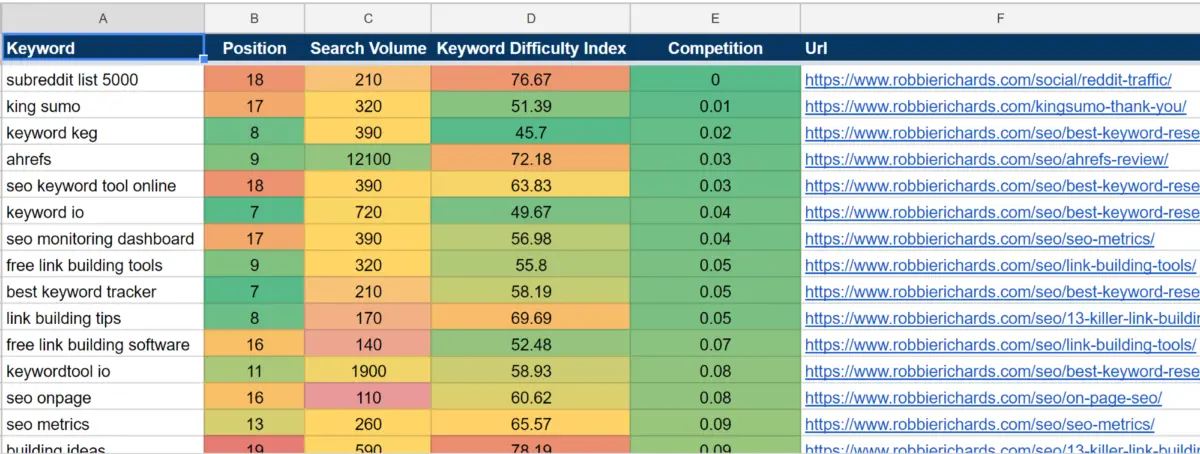
For websites with an established content footprint, the most lucrative starting point is rarely inventing new topics from scratch. Instead, the highest-ROI strategy involves identifying keywords where the domain already possesses search visibility—specifically ranking on pages two or three (positions 4 through 15)—but has yet to break into the coveted top-three organic slots.
By navigating to the Semrush SEO Toolkit, practitioners access the Organic Research >> Positions report. Applying targeted advanced filters—such as filtering for positions 4–15, setting baseline search volume parameters, and capping Keyword Difficulty (KD)—allows marketers to extract high-potential search terms that require minimal editorial optimization to capture a massive influx of organic traffic.
Phase 2: Competitive Intelligence and Subfolder Reverse-Engineering
Once low-hanging fruit has been cataloged, the strategic focus pivots outward to competitive intelligence. Competitor keyword research allows brands to bypass the trial-and-error phase of content planning by instantly identifying terms that are already driving conversions for industry peers.
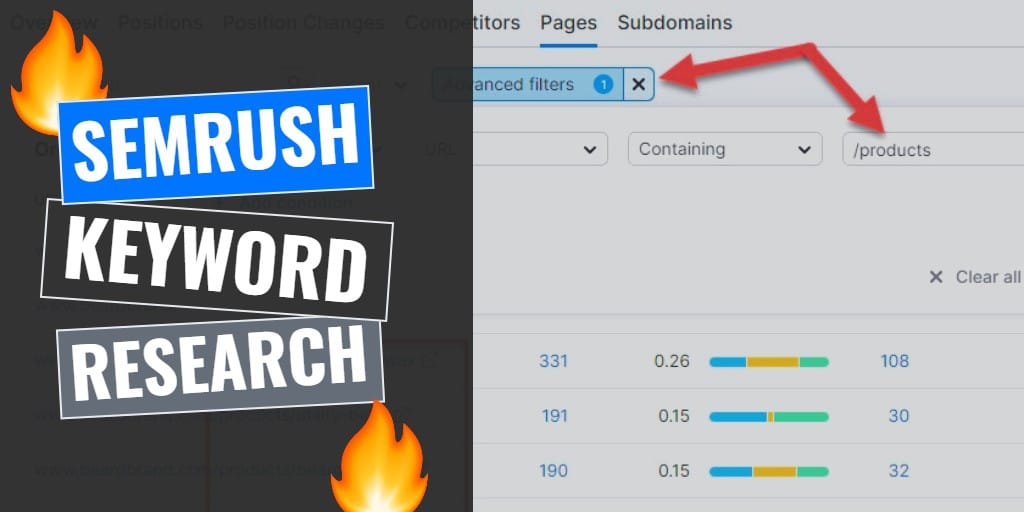
Advanced practitioners utilize subfolder analysis to drill down into specific sections of a competitor’s site—such as /products/ for e-commerce stores or /legal-services/ for professional practices. By pairing this with the Keyword Gap tool, digital marketers can perform comparative analyses across multiple domains simultaneously, instantly surfacing "missing" and "weak" keyword opportunities that represent immediate threats or missed market share.
Phase 3: Topical Expansion and Semantic Clustering
The final maturation of the modern keyword research workflow involves scaling content production through automated topical clustering. Rather than targeting isolated keywords haphazardly, top-tier SEO campaigns group hundreds of related search queries into cohesive topic clusters. Using tools like the Semrush Keyword Manager, marketers can synthesize thousands of variations into structured pillar-and-cluster architectures, ensuring complete topical authority and signaling deep subject-matter expertise to search engines.
To execute these phases effectively, marketers must master the specific metrics and modules that power the Semrush platform. Understanding how to interpret data points like Keyword Difficulty (KD), search intent, and traffic distribution separates amateur optimization from enterprise-level execution.
Decoding the Metrics That Matter
Search Volume: Represents the average monthly number of searches for a specific keyword over a 12-month rolling window. While high volume is enticing, context is paramount; transactional and commercial intent often trumps raw volume when driving bottom-line revenue.
Keyword Difficulty (KD %): A proprietary Semrush metric scored from 1 to 100 that estimates how difficult it would be to rank organically in the top 10 positions for a given search query. Low KD percentages paired with healthy search volume represent prime targets for rapid traffic acquisition.
Search Intent Classification: Semrush automatically categorizes keywords into four distinct intent buckets: Informational, Navigational, Commercial, and Transactional. Aligning content formats with these intent classifications is critical for matching user expectations and satisfying search engine quality raters.
Maximizing the Keyword Magic Tool
The Keyword Magic Tool serves as the primary engine for expansive topical research. By inputting a foundational seed term, users unlock access to billions of variations, instantly segmenting them using left-hand sidebar category groupings and advanced search modifiers.
For affiliate marketers and e-commerce brands alike, filtering for consideration-stage modifiers—such as "best," "review," "vs," or specific product comparisons—surfaces mid-funnel queries where users are actively evaluating purchasing decisions. Similarly, isolating question-based keywords (how, what, why, where) yields an abundance of low-competition, informational queries that build early-funnel brand awareness.
Official Statements & Industry Perspectives on Integrated SEO Architecture
As the search landscape grows increasingly competitive, industry leaders emphasize the necessity of platform integration over fragmented, single-point tools.
"The true power of modern enterprise SEO platforms does not stem from isolated data retrieval, but from seamless workflow integration," notes digital marketing strategist Robbie Richards. "When keyword research data flows natively from discovery tools directly into ranking monitors and on-page optimization assistants, organizations eliminate operational friction and scale their content velocity exponentially."
Enterprise SEO analysts echo this sentiment, pointing out that manual data exportation between disparate software suites introduces human error, slows down editorial pipelines, and obscures performance attribution. Semrush’s ability to send finalized keyword lists directly into the Position Tracking module for ongoing rank monitoring or transfer them into the SEO Writing Assistant for real-time semantic optimization represents a paradigm shift in how digital marketing teams operate.
Furthermore, the integration of PPC (Pay-Per-Click) and organic data within the Keyword Gap tool offers a unique cross-channel perspective. By identifying terms where competitors are actively bidding on paid search while organic rankings lag, organizations can establish immediate "paid aircover"—capturing high-intent conversions via ads while simultaneously developing long-term organic ranking strategies for the same search queries.
Future Outlook: The Next Frontier of Keyword Research and AI Integration
Looking ahead, the intersection of artificial intelligence and search engine optimization will continue to redefine the boundaries of keyword research. As conversational search engines, AI-generated overviews (such as Google’s Search Generative Experience), and voice-activated assistants alter how users interact with the web, traditional keyword matching is evolving into intent-driven semantic mapping.
Future-proof SEO strategies will increasingly rely on advanced clustering and topic modeling to capture entire conversational ecosystems rather than isolated string queries. Platforms like Semrush are uniquely positioned to spearhead this transition, continually expanding their intent-recognition algorithms and natural language processing capabilities to help brands anticipate user needs before they are typed into a search bar.
Actionable Takeaways for Modern Marketers
Audit Your Existing Footprint First: Always begin with an organic positions audit (positions 4–15) to capture quick-win traffic gains before investing in new content creation.
Leverage Subfolder Intelligence: Reverse-engineer competitor subfolders (/products/, /services/) to uncover high-intent commercial keywords that directly align with your monetization model.
Embrace Semantic Clustering: Utilize automated clustering tools to group hundreds of related terms into cohesive content hubs, establishing undeniable topical authority.
Demand Workflow Integration: Streamline your operational pipeline by utilizing integrated toolsets that bridge keyword research, rank tracking, and on-page content optimization.
By adopting these rigorous, data-backed methodologies and leveraging the full suite of Semrush’s advanced capabilities, organizations can cut through the noise of the modern SERP and secure sustainable, high-ROI organic growth for years to come.