

Executive Overview
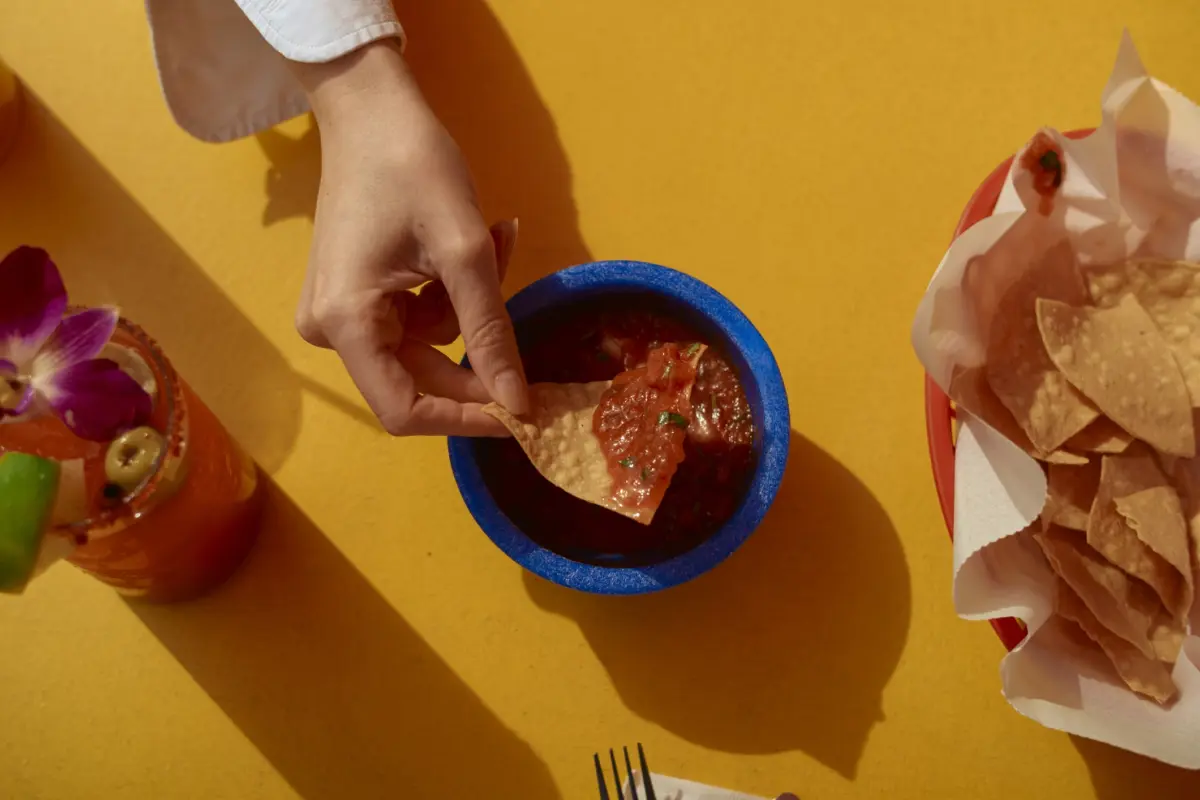
For generations of American diners, the culinary journey at a neighborhood Mexican restaurant has begun with a silent, seamless choreography. Before a single beverage order is logged or an entrée is weighed, a server materializes at the table to drop a warm, woven basket of salted tortilla chips alongside twin ramekins of salsa—one mild and bright, the other dark, smoky, and laced with charred jalapeño.
This gesture of immediate hospitality has long been treated as a given: an unwritten baseline of restaurant culture that flattened economic divides and welcomed guests regardless of their budgets.
Today, however, that foundational ritual faces an existential threat. A combination of federal trade policy, specifically post-2025 agricultural tariffs on fresh produce imports, and mounting inflationary pressures across the supply chain is forcing a fundamental shift in how restaurants operate. When the Trump administration withdrew from the long-standing Tomato Suspension Agreement, slapping a 17.09% antidumping duty on Mexican tomatoes, it sent shockwaves through an industry already buckling under high labor, utility, and credit card processing costs. Combined with adverse weather conditions in key growing regions, these policy shifts drove fresh tomato prices to historic highs.
The result is more than a commercial headache for restaurateurs; it marks a subtle erosion of dining culture. As the financial scaffolding of the restaurant industry is laid bare by rising costs, beloved complimentary staples are transforming into calculated line items. This report investigates the intersection of macroeconomic trade policy and neighborhood hospitality, examining how shifts in global trade are dismantling small-scale restaurant traditions one ramekin at a time.
Detailed Chronology: From Trade Policy to the Table
The dismantling of the complimentary chip-and-salsa basket did not happen overnight; it is the culmination of regulatory changes, diplomatic maneuvers, and meteorological disruptions that converged to squeeze restaurant profit margins to a breaking point.
July 2025: The Collapse of the Tomato Suspension Agreement
The tipping point for the current crisis arrived in mid-2025. For decades, the United States and Mexican tomato industries operated under the Tomato Suspension Agreement, a framework designed to stabilize the domestic market while allowing steady imports of fresh produce from south of the border. Proponents argued the agreement prevented unfair market flooding; critics within domestic farming sectors contended it failed to adequately protect American growers.
In July 2025, the federal government officially withdrew from the pact. In its place, the Department of Commerce levied a 17.09% antidumping duty on the vast majority of fresh tomatoes imported from Mexico. The administration framed the decision as a decisive victory for domestic agricultural producers, pointing to the necessity of countering unfair pricing strategies. Yet, the policy instantly altered the supply math for an ingredient fundamental to commercial kitchens across the United States.
Late 2025 to Early 2026: The Perfect Storm of Weather and Inflation
Policy shifts rarely act in a vacuum. Shortly after the implementation of the 17.09% tariff, adverse weather patterns struck major growing regions in both Mexico and Florida. Droughts, unseasonal heatwaves, and unexpected freezes decimated crop yields, compounding the artificial scarcity created by the trade duties.
By early 2026, the fresh tomato market experienced unprecedented volatility. According to agricultural and industry groups, box prices for fresh tomatoes skyrocketed, peaking at approximately $80 per box. While major grocery retailers quickly adjusted by shifting pricing models or scaling back their produce displays, independent and regional restaurants absorbed the initial shock, desperate to shield their customer bases from sudden menu price hikes.
Spring and Summer 2026: The Breaking Point for Hospitality
By the middle of 2026, the cumulative weight of operational expenses rendered the status quo unsustainable. Restaurant operators faced a relentless cascade of rising costs: minimum wage adjustments, skyrocketing commercial insurance premiums, inflated utility bills, and steep credit card processing swipe fees.
When factored alongside the inflated cost of core ingredients like tomatoes, onions, and jalapeños, the traditional business model of absorbing the cost of complimentary items fractured. Industry groups reported that restaurants across the American Southwest and beyond began quietly phasing out free chips and salsa, shifting toward charging nominal fees or eliminating the pre-meal ritual entirely to protect razor-thin profit margins.
Supporting Context & Metrics: The Anatomy of a Restaurant Margin
To understand why a simple basket of chips and salsa is vulnerable to macroeconomic policy, one must examine the precarious financial reality of the modern American restaurant industry.
Operating on Razor-Thin Margins
Even during periods of robust economic expansion, independent restaurants operate on notoriously narrow profit margins, typically hovering between 3% and 5%. Every component of a restaurant’s daily operation is subjected to intense cost scrutiny. When a staple input experiences a price surge of 20%, 30%, or higher—as fresh tomatoes did following the 2025 tariff implementation—the impact cascades across the entire P&L (Profit and Loss) statement.
| Expense Category | Typical % of Revenue | Recent Trend (2025–2026) |
|---|---|---|
| Cost of Goods Sold (Food & Bev) | 28% – 35% | Sharply Up (driven by produce tariffs & supply shocks) |
| Labor | 30% – 35% | Up (due to wage adjustments and retention pressures) |
| Occupancy (Rent & Utilities) | 8% – 12% | Up (commercial real estate and energy inflation) |
| Operating & Administrative (Fees/Insurance) | 5% – 10% | Significantly Up (insurance premiums and credit card swipe fees) |
The Real Cost of "Free"
In the economics of the hospitality industry, nothing is truly free. The labor required to prep, slice, and season tomatoes; the energy expended to fry tortilla chips daily; the cost of purchasing, washing, and sanitizing ceramic ramekins and woven baskets—all of these represent real capital outlays.
For decades, restaurants absorbed these overhead costs as a marketing expense, viewing the complimentary starter as an investment in atmosphere, customer loyalty, and table-turn speed. However, when the baseline cost of the raw agricultural inputs spikes due to punitive trade duties, the math changes. When a case of tomatoes jumps to $80, the hidden subsidy that allowed restaurants to give away food before an order was placed evaporates.
Official Statements and Industry Perspectives
The friction between national agricultural policy and local dining rooms has drawn sharp commentary from industry stakeholders, trade associations, and policy defenders.
The Federal Position
Supporters of the administration’s trade actions maintain that protecting domestic agricultural markets is a matter of national economic security. In statements released by the White House following the July 2025 policy shift, officials emphasized that the tariffs are designed to level the playing field for American farmers who face stringent regulatory and labor standards. Proponents argue that correcting perceived dumping practices ensures the long-term viability of domestic agriculture, framing import duties as a necessary corrective measure against foreign market distortion.
The Restaurant Industry Response
In contrast, trade organizations representing food service operators warn of unintended downstream consequences. Kelsey Erickson Streufert, chief public affairs officer for the Texas Restaurant Association, highlighted the precarious timing of the policy shifts in interviews with regional media outlets.
"The challenge is for our Texas restaurants, they operate on very narrow profit margins in what I would call good economic times," Streufert noted, emphasizing that the current economic climate is far from ideal given concurrent spikes in labor, insurance, and supply expenses.
Dante Galeazzi, president of the Texas International Produce Association, underscored the direct impact on everyday consumers and dining establishments. Pointing to skyrocketing box prices, Galeazzi noted that while grocery stores can quickly pivot away from high-priced produce, restaurants are tethered to consumer expectations.
"You have restaurants that are simply saying, Look, I can’t afford to put salsa on the tables anymore," Galeazzi observed. "What are consumers going to do? Where are consumers going to find this relief?"
Future Outlook: The Changing Texture of American Dining
As the American restaurant industry adapts to a new normal characterized by volatile commodity prices and protectionist trade policies, the long-term cultural impacts are becoming clear.
The Visibility of Economic Scaffolding
The most profound shift is not financial, but psychological. When a restaurant is forced to charge for chips and salsa, or to ask patrons whether they genuinely want a second basket, it shatters the illusion of effortless hospitality. It moves the diner imperceptibly from the status of an honored guest to that of a consumer managing a precise financial ledger.
This transparency can breed caution. Diners who once enjoyed a casual meal without calculating every side dish or appetizer now find themselves weighing micro-decisions: Do we need these chips today? Is the extra ramekin of queso worth the markup?
Toward a New Paradigm of Hospitality
Yet, the adaptability of the culinary industry should not be underestimated. Just as establishments weathered pandemic-era supply chain crunches, rising minimum wages, and inflation waves by rethinking menu designs, portion sizes, and service models, neighborhood restaurants are finding creative ways to survive. Some are shifting toward seasonal, locally sourced produce alternatives to bypass international tariffs, while others are leaning into transparent pricing models where customers willingly pay for premium appetizers that were previously subsidized.
Ultimately, the potential loss of the complimentary chip basket serves as a microcosm of modern globalization. Trade policies hatched in Washington boardrooms and trade tribunals do not remain abstract theories; they ripple downward until they land on a sticky laminate table in a regional family restaurant. Whether that table remains bare or continues to host the familiar red ramekins will depend on how the industry navigates the high cost of keeping hospitality alive.