

Executive Overview
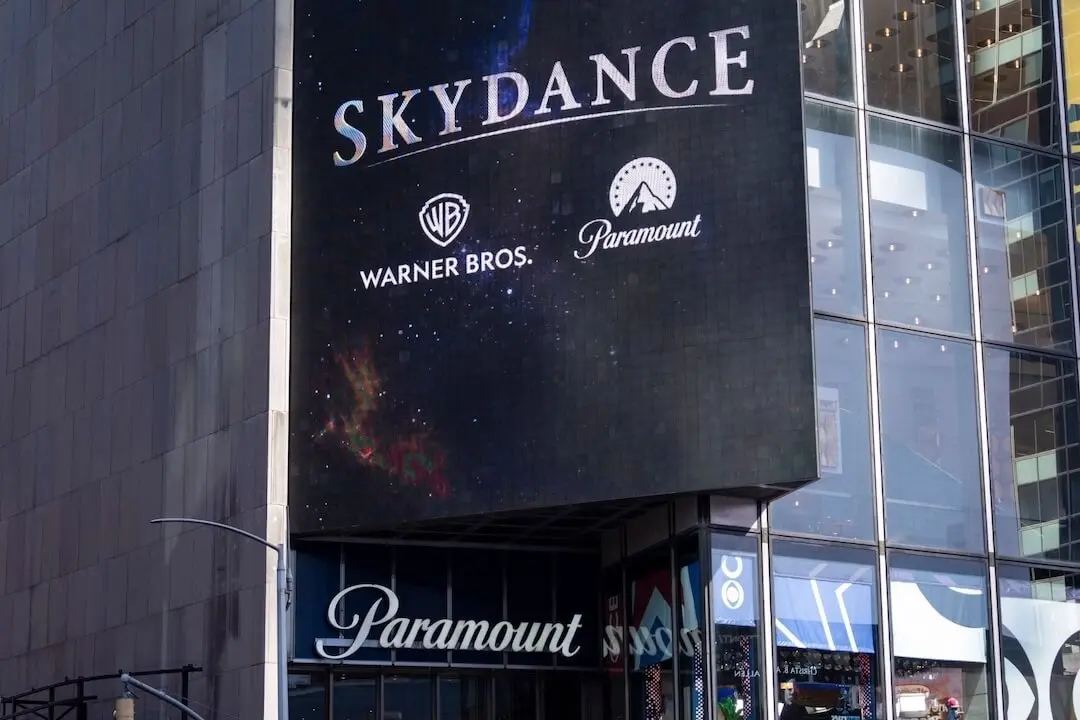
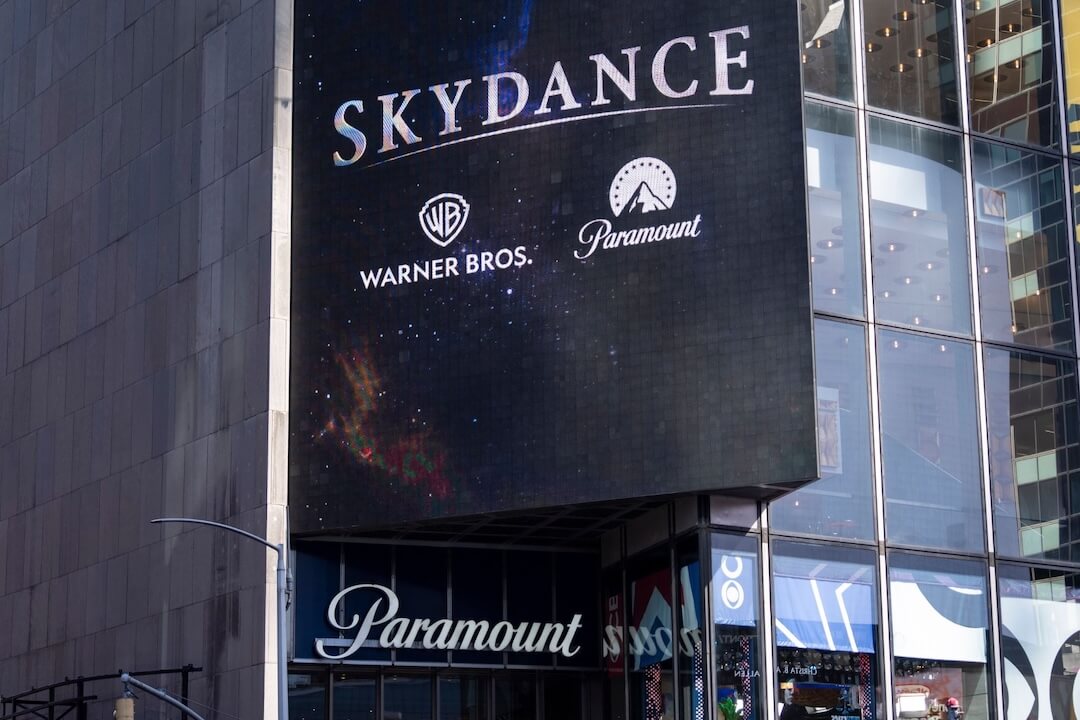
The landscape of global entertainment, streaming, and broadcast journalism has shifted permanently. Following months of legal wrangling, intense boardroom arm-wrestling, and high-profile pushback from some of the industry’s most influential stakeholders, the monumental $111 billion merger between Paramount Skydance and Warner Bros. Discovery (WBD) officially closed on Tuesday.
The resulting megacorporation—operating under the consolidated banner of Skydance—now commands an unprecedented footprint across Hollywood film and television studios, premier streaming platforms (including Paramount+ and HBO Max), and foundational news giants CNN and CBS News.
However, the dawn of this new era is accompanied by significant corporate turbulence. Financial analysts have immediately flagged concerns regarding the combined entity’s towering debt load, and leadership has already signaled the painful necessity of massive workforce reductions. Simultaneously, the broader media ecosystem is grappling with parallel seismic shocks: Disney’s high-stakes federal lawsuit against the Federal Communications Commission (FCC) over local broadcast license renewals, and a polarizing sports media controversy in Portland that has reignited fierce debates regarding cancel culture, youthful digital footprints, and institutional accountability.
Detailed Chronology of the Skydance-WBD Mega-Deal
The path to closing the $111 billion transaction was fraught with procedural, financial, and legal obstacles. For months, industry observers watched as Skydance maneuvered through regulatory hurdles and courtrooms to secure what is arguably the most transformative acquisition in modern media history.
The Closing and Corporate Structure
When the deal officially crossed the finish line on Tuesday, it birthed a consolidated powerhouse. Skydance Chairman and Co-CEO David Ellison hailed the milestone in a public statement:
"Today is a historic day, not just for Skydance but for our entire industry. We couldn’t be more excited to get to work."
The newly formed company instantly centralizes a vast library of intellectual property and distribution channels. By combining Paramount and Warner Bros.’ legacy film and television studios with Paramount+ and HBO Max, Skydance has engineered a streaming behemoth designed to compete directly with Netflix and Disney. Furthermore, the integration brings two of the most consequential broadcasting operations in the free world—CNN and CBS News—under a single corporate umbrella.
Financial Reality and Looming Layoffs
The elation of closing the mega-deal was quickly tempered by economic realities. Writing for The New York Times, media reporter Benjamin Mullin noted immediate signs of turbulence:
"On Tuesday, the ratings agency Fitch said it was downgrading the combined company to reflect increased debt as well as ‘significant execution and integration risks.’ And Mr. Ellison and Mr. Kreiz alluded to the prospect of looming layoffs in their memo. They must deliver $6 billion in cost-cutting over the next three years — a target they are likely to hit, in part by eliminating thousands of jobs."
In a joint memo to employees, Skydance Co-CEOs David Ellison and Ynon Kreiz addressed the human cost of the restructuring:
"Integrating two companies will bring change, including difficult decisions that affect our workforce. We are committed to handling this process thoughtfully and respectfully."
The Fate of David Zaslav
With the acquisition complete, Warner Bros. Discovery President and CEO David Zaslav has officially exited the company. Zaslav released a three-minute farewell video to WBD employees, reflecting on his tenure:
"For me, it’s been a great honor to be alongside all of you. I hope you take pride in what you’ve built, what you’ve created, and the role you’ve played in shaping an extraordinary history… I can’t wait to see what you do in the years ahead."
According to Variety’s Todd Spangler, Zaslav departs as one of the highest-compensated executives in media history, with a 2025 pay package totaling $165 million and a guaranteed "golden parachute" severance payout of at least $550 million.
Supporting Context & Metrics: Editorial Independence and the NFL Gamble
Integrating two colossal media networks while navigating external political pressures and vital sports rights renewals presents David Ellison with a formidable balancing act.
CNN and CBS News: Under One Roof
For news industry insiders, the central question revolves around how CNN and CBS News will operate under shared ownership. For the immediate future, operational leadership remains distinct: Bari Weiss continues to serve as editor-in-chief of CBS News, while Mark Thompson heads CNN.
Addressing staff during a Tuesday call, Weiss sought to calm anxieties, stating, "Nothing right now is going to change. This is a process that’s going to unfold under time."
Meanwhile, CNN faced acute internal and external scrutiny regarding Ellison’s well-documented ties to President Donald Trump—including hosting a dinner for Trump and socializing with him at Ultimate Fighting Championship (UFC) events. Skeptics wondered if Ellison would exert political influence over CNN’s editorial stance.
Ellison decisively addressed these concerns during a Tuesday town hall meeting moderated by CNN anchor Anderson Cooper. When Cooper pressed him with the direct question, "You’re pledging not to interfere with news coverage of CNN?" Ellison responded unequivocally: "Correct. We’ve been very clear. We believe in complete editorial independence. We trust Mark. We trust the team." Ellison further bolstered staff morale by backing CNN’s aggressive resistance against administration attempts to restrict the network’s press access.
The High-Stakes NFL Rights Renewal
Beyond newsrooms and streaming apps, Ellison must protect and stabilize the company’s vital revenue streams—chief among them, live sports. Writing for The New York Times, Ken Belson emphasized the irreplaceable value of sports programming:
"When it comes to attracting viewers, nothing beats live sports, one of the last bastions of appointment viewing. And in the sports world, nothing draws viewers like the National Football League."
CBS Sports’ current multi-billion-dollar broadcast agreement with the NFL—costing roughly $2.1 billion annually—is slated to expire at the conclusion of the 2033 season. However, because control of CBS Sports shifted during Ellison’s acquisition of Paramount, the NFL retained a contractual window to reopen negotiations or exercise a change-of-control opt-out clause following the 2029 season.
While the NFL opted not to trigger an immediate change-of-control penalty, industry analysts suggest the league could leverage its position to extract an additional $1 billion per year from CBS Sports. In exchange, the NFL would permanently waive its 2029 opt-out clause, providing CBS Sports with long-term rights certainty well into the next decade.
Official Statements & Legal Fronts: Disney vs. the FCC
While Skydance absorbs WBD, another regulatory battle is playing out in federal court, with massive implications for the future of broadcast journalism and corporate free speech.
The ABC-FCC Legal Showdown
In April, Federal Communications Commission (FCC) Chairman Brendan Carr initiated an unprecedented early review of local broadcast licenses for eight ABC television stations. On Tuesday, The Walt Disney Company—parent company of ABC—pushed back aggressively in federal court, accusing the Trump administration of "blatant violations of the U.S. Constitution" and petitioning a judge to issue an injunction halting the FCC’s early review. The Commission has asked the court to dismiss Disney’s suit outright.
Disney argues that Carr and the FCC are weaponizing the regulatory process at the behest of President Trump, who has frequently lambasted ABC programming such as Jimmy Kimmel Live! and The View. Conversely, the FCC maintains that its inquiry is focused on ABC’s corporate diversity, equity, and inclusion employment practices.
Reporting on the proceedings for The Guardian, Jeremy Barr noted that District Judge Loren AliKhan appeared skeptical of government justifications:
"District judge Loren AliKhan seemed unswayed by government arguments that the order to force Disney’s ABC to apply years early to renew local television station licenses was tied to an investigation into parent company Disney’s hiring practices."
Potential Fallout for the Broadcasting Industry
Legal scholars and media analysts are sharply divided over the ultimate outcome of the litigation. As The New York Times journalists John Koblin and Jim Rutenberg observed:
"If the judge rules in Disney’s favor, it will be a stinging loss for Mr. Carr, and could undermine his nearly two-year effort to rein in the major broadcast networks with the looming prospect of government action… Legal experts agree that ABC’s success in the case will hinge on making a convincing argument that it is suffering immediate harm through the F.C.C.’s adjudication process."
A formal judicial ruling is anticipated within the week, setting a vital precedent for federal oversight of media conglomerates.
Future Outlook: The Portland Trail Blazers Controversy
Amid corporate mega-deals and constitutional lawsuits, the sports media ecosystem was rocked by a rapid-fire hiring and firing controversy that exposed the volatile intersection of youthful social media behavior and professional accountability.
The Braiden Bell Incident
On October 1, the NBA’s Portland Trail Blazers proudly announced the hiring of 29-year-old Braiden Bell as their new television play-by-play announcer. Within hours, however, the team abruptly reversed course and fired Bell after investigative reporters uncovered deeply offensive tweets he had posted in 2012 when he was 15 years old.
The unearthed posts included explicit anti-Asian sentiments and misogynistic language. The digital footprint was first flagged by Devon Haskins, a reporter for KGW News (NBC’s Portland affiliate). KGW news director John Tierney confirmed the reporting timeline on social media: "KGW reporter @devonhaskins found the tweets this afternoon. We were in the process of reporting our story when the Blazers sent us a statement that they fired Bell."
In an official statement explaining the immediate termination, the Trail Blazers declared:
"The Portland Trail Blazers have zero tolerance for racist, sexist, or harmful comments. Social media posts made by our recently announced play-by-play broadcaster are in clear violation of team and league policies, as well as our values and expectations. Therefore, we will not be moving forward with this broadcaster… We did not meet our own bar in this process, and for that we apologize to Blazers fans and to Rip City."
The Public Debate Over Retrospective Accountability
The incident triggered an intense national debate within journalism and sports broadcasting. Critics and defenders clashed over whether an individual should face career ruin for comments made as a minor.
KGW noted in its reporting that its investigation "did not locate any offensive tweets from Bell after he became an adult."
In a public statement, Bell expressed remorse:
"I am deeply sorry for the language that I used on Twitter. These tweets, while wrong, were written by me 14 years ago while I was only 15 years old and have no reflection of who I am today… I regret this being the first impression to many of you online, but I can take solace in knowing that the people who truly know me understand that this is not the kind of person I am."
Bell’s legal counsel, Arnie Herz, formally appealed to the organization for reinstatement, arguing:
"Should the worst words a fifteen-year-old ever wrote decide the rest of his life? That is the question now before the Portland Trail Blazers… What he is asking is whether a boy’s words from fourteen years ago should outweigh everything the man has done since. Accountability means owning what you did and showing who you have become."
The Trail Blazers ultimately declined to reconsider, issuing a concise closing statement to The Athletic: "We stand by our statement issued last week and have no further comment at this time. We wish Mr. Bell the best."
The Digital Hygiene Advice for Emerging Journalists
The severe backlash faced by KGW reporter Devon Haskins—who was forced to delete his X account following heavy online harassment from critics of the story—underscored the toxic nature of modern media discourse.
Weighing in on the episode, veteran sports journalist Jemele Hill offered practical advice to the next generation of reporters:
"I tell every young journalist to delete their social media accounts and just start new ones once they begin pursuing this career. There is no way you were posting anything on social media as a teenager that is going to age well. You aren’t famous. You don’t have a following big enough to justify keeping it. Just start over."
Conclusion
As the dust settles on Skydance’s $111 billion acquisition of Warner Bros. Discovery, the media industry enters an era of stark contrasts. On one hand, David Ellison commands an unprecedented empire bridging Hollywood studios, streaming subscriptions, and premier news networks. On the other hand, the heavy burden of debt, impending mass layoffs, ongoing regulatory crackdowns, and the unpredictable cultural fault lines of digital history ensure that the road ahead for the newly minted Skydance megacorporation will be anything but smooth.