

Originally published via the Student Press Report, a national news desk highlighting the successes and challenges facing contemporary college journalism.
Executive Overview
Across college and university campuses in the United States, an adversarial shift is quietly reshaping the landscape of higher education. Institutions that historically champion freedom of the press and democratic inquiry in their classrooms are increasingly displaying a profound intolerance for those same principles when applied to their own operations.
In recent months, a wave of high-stakes investigative reporting by student journalists has brought to light systemic failures, alleged legal violations, and aggressive crackdowns on institutional transparency at universities nationwide. From the Ivy League to small private liberal arts colleges and major public research institutions, campus newspapers are finding themselves locked in bitter, high-profile conflicts with the very administrators tasked with protecting student welfare.
These disputes are no longer isolated campus squabbles over funding or publication space. Instead, they represent a systemic collision between institutional self-preservation and the unyielding public-service mission of the independent student press. When student reporters uncover abuses—ranging from the unauthorized sale of donated human remains to private interrogations of student activists and opaque financial reallocations—university administrations have frequently responded with stonewalling, public discreditation campaigns, and, in extreme cases, direct legal threats.
Yet, rather than silencing these newsrooms, these aggressive tactics have catalyzed a new generation of resilient reporters. This report examines three defining battles between student watchdogs and institutional power, offering a comprehensive look at the high cost of speaking truth to power on America’s campuses.
Detailed Chronology: Anatomy of Three Campus Battles
1. The University of Southern California & UC San Diego: The Cadaver Controversy
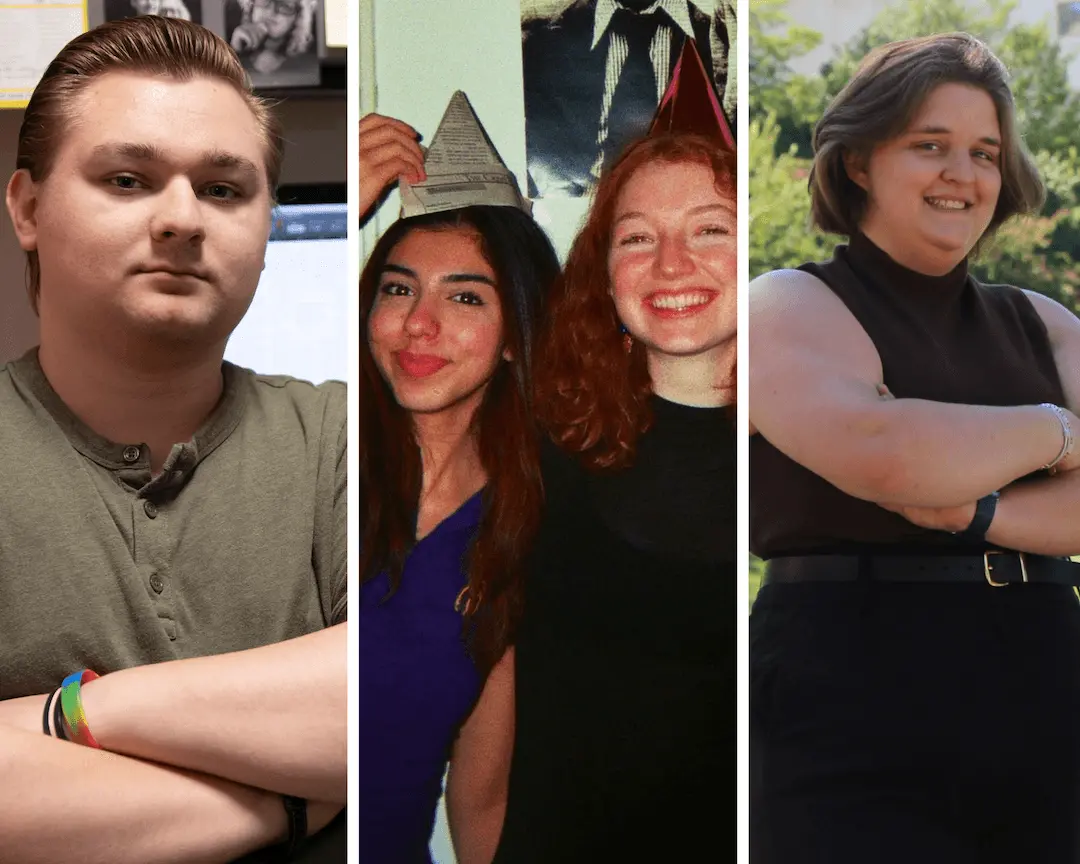
For Jennifer Nehrer, a recent journalism graduate from the University of Southern California (USC) and current news associate at CNN, the reality of reporting on institutional power hit home in a deeply visceral way.
The story began when Nehrer’s roommate relayed a staggering report: USC had allegedly been acquiring bodies donated to its medical school and selling them to the U.S. Navy, which in turn routed them to the Israeli military for training purposes. Recognizing the immense gravity of the allegations, the student investigative team at Annenberg Media mobilized, partnering with reporters at The UCSD Guardian to investigate parallel programs across California universities.
Nehrer’s specific assignment was among the most harrowing tasks a reporter can face: contacting grieving families to inform them that the remains of their deceased relatives—donated under the assumption they would aid medical education—may have been subjected to foreign military handling without informed consent.
As the joint investigation progressed, both universities deployed defensive roadblocks. Institutions stalled, obfuscated, and provided contradictory statements that directly contradicted official records. When answers were given at all, officials frequently bypassed written trails to deliver information via unrecorded phone calls.
Following the publication of the joint exposé, public reaction was overwhelmingly supportive, with readers expressing deep gratitude for the transparency. However, the institutional blowback was swift. When one woman emailed UC San Diego to rescind her own future body donation after reading the report, university representatives allegedly fired back with a hastily written letter accusing the student journalists of spreading lies and dismissing them as reporters "with an agenda."
Despite the hostility, the reporting bore fruit. On September 23, USC Annenberg Media reported that the university would formally terminate its contract to sell cadavers to the Navy, following UCSD’s decision to sever its own supply pipeline.
2. Southern Illinois University Edwardsville: Financial "Sweeps" and Legal Threats
At Southern Illinois University Edwardsville (SIUE), the friction between the administration and the independent student newspaper, The Alestle, has spanned years, progressively intensifying into open warfare.
Dylan Hembrough, who has served as The Alestle’s editor-in-chief for three years, has documented a steady degradation of institutional relations. The friction ignited in the fall of 2024 following an exposé on University Housing policies that allegedly stifled employee freedom of speech. When university legal counsel claimed the report was inaccurate, Hembrough’s requests for specific corrections were met with silence.
The tension escalated dramatically in March 2025 with the publication of a 15-month investigation into the administration’s "salary sweeps." The report revealed that SIUE had extracted more than $15 million from various campus departments, redirecting the funds into centralized "strategic" accounts. Although The Alestle inadvertently underreported the total sum and promptly issued corrections and apologies, Chancellor James T. Minor used the miscalculation to completely shut down communication with the paper.
In February 2026, Chancellor Minor distributed a sweeping memo to campus deans and department heads baselessly discrediting The Alestle’s reporting on a clerical workers’ union filing a cease-and-desist order against the university. The memo leveled accusations of "predictably poor, inaccurate and incomplete" work without offering a shred of contradictory evidence.
The situation deteriorated further when University Marketing and Communications began demanding to sit in on and record The Alestle’s internal interviews—a chilling precedent that threatens source confidentiality and invites self-censorship. Shortly before publication of this report, the Foundation for Individual Rights and Expression (FIRE) updated its documentation to reveal that SIUE’s communications department had gone as far as contacting local law enforcement to accuse Hembrough of "harassment."
3. Bryn Mawr and Haverford Colleges: Private Investigators and Secret Interrogations
In October 2025, the independent Bi-College News, serving Bryn Mawr and Haverford colleges, uncovered a chilling breach of student trust. Multiple students came forward with identical accounts: they had received sudden, unexplained email summonses from Bryn Mawr’s undergraduate dean to attend mandatory, confidential meetings.
Upon arrival, students found themselves alone in rooms with unannounced private investigators—with zero school officials present—and interrogated regarding their peers’ political beliefs and pro-Palestinian campus activism.
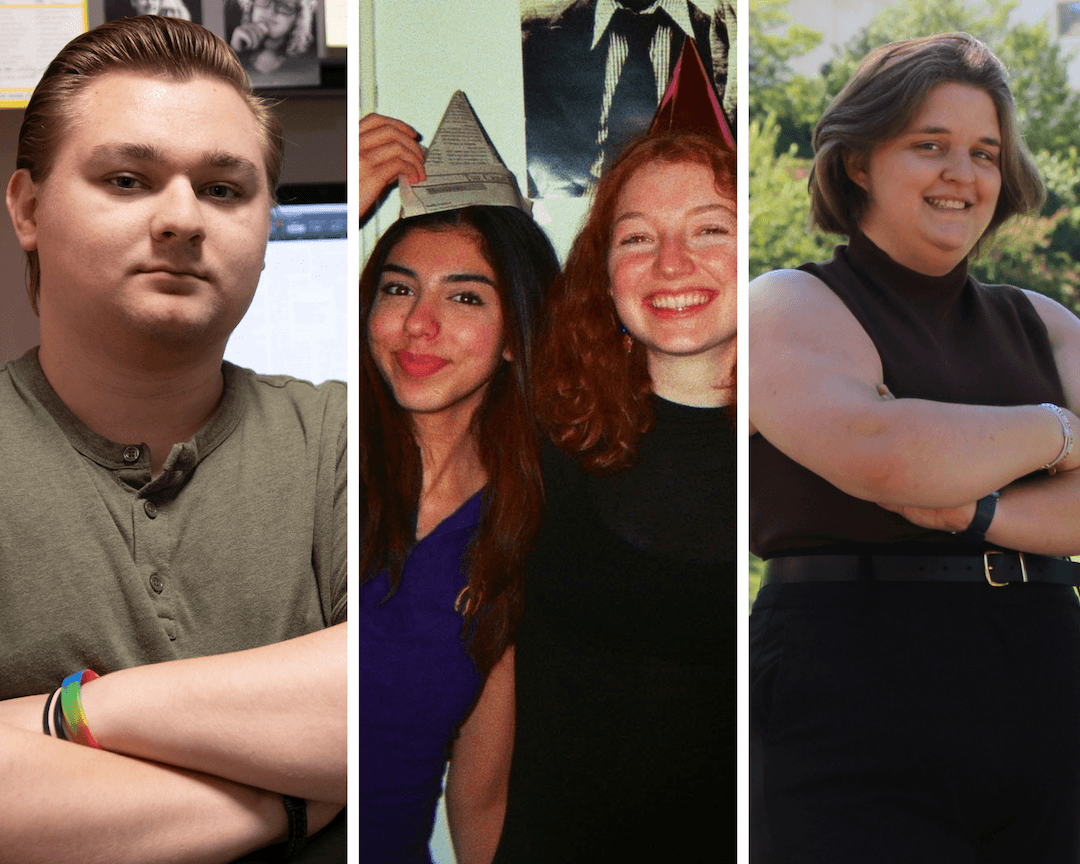
Recognizing the immense vulnerability of private college students, who lack the baseline statutory protections afforded to their public university peers, co-editors-in-chief Hannah Epstein and Rana Rastegari prioritized ironclad source protection. Every single testimony was exhaustively corroborated using private digital messages, emails, and background sources.
Three days prior to publication, the editorial board submitted an exhaustive list of inquiries to the president’s office. The administration declined to comment, offering only a boilerplate statement on investigative procedures.
When the story broke, it immediately galvanized the campus community. Students, alumni, and faculty members publicly condemned the administration’s tactics. A week later, Bryn Mawr President Wendy Cadge launched a counter-offensive via a campus-wide email, claiming the article "greatly misrepresent[ed]" investigative procedures and lecturing the student journalists on journalistic best practices, such as seeking comment and accurate source attribution.
Refusing to be undermined, the Bi-College News editorial board issued a blistering, transparent response. They published a point-by-point rebuttal featuring complete screenshots of their email correspondence with the president’s office, definitively proving that they had given the administration ample opportunity to address every single allegation prior to publication.
Supporting Context & Metrics: The Broader Press Freedom Crisis
The hostile environments faced by Nehrer, Hembrough, Epstein, and Rastegari are not statistical anomalies; they are indicative of a broader, systemic degradation of press freedoms across American institutions of higher learning.
- The Decline of Institutional Transparency: According to national media watchdogs, university public relations offices have increasingly shifted from public service entities into corporate-style crisis management firms. Their primary objective is frequently brand preservation and liability mitigation rather than the facilitation of public accountability.
- The Vulnerability of Private Institutions: While public university student journalists enjoy various degrees of statutory protection under the First Amendment and state-level anti-SLAPP laws, students at private institutions like Bryn Mawr operate in a legal gray area. Because private universities are not bound by the First Amendment in the same manner, student reporters face severe, unchecked threats of academic discipline, housing revocation, and administrative retaliation.
- The Weaponization of Discreditation: Modern administrative retaliation has evolved beyond traditional budget cuts or advisor censorship. Today, it frequently manifests as sophisticated public relations campaigns—open letters, presidential emails, and media memos designed to paint independent student newspapers as sensationalist, inaccurate, or politically motivated actors.
Official Statements & Institutional Responses
The rhetoric deployed by university administrators facing difficult reporting consistently emphasizes procedural integrity while attempting to cast doubt on the credibility of the student press.
- The Stance of Public Research Institutions: At USC and UCSD, initial stonewalling gave way to defensive counter-messaging. When confronted with evidence of selling donated bodies to military entities, institutional spokespeople repeatedly sought to frame investigative inquiries as disruptive interference rather than legitimate public interest reporting.
- The SIUE Defense: Chancellor James T. Minor and the SIUE administration have systematically characterized The Alestle’s rigorous investigations as "poor, inaccurate and incomplete." By issuing open letters to the broader campus community warning against reliance on student publications, the administration has sought to construct an alternate narrative of institutional victimhood.
- The Private College Perspective: Bryn Mawr President Wendy Cadge defended her administration’s position by emphasizing the necessity of institutional confidentiality and urging student journalists to adhere to rigorous verification standards—despite overwhelming documentary proof that the student editors had transparently offered multiple avenues for administrative comment prior to print.
Future Outlook: "The Student Agenda is Truth"
Despite the legal threats, administrative gaslighting, and institutional intimidation detailed in these reports, the spirit of the collegiate independent press remains unbroken.
The struggles at USC, SIUE, and Bryn Mawr demonstrate that when universities attempt to shield themselves from internal scrutiny, student journalists serve as the ultimate backstop of democratic accountability. They are chroniclers of history, documenting the raw, unvarnished realities of the institutions that claim to educate them.
As Jennifer Nehrer noted upon reflecting on her time at USC Annenberg Media, the ultimate validation for a student journalist does not come from administrative approval or institutional comfort. It comes from the realization that facts, once brought into the light, possess an unstoppable momentum.
In the face of mounting pressures on press freedoms, declining societal media literacy, and broader threats to democratic norms, student journalists across the nation continue to rally around a unifying ethos—one that Nehrer immortalized on the wall of her student newsroom:
"The student agenda is truth."