

Executive Overview
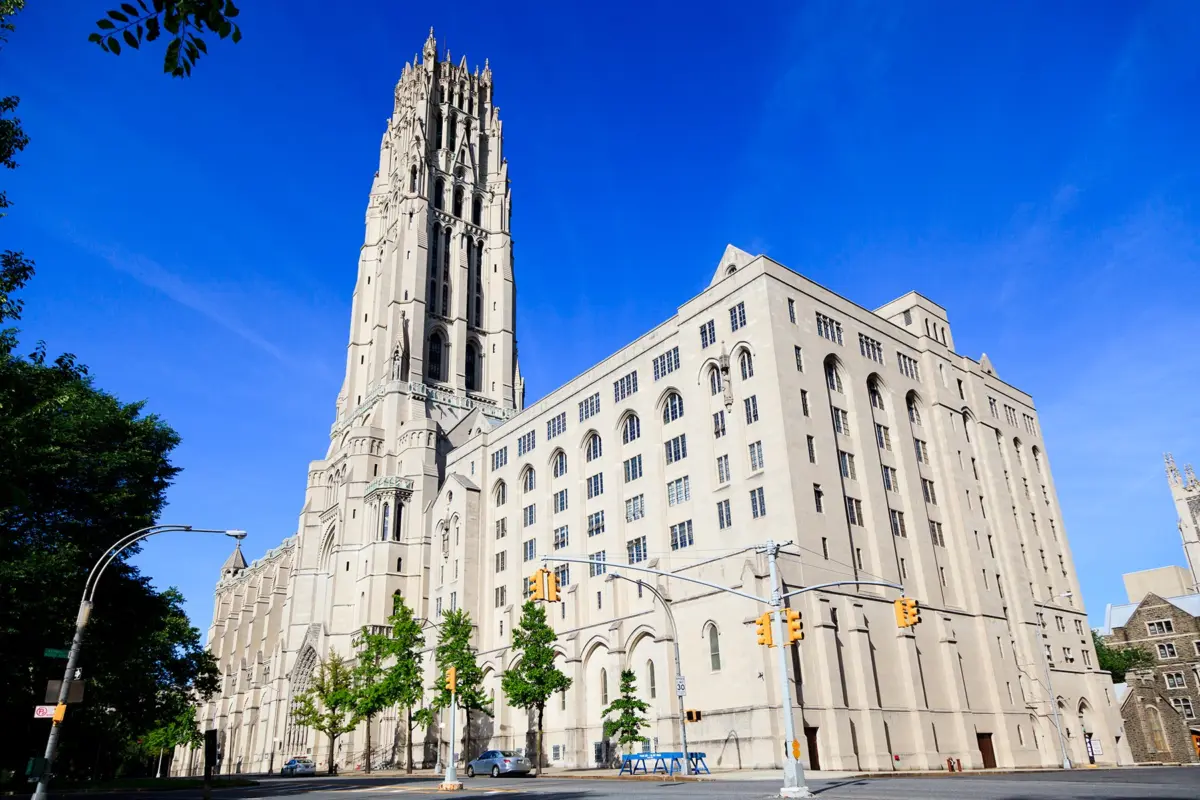
In a landmark verdict that pierces the decades-long institutional shield surrounding one of youth basketball’s most revered institutions, a New York state jury has awarded $11.3 million to a former player who suffered systematic sexual abuse as a teenager. The plaintiff, identified in court documents only as J.M., was subjected to harrowing assaults in the spring of 1978 by Ernest “Ernie” Lorch, the powerful sports program director, deacon, and corporate attorney who built the Riverside Church basketball program into an elite powerhouse.
The six-person jury in lower Manhattan Supreme Court deliberated for nearly five hours before delivering a decisive verdict: Riverside Church was found "reckless" and legally culpable for failing to protect the vulnerable youth entrusted to its care. The financial award comprises $7.5 million for past pain and suffering and $3.8 million for future damages.
This civil trial represents only the second time one of the numerous lawsuits stemming from the Riverside abuse scandal has gone before a jury. Enabled by New York’s Child Victims Act—which temporarily lifted the statute of limitations for historical child sexual abuse—the case cuts to the heart of a dark paradox. For over four decades, the Riverside Hawks served as a cultural and athletic incubator, launching the careers of more than 60 NBA players and hundreds of collegiate stars. Yet, beneath the veneer of prestige, champions, and community uplift, the program operated with virtually zero institutional oversight, allegedly harboring a predatory leader who leveraged his wealth, influence, and status as an untouchable "alpha male" to prey on impoverished Black and Latino youth.
Detailed Chronology & Courtroom Testimony
The Genesis of the Abuse: Spring 1978
The events that brought J.M. to a Manhattan courtroom began nearly half a century ago. In 1978, J.M. was a 14-year-old growing up in a single-parent household in the Bronx. Seeking structure, athletic outlets, and mentorship, he gravitated toward the prestigious Riverside Church sports program located in upper Manhattan.
Instead of finding sanctuary, the teenager encountered Ernest Lorch. During the spring of 1978, J.M. testified that Lorch sexually abused him "eight or nine" times. On the witness stand, J.M. described Lorch not merely as a coach, but as "the ultimate alpha male in the gym. Father figure. Everybody deferred to him." Lorch used this near-absolute authority to perpetrate acts that included forced oral sex and rape, shattering the young boy’s sense of safety and trust.
The Long Road to Justice and the Child Victims Act
For decades, institutional silence, fear, and restrictive New York state laws kept survivors like J.M. from seeking legal recourse. Under historical statutes of limitations, victims had merely a year after turning 18 to file civil lawsuits—an impossible window for those grappling with the psychological trauma of repressed memories, shame, and fear of retaliation.
That landscape shifted dramatically in 2019 when New York passed the Child Victims Act. The legislation opened a two-year window allowing survivors of child sexual abuse to bypass statute-of-limitations restrictions and file lawsuits against their abusers and the institutions that harbored them, regardless of how many decades had passed. Seizing this legislative opening, J.M. filed his lawsuit against Riverside Church that same year.
The Trial: Resilience vs. Trauma
During the trial, J.M.’s legal team, led by attorney Lucas Franken, called upon testimony from nine other alleged victims of Lorch to establish a clear, systemic pattern of predatory behavior. This pattern included institutionalized practices such as unauthorized paddling, invasive "jockstrap checks," and escalating sexual assaults directed predominantly at marginalized, often impoverished children.
Franken asked the jury for $25 million in past damages alone, arguing that the psychological devastation inflicted by Lorch was profound and lifelong.
Conversely, Riverside’s defense attorneys, spearheaded by Philip Semprevivo, conceded that if the abuse occurred, it was entirely Lorch’s responsibility—not the church’s. Lorch died in 2012 at the age of 79, escaping criminal prosecution. Riverside’s defense pivoted aggressively on J.M.’s subsequent success as an adult. They argued that J.M. was "highly functional," pointing out that he had worked his way through community college, earned an accounting degree on the West Coast, and built a successful career in the San Francisco Bay Area nonprofit sector.
Arguing that the plaintiff did not suffer from clinical post-traumatic stress disorder (PTSD)—noting a lack of recorded nightmares or flashbacks—Semprevivo told the jury during closing arguments: "Whether it’s friends. Whether it’s work. Whether it’s marriage. Whether it’s health. He checks all the boxes."
Franken countered this narrative effectively by highlighting the duality of trauma and resilience. In a powerful exchange during the trial, Franken asked J.M. if he was proud of his professional accomplishments despite what Lorch had put him through. When J.M. answered in the affirmative, Franken followed up:
"And do all the nice things that people say and all the achievements that you’ve had erase the memories of a 46-year-old man putting his penis in your mouth when you were 14 years old?"
J.M.’s quiet, resolute response—"No"—resonated deeply with the jurors, dismantling the defense’s attempt to weaponize the victim’s hard-won resilience against him.
Supporting Context & Metrics
The Riverside Legacy and the Shadow of Ernie Lorch
To understand the magnitude of the Riverside Church scandal, one must understand the towering stature of its sports program. Founded in upper Manhattan under the auspices of the Rockefeller-backed church, the Riverside Hawks program essentially forged the template for the modern, multi-billion-dollar youth sports and Amateur Athletic Union (AAU) industry.
From 1961 until 2002, Ernie Lorch operated as the undisputed kingmaker of New York City grassroots basketball. Under his stewardship, the program launched the careers of more than 60 NBA players and hundreds of collegiate standouts. The roster of prominent alumni includes:
- Basketball Hall of Famers: Nate "Tiny" Archibald and Chris Mullin
- NBA Champions & Media Personalities: Kenny Smith (two-time NBA champion and ESPN analyst)
- Star Players: Metta World Peace (formerly Ron Artest) and Lamar Odom
- Cultural Icons: Rappers Cam’ron and Ma$e, who played high school basketball for Riverside in the 1990s before transitioning to the music industry.
Despite Lorch’s immense power—augmented by his roles as a church deacon, board member, and wealthy corporate attorney—warning signs regarding his conduct circulated for years. In 2002, former player Robert Holmes publicly detailed to the New York Daily News how he was sexually abused and subsequently paid off by Lorch for his silence. At that time, prominent alumni such as Kenny Smith and Mark Jackson publicly rallied around Lorch, defending his character against the allegations.
The Scale of the Litigation
J.M. is just one of 27 plaintiffs who have filed lawsuits alleging that Lorch sexually abused them during their childhoods between 1961 and 2002. Investigations by Rolling Stone and Sportico have consistently underscored the core allegation driving these lawsuits: that Riverside Church leadership knew, or should have known, about Lorch’s predatory activities but deliberately looked the other way due to the immense prestige, financial backing, and athletic dominance the program brought to the institution.
| Metric / Detail | Fact / Figure |
|---|---|
| Total Plaintiffs | 27 individuals alleging abuse by Ernie Lorch |
| Abuse Period | 1961 – 2002 (Lorch’s tenure as program director) |
| J.M. Verdict Amount | $11.3 million ($7.5M past damages, $3.8M future damages) |
| NBA Alumni Impacted | 60+ players, including Hall of Famers Nate Archibald and Chris Mullin |
| Trials Completed | 2 jury trials (First ended in a January settlement; second resulted in J.M.’s verdict) |
Official Statements & Institutional Silence
The fallout from the verdict has laid bare a continuing chasm between survivors seeking accountability and institutions retreating behind legal armor.
- Plaintiff’s Legal Team: Lucas Franken expressed deep validation following the verdict, telling reporters that his client finally felt heard after decades of carrying an invisible burden. "The jury, after speaking to them, they believed us, they believed the truth we were conveying to them," Franken noted, emphasizing that common sense prevailed despite the immense passage of time.
- Riverside Church & Defense Counsel: In stark contrast to the emotional closure sought by the plaintiffs, representatives for Riverside Church and its legal team maintained a wall of silence. Emails and requests for comment directed to church officials and defense attorneys following Wednesday’s verdict went entirely unanswered. Throughout the proceedings, church lawyers maintained that any criminal acts committed by Lorch were strictly his own intentional actions and that the church bore no institutional liability for behavior alleged to have occurred in an era with vastly different cultural norms regarding supervision and reporting.
Future Outlook
The $11.3 million verdict in J.M.’s favor is a watershed moment, but it also highlights the protracted and agonizing nature of the broader legal battle.
Initially, hopes were high that a swift resolution would follow the January settlement involving former Marist College star Daryl Powell, whose case was resolved moments before it went to a jury. However, those hopes have faded. The litigation process has proven slow, arduous, and painful. Tragically, three former players have passed away while awaiting their day in court, denied the restorative justice that J.M. has finally secured.
As the remaining 20-plus lawsuits slowly wind their way through the New York court system, the Riverside Church scandal serves as a grim cautionary tale for youth sports organizations nationwide. It exposes the dangerous blind spots created when institutional prestige, athletic success, and financial capital are prioritized over the safety and well-being of children.
For J.M., now 63 and a resident of the San Francisco Bay Area, the verdict does not erase the trauma of 1978, nor does it rewrite a lifetime of navigating trust issues and cautious relationships. However, as he affirmed on the witness stand, it stands as an undeniable public acknowledgment of the truth—a judicial declaration that his accomplishments as an adult do not invalidate the child he once was, and that institutions can no longer hide behind decades-old accolades to escape accountability for abuse.