

By: Jon Small | Edited by: Dan Bova
Published: October 9, 2026
Classification: Food Industry, Corporate Strategy, Franchise Market Analysis
Executive Overview
The American fast-food landscape is undergoing a profound structural shift, with poultry rapidly eclipsing beef as the ultimate culinary battleground. Data compiled by Technomic reveals that chicken chain sales surged by an impressive 5.3% in 2025. This performance heavily outperforms the broader restaurant industry, which limped along with a modest 3% growth rate, and utterly dwarfs traditional burger chains, which crawled at a mere 1.5%.
Fueling this feathered frenzy are aggressive market disruptors such as Raising Cane’s, Dave’s Hot Chicken, and Wingstop, all of which have captured the cultural zeitgeist and consumer wallets alike. Yet, the sleeping giant of the fast-food world—McDonald’s—has officially declared war. Backed by a monumental $8.5 billion modernization initiative, the Golden Arches have set their sights on capturing an additional 1.5 points of the U.S. chicken market share by 2030, a campaign already underway via hand-breaded chicken tests in domestic and international markets.
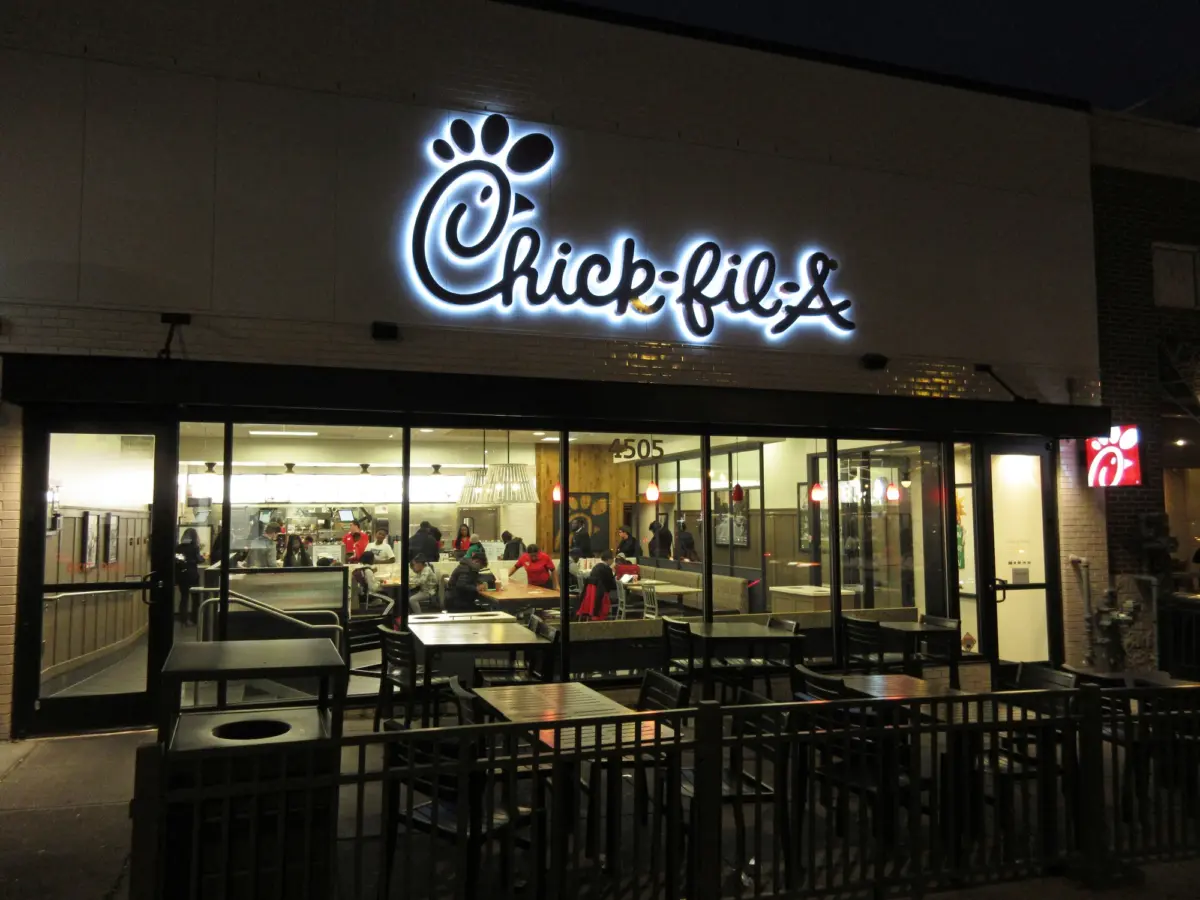
At the epicenter of this crossfire sits Chick-fil-A, the undisputed reigning champion of the chicken category. Rather than cowering beneath the encroaching shadows of fast-food royalty and hyper-growth upstarts, Chick-fil-A CEO Andrew Cathy is leaning into the pressure. In a recent strategic breakdown, Cathy embraced the tightening competition with the pragmatic mindset of a former high school football coach: “I love competition. It just makes us better.”
However, complacency remains the ultimate corporate enemy. To safeguard his empire, Cathy is deliberately prescribing a "healthy dose of fear" among his executive ranks, ensuring the multi-billion-dollar brand never loses its hunger. While competitors rush to automate every touchpoint, Cathy’s master plan doubles down on uncompromising fundamentals—precision, culinary execution, and authentic human hospitality—proving that sometimes, the ultimate strategic advantage is staying stubbornly human.
Detailed Chronology: The Evolution of the Chicken Wars
To understand how the fast-food industry arrived at this high-stakes poultry showdown, one must look at the historical trajectory that transformed a humble fried chicken sandwich into the most fiercely contested asset in global hospitality.
The Foundation Decades (1960s–1980s)
For decades, the quick-service restaurant (QSR) sector was defined by the burger. McDonald’s, Burger King, and Wendy’s dominated real estate, media spend, and consumer habits. Chick-fil-A, pioneered by S. Truett Cathy in an Atlanta-area mall in 1967, carved out a niche by inventing the boneless breast chicken sandwich. Meanwhile, KFC held a near-monopoly on bone-in buckets, operating largely outside the direct daily cross-traffic of suburban burger drive-thrus.
The Specialty Expansion (1990s–2010s)
As consumer preferences slowly shifted toward leaner, more versatile proteins, regional chains began scaling nationally. Wingstop capitalized on the sports-bar-at-home phenomenon, turning buffalo wings into a standalone powerhouse. Concurrently, Chick-fil-A quietly perfected its operational blueprint—focusing on Sunday closures, master-class supply chain logistics, and an almost militant devotion to customer service courtesy. By the late 2010s, Chick-fil-A had surpassed legacy burger chains in per-unit sales volumes despite operating six days a week.
The "Chicken Sandwich Wars" Ignition (2019–2021)
The modern era of the chicken wars officially ignited in the summer of 2019, when Popeyes launched its legendary spicy chicken sandwich. The resulting social media frenzy, traffic gridlock, and product shortages proved that consumers were ravenous for high-quality, quick-service poultry. Every major chain rushed to launch a competitive alternative. The battle was no longer a side-stage skirmish; it was a pitched war for category supremacy.
The Post-Pandemic Landscape & Market Realignment (2022–2025)
Following the disruptions of the pandemic, consumer behavior permanently favored drive-thru efficiency and handheld indulgence. Emerging brands like Raising Cane’s scaled aggressively with hyper-focused menus centered entirely around chicken fingers, while Dave’s Hot Chicken weaponized the consumer appetite for extreme spice and viral social media marketing. By the close of 2025, Technomic data confirmed that chicken chains were vastly outperforming the rest of the restaurant industry, growing at 5.3% while traditional burger segments stagnated.
The Present Era: The Titan’s Counteroffensive (2026)
Today, the battlefield has widened. McDonald’s has stepped into the arena with its $8.5 billion war chest, aiming directly at the crown jewel of fast-food poultry. With industry heavyweights circling, CEO Andrew Cathy is orchestrating Chick-fil-A’s defensive and offensive postures, anchoring the brand not in fleeting culinary gimmicks, but in operational excellence and an internal culture of paranoid vigilance.
Supporting Context & Metrics: By the Numbers
The macroeconomic and sector-specific data underpinning the current chicken wars paint a vivid picture of why legacy brands and disruptors alike are investing heavily in poultry.
Financial and Market Performance Metrics
- 5.3% Growth: The overall sales growth rate for chicken-centric chains in 2025, according to Technomic data.
- 3.0% Growth: The comparative growth rate for the broader restaurant industry during the same period, highlighting the disproportionate strength of the poultry category.
- 1.5% Growth: The sluggish growth rate recorded by traditional burger chains, signaling a maturation—and potential saturation—of the legacy burger market.
- $8.5 Billion: The capital allocation tied to McDonald’s sweeping modernization and operational overhaul plan, a core pillar of which is capturing market share in the chicken category.
- 1.5 Market Share Points: McDonald’s explicit goal for chicken category acquisition between now and 2030, supported by ongoing international and domestic tests of hand-breaded chicken platforms.
The Disruptor Ecosystem
The modern chicken wars are not merely a two-horse race between McDonald’s and Chick-fil-A. A dynamic triad of high-growth franchises has permanently altered consumer expectations:
- Raising Cane’s: Built on a famously streamlined menu (fingers, fries, Texas toast, and signature sauce), Cane’s proves that operational simplicity yields massive unit economics and extraordinary customer loyalty.
- Wingstop: By pioneering a digitally native, delivery-first model with high margins and robust technological infrastructure, Wingstop has redefined how consumers interact with fast-casual poultry.
- Dave’s Hot Chicken: Harnessing the cultural fascination with Nashville hot chicken and user-generated social media content, Dave’s has demonstrated the power of experiential dining and bold flavor profiles.
Official Statements: Inside the Mind of Andrew Cathy
For Andrew Cathy, maintaining the market-leading position requires a delicate balance of institutional confidence and intentional anxiety. Transitioning from his background as a high school football coach into the boardroom of America’s most successful private restaurant chain, Cathy views pressure not as a liability, but as a mandatory fuel source.
"I love competition. It just makes us better." — Andrew Cathy, CEO, Chick-fil-A
In an industry prone to panic when legacy competitors launch multi-billion-dollar offensives, Cathy’s posture is remarkably serene. However, serenity at the top does not translate to complacency on the ground. Cathy has openly expressed that his primary operational anxiety is not the moves made by McDonald’s or Raising Cane’s, but rather the internal threat of slowing down.
To counteract organizational inertia, Cathy actively prescribes a "healthy dose of fear" among his leadership team and franchise operators. In corporate psychology, this ethos prevents institutional arrogance—the silent killer of dominant market leaders. When a brand becomes the undisputed king, the natural tendency is to rest on its laurels, tinker with core recipes, or chase fleeting technology trends. Cathy’s mandate ensures that Chick-fil-A treats every single customer interaction as if market share were actively being lost.
Future Outlook: The Strategic Horizon (2026–2030 and Beyond)
As the chicken wars escalate toward the close of the decade, the strategic divergence between industry giants will define who wins the next era of fast food. Two distinct philosophies are emerging:
1. The Technological & Automated Frontier
McDonald’s and various fast-casual competitors are betting heavily on automation, artificial intelligence, digital-first drive-thrus, and labor-saving efficiencies to protect margins against rising operational costs. By streamlining kitchen workflows and reducing human touchpoints, these brands aim to achieve maximum throughput and speed of service.
2. The High-Touch, Fundamentalist Approach
Chick-fil-A is taking the counter-intuitive route. While competitors rush to integrate AI order-takers and automated kitchen systems, Cathy and his executive team are doubling down on human capital. Chick-fil-A has consciously chosen not to replace human order-takers with AI. Their thesis is simple: in an increasingly automated and detached digital world, genuine human hospitality, impeccable order accuracy, and warm customer connections represent the ultimate luxury and differentiator.
What Lies Ahead
Over the next four years, as McDonald’s rolls out its hand-breaded chicken initiatives and pushes toward its 2030 market share targets, the margins for error will narrow. Regional disruptors will continue to test the boundaries of flavor and digital engagement.
Yet, as Andrew Cathy’s leadership philosophy demonstrates, the ultimate victor of the chicken wars will not necessarily be the brand with the most automated kitchen or the largest marketing budget. It will be the organization that can successfully scale without losing its soul—balancing the fiery ambition of a challenger brand with an unyielding dedication to the fundamentals of food, service, and operational fear.