

Executive Overview
As the United States barrels toward the midterm elections, the political landscape is characterized by a paradoxical dynamic: Donald Trump’s grip on institutional power is visibly fraying, yet his capacity for systemic disruption remains dangerously high. Trapped between shrinking rally attendance, slipping congressional prospects, and an increasingly alienated electorate, the former president has retreated into a familiar posture of dark grievances, threats of political retribution, and violent rhetorical escalation.
While recent campaign stops in Ohio, Nebraska, and Texas have exposed dwindling crowds and heightened paranoia within his inner circle, Trump continues to assert absolute impunity. His recent public declarations—insisting that he can "do whatever I want" to his political rivals—reveal a worldview fundamentally detached from constitutional norms. Yet, beneath the bluster lies a narrative of political contraction. Midterm polling indicates a growing fatigue among the American electorate with Trump-era chaos, while down-ballot Democratic candidates in traditionally deep-red districts have closed gaps to statistical dead heats through disciplined, retail-level campaigning.
As the Republican Party quietly begins to position itself for a post-Trump future, the weeks leading up to November present a volatile gauntlet. From potential government shutdowns and contested local ballot counts to speculative congressional maneuvers regarding impeachment, the nation faces a turbulent transition. Trump may be sliding toward political insignificance, but a cornered and desperate political actor remains an existential threat to democratic stability.
Detailed Chronology: The Anatomy of a Desperate Campaign
The closing weeks of the 2026 midterm cycle have mapped a clear trajectory of decline for Trump’s national political apparatus, punctuated by erratic public appearances and escalating rhetoric.
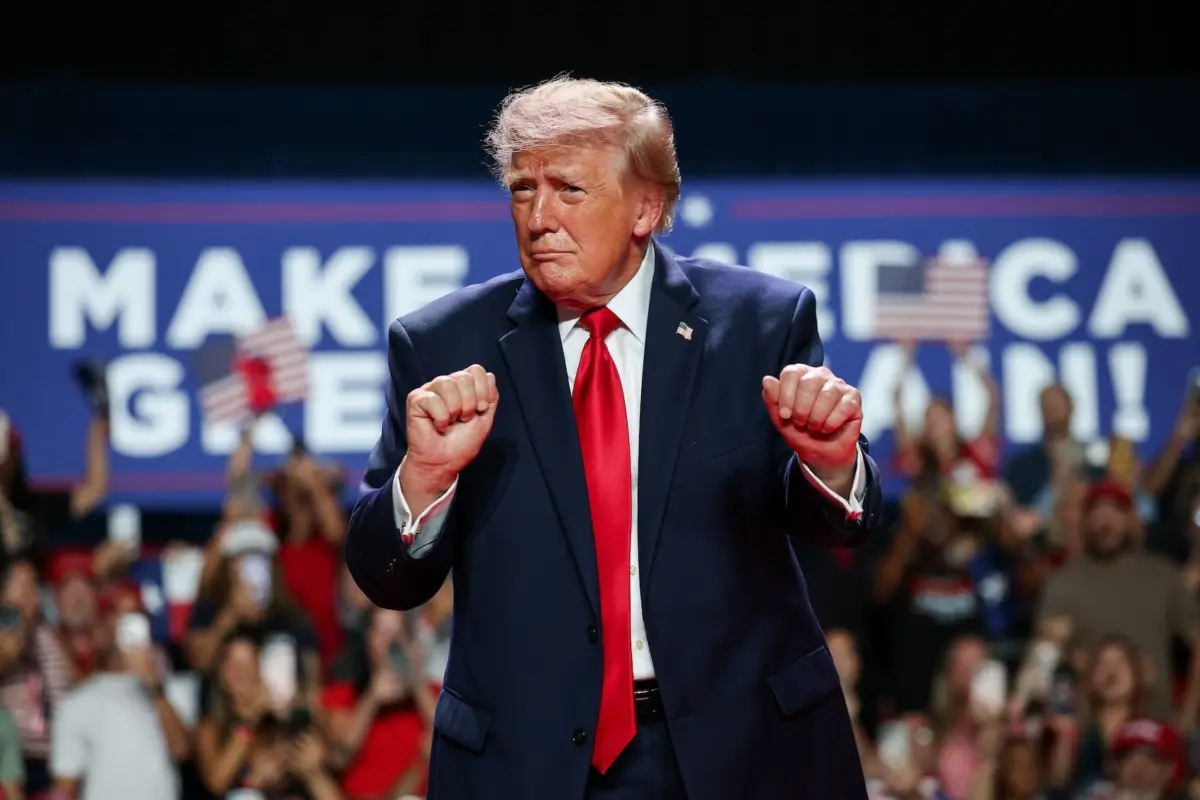
- October 5 (Nebraska): During a campaign stop, Trump escalated his attacks on political opponents, explicitly stating that he retained the right to exact revenge for his past impeachments. Before an audience of roughly 6,000 people—filling a venue significantly scaled down from the massive arenas of his past campaigns—he suggested that foreign adversaries might target major American cities like Los Angeles and San Diego. The audience’s enthusiastic reception of these dark, transactional warnings underscored the radicalization of his remaining base.
- Early October (Ohio & Texas): Trump appeared at a high school gymnasium in Ohio to a crowd of roughly 5,000, reacting with fury to local media reports highlighting the starkly diminished venue sizes. Days later, at the Freeman Coliseum in San Antonio, Texas, his speech doubled down on grievances regarding the economy, falsely claiming that inflation had evaporated and oil prices were plummeting. Observers noted the distinct absence of broader economic plans, replaced instead by insular warnings directed at core MAGA loyalists.
- October 6–7 (The Shift in Messaging): Recognizing the precarious state of the House and Senate maps, top Trump aides, reportedly collaborating through figures like Susie Wiles and Stephen Miller, began pushing a starkly apocalyptic tone via campaign emails. A notable dispatch warned supporters that congressional majorities could slip away "like a throat being cut in silence," urging weary voters not to succumb to inaction.
- October 9 (The Oval Office Assertion): In an interview touching on institutional checks and balances, Trump doubled down on his view of executive power, stating, "They impeached me twice. I certainly — even to this moment I can do whatever I want, if I want," attributing his restraint solely to his personal reverence for the office of the presidency rather than constitutional constraints.
Supporting Context & Metrics: Shrinking Crowds and Surprising Margins
To understand the current political moment, one must examine the metrics defining both the national decline of Trumpism and the unexpected vitality of local Democratic campaigns.
The Crowd Size Indicator
For a political movement historically defined by its visceral displays of mass mobilization, venue size and crowd density serve as critical barometers of momentum. In 2026, Trump’s campaign has systematically abandoned large-scale arenas in favor of high school gymnasiums and smaller regional coliseums. Media scrutiny of these downsized events has sparked aggressive pushback from the former president, including retaliatory threats against reporters—a tacit acknowledgment that the visual narrative of his rallies has fundamentally shifted from dominant to defensive.
Down-Ballot Resilience in Red Districts
While the national Democratic Party’s campaign strategy has largely defaulted to the minimalist pitch of "We’re not him!", individual candidates at the district level have redefined the electoral map.
- North Carolina’s 9th Congressional District: Retired Army officer Richard Ojeda has leveraged grassroots engagement to turn a historically safe Republican stronghold into a dead heat, despite Trump carrying the district by double digits in 2024.
- Missouri’s 2nd Congressional District: Military veteran Fred Wellman has similarly closed an eight-point 2024 Republican margin into a statistical tie through extensive public appearances and direct voter contact.
These campaigns suggest that retail politics—focusing on local economic anxieties, infrastructure, and competent governance—can effectively pierce through hyper-partisan polarization, offering a blueprint for post-Trump electoral competition.
Official Statements and Internal Party Maneuvering
As the electoral reality sets in, both major parties are quietly preparing for a paradigm shift that extends far beyond the immediate midterms.
The Republican Succession Sweepstakes
With Trump’s grip on the congressional map loosening, Republican leadership in the House and Senate is already experiencing quiet jockeying for succession. Rep. Jim Jordan of Ohio has maintained a strategic, low-profile posture, positioning himself as a potential successor for House Minority Leader as outgoing Speaker Mike Johnson faces mounting internal criticism. Simultaneously, figures like Vice President JD Vance—campaigning in distant strongholds like Alaska—and Secretary of State Marco Rubio are carefully calibrating their national profiles for a post-Trump primary ecosystem.
Democratic Retaliation and Impeachment Calculations
Should Democrats secure majorities in both the House and Senate, the legislative branch faces a collision course with the executive. Talk of substantive investigations has quickly expanded to potential impeachment proceedings. While many progressive lawmakers are eager to target Donald Trump directly, institutional strategists argue for a phased approach:
- Targeting Vulnerable Appointees: Lawmakers suggest initiating proceedings against controversial figures such as Defense Secretary Pete Hegseth. Hegseth’s recent public musings regarding the reinstitution of public executions have rendered him politically toxic, potentially offering vulnerable congressional Republicans a face-saving exit strategy.
- Weakening the Executive Wall: Proponents of this strategy argue that successfully removing or neutralizing key cabinet officials like Hegseth would effectively strip Trump of uncritical military loyalty, isolating the executive branch before any legislative attempt at presidential impeachment is initiated.
Future Outlook: The Dangerous Transition Period
The window between the November midterm elections and the swearing-in of the new Congress in January represents one of the most perilous stretches in modern American political history.
Political analysts have raised alarms regarding several predictable flashpoints:
- Legislative Brinkmanship: The potential for a government shutdown in mid-December, engineered by hardline factions within a lame-duck Republican Congress, remains a persistent threat to national stability.
- Electoral Disruption: Fears of ballot-box seizures, localized administrative chaos, and widespread challenges to certified results in contested districts mirror the playbook of previous election cycles, albeit deployed with heightened desperation.
- Executive Overreach: Trump’s stated belief that he possesses absolute freedom of action, combined with provocative foreign policy maneuvers—such as the repositioning of military assets and inflammatory rhetoric regarding foreign adversaries—signals that his final years in office could be marked by erratic, high-stakes external provocations.
Ultimately, Donald Trump is evolving into a diminished political figure—isolated by shrinking crowds, alienated by a fatigued electorate, and abandoned by pragmatic elements within his own party who are quietly planning for the future. Yet, history demonstrates that a cornered political actor wielding executive authority is at his most dangerous precisely when his institutional immortality begins to fade. The upcoming months will test not only the resilience of America’s democratic institutions but also the collective resolve of a nation seeking to move beyond the politics of perpetual grievance.