

Executive Overview
In the high-stakes theater where state power converges with techno-capitalism, semantics are rarely neutral. Language shapes policy, public sentiment dictates regulatory boundaries, and definitions can mean the difference between billions in market capitalization and terminal public pushback.
A fascinating lexical transformation is underway at the highest levels of governance and industry: the deliberate, government-backed eradication of the term "Artificial Intelligence" (AI) in favor of "Super Intelligence" (SI).
What began as a stroke of political maneuvering by the White House via executive order has rapidly morphed into a synchronized campaign among the tech elite. Silicon Valley billionaires, eager to outpace public anxiety, regulatory scrutiny, and existential dread, are leaping at the rebrand. To the architects of this new technological paradigm, dropping the word "artificial"—with its unfortunate connotations of fakeness, cheapness, and synthetic imitation—is a brilliant psychological pivot.
Yet, as this rhetoric escalates, so does the intolerance for dissent. President Donald Trump has drawn a stark battle line, declaring on social media that those who refuse to adopt the administration’s preferred nomenclature are "the enemy." Meanwhile, prominent tech moguls have elevated the discourse to apocalyptic proportions, dismissing critics as political opportunists or even, in the staggering rhetoric of Palantir co-founder Peter Thiel, "the Antichrist."
This report provides an exhaustive, multi-layered investigation into the linguistic rebrand of AI, examining the motivations driving the White House, the enthusiastic compliance of tech titans, the fierce ideological warfare against global critics, and what this semantic shift reveals about the future of human governance and technological hegemony.
Detailed Chronology: How "Artificial Intelligence" Became "Super Intelligence"
The path from academic nomenclature to federal mandate and corporate alignment did not happen overnight. It represents a calculated evolution in public relations, policy coordination, and ideological framing.
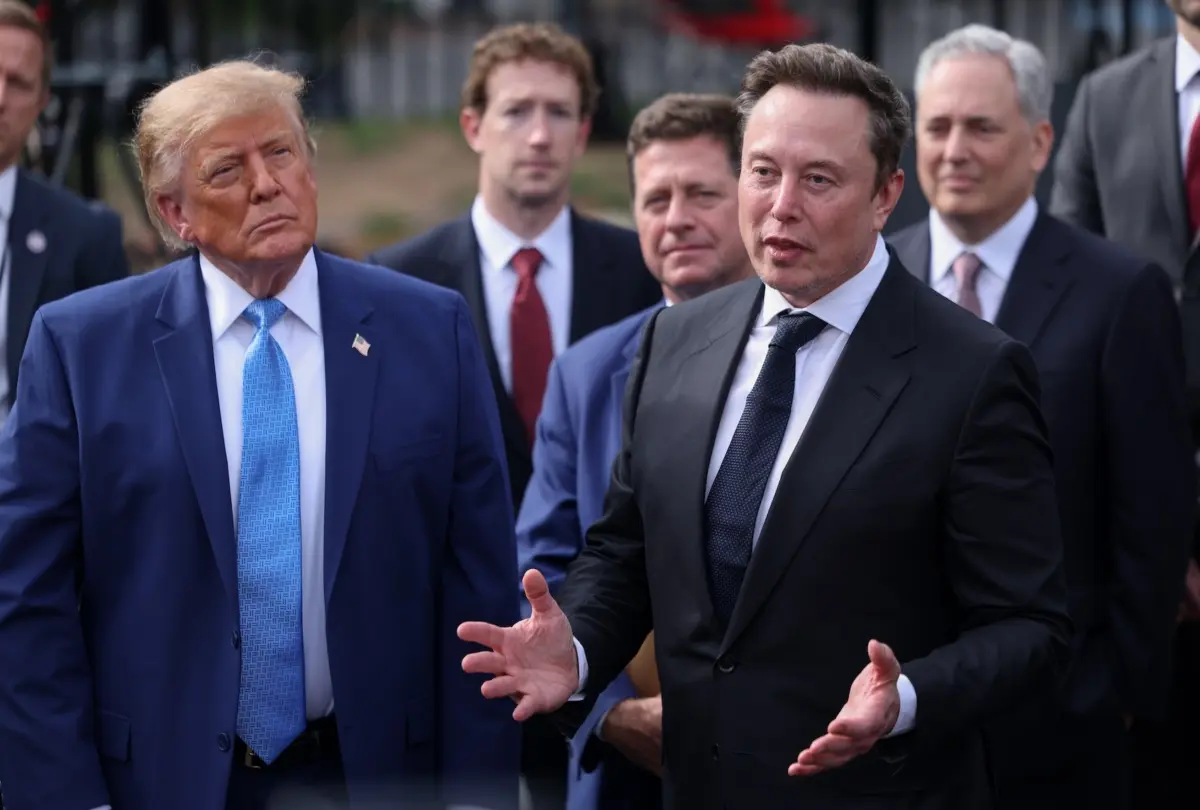
- Late September 2026: President Donald Trump hosts a high-profile summit on advanced computing and automated systems in the East Room of the White House, surrounded by the nation’s top tech executives, including Tesla, X, and SpaceX CEO Elon Musk. The discussions center on managing the explosive growth and national security implications of next-generation computational power.
- Late September 2026: Behind closed doors in Nashville, tech mogul and investor Peter Thiel delivers a series of provocative, leaked lectures to an elite audience. In these remarks, Thiel frames the rising tide of skepticism toward advanced technology not as a policy disagreement, but as an eschatological struggle, labeling critics like former President Barack Obama and Pope Leo XIV as adversaries of technological progress.
- October 2026 (The Executive Order): The White House issues Executive Order 14434, formally shifting the federal administrative framework’s lexicon away from "Artificial Intelligence" toward the more exalted phrase, "Super Intelligence" (SI).
- October 8, 2026: President Trump doubles down on the shift in a fiery post on Truth Social, writing: "The White House considers anyone that uses the term, ‘Artificial Intelligence,’ as opposed to the highly accepted new and more accurate term, ‘Super Intelligence,’ THE ENEMY!"
- October 8, 2026: Digital infrastructure attempts to catch up with executive fiat. Government portals such as
ai.govexperience chaotic overhauls. While the core URL remains unchanged, landing pages are hastily updated with oversized "SI.gov" branding, though infrastructural redirects frequently break, leading to administrative error pages. - October 8, 2026: Corporate alignment follows suit with astonishing speed. Elon Musk announces that his dedicated AI subsidiary, SpaceXAI, will be immediately rebranded to SpaceXSI, declaring that "AI is no more." Simultaneously, Amazon founder Jeff Bezos publicly champions the rebrand during a Fox News appearance, validating the administration’s linguistic grievances against the word "artificial."
- October 8–10, 2026: Investigative reporting by Politico’s Decoded surfaces the leaked recordings of Peter Thiel’s Nashville speeches. The audio reveals Thiel’s explicit attacks on prominent global figures—accusing both the Vatican and the Democratic establishment of manufacturing opposition to advanced computing as a cynical ploy to regain political relevance.
Supporting Context & Metrics: The Psychology of Semantics
To understand why the White House and Silicon Valley are expending political capital on a mere vocabulary shift, one must analyze the deep-seated public relations crisis facing the tech industry.
For the past several years, public engagement with generative computing and automated systems has been plagued by a duality of extremes: paralyzed fear of existential doom on one hand, and messianic, hype-driven savior complexes on the other. Surveys consistently show that ordinary citizens harbor profound anxieties regarding workforce displacement, algorithmic bias, the erosion of truth, and the loss of human agency.
The Stigma of "Artificial"
As Jeff Bezos noted during his Fox News interview, the word "artificial" carries an inherently negative subtext in consumer psychology. "Nobody wants an artificial sweetener, artificial flavoring," Bezos argued. "Artificial sort of means fake."
By shedding "artificial," the tech elite achieve two psychological breakthroughs:
- Legitimacy: The systems are no longer framed as synthetic or simulated counterfeits of human thought, but as elevated, superior entities ("Super Intelligence").
- Incapability of Stigmatization: It shifts the narrative away from human error and corporate overreach, coating the technology in an aura of inevitable, transcendent destiny.
The Bureaucratic Scramble
The transition has not been without logistical friction. Federal web architecture, built over decades around the domain ai.gov, struggled to adapt overnight to the presidential decree. When the White House rushed to display massive "SI.gov" headers on October 8, it exposed the gap between impulsive executive mandates and the grinding gears of bureaucratic digital infrastructure. Internal routing errors and broken hyperlinks became immediate symbols of a government trying to force a linguistic revolution through sheer administrative willpower.
Official Statements and Industry Alignment
The speed at which the tech oligarchy fell in line behind the White House’s executive order demonstrates a shared interest in narrative control. The reactions from the industry’s most influential figures highlight a unified front against critics.
Elon Musk and SpaceXSI
Elon Musk, whose influence within the current administration has reached unprecedented heights, wasted no time operationalizing the executive order. Signaling the death of the old terminology, Musk declared that "AI is no more." His aerospace and technology ventures quickly initiated internal restructuring to replace legacy acronyms with the administration-approved "SI."
Jeff Bezos on the Rhetoric of "Fake"
Amazon founder Jeff Bezos provided the consumer-facing rationale for the rebrand during his media appearances. By weaponizing the linguistic flaws of the word "artificial," Bezos successfully aligned Big Tech’s branding strategy with the White House’s executive goals, reframing skepticism toward computing power as a simple misunderstanding of product branding.
Peter Thiel’s Apocalyptic Eschatology
Perhaps the most extreme ideological defense of the technology came from Peter Thiel. Long fascinated by historical eschatology and political theology, Thiel used closed-door lectures in Nashville to frame the debate over advanced computing in cosmic, theological terms.
According to leaked audio transcripts, Thiel targeted two of the world’s most prominent moral voices: former President Barack Obama and Pope Leo XIV. Thiel alleged that their public calls for oversight and human safeguarding were born entirely out of political opportunism rather than genuine ethical concern.
"Many people know that AI is politically unpopular, and want to leverage that to boost their own popularity," Thiel stated in the leaked recordings. Claiming that the Democratic party lacks substantive policy ideas, Thiel asserted that opposing automation has become their fallback strategy.
Turning his focus to the Vatican, Thiel went further, claiming that Pope Leo XIV’s historic encyclical—Magnifica Humanitas, which focuses on safeguarding human dignity in an automated age—was merely a strategic distraction. Thiel alleged that the Pope used the existential fears surrounding computing to distract the public from institutional church scandals.
Future Outlook: The Weaponization of Discourse
The joint campaign by the White House and Silicon Valley to rebrand advanced computing as "Super Intelligence" marks a dangerous new chapter in public discourse. By criminalizing linguistic dissent—branding anyone who says "artificial intelligence" as "the enemy"—the administration has effectively closed the door on democratic, open-source deliberation regarding safety and regulation.
As we look toward the horizon of 2027 and beyond, several critical questions remain:
- Regulatory Compliance: Will federal agencies aggressively enforce the "SI" nomenclature in procurement, contracting, and legislative drafts, effectively freezing out researchers and watchdogs who insist on using accurate technical terminology?
- The Corporate Monopolization of Narrative: With billionaires like Musk, Bezos, and Thiel actively framing critics as political cynics, the Antichrist, or national enemies, public critique of automated systems risks being completely delegitimized.
- Global Divergence: How will international bodies, the European Union, and geopolitical rivals react to Washington’s aggressive rebranding? While Silicon Valley embraces "Super Intelligence," international standard-setting bodies still operate within the framework of risk-based AI regulation.
What is certain is that the battle over the future of humanity’s relationship with intelligent machines is no longer just about code, silicon, and algorithms. It is a fierce battle over vocabulary, narrative, and power—where those who control the definition of the technology dictate the terms of human existence.