

Executive Overview
The contemporary media landscape exists in a state of unprecedented turbulence, caught at the volatile intersection of aggressive federal politics, shifting corporate broadcasting strategies, and the relentless economic erosion of local journalism. Over the past fortnight, these compounding pressures have erupted into public view across several high-profile fronts.
At the federal level, the legal battle between the Trump administration and major news organizations—specifically CNN, MS NOW, and Politico—has escalated into a defining constitutional test of First and Fifth Amendment protections. Simultaneously, the corporate broadcasting world is absorbing tectonic shifts, highlighted by structural overhauls at legacy institutions like CBS News and high-stakes controversies involving top-tier sports commentators like ESPN’s Stephen A. Smith. Beneath these national headlines, however, lies a quieter, more devastating crisis: the systematic gutting of local newsrooms, epitomized by the near-total liquidation of the editorial staff at the Amarillo Globe-News.
This report provides a comprehensive, multi-layered examination of these unfolding events, analyzing the legal arguments, institutional realignments, and systemic vulnerabilities shaping the future of the American press.
Detailed Chronology: The White House Press Corps Legal Battle
The ongoing confrontation between President Donald Trump and the White House press corps reached a critical juncture following an aggressive escalation by the administration two weeks ago. In a move that stunned media observers, the administration revoked the White House grounds press credentials for three major outlets: CNN, MS NOW, and Politico.
The targeted organizations immediately took legal action, petitioning the U.S. District Court for the District of Columbia for emergency relief. A federal judge swiftly granted a 14-day temporary restraining order, forcing the administration to restore the outlets’ press access while the substantive arguments of the lawsuit were evaluated.
As that initial 14-day window drew to a close on Thursday, the legal teams reassembled before U.S. District Judge Timothy J. Kelly. With the initial restraining order on the verge of expiration, Judge Kelly opted to extend the order through next Tuesday, signaling that the court intends to deliberate carefully before ruling on a more durable, long-term preliminary injunction.
According to Politico’s legal reporter Irie Sentner, who observed the proceedings, "In the hearing, Kelly appeared to be gravitating toward a more durable injunction over the course of potentially months of litigation." For the time being, however, the affected networks remain in a precarious holding pattern as the litigation unfolds.
Central to the plaintiffs’ case is the assertion that the administration’s ban is a direct retaliation for critical reporting, thereby violating their First Amendment rights to free speech and a free press. However, the legal mechanics of the hearing revealed a nuanced judicial focus. Judge Kelly pressed both sides heavily on the constitutional dimensions of due process, questioning whether the outlets’ Fifth Amendment rights were infringed when their credentials were abruptly revoked without a formal hearing or transparent administrative procedure.
"That’s probably the biggest hurdle you all have," Judge Kelly told government attorneys during the hearing, pointing to the procedural mechanisms of the ban.
Concurrently, Judge Kelly expressed deep skepticism regarding the administration’s justification that the reporting from CNN, MS NOW, and Politico posed a tangible threat to national security. Legal counsel for the media outlets seized upon public statements made by President Trump to dismantle the national security rationale. During a recent interview with Time magazine, when asked why he specifically banned the outlets, Trump remarked, "Well, it’s just bad story after bad story."
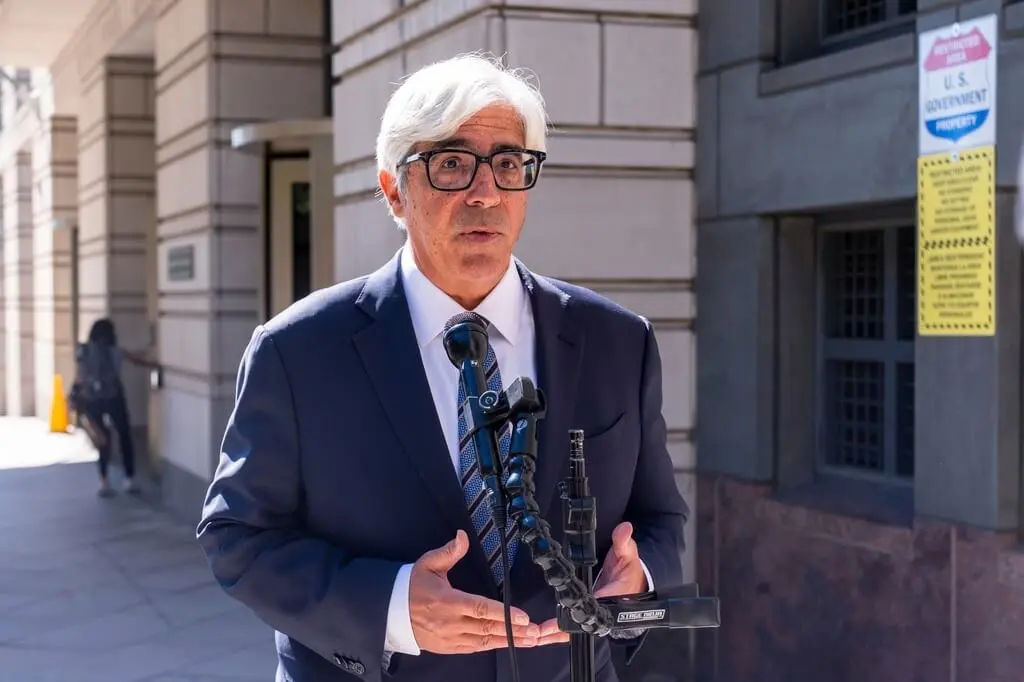
At Thursday’s hearing, Theodore J. Boutrous Jr., the lead attorney representing the banned media organizations, presented the transcript of that interview to the court as definitive evidence of retaliatory animus. "That interview really is the coup de grace," Boutrous argued, maintaining that the president’s own admissions undermine any pretext of national security concerns.
Despite the courtroom momentum favoring the media outlets, carve-outs in the dispute remain. Notably, the administration’s parallel ban preventing reporters from CNN, MS NOW, and Politico from boarding Air Force One remains fully intact, a distinction detailed by The New York Times media analyst Erik Wemple in his reporting on the complex jurisdictional boundaries governing presidential travel spaces.
Supporting Context & Metrics: Institutional Transformations and Cultural Flashpoints
Ross Douthat’s Dual Role at CBS News and The Free Press
The legal battles in Washington unfold against a backdrop of sweeping institutional transformation within legacy broadcasting and digital media. Following a tumultuous summer at CBS News—marked by the departure of its executive producer and several veteran, highly respected correspondents—CBS News Editor-in-Chief Bari Weiss made a bold, unorthodox hire. She brought in New York Times opinion columnist Ross Douthat as a network correspondent, a move that raised eyebrows across the industry given Douthat’s lack of traditional television news experience.
On Thursday, Weiss announced a secondary venture involving Douthat, revealing that he is joining her digital publication, The Free Press, as a regular columnist. The two previously collaborated within the opinion pages of The New York Times. Announcing the move on social media, Weiss kept her reaction succinct: "A dream come true."
Douthat inaugurated his new column with a self-referential piece titled, "I’m Writing a Column for The Free Press." In the essay, Douthat detailed the genesis of the publication, recalling a conversation he had with Weiss shortly after her departure from the Times in 2020.
"She was in an entrepreneurial mood, making calls and soliciting opinions, and I told her that I thought there was a potential market for a new general-interest publication that was politically independent, competitive with The Atlantic and The New Yorker, free from the ideological strictures of wokeness and the loyalty tests of MAGA," Douthat wrote.
The project evolved from Weiss’s initial Substack venture, Common Sense, launched in 2021, into the fully realized digital media company The Free Press in 2022. Addressing potential conflicts between his print commentary and his broadcast journalism, Douthat emphasized the distinct boundaries of his new career portfolio:
"This is not my day job. I am a newly minted correspondent for 60 Minutes, where the goal is to ask probing questions, not sling political hot takes. If all goes well, this column will complement that work, staying a little bit above the partisan fray while giving readers useful frameworks (or, sometimes, truly eccentric frameworks) through which to understand our strange-and-getting-stranger century."
To date, Douthat has contributed two reported pieces across the first three episodes of the current 60 Minutes season: an interview with Patrick Clancy, the former husband of a woman accused of murdering their three children, and a profile of North Carolina Republican Senator Thom Tillis.
Stephen A. Smith and the Ethics of Commentary
While print and investigative desks grapple with constitutional and structural shifts, the daily sports and entertainment commentary machine faced its own reckoning this week over journalistic responsibility and tone.
ESPN commentator Stephen A. Smith drew severe public backlash following remarks made on Wednesday’s edition of First Take. Discussing the abrupt retirement of Philadelphia Eagles offensive lineman Lane Johnson—who publicly cited mental health challenges as the primary reason for stepping away from the game—Smith appeared to trivialize the situation, suggesting that the player’s true motivation stemmed from the team’s on-field struggles.
Kimberly A. Martin, a guest on First Take, immediately challenged Smith in real time, stating on air, "I feel like you’re making light of the situation."
Later that day, Smith attempted to address the controversy on his SiriusXM radio program, but his defense exacerbated the fallout. He argued that his comments had been "misconstrued," adding that he would never make light of mental health and briefly recounting his own personal struggles with mental health over the years. However, media critics argued his initial response fell short of accountability.
Writing in The Athletic, media columnist Andrew Marchand asserted that Smith had embarrassed himself and argued that the commentator needed to issue an unreserved apology rather than deflecting.
Responding to the mounting criticism, Smith opened Thursday’s broadcast of First Take with a lengthy, unscripted, and unequivocal apology. "Here’s the reality of the situation. I was wrong," Smith stated directly to the audience. "I messed up." He extended apologies to Lane Johnson, the Philadelphia Eagles organization, and anyone navigating mental health challenges.
"The biggest regret that I have for all of this is the fact that it may have given people that wanted to open the door to seek help a reason to pause and hesitate and not do so. And I can’t emphasize enough how sorry I am about that because it is a real issue," Smith said, praising the courage required for athletes to speak publicly about psychological well-being.
Industry analysts noted that Smith’s apology appeared genuine and was not mandated by ESPN management. Nonetheless, the incident ignited a broader debate regarding the structural incentives of modern commentary culture. High-volume commentators who are required to fill hours of airtime daily are frequently incentivized to be provocative and spontaneous.
As Marchand observed in The Athletic:
"Talk show hosts mostly don’t know anything, but have to pretend they know everything. Smith and others are on your screen to entertain, not inform. If it is debating LeBron versus MJ or the Dallas Cowboys defense or who should be ranked No. 1, it really is no harm, no foul. But when you are talking about a serious topic, like mental health issues, don’t mock someone… After all the clamor is done, he should make sure next time he gives himself a little more time to think before he takes on serious matters. Life is not a show."
The Erasure of Local News: The Crisis in Amarillo
While national media organizations fight constitutional battles in federal court and cable networks manage personality-driven controversies, the foundational infrastructure of local journalism continues to disintegrate away from the spotlight.
Reporting by Angela Fu for the Poynter Institute highlights the ongoing devastation facing regional print media. In Amarillo, Texas—a city of 205,000 residents—the paper of record, the Amarillo Globe-News, has been reduced to a solitary high-school sports reporter.
According to an investigation by the Amarillo Tribune, the Globe-News—owned by the USA Today Co. (Gannett)—laid off the remainder of its editorial staff "without warning." The sweeping cuts occurred mere days after multiple sports reporters across the parent company’s regional newspaper chain were similarly terminated. These reductions follow an earlier corporate reorganization in September targeting the company’s audience teams. USA Today Co. representatives did not respond to media requests for comment regarding the Amarillo layoffs, underscoring the opaque corporate strategies driving the quiet dismantling of local civic reporting infrastructure across the United States.
Official Statements & Legal Positions
- U.S. District Judge Timothy J. Kelly: Emphasized during Thursday’s hearing that the primary constitutional hurdle for the media plaintiffs lies in establishing due process violations under the Fifth Amendment, while expressing skepticism toward the administration’s national security claims.
- Theodore J. Boutrous Jr. (Attorney for Banned Outlets): Designated President Trump’s interview with Time magazine—wherein the president cited "bad story after bad story" as the basis for the ban—as the definitive evidentiary "coup de grace" establishing retaliatory intent under the First Amendment.
- Stephen A. Smith (ESPN Commentator): Stated during his public apology on First Take: "Here’s the reality of the situation. I was wrong… I messed up. The biggest regret that I have for all of this is the fact that it may have given people that wanted to open the door to seek help a reason to pause and hesitate and not do so."
- Bari Weiss (Editor-in-Chief, The Free Press): Described the addition of columnist Ross Douthat to her publication’s roster as "A dream come true" in a public statement released via social media.
Future Outlook
As the media landscape navigates these concurrent crises, the immediate focal point remains the federal courtroom in Washington, D.C. Next Tuesday’s scheduled hearing will determine whether Judge Kelly converts the temporary restraining order into a preliminary injunction. Such a ruling would offer the plaintiffs long-term protections against credential revocations throughout what is expected to be a protracted legal battle stretching over many months.
Concurrently, the broader media ecosystem faces structural interrogation. The integration of traditional print columnists into emerging digital ventures and broadcast newsrooms—as seen with Ross Douthat—signals an ongoing blur of traditional media boundaries. Yet, this institutional agility stands in stark contrast to the vulnerabilities exposed by Stephen A. Smith’s commentary controversy and the unyielding corporate downsizing devastating regional newsrooms in markets like Amarillo.
Ultimately, while national outlets fight for their constitutional right to cover the executive branch, the systemic erosion of local reporting continues unchecked, posing a silent, compounding threat to civic accountability nationwide.