

Executive Overview
The contemporary media ecosystem is experiencing a period of profound volatility, characterized by high-stakes legal battles, shifting corporate hierarchies, and urgent ethical reckonings across both digital and legacy platforms. At the center of this turbulence is an escalating constitutional showdown between the executive branch and the Fourth Estate. President Donald Trump’s unprecedented decision to ban prominent news organizations—including CNN, MS NOW, and Politico—from White House grounds has triggered a fierce judicial intervention, raising critical questions regarding First Amendment protections and Fifth Amendment due process.
Simultaneously, the inner workings of legacy media and sports broadcasting are undergoing drastic transformations. High-profile personnel moves, such as Ross Douthat’s dual roles at CBS News and The Free Press, highlight an industry desperately searching for new paradigms to capture audience trust. Yet, these corporate maneuvers occur against a backdrop of severe industry-wide contractions. Recent layoffs at local institutions like the Amarillo Globe-News underscore the devastating impact of corporate consolidation on local journalism. Furthermore, high-profile missteps by prominent commentators, such as ESPN’s Stephen A. Smith handling of athlete mental health, have reignited fierce debates regarding the responsibilities of opinion-driven broadcasting in a 24/7 news cycle.
This report provides a comprehensive, multi-layered examination of these intersecting crises, analyzing the legal implications of White House press exclusions, structural shifts in television news and opinion journalism, the ethical boundaries of sports commentary, and the accelerating erosion of local reporting capacity across the United States.
Detailed Chronology: The White House Press Ban Litigation
The Initial Exclusions and Immediate Legal Response
The friction between the current administration and major journalistic outlets reached a boiling point two weeks ago when the White House enacted a sweeping directive barring reporters and personnel from CNN, MS NOW, and Politico from accessing White House grounds and facilities. The administration defended the move by asserting national security concerns and criticizing the outlets’ reporting.
Recognizing an existential threat to their constitutional right to cover the executive branch, the affected media organizations immediately mounted a joint legal challenge. Filing suit in the U.S. District Court for the District of Columbia, the outlets requested emergency judicial relief. Judge Timothy J. Kelly swiftly granted a 14-day temporary restraining order (TRO), compelling the administration to temporarily restore the outlets’ White House press credentials while the substantive arguments of the case were prepared.
The Thursday Hearing and Extension
With the initial 14-day restraining order slated to expire on a Thursday, attorneys for both the media coalition and the federal government returned to the courtroom before Judge Kelly. Following arguments from both sides, Judge Kelly elected to extend the restraining order until the following Tuesday.
Reporting from the courtroom, Politico’s Irie Sentner noted that Judge Kelly appeared to be leaning toward establishing a more durable, long-term preliminary injunction. Such an injunction would govern the relationship between the executive branch and the press corps over what could potentially amount to months of protracted litigation. For the time being, however, the media outlets remain in a procedural holding pattern, protected temporarily while the underlying constitutional questions are dissected.
The Legal Battlegrounds: First vs. Fifth Amendments
Throughout the litigation, the core of the media’s argument has centered on the First Amendment, asserting that the Trump administration is retaliating against unfavorable coverage by systematically attempting to silence critical voices.
However, legal analysts and courtroom observers have closely watched Judge Kelly’s specific lines of inquiry. Rather than resting his skepticism entirely on the First Amendment, Judge Kelly has aggressively probed whether the government violated the media outlets’ Fifth Amendment rights to due process. During the proceedings, the judge remarked directly to government counsel, "That’s probably the biggest hurdle you all have."
Simultaneously, the court has expressed profound skepticism regarding the administration’s national security justifications. The government’s claim that specific reporting posed tangible threats to national security has been vigorously contested by the media coalition. This defense suffered a significant blow following a recent interview President Trump granted to Time magazine. When flatly asked why he implemented the bans against the specific outlets, Trump responded candidly: "Well, it’s just bad story after bad story."
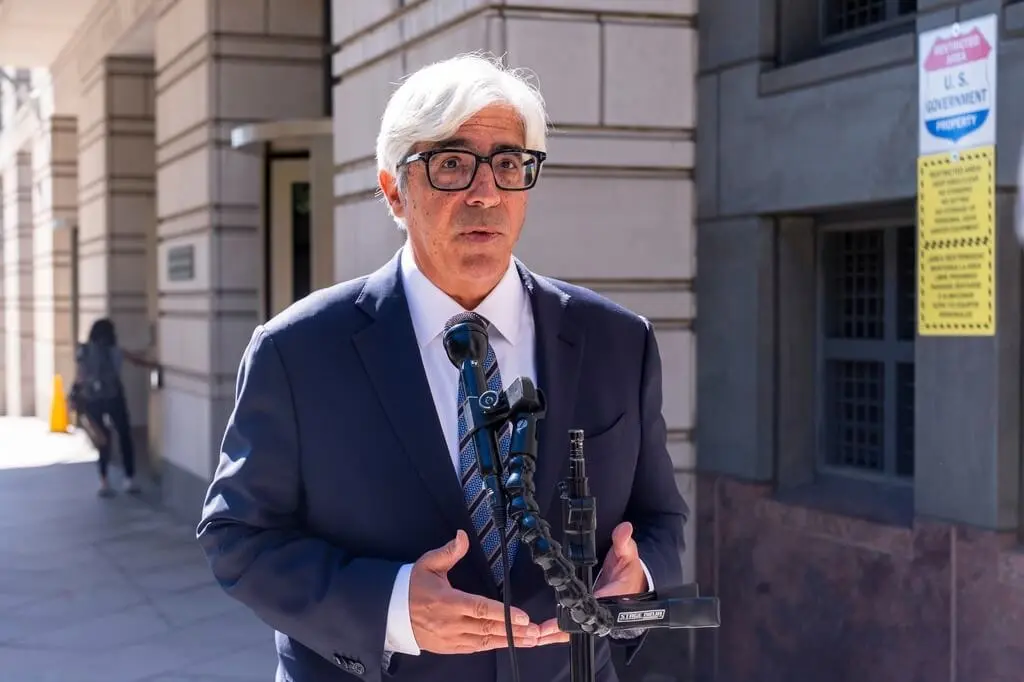
During Thursday’s proceedings, Theodore J. Boutrous Jr., lead attorney for the banned media outlets, pointed directly to this interview as a definitive admission of viewpoint-based retaliation. "That interview really is the coup de grâce," Boutrous argued before the court, signaling that the administration’s own public statements may dismantle its legal defense.
The Air Force One Exception
While the court has intervened forcefully regarding access to White House grounds, the legal restrictions do not currently extend to all executive travel facilities. As reported by The New York Times media analyst Erik Wemple in his detailed piece, "Why a Court Order Didn’t Stop Trump From Keeping Reporters Off Air Force One," the administration’s ban of CNN, MS NOW, and Politico from traveling aboard Air Force One remains legally distinct and currently permitted to stay in place. This nuance highlights the complex, fragmented nature of press access privileges, where physical federal property and government-chartered transportation are governed by separate legal frameworks.
Supporting Context & Metrics: The Contraction of Local Journalism
While national media organizations fight for their constitutional right of access in federal court, the foundational bedrock of American journalism—local reporting—is experiencing an unprecedented structural collapse.
The Crisis at the Amarillo Globe-News
A striking example of this localized erosion unfolded recently in Amarillo, Texas. Serving a population of approximately 205,000 residents, the city’s paper of record, the Amarillo Globe-News, was abruptly reduced to a single high-profile high school sports reporter.
According to an investigative report by the Amarillo Tribune, the corporate parent of the publication, USA Today Co. (Gannett), laid off the remainder of the editorial staff "without warning." These sweeping cuts occurred mere days after a wave of similar terminations struck sports reporters across the media conglomerate’s nationwide network of newspapers.
The Amarillo newsroom cuts are part of a broader corporate reorganization strategy. In September, USA Today Co. executed a massive round of layoffs targeting its audience teams and digital desks. Despite repeated inquiries from industry watchdogs and local press, corporate leadership at USA Today Co. has declined to respond to requests for comment regarding the sustainability of its remaining newsrooms or the long-term impact on local accountability reporting.
Official Statements and Institutional Shifts
Ross Douthat’s Unprecedented Dual Role
The media industry is not only shifting at the local level; elite legacy institutions are aggressively experimenting with hybrid talent models. Following a turbulent summer at CBS News’ legendary investigative program 60 Minutes—which saw the ouster of its executive producer and several veteran, highly respected correspondents—newly appointed CBS News Editor-in-Chief Bari Weiss made a surprising announcement. Weiss hired New York Times opinion columnist Ross Douthat as a correspondent for the broadcast, despite his lack of traditional television news reporting experience.
On Thursday, Weiss issued a second, less surprising announcement: Douthat is also joining her independent digital publication, The Free Press, as a regular columnist. Weiss and Douthat previously collaborated within the opinion division of The New York Times. Celebrating the reunion on social media, Weiss posted on X (formerly Twitter), declaring it "A dream come true."
Douthat inaugurated his new column with a direct, transparent piece titled, "I’m Writing a Column for The Free Press." In the essay, Douthat detailed the genesis of the publication, recalling a conversation he held with Weiss shortly after her departure from the Times in 2020.
"She was in an entrepreneurial mood, making calls and soliciting opinions, and I told her that I thought there was a potential market for a new general-interest publication that was politically independent, competitive with The Atlantic and The New Yorker, free from the ideological strictures of wokeness and the loyalty tests of MAGA," Douthat wrote.
The conversation laid the conceptual groundwork for what became The Free Press, initially launched by Weiss as a Substack newsletter titled Common Sense in 2021 before rebranding in 2022.
Addressing potential conflicts between his print commentary and broadcast journalism, Douthat clarified his professional boundaries:
"This is not my day job. I am a newly minted correspondent for 60 Minutes, where the goal is to ask probing questions, not sling political hot takes. If all goes well, this column will complement that work, staying a little bit above the partisan fray while giving readers useful frameworks (or, sometimes, truly eccentric frameworks) through which to understand our strange-and-getting-stranger century."
To date, Douthat has contributed two reported segments during the initial three episodes of the current 60 Minutes season: an interview with Patrick Clancy, the former husband of a woman accused of murdering their three children, and an in-depth profile of North Carolina Republican Senator Thom Tillis.
Ethical Boundaries in the 24/7 Commentary Economy
Stephen A. Smith and the Ethics of Sports Broadcasting
The fragile boundary between entertainment and responsible journalism was thrust into the national spotlight earlier this week, centering on ESPN’s premier commentator, Stephen A. Smith. During a broadcast of the network’s morning debate show First Take, Smith addressed the sudden retirement of Philadelphia Eagles offensive lineman Lane Johnson, who publicly cited severe mental health challenges as the primary reason for stepping away from the National Football League.
On air, Smith appeared to minimize Johnson’s stated struggles, suggesting instead that the player’s retirement was primarily motivated by the Philadelphia Eagles’ on-field performance and athletic difficulties. Show guest Kimberly A. Martin immediately challenged Smith in real time, stating on air, "I feel like you’re making light of the situation."
The Apology and Industry Critique
Later that day, Smith attempted to address the growing backlash during his SiriusXM radio program. However, his defense was widely criticized as defensive; he claimed his remarks had been "misconstrued" while simultaneously emphasizing that he would "never" mock mental health and recounting personal challenges he had faced over the years.
The pushback was immediate and severe. Writing for The Athletic, media columnist Andrew Marchand published a scathing critique arguing that Smith had deeply embarrassed himself and should have simply offered an unreserved apology.
The following morning on First Take, Smith opened the broadcast with an extensive, unprompted mea culpa:
"Here’s the reality of the situation. I was wrong. I messed up."
Smith directly apologized to Lane Johnson, the Philadelphia Eagles organization, and anyone navigating mental health struggles. In a particularly vulnerable moment, Smith noted:
"The biggest regret that I have for all of this is the fact that it may have given people that wanted to open the door to seek help a reason to pause and hesitate and not do so. And I can’t emphasize enough how sorry I am about that because it is a real issue."
He explicitly acknowledged the immense personal courage required for professional athletes like Johnson to speak publicly about psychological vulnerabilities. Industry sources confirmed that the apology was self-directed and not explicitly mandated by ESPN executives.
Nevertheless, media critics argue that the incident exposes structural flaws within the modern 24/7 commentary model. Commentators like Smith are contractually obligated to produce staggering volumes of content weekly, incentivized heavily to be provocative, opinionated, and entertaining.
As Marchand observed in his analysis:
"Talk show hosts mostly don’t know anything, but have to pretend they know everything. Smith and others are on your screen to entertain, not inform. If it is debating LeBron versus MJ or the Dallas Cowboys defense or who should be ranked No. 1, it really is no harm, no foul. But when you are talking about a serious topic, like mental health issues, don’t mock someone."
Marchand concluded with a warning for the broader broadcast industry:
"After all the clamor is done, he should make sure next time he gives himself a little more time to think before he takes on serious matters. Life is not a show."
Future Outlook
As the media landscape navigates the remainder of the year, several critical trajectories will determine the health and structure of public discourse:
- The Legal Precedent of Executive Press Access: All eyes remain fixed on Judge Timothy J. Kelly’s upcoming decision regarding the preliminary injunction in the White House press ban litigation. A ruling favoring the media coalition would reinforce bedrock First Amendment protections against retaliatory executive exclusion, establishing a powerful precedent preventing future administrations from weaponizing credentialing systems against critical newsrooms. Conversely, an adverse ruling could permanently alter the legal dynamics of executive branch oversight.
- Corporate Consolidation vs. Independent Media: The simultaneous rise of independent subscription-based publications like The Free Press and the aggressive cost-cutting initiatives dismantling legacy local newspapers like the Amarillo Globe-News signal a widening chasm in American journalism. While elite commentators transition fluidly between elite networks and digital startups, regional accountability reporting continues to wither.
- The Accountability of Opinion Media: The intense public reaction to Stephen A. Smith’s remarks on mental health serves as a cautionary tale for the 24/7 entertainment-industrial complex. As audiences increasingly demand ethical rigor and emotional intelligence from high-profile figures, media networks will face mounting pressure to balance provocative debate formats with substantive, empathetic responsibility.