

Executive Overview
The contemporary media ecosystem is experiencing a period of profound turbulence, defined by high-stakes legal battles at the highest levels of government, dramatic executive shuffles within legacy television networks, and the relentless, quiet decimation of local newsrooms. Over the past fortnight, the friction between the executive branch and the Fourth Estate has escalated from rhetorical combat to constitutional litigation, notably centered around the White House press briefing room.
Simultaneously, the cultural and economic pressures facing traditional journalism have triggered ripple effects across print, broadcast, and digital platforms. From high-profile columnists branching into broadcast journalism to prime-time sports commentators facing public reckoning over insensitive commentary, the boundaries separating entertainment, opinion, and hard news are increasingly blurred. Meanwhile, corporate consolidation and aggressive cost-cutting continue to eviscerate local reporting infrastructure, leaving mid-sized American cities effectively unmonitored.
This report provides an exhaustive examination of the intersecting crises shaping the current media environment. It analyzes the ongoing legal duel between the Trump administration and prominent news organizations, explores the strategic restructuring at CBS News and The Free Press, unpacks the anatomy of an ESPN controversy regarding mental health reporting, and documents the latest contraction of local journalism in Amarillo, Texas.
Detailed Chronology
The White House Press Bans and the Federal Court Battle
The adversarial relationship between President Donald Trump and major American news organizations reached a judicial milestone this month, transforming political animus into a formal constitutional test of press freedoms.
Two weeks prior, the administration enacted a sweeping prohibition, barring journalists from CNN, MS NOW, and Politico from accessing White House grounds. The administration defended the move by asserting that the coverage produced by these outlets posed a threat to national security and constituted an unrelenting stream of negative framing. In a recent interview with Time magazine, when directly queried about the rationale behind the ban, President Trump offered a blunt explanation: "Well, it’s just bad story after bad story."
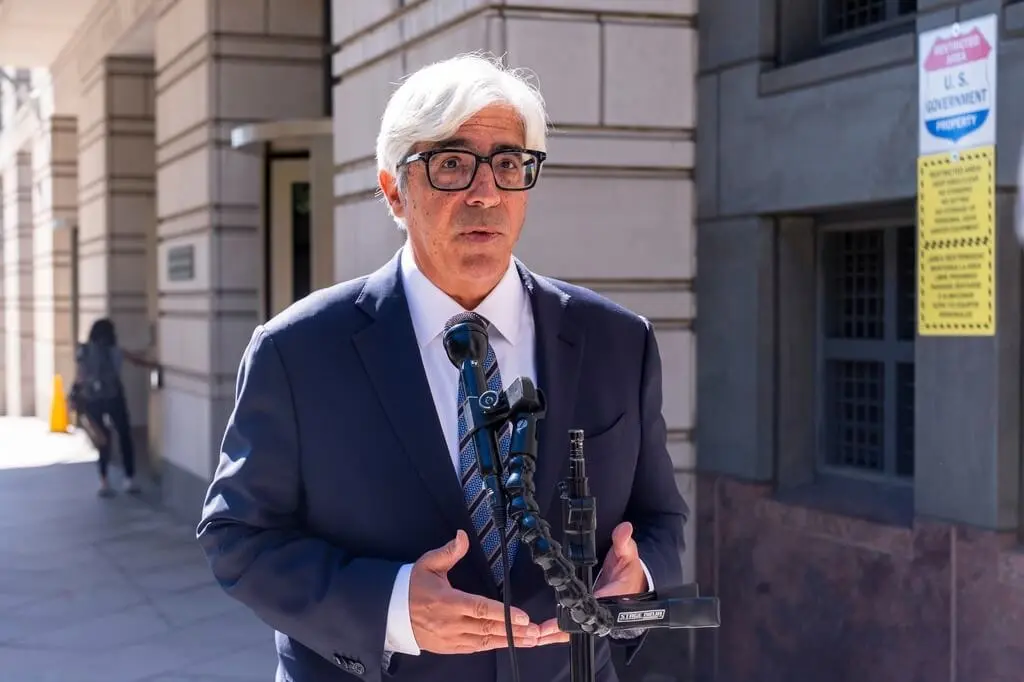
Faced with exclusion from the seat of executive power, the affected media outlets immediately filed a lawsuit in the U.S. District Court for the District of Columbia, arguing that the administration’s actions represented a clear violation of their First Amendment protections. Judge Timothy J. Kelly intervened swiftly, granting a temporary 14-day restraining order that restored the outlets’ White House press credentials.
As that initial order approached its Thursday expiration, lawyers for both sides reconvened before Judge Kelly. During the proceedings, the judge elected to extend the restraining order through the following Tuesday, signaling that he is weighing a more durable, long-term injunction that could govern access throughout months of anticipated litigation.
Legal observers note that while the media companies continue to press their First Amendment claims, Judge Kelly has demonstrated a sharp focus on potential violations of Fifth Amendment due process rights. "That’s probably the biggest hurdle you all have," Kelly remarked to government attorneys, while simultaneously exhibiting skepticism toward the administration’s national security justifications.
The defense delivered by the media coalition was underscored during Thursday’s hearing by attorney Theodore J. Boutrous Jr., who pointed directly to the president’s Time magazine remarks. Describing the interview as "the coup de grace," Boutrous argued that the executive had explicitly admitted to penalizing outlets based on editorial content rather than legitimate security concerns.
Despite these victories, the administration’s restrictions are not entirely dismantled. Legal analysts point out that the presidential ban preventing reporters from CNN, MS NOW, and Politico from boarding Air Force One remains legally distinct and structurally intact, leaving a critical perimeter of executive travel closed to the designated outlets.
Supporting Context & Metrics
The CBS News and The Free Press Axis: Douthat’s Dual Role
As institutional legacy media organizations grapple with shifting audiences and economic contraction, individual talent mobility is reshaping the industry’s power centers. This dynamic is vividly illustrated by the career trajectory of New York Times opinion columnist Ross Douthat.
Following a tumultuous summer at CBS News—marked by the departure of its executive producer and the exit of several veteran correspondents—Editor-in-Chief Bari Weiss executed a surprising recruitment strategy. Despite having no formal television news background, Douthat was named a correspondent for the legendary investigative program 60 Minutes.
The institutional pivot continued when Weiss announced that Douthat would simultaneously join her independent digital publication, The Free Press, as a columnist. Douthat and Weiss previously shared editorial space within The New York Times opinion section, a bond that manifested in Weiss’s public celebration on social media: "A dream come true."
In his inaugural column for The Free Press, titled simply "I’m Writing a Column for The Free Press," Douthat detailed the ideological and market philosophy underpinning the publication. He recalled a 2020 conversation with Weiss shortly after her departure from the Gray Lady:
"She was in an entrepreneurial mood, making calls and soliciting opinions, and I told her that I thought there was a potential market for a new general-interest publication that was politically independent, competitive with The Atlantic and The New Yorker, free from the ideological strictures of wokeness and the loyalty tests of MAGA."
This ethos birthed The Free Press, which evolved from a Substack titled Common Sense in 2021 into a fully branded digital media entity by 2022. Douthat has emphasized that his writing for the platform will not interfere with his responsibilities at CBS News. Characterizing his television work as an investigative endeavor rather than an opinion platform, he wrote: "This is not my day job. I am a newly minted correspondent for 60 Minutes, where the goal is to ask probing questions, not sling political hot takes."
Douthat’s early television portfolio includes substantial profiles and interviews, such as a segment on North Carolina Republican Senator Thom Tillis and an examination of Patrick Clancy, the former husband of a woman accused of murdering their three children.
The Stephen A. Smith Controversy and the Economics of Commentary
The pressures of continuous, high-volume commentary were thrust into the spotlight this week following a high-profile misstep by ESPN commentator Stephen A. Smith on the flagship debate show First Take.
The controversy erupted when Smith addressed the sudden retirement of Philadelphia Eagles offensive lineman Lane Johnson, who cited severe mental health challenges as the primary catalyst for his departure. During Wednesday’s broadcast, Smith appeared to minimize Johnson’s disclosures, suggesting that the player’s retirement was primarily driven by the Eagles’ on-field athletic struggles. Guest co-host Kimberly A. Martin immediately challenged Smith on-air, telling him, "I feel like you’re making light of the situation."
Subsequent attempts by Smith to address the backlash on his SiriusXM radio program initially exacerbated the crisis. While asserting that he would never intentionally mock mental health—and citing personal mental health struggles of his own—Smith insisted his comments had been "misconstrued," drawing sharp criticism from media analysts like The Athletic’s Andrew Marchand, who argued that defensive rationalizations only compounded the error.
Recognizing the gravity of the backlash, Smith opened Thursday’s edition of First Take with an unequivocal, unscripted apology:
"Here’s the reality of the situation. I was wrong. I messed up."
Directly addressing Johnson, the Eagles organization, and individuals battling mental health conditions, Smith expressed deep remorse:
"The biggest regret that I have for all of this is the fact that it may have given people that wanted to open the door to seek help a reason to pause and hesitate and not do so. And I can’t emphasize enough how sorry I am about that because it is a real issue."
Industry observers noted that the incident underscores the systemic vulnerabilities inherent in modern sports and entertainment commentary. With commentators required to produce hours of provocative daily content, the boundary between analytical sports debate and complex social issues often collapses. As Marchand observed in his critique:
"Talk show hosts mostly don’t know anything, but have to pretend they know everything. Smith and others are on your screen to entertain, not inform… When you are talking about a serious topic, like mental health issues, don’t mock someone."
Official Statements & Institutional Impacts
Amarillo, Texas: The Silent Erosion of Local Journalism
While federal litigation and network executive shuffles dominate national headlines, the foundational crisis of the American media landscape continues to unfold quietly at the local level.
According to reports from the Amarillo Tribune, the Amarillo Globe-News—serving a population of 205,000 as the paper of record in Amarillo, Texas—has been reduced to a solitary high school sports reporter. The corporate parent, USA Today Co. (Gannett), executed a sweeping round of layoffs last week that eliminated the remainder of the editorial staff "without warning."
These local job losses followed a series of sports journalism cutbacks across the USA Today chain and coincided with a broader corporate reorganization of the company’s audience development teams. Despite formal inquiries from industry watchdogs and regional publications, corporate leadership has declined to provide public comment regarding the operational future or newsroom capacity of the Amarillo Globe-News.
Media economists point out that the hollowing out of regional newspapers like the one in Amarillo accelerates the information deficit in suburban and rural communities, leaving local government corruption, school board governance, and regional commerce entirely devoid of professional journalistic oversight.
Future Outlook
As the legal, corporate, and cultural shifts within the media sector converge, several defining trajectories will shape the industry in the coming months:
- The Outcome of White House Access Litigation: All eyes remain fixed on Judge Timothy J. Kelly’s forthcoming decisions regarding the permanent injunction requested by CNN, MS NOW, and Politico. A ruling in favor of the media outlets would establish a vital legal precedent limiting executive discretion over press credentials, while a victory for the administration would permanently alter the baseline of interactions between the executive branch and independent journalists.
- The Blurring Lines of Opinion and Investigation: The cross-pollination of elite print columnists into broadcast investigative platforms—exemplified by Ross Douthat’s dual roles at 60 Minutes and The Free Press—signals a new era of cross-media hybrid talent. Networks increasingly rely on recognized bylines to drive broadcast viewership, testing whether traditional opinion writers can successfully adopt the objective posture of investigative reporting.
- Accountability and Content Volatility in Talk Media: The Stephen A. Smith controversy serves as a cautionary tale for live-format networks. As audiences demand higher standards of social responsibility regarding sensitive topics like mental health, networks and commentators face mounting pressure to balance entertainment value with rigorous, empathetic discourse.
- The Ongoing Crisis of Regional News Deserts: Without systemic economic interventions or innovative non-profit funding models, corporate-owned local newspapers will continue to shrink toward irrelevance. The reduction of newsrooms to single-reporter operations in markets like Amarillo underscores the urgent need for structural revitalization in local reporting infrastructure before regional civic accountability completely collapses.