

Executive Overview
The contemporary media ecosystem is undergoing a period of profound turbulence, characterized by high-stakes legal confrontations, sweeping corporate restructuring, ethical missteps by marquee commentators, and the accelerating erosion of local journalism. From the hallowed corridors of the federal judiciary, where the First and Fifth Amendments are being intensely scrutinized in a high-profile showdown between the White House and major news outlets, to the dramatic cultural shifts inside elite broadcasting networks and legacy publishing houses, the boundaries of journalism are continuously being tested.
At the epicenter of this institutional friction is an ongoing collision between political power and the press. The federal government’s aggressive actions to restrict major news organizations from official properties have ignited a constitutional battle that could redefine the parameters of executive accountability and press freedom for generations. Simultaneously, traditional newsrooms are grappling with severe internal transformations, marked by surprising cross-industry talent migrations, high-profile apologies over cultural insensitivity regarding mental health discourse, and the devastating, silent collapse of local newsrooms across heartland America.
This report delivers an exhaustive, multi-faceted analysis of the current state of the media, breaking down the ongoing legal war between the Trump administration and prominent journalistic institutions, the structural evolution of commentary and reporting networks, and the perilous socioeconomic realities facing local news operations.
Detailed Chronology
The past several weeks have accelerated long-simmering tensions into immediate, court-tested crises. To understand the current equilibrium of the American media landscape, one must trace the timeline of key events that have shaped the discourse.
The White House Press Ban and Judicial Retaliation
- Two Weeks Prior: The Trump administration dramatically escalated its antagonistic relationship with the media by officially banning prominent outlets—specifically CNN, MS NOW, and Politico—from White House grounds.
- Immediate Aftermath: Recognizing the existential threat posed to their constitutional right to gather news, the banned media outlets immediately filed a lawsuit in federal court. A federal judge swiftly granted a 14-day temporary restraining order, forcing the administration to restore the outlets’ White House press credentials.
- Thursday Hearing: As the initial 14-day restraining order approached its expiration date, legal teams from both sides converged for a high-stakes follow-up hearing in the U.S. District Court for the District of Columbia. Presiding Judge Timothy J. Kelly opted to extend the restraining order through the following Tuesday, while signaling an openness to issuing a more durable, long-term injunction that could govern access over months of protracted litigation.
- Air Force One Exception: Notably, while White House grounds access was temporarily restored via judicial intervention, separate bans barring these same organizations from traveling on Air Force One were allowed to remain in place by the administration, prompting further legal and analytical scrutiny regarding the scope of executive property rights versus press access.
Ross Douthat’s Dual Career Move
- Summer/Fall Transition: Following a tumultuous operational summer at CBS News’ iconic program 60 Minutes—which saw the departure of its executive producer and several veteran correspondents—Editor-in-Chief Bari Weiss made the unconventional choice to hire New York Times opinion columnist Ross Douthat as a correspondent, despite his lack of prior television news experience.
- Thursday Announcement: Weiss made a secondary announcement confirming that Douthat would also join her independent digital publication, The Free Press, as a columnist. Douthat quickly published his inaugural column, titled "I’m Writing a Column for The Free Press," detailing the ideological void he hopes the publication fills between "the ideological strictures of wokeness and the loyalty tests of MAGA."
The Stephen A. Smith Controversy
- Wednesday Morning: During a live broadcast of ESPN’s First Take, commentator Stephen A. Smith made remarks regarding the abrupt retirement of Philadelphia Eagles offensive lineman Lane Johnson, who had openly cited mental health struggles as the primary catalyst for his departure. Smith’s commentary was perceived by co-panelists and viewers alike as dismissive, suggesting the real motivation stemmed from the team’s on-field performance rather than psychological well-being.
- Wednesday Afternoon: Attempting to quell mounting backlash, Smith addressed the controversy on his SiriusXM radio program, asserting that his comments had been "misconstrued" and highlighting his own historical battles with mental health. However, critics argued the defense fell short of a true accountability measure.
- Thursday Morning: Following intense media condemnation—including a scathing critique by The Athletic’s Andrew Marchand—Smith opened the Thursday edition of First Take with an unprompted, deeply remorseful, and comprehensive apology, explicitly stating, "I was wrong" and expressing deep regret that his words might deter others from seeking psychological help.
The Amarillo Globe-News Layoffs
- Late September to Early October: In a quiet manifestation of systemic local news erosion, the Amarillo Globe-News—the paper of record for a Texas community of 205,000 residents—was reduced to a single high-school sports reporter. According to reports by the Amarillo Tribune, the USA Today Co.-owned publication laid off its remaining editorial staff "without warning," following broader corporate restructuring and terminations across the parent company’s national footprint.
Supporting Context & Metrics
The Constitutional Battleground: First vs. Fifth Amendments
The legal clash between the Trump administration and the press hinges on delicate interpretations of constitutional law. While the targeted news organizations argue that their First Amendment protections against viewpoint discrimination are being systematically violated—contending that the ban is a punitive measure explicitly driven by content the president dislikes—the judiciary has introduced an equally compelling legal dimension.
U.S. District Judge Timothy J. Kelly has maintained a sharp focus on whether the administration violated the media’s Fifth Amendment rights to due process. During proceedings, Judge Kelly remarked directly to government counsels: "That’s probably the biggest hurdle you all have."
Simultaneously, the judiciary has expressed deep skepticism toward the administration’s routine justifications that the penalized outlets’ reporting poses an active threat to national security. The legal weight of the administration’s argument suffered a critical self-inflicted wound when President Trump, during a widely publicized interview with Time magazine, was directly asked why he chose to ban the organizations. His blunt response—"Well, it’s just bad story after bad story"—was characterized by Theodore J. Boutrous Jr., attorney for the banned outlets, as the ultimate "coup de grace" confirming retaliatory viewpoint discrimination.
The Shifting Paradigm of Commentary and Television News
The media industry is simultaneously witnessing a blurring of lines between traditional broadcast journalism and independent digital publishing. Bari Weiss’s leadership at CBS News and her concurrent expansion of The Free Press illustrate a new cross-pollination of talent. Douthat’s transition into television with 60 Minutes—marked by profiles of political figures like Senator Thom Tillis and deeply personal investigations—alongside his return to written commentary for an independent platform, highlights how contemporary journalists are diversifying their portfolios outside legacy conglomerates.
However, this high-output, 24/7 commentary culture carries substantial professional hazards. The Stephen A. Smith controversy at ESPN underscores the immense pressure placed on modern sports and political pundits to deliver hours of provocative, highly engaging content daily. As media critic Andrew Marchand astutely observed, contemporary talk show hosts are frequently thrust into positions where they must project total authority on complex, multi-faceted topics while operating primarily as entertainers rather than investigative reporters. When these commercial imperatives intersect with sensitive, deeply human issues such as mental health, the margin for error narrows catastrophically.
The Collapse of Regional Print Infrastructure
While national media outlets battle in federal courts and digital startups scale rapidly, the foundational infrastructure of local journalism continues to decay. The near-total decimation of the Amarillo Globe-News newsroom by the USA Today Co. exemplifies the relentless corporate cost-cutting sweeping regional news markets. Stripping a city of over 200,000 residents of its dedicated civic watchdog reporters in favor of a skeletal operation focused solely on high school sports highlights the ongoing crisis of news deserts in America—a phenomenon that compromises municipal transparency and democratic accountability at the grassroots level.
Official Statements
-
Judge Timothy J. Kelly (U.S. District Court for the District of Columbia):
"That’s probably the biggest hurdle you all have."
(Addressing government defense lawyers regarding potential Fifth Amendment due process violations during the federal hearing) -
President Donald Trump (via Time Magazine interview, regarding the press ban):
"Well, it’s just bad story after bad story."
-
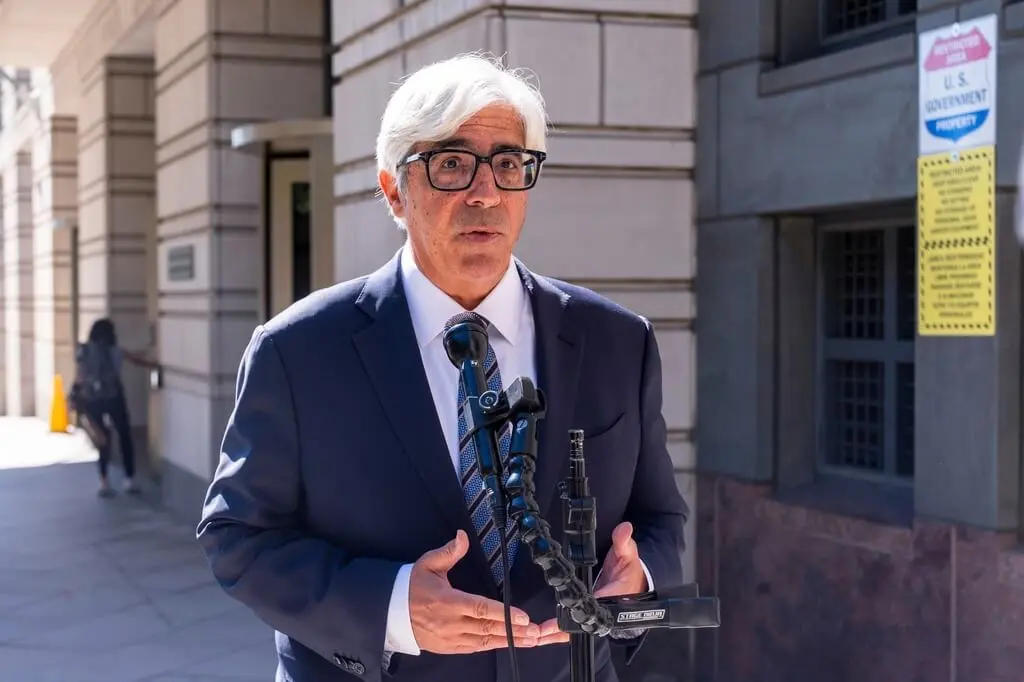
Theodore J. Boutrous Jr. (Attorney for CNN, MS NOW, and Politico):
"That interview really is the coup de grace."
(Referencing President Trump’s public admission that the news bans were motivated by unfavorable coverage) -
Bari Weiss (Editor-in-Chief, The Free Press, via X/Twitter):
"A dream come true."
(Commenting on the addition of Ross Douthat as a columnist) -
Ross Douthat (Opinion Columnist and 60 Minutes Correspondent):
"This is not my day job. I am a newly minted correspondent for 60 Minutes, where the goal is to ask probing questions, not sling political hot takes. If all goes well, this column will complement that work, staying a little bit above the partisan fray while giving readers useful frameworks (or, sometimes, truly eccentric frameworks) through through which to understand our strange-and-getting-stranger century."
-
Stephen A. Smith (ESPN Commentator, addressing his on-air remarks):
"Here’s the reality of the situation. I was wrong. I messed up… The biggest regret that I have for all of this is the fact that it may have given people that wanted to open the door to seek help a reason to pause and hesitate and not do so. And I can’t emphasize enough how sorry I am about that because it is a real issue."
Future Outlook
As the legal and cultural landscape of American media continues to morph, several critical trajectories will dictate the health and structure of the industry in the months ahead:
-
The Legal Precedent of Executive Press Access:
The forthcoming rulings by Judge Timothy J. Kelly will set a profound constitutional baseline. If the court issues a durable, multi-month injunction against the White House, it will reinforce robust legal boundaries protecting journalistic access against politically motivated retaliation. Conversely, any judicial deference granted to executive property rights could permanently alter how future administrations manage press pools. -
The Evolution of Independent vs. Legacy Media:
The hybrid career trajectories of figures like Ross Douthat signal a decentralization of journalistic prestige. As subscription-based digital outlets like The Free Press compete directly with legacy powerhouses like The Atlantic and The New Yorker, the financial and ideological boundaries of elite opinion journalism will continue to shift away from traditional corporate models toward independent, ideologically distinct ecosystems. -
Accountability and Content Delivery Standards in Sports and Entertainment Media:
The intense public backlash and subsequent sincere apology by Stephen A. Smith serve as a cautionary watershed moment for high-volume broadcast personalities. Networks and commentators alike will face increasing pressure to balance the commercial demand for provocative entertainment with rigorous ethical standards, particularly when addressing vulnerable societal issues such as mental health. -
The Sustainability Crisis of Local News:
With corporate media consolidations continuing to gut local newsrooms—as evidenced in Amarillo—the urgent search for sustainable nonprofit, philanthropic, and community-funded journalism models remains an existential necessity. Without structural interventions, the ongoing erosion of local reporting will continue to leave millions of Americans without verified, boots-on-the-ground civic accountability.