

Executive Overview
In a landmark verdict that pierces decades of institutional silence and athletic prestige, a New York State Supreme Court jury has awarded $11.3 million to a former youth basketball player who suffered systematic sexual abuse as a teenager. The plaintiff, identified in court documents as J.M., was subjected to harrowing assaults in the spring of 1978 by Ernest "Ernie" Lorch, the powerful sports program director, deacon, and corporate attorney who built the legendary Riverside Church basketball program in upper Manhattan.
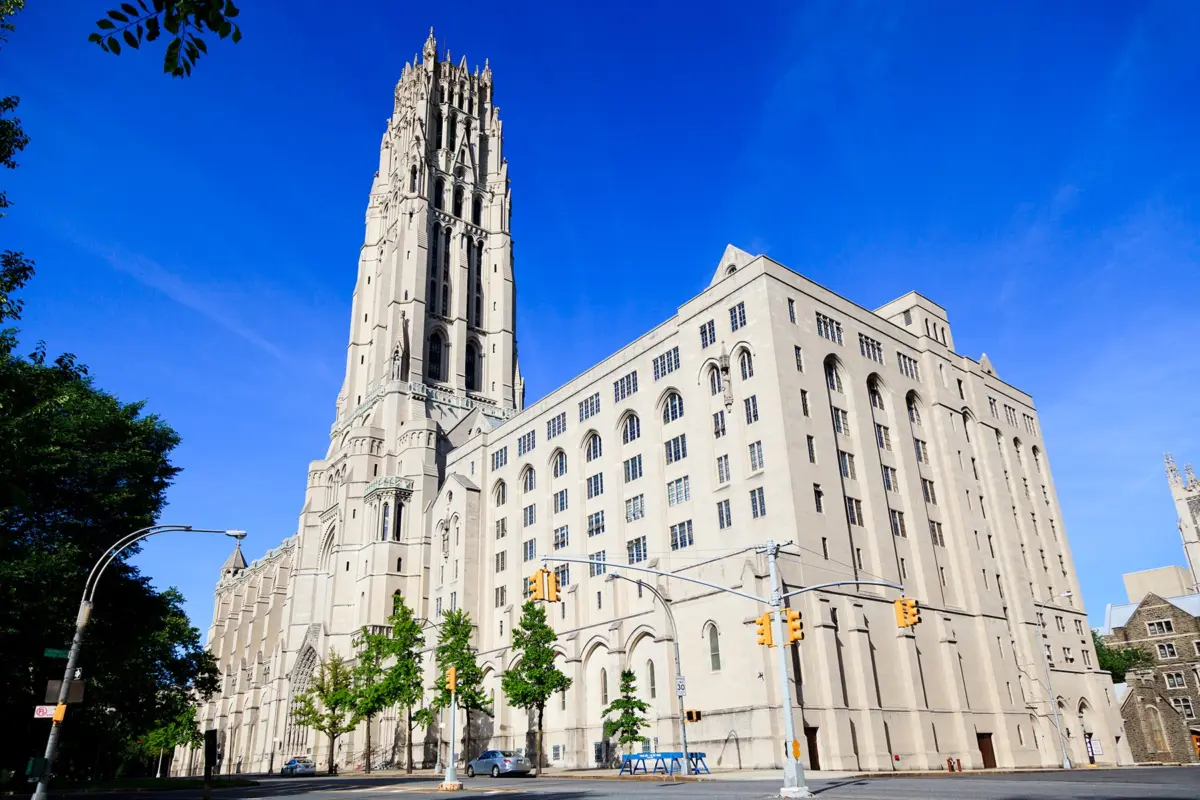
The six-person Manhattan jury deliberated for nearly five hours on Wednesday before reaching a definitive conclusion: Riverside Church was "reckless" and legally culpable for failing to protect the children under its care. The financial penalty—comprising $7.5 million for past pain and suffering and $3.8 million for future damages—marks a monumental moment in an ongoing, high-stakes legal battle centered around one of the most influential youth sports pipelines in American history.
For decades, the Riverside Hawks served as an incubator for basketball greatness, forging the blueprint for the modern, multi-billion-dollar youth sports industry. Yet, beneath the veneer of athletic glory, trophies, and NCAA championships lay a dark reality. Lorch, who died in 2012 at the age of 79, operated with absolute impunity, leveraging his immense wealth, institutional status, and the prestige of the Rockefeller-founded church to shield himself from accountability.
This verdict represents only the second trial to reach a resolution among nearly three dozen lawsuits filed against Riverside Church under New York’s Child Victims Act (CVA). As survivors continue their arduous journey toward justice, the case lays bare the devastating human cost of institutional negligence, the weaponization of a victim’s resilience, and the long-overdue reckoning facing elite youth athletic organizations.
Detailed Chronology: From the Bronx to the Courtroom
The roots of the litigation stretch back to the spring of 1978. At the time, J.M. was a 14-year-old growing up in a single-parent household in the Bronx. Like countless inner-city youths, he looked to sports as an avenue of hope and discipline, leading him to the doors of the Riverside Church basketball program.
During his testimony in lower Manhattan last week, J.M., now 63 and a resident of the San Francisco Bay Area, described Lorch as "the ultimate alpha male in the gym." To the teenagers who entered the program, Lorch was a towering father figure whose approval was paramount. "Everybody deferred to him," J.M. testified.
That immense psychological authority became the instrument of exploitation. J.M. detailed being sexually abused "eight or nine" times by Lorch during a single season, enduring harrowing acts of rape and forced oral sex.
Decades later, the passage of New York’s Child Victims Act in 2019 provided the legal mechanism necessary to break the silence. The legislation opened a vital two-year lookback window, allowing survivors of childhood sexual abuse to bypass archaic statute-of-limitations laws and seek civil damages long after the abuse occurred. J.M. filed his lawsuit against Riverside Church that same year, setting the stage for an intense, emotionally charged courtroom battle.
During the trial, J.M.’s legal team, led by attorney Lucas Franken, meticulously established a pattern of institutional failure. Prosecutors and civil attorneys lined up testimony from nine other alleged victims—echoing evidence presented in a previous trial involving former Marist College basketball star Daryl Powell, which ended in a settlement in January just before jury deliberations. The testimony painted a disturbing portrait of an unchecked predator who routinely utilized paddling, invasive "jockstrap checks," and escalating sexual assaults against impoverished Black and Latino children.
Despite the overwhelming evidence, the defense mounted an aggressive counter-strategy. Attorneys for Riverside Church argued that the institution had no direct knowledge of Lorch’s actions and bore no legal responsibility for what they characterized as unauthorized, intentional acts committed by an individual. Furthermore, defense counsel Philip Semprevivo leaned heavily on a controversial defense: weaponizing the plaintiff’s subsequent life achievements. Arguing that J.M. had built a successful career in the nonprofit sector and exhibited no classic signs of Post-Traumatic Stress Disorder (PTSD), the defense claimed he was "highly functional" and therefore not entitled to massive financial damages.
Franken fiercely dismantled this argument during his closing statements, accusing the defense of punishing the plaintiff for his own resilience. "Because he’s resilient, we don’t owe him anything?" Franken asked the jury, highlighting the stark dichotomy between the public-facing strength J.M. cultivated and the private, 48-year trauma he silently endured.
The jury ultimately rejected the church’s arguments, finding Riverside fully culpable for its reckless oversight and awarding J.M. the $11.3 million judgment.
Supporting Context & Metrics: The Riverside Hawks Legacy and the CVA Impact
To understand the magnitude of the Riverside Church abuse scandal, one must examine the monumental footprint of the organization Lorch helmed from 1961 to 2002.
The Riverside Hawks were not merely a local youth team; they were the vanguard of modern grassroots basketball. Lorch’s operation pioneered the travel-team circuit and elite showcase tournaments that today define the lucrative, $40 billion youth sports ecosystem. The program’s alumni roster reads like a Who’s Who of basketball history:
- More than 60 NBA players launched their careers through Riverside.
- Hundreds of NCAA Division I standouts wore the Hawks jersey.
- Basketball Hall of Fame inductees Nate Archibald and Chris Mullin honed their skills within the program.
- NBA champions and high-profile sports personalities, such as two-time champion Kenny Smith and players-turned-analysts Metta World Peace (Ron Artest) and Lamar Odom, played under Lorch.
- Cultural figures and hip-hop icons, including rappers Cam’ron and Ma$e, participated in the program as promising New York high school prospects in the 1990s before entering the music industry.
This glittering athletic pedigree created a protective shield around Lorch. When allegations first surfaced in the public sphere—notably in 2002 when former player Robert Holmes detailed how he was abused and subsequently paid for his silence by Lorch—the reaction from the basketball community was deeply fractured. Some prominent alumni, including Kenny Smith and Mark Jackson, publicly defended Lorch, highlighting the complex web of loyalty and denial that enabled his behavior to persist for decades.
The passage of the Child Victims Act radically altered this dynamic. J.M. is one of 27 plaintiffs who have filed lawsuits alleging they were abused by Lorch as children. Nearly all of the plaintiffs participated in Riverside’s sports programs during Lorch’s four-decade tenure.
The legal battles have exposed deep systemic failures. As investigative reporting by Rolling Stone and Sportico revealed, Riverside Church leadership repeatedly ignored red flags, blinded by the prestige, donor money, and institutional influence Lorch wielded as a prominent deacon and board member. "There was no supervision," Franken argued in court. "There was no oversight. And there is no record that these kids ever existed other than the accolades."
Official Statements and Legal Perspectives
The fallout from the verdict has brought intense scrutiny to the legal strategies employed by both sides and the broader implications for institutional accountability.
Following the jury’s decision, J.M.’s attorney, Lucas Franken, spoke to reporters about the profound validation his client experienced.
"He’s feeling that it’s gratifying to be heard, and it’s obviously a long time coming," Franken told Rolling Stone. "And the jury, after speaking to them, they believed us, they believed the truth we were conveying to them, and even with the fact that so much time had passed, it was common sense."
Throughout the trial, Franken repeatedly underscored the psychological trauma behind J.M.’s outward success. During his closing argument, he challenged the jury to weigh worldly achievements against foundational trauma:
"Are you proud of what you have accomplished despite what Mr. Lorch did to you?" Franken asked his client on the stand.
"Yes," J.M. answered.
"And do all the nice things that people say and all the achievements that you’ve had erase the memories of a 46-year-old man putting his penis in your mouth when you were 14 years old?"
"No," J.M. answered.
Conversely, the defense maintained a strict stance regarding institutional liability and the nature of the alleged damages. In his opening statement, Riverside counsel Philip Semprevivo attempted to isolate the church from Lorch’s actions, framing the alleged abuse as solely the rogue behavior of an individual:
"If the abuse happened as it’s going to be described by [J.M.] here, yes, 100 percent, it’s Ernest Lorch’s fault, not 90 percent, not 80 percent. It’s an intentional act. If he did it, he did it, not Riverside."
In closing arguments, Semprevivo pivoted to the plaintiff’s high-functioning professional life, arguing that the legal threshold for severe PTSD had not been met:
"What’s alleged is PTSD," Semprevivo stated, pointing out an absence of documented nightmares or flashbacks. "He is successful in every aspect of his life. Whether it’s friends. Whether it’s work. Whether it’s marriage. Whether it’s health. He checks all the boxes."
Representatives for Riverside Church and its attorneys declined to issue email or telephone statements to the press immediately following the Wednesday verdict.
Future Outlook: Unresolved Claims and a Slow Path to Justice
While the $11.3 million verdict marks a monumental victory for J.M., the broader legal landscape surrounding Riverside Church remains fraught with delays, uncertainty, and profound grief.
When the Daryl Powell case resulted in a sudden settlement in January just moments before reaching the jury, legal analysts and survivors hoped it would catalyze a wave of swift resolutions across the remaining dockets. Unfortunately, that momentum has largely stalled. The slow-moving series of cases has left many aging plaintiffs in limbo; tragically, three former players have passed away while awaiting their day in court over the last six years.
The trial of J.M. has demonstrated that juries are increasingly willing to hold major institutions accountable for negligent supervision, even when decades have elapsed and perpetrators have passed away. By rejecting the defense’s attempts to weaponize a survivor’s resilience and professional success, the Manhattan jury established a vital legal precedent for future Child Victims Act litigations across New York State.
For J.M., the verdict offers a measure of closure after nearly five decades of silent suffering—a journey that required him to rebuild his life, navigate profound distrust of religious and institutional authorities, and ultimately confront the ghosts of the Riverside gym in a court of law. As the remaining lawsuits slowly wind their way through the judicial system, the shadow of Ernie Lorch and the institutional failings of Riverside Church continue to demand public accountability, ensuring that the stories of vulnerable children are finally heard, believed, and vindicated.