

Executive Overview
In the realm of artisanal agriculture and heritage horticulture, the modern consumer often finds themselves navigating a vast, unmapped wilderness of obscure cultivars. While supermarket shelves remain thoroughly dominated by a homogenized corporate monopoly of uniform, wax-coated Red Delicious and ubiquitous Gala apples, a quiet renaissance is occurring on the fringes. Horticultural enthusiasts, specialty growers, and itinerant fruit critics are increasingly turning their attention toward heirloom, cider, and wild-foraged pomological specimens.
This report serves as the second installment in a comprehensive, unyielding investigative survey of contemporary apple varieties. Utilizing a rigorous, highly subjective, yet unflinchingly honest rating system—grounded in tactile texture analysis, flavor profiling, historical provenance, and sheer culinary utility—this review evaluates seven distinct and idiosyncratic cultivars. From the nutmeg-heavy density of the Kickapoo Spice to the jaw-shattering, gum-flavored resilience of the Graham apple, these evaluations aim to separate genuine pomological masterpieces from fraudulent, mealy botanical disappointments.

As agricultural trade routes expand and regional orchards grapple with shifting climate patterns and historical preservation efforts, understanding the structural and sensory attributes of these niche fruits becomes paramount. The following deep-dive analysis chronicles the tasting notes, structural anomalies, historical lore, and ultimate numerical rankings of the season’s most eccentric apple crop.
Detailed Chronology of Tastings and Sensory Evaluations
The evaluation process requires a strict methodology: immediate post-acquisition consumption (barring specified anomalies in storage degradation), structural resistance testing via human dentition, and a comprehensive breakdown of aromatic volatile compounds detected upon fracturing the skin. Below is the chronological breakdown of the second batch of seasonal apple evaluations.

1. Kickapoo Spice
- Initial Impression: The nomenclature alone evokes immediate cultural touchstones, carrying a robust, rebellious energy reminiscent of classic rock anthems. Visually, the Kickapoo Spice presents as a remarkably dense specimen—a heavy, unyielding botanical orb that suggests high structural integrity and a stubborn refusal to bruise easily.
- Flavor and Texture Profile: Upon breaching the skin, the fruit reveals an intensely high spice component. The flavor profile leans heavily into aromatic autumnal spices, dominated by robust notes of nutmeg, backed by subtle undertones of cinnamon and clove. True to its moniker, the spice element is thoroughly apropos. However, it lacks juiciness, presenting a dry, tightly bound flesh. Most distressingly, the finish introduces an unexpected, non-ideal aftertaste reminiscent of freshly cut grass, indicating potential mistiming in post-harvest storage.
- Final Verdict: A fascinating, complex specimen that suffers slightly from maturation anomalies.
- Rating: 6.9 / 10
2. St. Edmunds Pippin
- Initial Impression: Serving as the inaugural "proper" apple of the evaluation season, the St. Edmunds Pippin immediately establishes a high baseline for quality. The exterior skin exhibits a characteristic rustic roughness—coarse to the touch, evoking tactile comparisons to backward-stroked shark skin.
- Flavor and Texture Profile: Despite its rugged exterior, the first bite delivers a deeply satisfying, explosive acoustic and tactile experience, characterized by a sharp pop and a resonant crunch. Flavor-wise, the Pippin is a triumph of balance. It offers a bright, herbal complexity with distinct fennel pollen undertones, expertly tempered by a clean, underlying sweetness. It is simultaneously crunchy, exceptionally juicy, and refreshingly sharp-breaking.
- Final Verdict: An exemplary specimen demonstrating how heirloom varieties can successfully marry funky, complex herbal notes with classic sweet-tart refreshment.
- Rating: 8.3 / 10
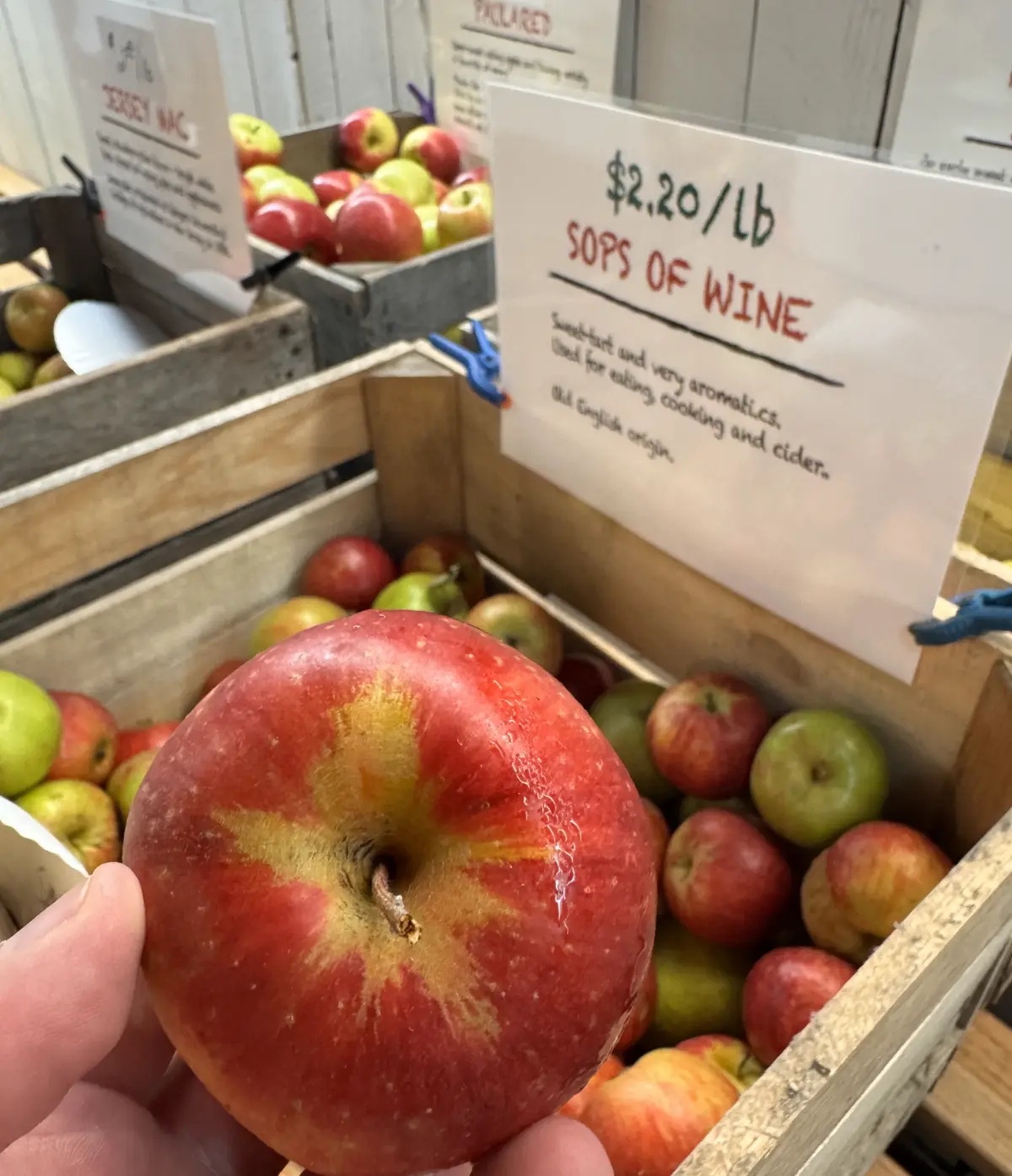
3. Sops of Wine
- Initial Impression: Steeped in literary and historical ghosts, this cultivar’s very name triggers involuntary psychological associations with epic fantasy cinema—specifically, the haunting, hollow-voiced phantom echoes of grand cinematic feasts.
- Flavor and Texture Profile: Unfortunately, the physical reality of the fruit fails to live up to its dramatic nomenclature. While the flavor profile exhibits pleasant, funky subacid qualities—leaning sweeter than tart with delicate accents of vanilla and spice—the structural integrity of the specimen is deeply compromised. The texture is overtly mealy, dry, and unpleasantly gritty, suggesting the fruit languished far too long off the branch before reaching the consumer. Furthermore, while historical literature notes that true Sops of Wine feature striking red-fleshed staining, this particular specimen displayed mundane, uninspired white flesh.
- Final Verdict: A textural disaster redeemed only marginally by intermittent flickers of historical charm and vanilla-spiced nuance.
- Rating: 3.5 / 10
4. Fenceline Surprise
- Initial Impression: The ultimate surprise of the Fenceline Surprise is its absolute culinary failure. Possessing a pretentious linguistic ambiguity that invites continental European mispronunciations, the apple masks an utterly dismal interior beneath a superficially appealing exterior and an authoritative orchard sign labeling it a "firm apple."
- Flavor and Texture Profile: Upon biting into the specimen, the taster is greeted not by firmness, but by a profoundly bland, structural mush. A faint, fleeting ghost of pear juice lingers momentarily on the palate before evaporating entirely, leaving the mouth feeling as though it has been packed with dry beach sand. It is a coarse, unpleasant experience, indicative of an over-aged cold-storage casualty.
- Final Verdict: An unmitigated disaster that narrowly escapes a zero-point score solely due to its dignified name and deceptive aesthetic presentation.
- Rating: 1.0 / 10
5. Americus Crab
- Initial Impression: "Americus Crab" sounds less like a pomological cultivar and more like a steampunk inventor or a hyper-niche, golden-age comic book superhero dedicated to maritime defense.
- Flavor and Texture Profile: Classified strictly as a crabapple, this specimen resists standard culinary evaluation. It is unapologetically idiosyncratic: fiercely savory, punishingly tart, structurally rigid, and saturated with astronomical levels of astringent tannins. It is entirely unsuited for casual, out-of-hand consumption by the unprepared palate.
- Final Verdict: Not recommended for casual snacking, but holds undeniable appeal for adventurous foragers and experimental horticulturalists drawn to aggressive, challenging flavors.
- Rating: 2.5 / 10
6. Campfield (False?)
- Initial Impression: Labeled cryptically with the parenthetical descriptor "(false)," this mysterious apple immediately introduces themes of deceit. Structurally, the flesh presents a chewy, unyielding resistance akin to a callused thumb.
- Flavor and Texture Profile: This is textbook cider fruit, entirely unrefined for the unshielded human tongue. It strikes a confusing balance between excessive, cloying sweetness and a tannin payload so heavy it feels as though the fruit is actively consuming the consumer. It demands fermentation, microbial alchemy, or specialized cellar processing to become palatable.
- Historical Provenance: Archival lore links the Campfield name directly to Matthew Canfield (variously spelled Campfield), an anti-royalist Puritan arriving from Harleston, England, in 1637 during the Great Puritan Migration. A founding father of New Haven, Norwalk, and Newark—where he was buried beneath City Hall—Canfield’s legacy is deeply intertwined with colonial orchard laws mandating that freeholders cultivate four acres of land, heavily prioritizing winter fruit and hard cider production.
- Final Verdict: A historically rich cider apple that is fundamentally hostile to raw human consumption.
- Rating: 4.1 / 10
7. Graham
- Initial Impression: The Graham is an absolute physical titan. Built with structural density and hardness that defies normal human dentition, this apple appears to have undergone an intense regimen of physical conditioning, presenting a formidable challenge to any taster attempting a first bite.
- Flavor and Texture Profile: Penetrating the Graham’s exterior requires maximum physical effort, fracturing with the dramatic finality of a calving glacier. However, once breached, the reward is extraordinary. The interior is wonderfully juicy, releasing an unmistakably distinct, unreserved, and startling flavor profile: straight-up, unadulterated Juicy Fruit chewing gum.
- Final Verdict: Despite the high risk of temporary temporomandibular joint (TMJ) strain, the payoff is a delightfully whimsical and deeply satisfying tasting experience.
- Rating: 8.0 / 10
Supporting Context & Metrics
To contextualize the vast variability observed within contemporary heritage apple consumption, agricultural analysts evaluate several core metrics:
- Storage Decay Index (SDI): Measures the rate at which harvested fruit transitions from crisp to mealy. Varieties like the Fenceline Surprise and Sops of Wine display high SDI vulnerability when exposed to extended transit times.
- Tannin-to-Sugar Ratio (TSR): Critical for determining whether a fruit is built for fresh dessert snacking or industrial/farmhouse cider production, as demonstrated by the punishing astringency of the Campfield and Americus Crab.
- Structural Hardness Factor (SHF): Quantifies the potential risk to human jaw structures, where heavy-hitting cultivars like the Graham demand significant mechanical input for marginal initial penetration.
| Variety | Primary Flavor Notes | Texture Rating | Structural Integrity | Final Score |
|---|---|---|---|---|
| Kickapoo Spice | Nutmeg, Clove, Cut Grass | Dry, Dense | High | 6.9 / 10 |
| St. Edmunds Pippin | Fennel Pollen, Sweet-Tart | Juicy, Sharp-Breaking | High | 8.3 / 10 |
| Sops of Wine | Vanilla, Spice, Subacid | Mealy, Gritty | Low | 3.5 / 10 |
| Fenceline Surprise | Faint Pear, Beach Sand | Mushy, Coarse | Very Low | 1.0 / 10 |
| Americus Crab | Savory, Tart, Tannic | Tough, Astringent | Extreme | 2.5 / 10 |
| Campfield (False?) | Tannic, Over-Sweet | Chewy, Resilient | High (Cider-Grade) | 4.1 / 10 |
| Graham | Juicy Fruit Gum | Glacier-Fracture Hard | Maximum | 8.0 / 10 |
Official Statements and Horticultural Perspectives
Industry experts and pomological historians emphasize that the extreme variance observed in regional apple batches is an inevitable byproduct of climate fluctuation, rootstock age, and post-harvest handling.

"When consumers step outside the corporate monoculture of standardized grocery store fruit, they are stepping into an ecosystem of extreme biological diversity," notes an anonymous regional orchard historian. "Varieties bred centuries ago for dense winter storage, livestock feed, or complex ecclesiastical cider-making do not adhere to modern expectations of soft, sugary snack-fruit. They demand respect, historical context, and occasionally, a cider press."
Furthermore, agricultural extension offices stress that labels such as "(false)" or ambiguous nomenclature like Sops of Wine highlight ongoing genetic preservation challenges within heritage orchards, where centuries of open pollination, scion-wood sharing, and graft-naming have muddied official pedigree registries.

Future Outlook
As the seasonal harvest transitions northward, the investigative pomological circuit prepares for its next major deployment. With upcoming expeditions scheduled across New York, New England, and cross-border Canadian orchards, the search for hidden, eccentric, and structurally punishing heritage apples intensifies.
Consumers, growers, and local orchardists are strongly encouraged to submit specialized, wild, or historically significant fruit specimens for upcoming field evaluations. The ongoing crusade to map the eccentricities of the global apple harvest continues—ensuring that no rogue crabapple, deceptive cider fruit, or jaw-shattering heritage titan goes unjudged.