

Executive Overview
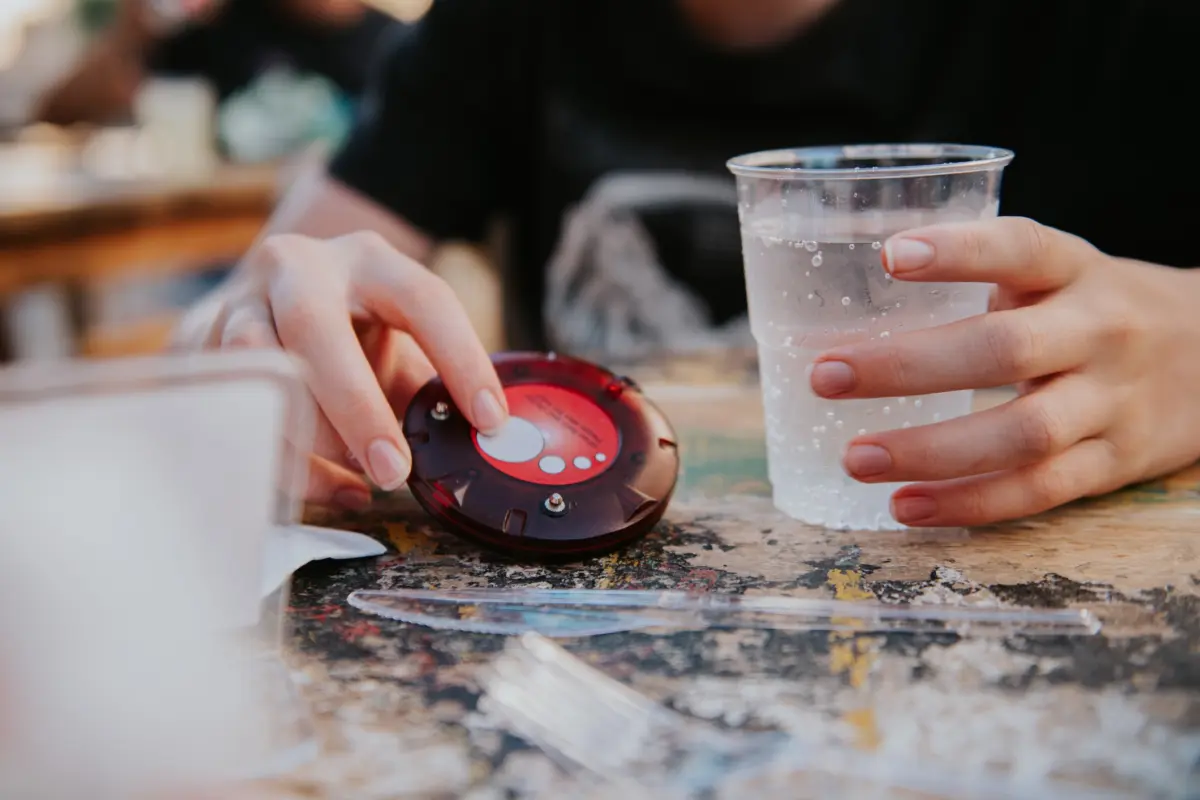
In the modern hospitality landscape, the simple act of waiting for a table has undergone a quiet, digital revolution. Once characterized by the tactile comfort of a chunky plastic pager—a low-stakes blinking puck handed across a host stand—the pre-meal limbo has been co-opted by our personal technology. Today, patrons are routinely required to surrender their cell phone numbers just to join a digital queue, opening a portal that rarely shuts once the meal concludes.
What began as a measure to streamline operations during the early days of the COVID-19 pandemic has evolved into an inescapable ecosystem of QR-code menus, digital ordering interfaces, contactless billing, and post-meal review prompts. While these tools promise efficiency and spatial freedom, they exact a psychological toll. By transforming our smartphones into mandatory pieces of civic and commercial infrastructure, we have erased a vital boundary between daily labor and leisure. True hospitality once meant outsourcing the logistics of living to someone else; today, even at brunch, we are tethered to the machines we came out to escape.
Detailed Chronology: From the Suburbia of Pagers to the Era of the App
To understand the weight of our current digital tether, one must look back at the mechanical simplicity of late-20th-century casual dining.
- The Late 1990s and 2000s (The Age of the Pager): Casual dining chains—epitomized by sprawling suburban outposts of Chili’s, Olive Garden, and Applebee’s—reigned supreme as regional social hubs. Host stands operated with analog efficiency. Hosts recorded names, party sizes, and estimated wait times on paper or early terminal screens, handing customers a weighty, single-purpose radio-frequency pager. These devices possessed a glorious, restricted ambition: they buzzed, they blinked, and they brought you back to your table. Once seated, the technology stayed behind.
- The Early 2010s (The Rise of Digital Queues): Platforms like Yelp Waitlist, OpenTable, and early proprietary restaurant apps began introducing digital queuing. Initially pitched as an upgrade that allowed diners to join a line remotely before even arriving at the restaurant, these services planted the seeds for the smartphone’s permanent integration into the front-of-house experience.
- 2020–2021 (The Pandemic Pivot): The onset of the COVID-19 pandemic accelerated technological adoption across the service industry overnight. To minimize shared high-touch surfaces—such as physical pagers, paper menus, and plastic credit card trays—restaurants leaned heavily into contactless infrastructure. The smartphone transitioned from a convenient option for remote booking to an absolute prerequisite for dining out.
- The Present Day (The Complete Digital Lifecycle): What started at the host stand has now colonized the entire dining arc. A single smartphone is now required to check in, scan a dynamic QR code for a menu, transmit an order to the kitchen, split the bill via a digital payment portal, and finally, receive a text message soliciting a star-rating review hours after leaving the premises.
Supporting Context & Metrics: The Cognitive Cost of Connectivity
The migration of the restaurant waitlist to the smartphone screen is part of a broader societal shift toward pervasive digital infrastructure. From transit turnstiles and parking meters to medical check-ins and multi-factor authentication, the modern consumer is asked to unlock, tap, and verify dozens of times a day.
The Illusion of Multi-Tasking
Proponents of digital waitlists argue that text-message alerts liberate customers, allowing them to browse nearby shops or run errands rather than being chained to a pleather bench in a crowded lobby. While this is occasionally true, behavioral studies on continuous partial attention suggest a different reality.
When a diner’s phone buzzes with a table notification, it does not arrive in a vacuum. It breaches a device cluttered with professional emails, breaking news alerts, social media notifications, and family group chats. What was designed to streamline a Saturday morning brunch inadvertently injects administrative anxiety into a space dedicated to rest.
Infrastructure Fatigue
This reliance on consumer hardware assumes a baseline of functional perfection that digital systems rarely deliver. Much like the commuters at Chicago Transit Authority (CTA) stations who found themselves locked out of turnstiles because digital readers failed—forcing a return to physical transit cards and cash machines—diners frequently encounter friction in hyper-digitized environments. When restaurant Wi-Fi stutters, reservation apps crash, or battery levels flag, the "convenience" of the phone becomes an operational hazard.
Furthermore, data privacy concerns continue to mount. Every time a diner hands over a phone number to secure a table, they enter a marketing database. The transaction is no longer a simple exchange of capital for a meal; it is an extraction of consumer data traded for the privilege of eating.
Official Statements & Industry Perspectives
Industry insiders and software developers view the digitization of front-of-house operations through a lens of undeniable optimization, citing labor shortages, table-turn rates, and customer autonomy.
"The restaurant industry operates on razor-thin margins where every minute of table turnover and every ounce of labor efficiency dictates survival," notes a veteran hospitality software consultant. "Digital waitlists and integrated POS [Point of Sale] systems allow operators to forecast demand accurately, communicate instantly with large volumes of waiting guests, and reduce front-of-house friction. For high-volume establishments, returning to manual pagers is operationally regressive."
Conversely, cultural commentators and front-line hospitality workers increasingly question whether the elimination of human touch points is stripping dining out of its core amenity: being taken care of.
"The true luxury of hospitality has always been logistics management," argues a prominent food culture essayist. "When you walk into a great restaurant, you are paying for the illusion—and the reality—that someone else is holding the operational weight of the evening. When we force customers to manage their own wait times through text alerts, scan their own menus, and process their own bills via mobile portals, we aren’t empowering the diner; we are simply offloading restaurant labor onto the guest’s personal device."
Future Outlook: Reclaiming the Analog Space
As the hospitality sector moves further into the latter half of the decade, a quiet pushback is beginning to take shape. While high-tech automation will undoubtedly remain the standard for fast-casual chains and high-volume urban eateries, a growing segment of independent restaurants is recognizing the marketing and experiential value of analog touch points.
The Rise of "Low-Tech" Refuges
Some boutique cafes, neighborhood bistros, and upscale dining concepts are consciously scaling back their tech stacks. By offering physical menus, printed wine lists, and human-managed reservation systems—or even dusting off vintage physical pagers—these establishments appeal to a consumer base suffering from digital fatigue. For these venues, the absence of constant screen-checking becomes a distinct selling point, marketing the dining room as a sanctuary from the notification economy.
Redefining Convenience
The future of dining technology will likely depend on consent rather than compulsion. True innovation will not look like forcing every customer through a singular app-based funnel, but rather offering flexible pathways that respect a guest’s desire to disconnect.
Until then, the humble plastic pager remains a potent symbol of a simpler era. It was far from perfect—batteries died, units were occasionally pocketed as souvenirs, and they lacked the sleek sophistication of modern cloud software. Yet, they possessed an unmatched grace: they asked for nothing from the user save a moment of attention, and when the job was done, you handed them back.