

Executive Overview
The intersection of Hollywood heavyweights, elite athletes, and global consumer brands reached a fever pitch this week, yielding one of the most star-studded advertising lineups of the fiscal year so far. In a calculated bid to capture fragmented consumer attention, major corporations have leaned heavily into high-concept nostalgia, tongue-in-cheek self-parody, and unexpected cross-industry partnerships. From automotive startups marrying blockbuster cinematic franchises to delivery giants enlisting reality television moguls, the marketing landscape has transformed into a high-stakes arena where cultural relevance is the ultimate currency.
This week’s campaign rollouts demonstrate a distinct strategic pivot. Rather than relying on traditional product demonstrations or straightforward value propositions, brands are embedding themselves deeply into pop culture narratives. Electric vehicle manufacturer Rivian secured iconic actor Bill Murray to reprise his legendary ghost-hunting persona, bridging the gap between legacy pop culture and modern sustainable mobility. Simultaneously, DoorDash tapped billionaire entrepreneur and style icon Kim Kardashian to reframe convenience, while Meltwater enlisted cultural touchstone Kim Cattrall to lean into her iconic publicist archetype.
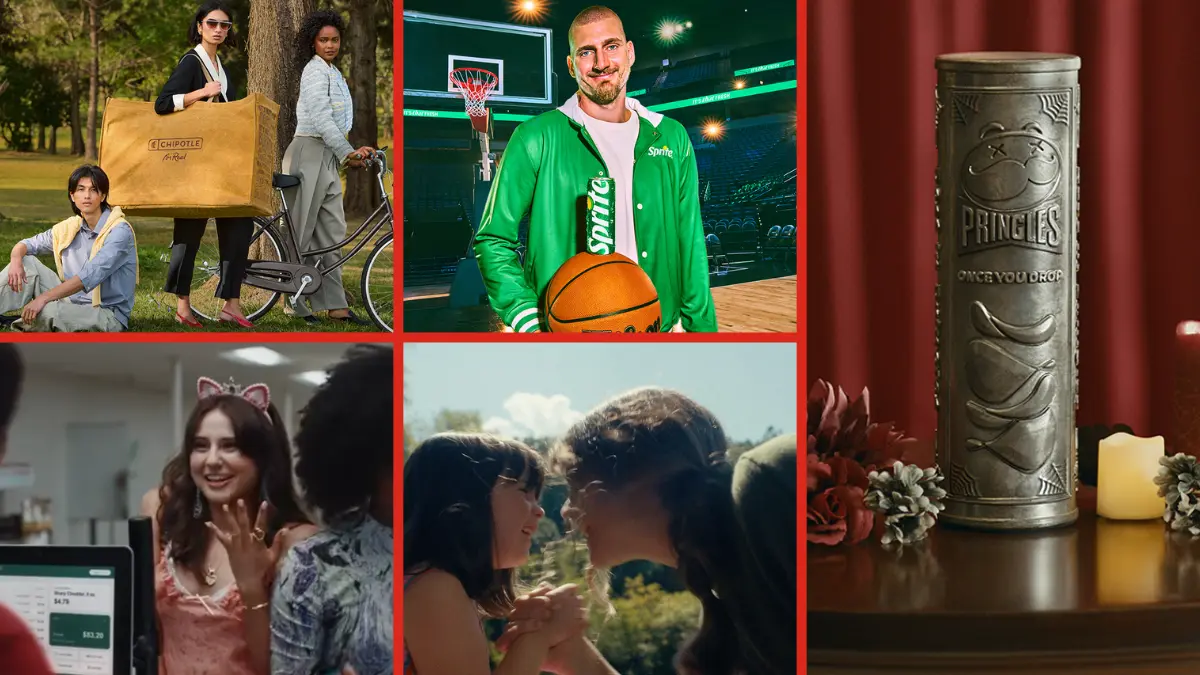
Beyond entertainment and fashion royalty, the sports and directing worlds also made significant waves. NBA superstar Nikola Jokić showcased his deadpan comedic timing for Sprite, Academy Award-winning filmmaker Kathryn Bigelow lent her visionary lens to prediction market platform Polymarket, and hip-hop powerhouse Megan Thee Stallion brought her signature intensity to fitness apparel brand Gymshark. Meanwhile, tech and consumer goods brands—including Oura, Pringles, Chipotle, and Aura—unveiled creative campaigns that blended surrealism, experiential marketing, and digital-first engagement.
This comprehensive report examines the anatomy of these campaigns, analyzing the strategic imperatives driving these high-profile collaborations. Furthermore, we evaluate our Most Effective Ad of the Week—selected in partnership with TV attribution and engagement analytics firm EDO—to understand precisely which creative vehicles are moving the needle with modern audiences.
Detailed Chronology of Campaigns: A Week in Review
The sheer volume of major creative debuts this week highlights the accelerating pace of modern advertising. Brands are no longer content with sequential rollouts; instead, they are deploying multi-platform assaults designed to dominate social media discourse, evening television blocks, and digital out-of-home spaces simultaneously.
The Cinematic and Automotive Intersection: Rivian Enlists Bill Murray
Kicking off the week’s major automotive narratives, Rivian made a bold play for cultural ubiquity by enlisting Bill Murray. The campaign cleverly bridges the gap between classic cinematic history and the cutting-edge future of electric vehicles. Murray, donning his informal ghost-busting aura, brings his trademark deadpan humor to the rugged outdoors, juxtaposing the supernatural absurdity of his past with the very real, earthly capabilities of Rivian’s adventure vehicles.
Rather than treating the electric vehicle as a sterile piece of technology, the spot positions the vehicle as a reliable companion for the unexpected. Industry analysts note that this approach successfully disarms consumers who may feel intimidated by the rapid transition to electric mobility, using humor and nostalgia as a cognitive bridge.
Fashion, Delivery, and PR Royalty: Kardashian, Cattrall, and DoorDash
In the realm of lifestyle and convenience, DoorDash made headlines by pairing its delivery infrastructure with the unmistakable star power of Kim Kardashian. The campaign plays with the contrast between high-glamour aesthetics and the mundane realities of ordering everyday essentials. Kardashian’s self-awareness anchors the creative, allowing the brand to communicate expansive service offerings—ranging from grocery delivery to retail items—without sacrificing its aspirational appeal.
Concurrently, media intelligence platform Meltwater executed a stroke of casting brilliance by bringing back Kim Cattrall to channel her definitive publicist persona. The campaign targets B2B decision-makers and marketing professionals by leveraging Cattrall’s sharp, sophisticated television history. By positioning Meltwater’s data analytics and media monitoring tools as the ultimate PR weapon, the brand successfully translates a beloved television archetype into an authoritative enterprise solution.
Athletic Charisma and Cinematic Direction: Jokić, Bigelow, and Gymshark
The sports and entertainment sectors proved that authenticity and high artistic direction remain potent marketing tools. Sprite’s new campaign features Denver Nuggets superstar Nikola Jokić. Known famously for his indifferent attitude toward fame and his laser-focused dedication to basketball, Jokić leans directly into his deadpan persona. The campaign works precisely because Jokić refuses to act like a traditional, hyper-energetic pitchman. His reluctance to embrace conventional marketing tropes gives the spot a refreshing, self-aware charm that resonates deeply with younger, cynical demographics.
In an unexpected twist of high-art meets tech, Polymarket tapped Academy Award-winning director Kathryn Bigelow to helm its latest creative endeavor. Bigelow, celebrated for her visceral, tension-filled cinematic style (The Hurt Locker, Zero Dark Thirty), brings an unprecedented level of gravitas to the prediction market platform. The resulting spot treats geopolitical and cultural forecasting not as dry data points, but as high-stakes, cinematic realities, instantly elevating Polymarket’s brand positioning from a niche crypto-adjacent tool to a mainstream information powerhouse.
Rounding out the movement sector, Megan Thee Stallion teamed up with Gymshark. The resulting campaign is a masterclass in high-energy motivational branding. Megan’s authentic dedication to fitness—famously documented across her social media channels as "Hottietude fitness"—makes her an ideal partner for Gymshark. The creative bypasses traditional, intimidating gym tropes in favor of inclusivity, rhythm, and unabashed self-expression.
Surrealism, Sizing, and Social Safety: Oura, Pringles, Chipotle, and Aura
The remainder of the week’s landscape was defined by distinct creative risks across various consumer categories:
- Oura: The smart-ring pioneer introduced a visually arresting tour of the city, utilizing unique perspective shifts to demonstrate how health tracking integrates seamlessly into urban, fast-paced lifestyles.
- Pringles: True to form, the snack brand leaned into surrealism, offering a darkly comedic and tasty glimpse of the afterlife, proving that snack-food marketing can still surprise and delight through absurd narrative framing.
- Chipotle: Bridging digital engagement with physical novelty, the fast-casual giant launched a viral campaign centered around an outrageously oversize takeout bag, driving intense social media sharing and user-generated content.
- Aura: Focusing on digital security and wellness, Aura deployed an emotionally resonant campaign aimed at fostering close social connections and protecting families in an increasingly fractured digital landscape.
Supporting Context & Metrics: The Science of Modern Engagement
To understand why brands are investing heavily in these multifaceted campaigns, one must examine the shifting metrics of modern media consumption. According to recent industry benchmarks, traditional interruptive advertising faces declining attention spans, particularly among Millennials and Generation Z. Consequently, marketers are deploying three primary strategic pillars: cultural integration, cognitive relief, and cross-platform synergy.
The Nostalgia Dividend
The inclusion of legacy figures like Bill Murray and Kim Cattrall is not accidental. In uncertain economic and social climates, consumers demonstrate a marked psychological preference for familiar cultural anchors. Studies in consumer behavior indicate that nostalgia-driven campaigns elicit higher emotional resonance, which directly correlates with improved brand recall and favorable sentiment scores. By pairing these veteran icons with modern products (Rivian EVs and Meltwater software), brands successfully neutralize the friction of consumer adoption.
The Rise of Anti-Advertising
The success of Nikola Jokić for Sprite and Kim Kardashian for DoorDash highlights a broader trend: the embrace of "anti-advertising." Modern consumers are acutely aware when they are being sold to, and polished, overly earnest pitches are frequently met with skepticism. By embracing self-parody, deadpan humor, and acknowledged commercial artifice, brands disarm the audience. Jokić’s reluctance to perform traditional ad antics builds trust, proving that authenticity—even when scripted—outperforms perfection every time.
Quantitative Impact via EDO Analytics
When evaluating this week’s lineup, our Most Effective Ad of the Week, selected in partnership with EDO, stands out by measuring actual consumer behavioral intent. EDO’s TV outcomes measurement platform analyzes real-time consumer search and engagement spikes following an ad’s broadcast.
The winning campaign demonstrated an exceptional ability to drive immediate, measurable online actions within minutes of airing. By prioritizing emotional uplift and clear, frictionless messaging, the spot proved that creative joy remains one of the most powerful conversion drivers in the marketer’s toolkit. Rather than relying solely on high-concept confusion or sprawling narrative arcs, the top-performing ad achieved optimal balance: high creative entertainment value coupled with an unmistakable, immediate call to action.
Official Statements and Industry Insights
The convergence of high-art direction, elite sports, and cinematic nostalgia has prompted considerable commentary from industry leaders, agency executives, and brand architects.
Reflecting on the shifting dynamics of celebrity partnerships, a leading creative director noted:
"We have moved far beyond the era of the passive celebrity endorsement. Today’s audiences demand narrative coherence. When you bring someone like Bill Murray into an electric vehicle campaign, or Kathryn Bigelow into a tech-adjacent prediction platform, you aren’t just buying a famous face—you are borrowing their cultural equity to validate a new consumer behavior. The partnership must make logical, emotional, and artistic sense, or consumers will instantly reject it as a cash grab."
Executives from the attribution and analytics sector also emphasized the growing necessity of real-time data in creative evaluation. A senior media strategist remarked:
"Creativity without measurement is merely art; measurement without creativity is just math. What we are seeing this week is a masterclass in balancing both. Brands are taking massive creative swings—whether it’s Pringles exploring the afterlife or Polymarket enlisting an Oscar-winning director—while simultaneously utilizing advanced attribution tools to ensure those creative risks translate directly into tangible market share and consumer engagement."
Furthermore, digital marketing specialists point out that campaigns featuring non-traditional pitchmen, such as Nikola Jokić’s deadpan sports marketing debut, signify a permanent shift in athlete-brand relationships.
"Athletes are no longer content reading cue cards," an agency partner observed. "They have their own media footprints, their own distinct personalities, and an audience that values their unfiltered reality. Brands that allow athletes to be authentically themselves—even if that means poking fun at the advertising process itself—will consistently outperform those that try to force athletes into rigid corporate boxes."
Future Outlook: Where Brand Strategy is Headed
As we look toward the remainder of the fiscal year, several clear trends emerge from this week’s flurry of high-profile campaigns, signaling where the advertising and marketing industries are headed next.
1. The Blurring Lines Between Cinema and Commercials
The involvement of visionary directors like Kathryn Bigelow in commercial projects signals a permanent elevation of advertising production values. As streaming platforms fragment audiences and ad-free tiers continue to grow, brands must treat 30-second and 60-second spots as micro-cinematic events. Expect to see an increasing number of A-list Hollywood directors crossing over into commercial spaces, turning standard brand spots into cultural events that command independent media coverage.
2. Hyper-Personalization Meets Broad Cultural Moments
While hyper-targeted programmatic digital advertising remains essential for performance marketing, brands are realizing that they still require broad cultural touchpoints to build long-term equity. The juxtaposition of massive television-broadcast campaigns (featuring Bill Murray, Kim Kardashian, and Nikola Jokić) with digital-first activation (such as Chipotle’s oversized bag and Oura’s urban exploration) demonstrates the necessity of a truly hybrid marketing ecosystem. Future campaigns will increasingly couple massive, top-of-funnel cultural moments with hyper-targeted, interactive digital extensions.
3. The Imperative of Emotional Uplift
As highlighted by our Most Effective Ad of the Week, consumer fatigue is real. In an era saturated with geopolitical tension, economic uncertainty, and digital noise, campaigns that successfully lift the mood and offer genuine comedic or emotional relief are proving to be the most commercially viable. Brands that position themselves as sources of joy, relief, and human connection will capture not only consumer attention, but enduring loyalty.
In conclusion, this week’s brand campaigns have set a remarkably high bar for the industry. By successfully fusing Hollywood star power, athletic authenticity, surrealist humor, and rigorous data-driven attribution, modern marketers are proving that creative bravery is the ultimate antidote to audience fragmentation. As brands look toward upcoming seasonal rollouts, the mandate is clear: entertain intelligently, partner authentically, and measure relentlessly.