

Executive Overview
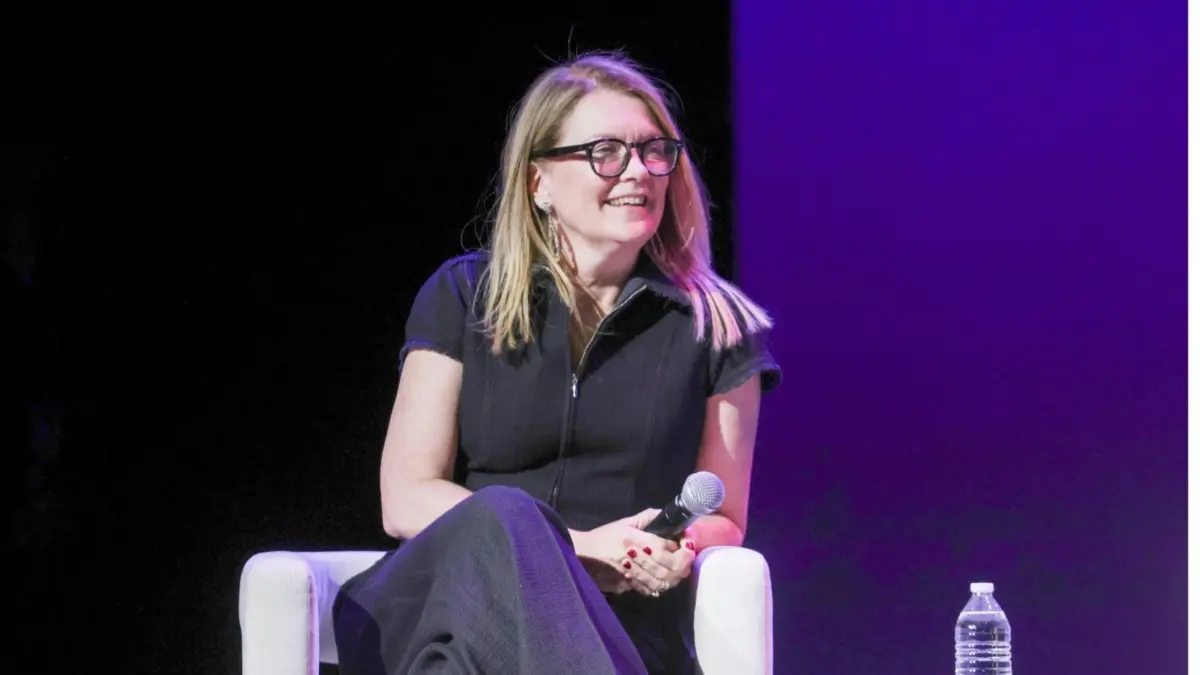
In a corporate milestone that marks the end of an extraordinary era for one of the world’s most enduring financial services brands, American Express Chief Marketing Officer Elizabeth Rutledge has announced her impending retirement. After a stellar tenure spanning more than three decades within the institution, Rutledge will officially step down from her post in March 2027. The news, first shared by the executive via a professional network post on Thursday, October 15, cascades across the global marketing and advertising landscapes, prompting industry-wide reflections on her profound influence over modern brand stewardship.
American Express confirmed the transition later that same day, paying tribute to an executive whose fingerprints are visible across virtually every major touchpoint of the company’s modern identity. "She has made an enduring impact on the brand," an American Express spokesperson stated, adding that a successor to the CMO role is anticipated to be announced in the coming weeks. This deliberate, multi-year runway ensures a seamless leadership handoff, safeguarding the strategic momentum of a marketing apparatus that oversees billions in global advertising and brand equity.
Rutledge’s retirement brings down the curtain on a 37-year corporate journey that began in the towering halls of New York City and evolved into a masterclass in long-term institutional loyalty, innovative product development, and agile digital adaptation. As the industry looks ahead to the post-Rutledge era, her departure invites a comprehensive retrospective on how a single career trajectory mirrored—and often shaped—the broader transformation of financial marketing from traditional broadcast media to data-driven, experiential ecosystems.
Detailed Chronology: From New York City Arrival to the C-Suite
To understand the magnitude of Elizabeth Rutledge’s departure, one must trace a career path that offers a rare blueprint of sustained excellence within a single enterprise. In an era characterized by frequent executive migrations and short-lived agency tenures, Rutledge’s trajectory stands as a monument to institutional depth.
The Foundation Years (1990s–2000s)
Nearly 37 years ago, a young marketing professional walked through the doors of the iconic American Express Tower in New York City. As Rutledge recalled in her reflective social media announcement, entering the building was the realization of a long-held professional dream. She was drawn to an enterprise universally recognized for its prestigious brand cachet, legendary marketing prowess, and elite talent pool.
Rather than remaining siloed within a single department, Rutledge immersed herself in the multifaceted operations of the financial giant. Over her first two decades with the company, she steadily climbed the corporate ladder, undertaking rigorous leadership roles across diverse operational disciplines. Her early assignments spanned critical business units, including core marketing operations, the intricate design and management of card products, and the refinement of customer benefits. This cross-functional exposure proved invaluable, equipping her with a holistic understanding of how product utility and brand perception intersect in the minds of affluent and corporate consumers alike.
Ascent to Global Leadership and CMO Appointment (2010s)
As her responsibilities expanded, Rutledge took the helm of increasingly complex portfolios, eventually overseeing global advertising and brand management. In this capacity, she was tasked with protecting and modernizing a brand heritage that dated back to the 19th century. She navigated the perilous waters of the post-2008 financial landscape, ensuring that American Express maintained its premium positioning while aggressively courting younger demographics who viewed financial services through a vastly different lens than their parents.
The culmination of these efforts arrived in 2018 when American Express officially named Rutledge as its Chief Marketing Officer. Stepping into the role at a time of seismic technological disruption, she immediately set about future-proofing the company’s marketing engine. Under her leadership, the brand pivoted heavily toward digital-first engagement, hyper-personalization, and experiential marketing—strategies that would ultimately fortify the company against macroeconomic headwinds and shifting consumer behaviors over the next decade.
Supporting Context & Metrics: Navigating the Modern Brand Landscape
Elizabeth Rutledge’s tenure as CMO cannot be evaluated in a vacuum; it must be contextualized within the extraordinary evolution of American Express as a global financial powerhouse. During her watch, the marketing landscape underwent a tectonic shift away from traditional linear television and print media toward programmatic advertising, social media ecosystems, and data-driven customer acquisition.
The Evolution of Amex’s Marketing Strategy
When Rutledge assumed the CMO mantle in 2018, American Express was actively reinventing its value propositions to appeal to Millennials and Gen Z consumers—demographics that historically favored debit products or digital-first fintech alternatives. Rutledge played a pivotal role in overhauling the company’s flagship card portfolios, most notably the Platinum and Gold cards, infusing them with lifestyle, dining, travel, and wellness benefits that resonated deeply with younger, experience-driven affluent consumers.
Furthermore, Rutledge championed the philosophy that brand marketing and performance marketing should not exist in perpetual silos. Under her guidance, American Express dramatically scaled its digital marketing capabilities, leveraging sophisticated customer data analytics to deliver hyper-targeted offers. Initiatives like "Shop Small" and "Small Business Saturday"—though conceptualized earlier—achieved unprecedented global resonance and cultural embedding during her overarching leadership tenure, positioning American Express as an empathetic ally to local economies during times of crisis, including the COVID-19 pandemic.
Financial and Brand Valuation Impacts
The empirical evidence of Rutledge’s strategic efficacy is reflected in the brand’s robust valuation metrics over the past decade. Despite fierce competition from emerging digital banks and legacy competitors alike, American Express consistently retained its standing among the world’s most valuable brands, routinely ranking in the upper echelons of Interbrand’s Best Global Brands report.
Throughout her tenure, Amex’s marketing investments—often totaling billions of dollars annually—were subjected to rigorous ROI frameworks championed by executive leadership. Rutledge successfully balanced the delicate dichotomy required of a luxury-adjacent financial brand: maintaining the aspirational, exclusive mystique of the Centurion and Platinum tiers while simultaneously driving massive customer acquisition scale across its broader network. Her ability to quantify the intangible value of brand equity while adapting to performance-driven digital metrics cemented her reputation as one of the most effective enterprise CMOs of her generation.
Official Statements and Industry Reception
The announcement of Rutledge’s planned departure triggered an outpouring of tributes from across the corporate, marketing, and agency landscapes. The news underscored not only her corporate achievements but also her reputation as a collaborative, visionary leader who championed talent development within her organization.
Corporate Acknowledgment
In its official statement released on Thursday, October 15, American Express was quick to emphasize the permanent structural and cultural imprint Rutledge leaves behind.
"She has made an enduring impact on the brand, and her successor is expected to be announced in the coming weeks," an American Express spokesperson affirmed.
This concise yet weighty endorsement speaks volumes about the internal reverence for Rutledge’s contributions. Within American Express, she is widely credited with fostering a culture of creative bravery, encouraging her teams to take calculated risks in their campaigns, partnerships, and sponsorships.
In Her Own Words
In her personal announcement shared on LinkedIn, Rutledge reflected on the profound emotional and professional significance of her nearly 37-year journey:
"Almost 37 years ago, I walked into the American Express Tower in New York City to fulfill a dream: to work for a company known for its iconic brand, marketing prowess, and extraordinary people," Rutledge wrote.
Her message resonated widely across professional networks, drawing hundreds of comments, accolades, and reflections from peers, former mentees, agency partners, and industry leaders. Many highlighted her mentorship, grace under pressure, and unwavering commitment to maintaining the integrity of the American Express brand through decades of technological and economic turbulence.
Future Outlook: The Road to 2027 and Beyond
As American Express looks toward the horizon, the impending departure of Elizabeth Rutledge initiates a critical transition phase for the company’s global marketing operations. With a generous lead time stretching ahead to her official retirement in March 2027, the enterprise possesses a unique luxury: time.
The Succession Calculus
The impending announcement of Rutledge’s successor, anticipated in the coming weeks, will be one of the most closely watched executive transitions in the global marketing community. Industry analysts are already speculating on whether American Express will look inward—elevating a seasoned lieutenant from within Rutledge’s formidable internal bench—or cast a wider net externally to bring in a disruptive visionary capable of navigating the next wave of technological disruption, including artificial intelligence in marketing, immersive Web3 environments, and shifting global regulatory frameworks.
Whoever assumes the mantle will inherit a well-oiled, highly sophisticated global marketing apparatus, yet they will also face distinct challenges. The incoming CMO must continue to defend Amex’s premium turf against aggressive incursions from tech giants and agile fintech startups, all while maintaining the brand’s cultural relevance among younger, increasingly discerning generations of consumers.
Rutledge’s Legacy
For her part, Elizabeth Rutledge leaves behind a corporate legacy that will be studied in business schools and corporate boardrooms for years to come. Her career proves that institutional longevity and creative dynamism are not mutually exclusive. By evolving alongside the brand she served for nearly four decades, she transformed American Express from a traditional purveyor of plastic travel and entertainment cards into a dynamic, lifestyle-driven financial ecosystem.
As the countdown to March 2027 begins, the marketing industry bids a premature yet respectful farewell to a true titan of the craft. Rutledge’s departure marks the end of an extraordinary chapter, but the structural foundations she laid ensure that the blue box of American Express will continue to project prestige, trust, and innovation well into the future.