

Executive Overview
In the autumn of 1960, the prestigious journal Science published a short research paper bearing one of the most provocative and chilling titles in the history of academic publishing: “Doomsday: Friday, 13 November, A.D. 2026.”
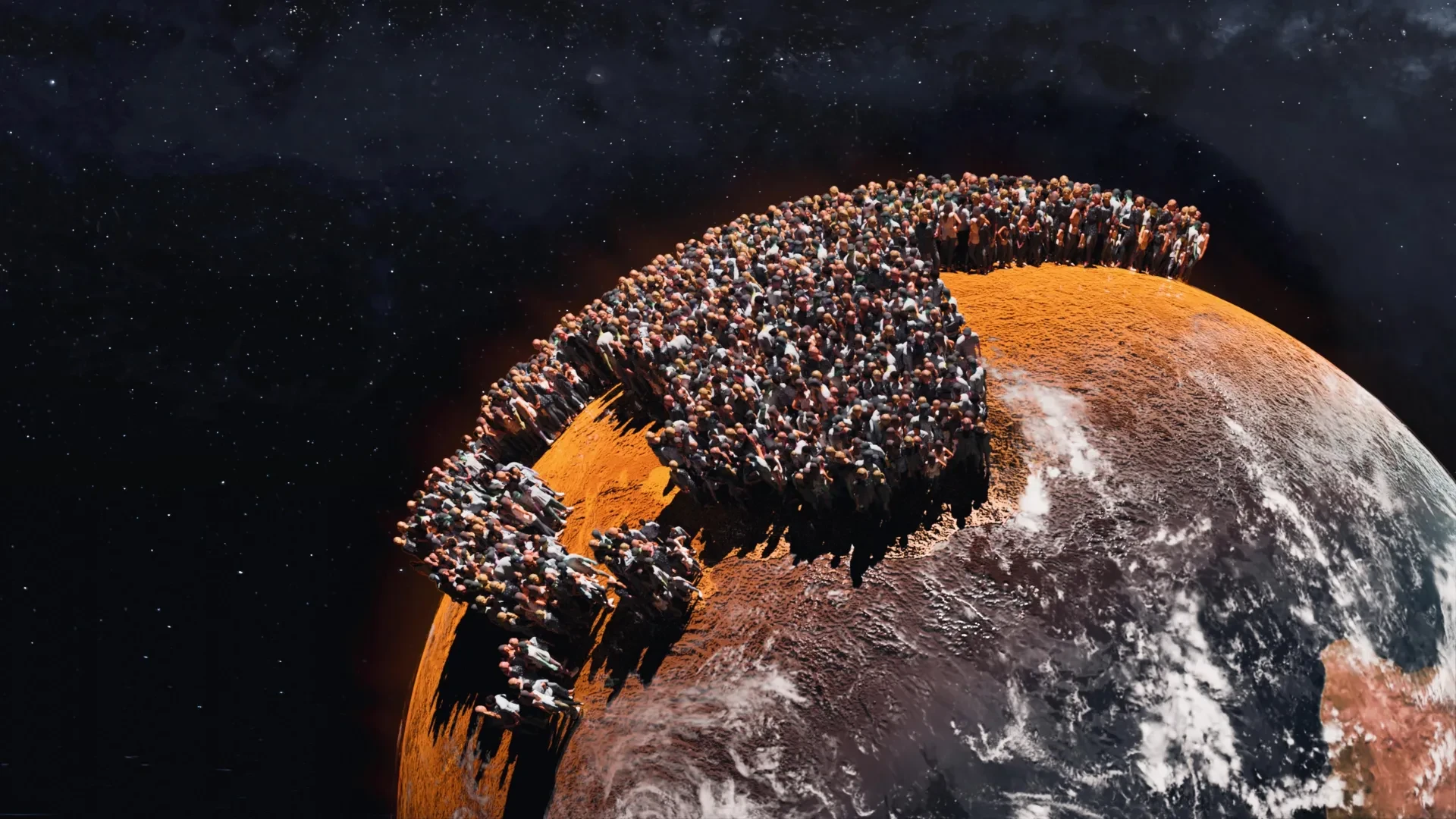
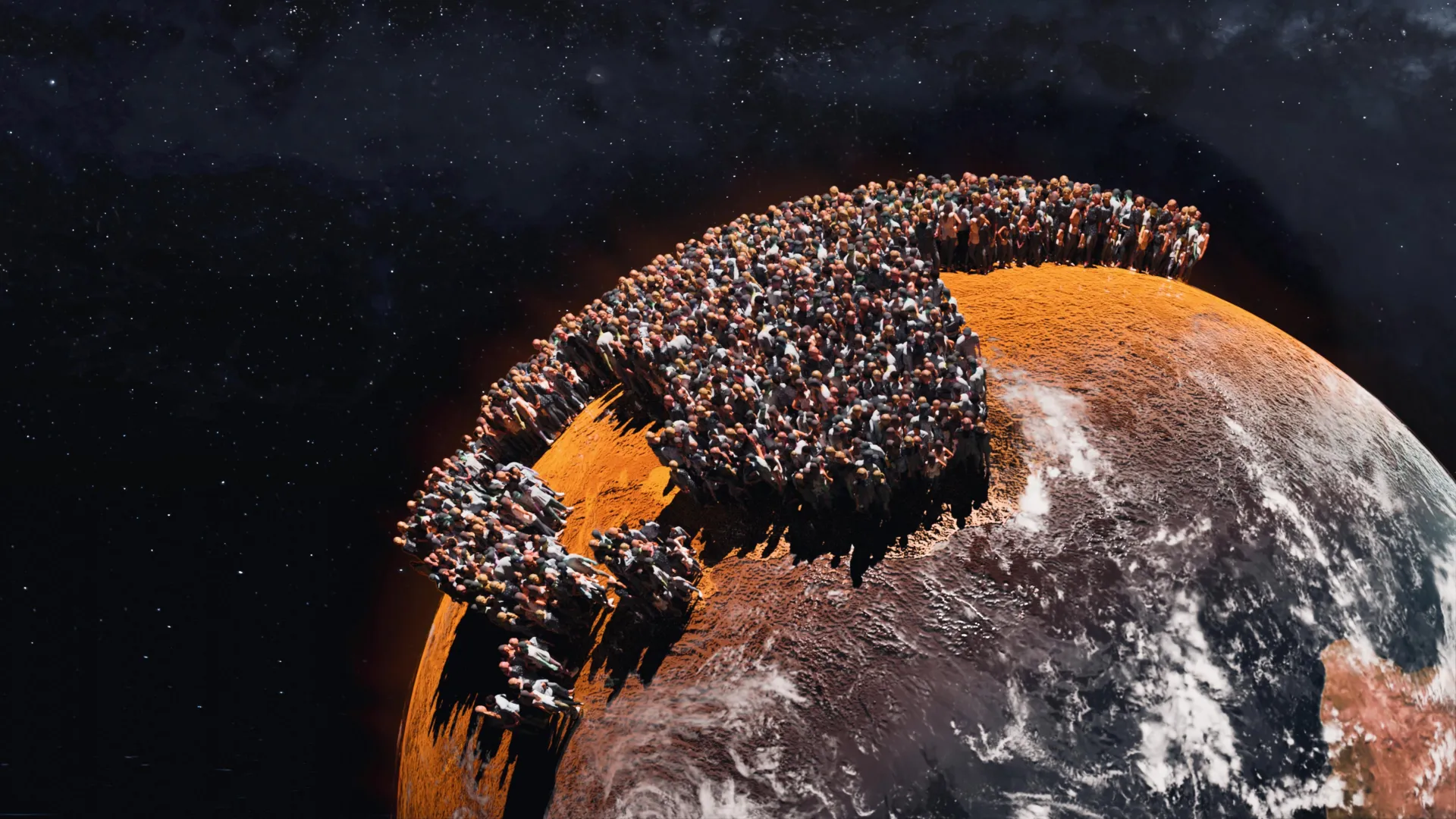
Penned by Austrian-American physicist and cybernetics pioneer Heinz von Foerster alongside two of his undergraduate students, Patricia M. Mora and Lawrence W. Amiot, the article put forward a mathematical proposition so startling it immediately captured the global imagination. The authors calculated that on that specific date—now less than a month away—the human population would approach mathematical infinity, resulting in the literal self-annihilation of our species through sheer overcrowding.
“Our great-great-grandchildren will not starve,” the authors famously warned. “They will be squeezed to death.”
Far from being dismissed as a crude hoax, the publication sparked decades of serious academic, legal, and political debate. Backed by dense differential equations and historical data stretching back two millennia, von Foerster’s model tracked real-world population growth with eerie precision for more than three decades. It was cited in United States Supreme Court briefs, Canadian parliamentary committees, university textbooks, and pop-culture phenomena alike.
Yet, as November 13, 2026, finally arrives, humanity is not facing an apocalyptic crush. Instead, the global birth rate sits at roughly half of what it was in 1960, and demographic anxiety has shifted toward population decline rather than runaway explosion.
This retrospective examines the genesis of the 1960 Science paper, the brilliant amalgamation of rigorous mathematics and theatrical stagecraft that built it, its profound cultural footprint, and the profound lessons it holds for science communication in the 21st century.
Detailed Chronology: From Cybernetics to Cosmic Calculus
The Mid-Century Demographic Panic
To understand the context of von Foerster’s paper, one must look back at the cultural landscape of the mid-20th century. Following the devastation of the Second World War and the subsequent global "baby boom," public anxiety surrounding overpopulation reached a fever pitch.
Dominating these discussions was the revived shadow of Thomas Malthus, the 18th-century English cleric and scholar who argued that while food production grows arithmetically, human population grows exponentially—inevitably leading to famine, disease, and societal collapse unless checked by poverty, war, or moral restraint.
However, Heinz von Foerster—a towering figure in early cybernetics, systems theory, and information science who also happened to possess a background as a semi-professional stage magician—looked at the Malthusian paradigm and saw a fundamental flaw.
The Birth of the Equation
Working at the University of Illinois Urbana-Champaign’s Laboratory of Computer Radiobiology, von Foerster, alongside Mora and Amiot, sought to model human demographic trends not as passive biological responses to resource ceilings, but as dynamic feedback systems.
They gathered 24 historical estimates of the world population spanning the previous 2,000 years. When they plotted these numbers, they discovered something extraordinary: human population growth was not merely exponential. An exponential curve assumes a constant rate of growth relative to population size. Instead, human population growth was hyper-exponential—the relative rate of growth was itself increasing over time.
Why? The authors argued that human beings possess a unique capacity for communication, technological innovation, and the formation of cooperative "coalitions." Unlike other organisms, which are strictly bound by localized carrying capacities, human beings actively expand their carrying capacities through collective problem-solving.
Consequently, higher population densities do not merely mean more mouths to feed; they mean more minds to collaborate, innovate, and accelerate societal development. This positive feedback loop meant our numbers were growing faster than any standard demographic model could account for.
The Hyperbolic Singularity
To express this mathematically, von Foerster formulated a nonlinear differential equation where the population $N$ at time $t$ approaches infinity at a finite point in the future. The equation yielded a mathematical singularity—a vertical asymptote on a graph where the curve shoots straight up to infinity.
When they plugged the constants derived from historical data into their equation, the math spat out a precise calendar date: Friday, November 13, 2026.
Realizing the radical nature of their findings, the researchers decided to frame their empirical findings with a brilliant stroke of intellectual showmanship. They calculated that if the trend continued unchecked, the sheer volume of human bodies would eventually cover every square inch of the Earth’s land surface.
Rather than framing the paper as a dry statistical exercise, they published it in Science with the "Doomsday" headline, accompanied by a tongue-in-cheek conclusion: since humanity was unlikely to willingly reduce its lifespan, the only rational solution to avert the impending infinite crush was to coordinate a global reduction in the birth rate by 50 percent.
Supporting Context & Metrics: The Accuracy and Fall of the Model
Immediate Backlash and Academic Firestorms
The publication of "Doomsday: Friday, 13 November, A.D. 2026" triggered an immediate media storm. Major outlets, including Time magazine and The New York Times, ran prominent features on the physicist’s prophecy. Cultural touchstones followed; the paper even inspired a series of Pogo comic strips lampooning doomsday hysteria.
Within the scientific community, however, the reception was deeply polarized. Science soon published a flurry of letters to the editor from professional demographers, statisticians, and mathematicians who labeled von Foerster’s thesis “ridiculous,” “absurd,” and a fundamental misuse of mathematical modeling.
Unfazed, von Foerster and his co-authors engaged their critics with spirited, mathematically rigorous defenses. They did not back down from their equations; instead, they challenged their detractors to find empirical flaws in the historical data sets.
Unprecedented Real-World Impact
Remarkably, as the decades rolled on, the "Doomsday" equation refused to fade into obscurity. Throughout the 1960s, 1970s, and 1980s, von Foerster’s demographic formula became a staple citation in university textbooks spanning genetics, ecology, and demography.
Its influence extended far beyond academic walls:
- Legislative and Industrial Debates: In 1963, during hearings before a Canadian Parliamentary committee, a chemical industry representative cited the impending population explosion predicted by von Foerster as empirical justification for the heavy deployment of chemical pesticides to secure global food supplies.
- Jurisprudence: In 1971, during preliminary legal proceedings leading up to the landmark Roe v. Wade U.S. Supreme Court decision, the looming population crisis was cited in amicus briefs as evidence that the government possessed no compelling interest in artificially incentivizing population growth.
More impressively, the mathematical model worked. For more than thirty years, von Foerster’s hyper-exponential equation projected global population totals with an accuracy that frequently outperformed the projections generated by institutional demographers.
The Turning Point: 1993
The predictive power of the 1960 paper held firm until approximately 1993—almost exactly halfway to the predicted doomsday.
Around this time, global population growth began to decisively deviate from the hyperbolic trajectory, falling behind von Foerster’s forecasts. This divergence did not happen by accident; it occurred precisely because humanity heeded the underlying warning of the paper and subsequent environmental movements.
Governments, non-governmental organizations, and international bodies invested heavily in family planning, female education, and healthcare access. Cultural attitudes toward family size shifted dramatically on a global scale.
As a result, the global birth rate began a sustained downward trend. Today, humanity finds itself in a demographic reality vastly different from the one projected in 1960: global fertility rates are hovering at slightly less than half of what they were when Science published its infamous warning.
Official Statements & Archival Reflections
The legacy of Heinz von Foerster’s work transcends mere demographic forecasting; it serves as a watershed moment in the philosophy of science communication. Colleagues and historians of cybernetics have frequently noted that von Foerster viewed complex systems through a lens that combined rigorous analytical philosophy with theatrical performance.
In a retrospective analysis of the paper, demographic historians noted:
"Von Foerster did not write the ‘Doomsday’ paper as a literal prophecy of doom; he wrote it as a profound diagnostic tool. By taking the Malthusian fear to its absolute, absurd mathematical limit, he forced the global scientific community to confront the dynamics of human collectivity. He proved that human systems are bounded not merely by static resources, but by our own capacity to alter our behavior in response to information."
Furthermore, von Foerster’s personal history as a stage magician informed his approach to public discourse. In interviews later in life, he frequently emphasized that effective communication requires disrupting complacency. A dry statistical report on population dynamics would have quietly languished in university archives; wrapping that same empirical model in the dramatic framing of a doomsday clock forced policymakers, scientists, and the public to pay attention.
Future Outlook: Lessons for the 21st Century
As the calendar turns to November 13, 2026, the world will wake up to an ordinary Friday. There will be no infinite crushing of humanity, no spatial singularity of human bodies, and no sudden thermodynamic collapse driven by overpopulation.
Instead, the modern world grapples with an entirely inverted demographic crisis. In advanced economies across East Asia, Europe, and the Americas, below-replacement fertility rates and aging populations present unprecedented socio-economic challenges, straining pension systems, healthcare infrastructures, and labor markets.
Yet, the enduring value of von Foerster, Mora, and Amiot’s 1960 paper lies not in the literal truth of its calendar prediction, but in the methodological brilliance of its execution.
Key Takeaways for Modern Science Communication:
- The Power of Rigor Wrapped in Rhetoric: Real, peer-reviewed science does not have to be inaccessible or boring. When rigorous mathematical frameworks are paired with bold, imaginative framing, complex ideas can break through the noise of public discourse.
- The Adaptability of Human Systems: The failure of the 2026 doomsday prediction is ultimately a testament to human agency. Models of complex adaptive systems can project trends, but they cannot account for humanity’s capacity to recognize a systemic threat and collectively alter course.
- Navigating New Crises: As contemporary scientists grapple with existential threats—ranging from anthropogenic climate change to artificial intelligence governance—the strategy pioneered by von Foerster remains relevant: use unyielding data to map the worst-case trajectory, present it with absolute clarity, and trust that human collaboration can bend the curve toward survival.
Ultimately, Heinz von Foerster pulled off the greatest magic trick in the history of academic publishing. He took the cold numbers of demographic reality, placed them inside the hat of existential hyperbole, and pulled out a warning that fundamentally helped change the course of human history—ensuring that the apocalypse scheduled for November 13, 2026, remains nothing more than a fascinating footnote in the annals of science.