

Executive Overview
In a strategic pivot designed to redefine how artificial intelligence interacts with digital consumers, customer service AI startup Netomi has announced a high-profile restructuring of its executive leadership team. Backed prominently by media mogul and former DreamWorks Animation CEO Jeffrey Katzenberg, the company is stepping away from traditional, restricted chatbot interfaces—often relegated to the bottom-right corner of a webpage—and is aggressively pushing to embed generative intelligence directly into the architecture of the website itself.
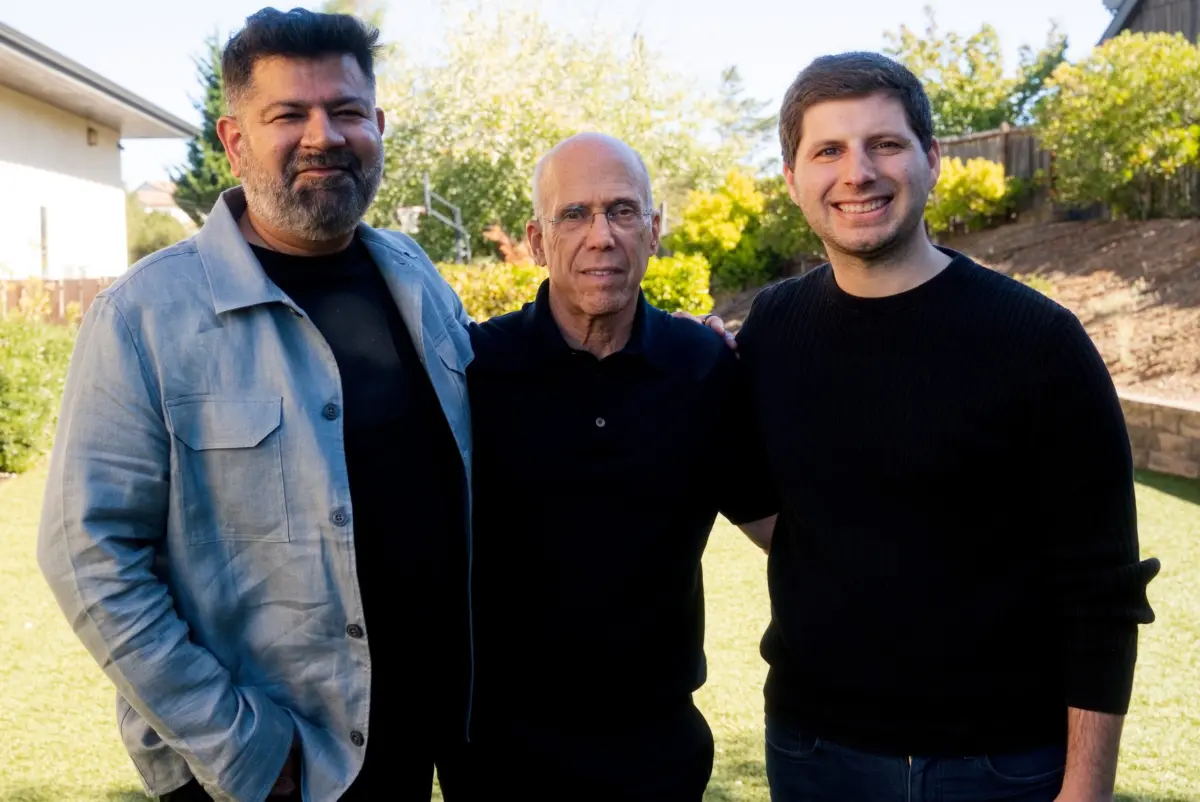
To steer this ambitious transformation, Justin Wexler, a veteran general partner at Katzenberg’s venture capital firm WNDR and a long-standing Netomi board member of five years, has assumed the role of company president. Wexler will operate in close tandem with Netomi’s founder and Chief Executive Officer, Puneet Mehta. In order to dedicate his full operational capacity to Netomi, Wexler has simultaneously transitioned to a venture partner role at WNDR.
Bolstering this leadership reshuffle is the strategic hire of Ryan Boughan. Formerly the president and chief operating officer of the exclusive CMO network PTTOW!, Boughan joins Netomi as the senior vice president of growth, bringing extensive experience in marketing leadership, executive networking, and scaling enterprise value.
This executive overhaul arrives at a critical juncture for both Netomi and the broader enterprise artificial intelligence sector. As generative AI shifts from a novelty application to an indispensable core operational layer, companies are racing to transcend the limitations of stateless conversational agents. Netomi’s leadership changes signal a profound structural evolution: moving AI from a passive support widget to an active, deeply integrated engine that drives the entire digital user journey.
Detailed Chronology: The Evolution of Netomi and Its Strategic Pivot
To understand the weight of Netomi’s recent structural changes, it is necessary to examine the trajectory of the company from its founding to its current manifestation as an enterprise-grade AI powerhouse.
Foundation and Early Years (2015–2018)
Founded by Puneet Mehta, Netomi—originally known as Talkuments—entered the market with a vision to automate customer service interactions using natural language processing (NLP). In its early iterations, the company focused on parsing unstructured customer data and helping brands respond to inquiries via email and social media channels. As conversational interfaces gained traction across digital commerce, Netomi pivoted toward scalable chat automation, securing early enterprise clients by promising reduced customer support overhead and faster response times.
The Katzenberg Connection and Scale (2019–2021)
A major turning point for the startup occurred as it attracted high-profile institutional and individual backing, notably from Jeffrey Katzenberg’s WNDR Ventures. Katzenberg’s involvement not only injected vital capital into the firm but also brought invaluable media, entertainment, and digital-consumer insights to Netomi’s strategic board. During this phase, Justin Wexler—acting as a general partner at WNDR—deeply immersed himself in Netomi’s operational governance, serving as a trusted board member and observing firsthand the architectural limitations of early conversational AI models.
The Generative AI Boom and the Architectural Bottleneck (2022–2023)
The advent of large language models (LLMs) and advanced generative AI in late 2022 fundamentally disrupted the customer experience landscape. While companies rushed to deploy chatbots capable of mimicking human conversation, Netomi’s leadership recognized a deeper flaw in the industry’s approach: the "chat window fallacy." Consumers were still being funneled into isolated UI widgets that functioned independently from the main website. The chat window remained a silo, detached from product catalogs, dynamic pricing structures, real-time inventory databases, and user behavior analytics.
The Leadership Restructuring (2024–Present)
Recognizing that incremental updates to chat interfaces would no longer suffice, Mehta and the board initiated a comprehensive operational overhaul. In 2024, the decision was finalized to transition Justin Wexler from the boardroom to the executive suite as president. By embedding a seasoned venture capitalist with deep institutional knowledge directly into the daily management of the firm, Netomi positioned itself to execute aggressive market expansion. The subsequent recruitment of Ryan Boughan as senior vice president of growth completed the trifecta, aligning product capability, institutional guidance, and enterprise go-to-market strategies.
Supporting Context & Metrics: The Shift from Siloed Chatbots to Omnipresent Web Intelligence
The enterprise software market is undergoing a seismic shift. For decades, websites have operated on static, deterministic frameworks: users arrive via search engines or direct links, navigate through hierarchical menus, utilize keyword search bars, and manually execute transactions. Even with the introduction of early conversational bots, the fundamental architecture of the web remained unchanged. Chatbots acted merely as reactive helpers answering FAQs, sequestered away in a floating graphical user interface (GUI) frame.
The Limitations of the "Chat Window in the Corner"
Industry analysts point out several systemic failures of traditional website chat widgets:
- Friction in User Intent: Users must abandon their primary task (e.g., browsing a product page or filling out a complex form) to open a chat window and explain their problem from scratch.
- Disconnected Context: Standard chat widgets rarely possess real-time awareness of the specific page a user is viewing, their browsing history, or their pre-authentication account status.
- Low Conversion Impact: While chatbots successfully handle routine Tier-1 support tickets, they historically demonstrate minimal direct correlation with top-line revenue growth or conversion rate optimization (CRO).
Netomi’s Technological Vision: The AI-First Website
Netomi’s strategic pivot seeks to dismantle the chat window paradigm entirely. Under the new leadership team, the company is engineering solutions that treat artificial intelligence not as a peripheral app, but as the foundational operating system of the website itself.
By integrating deep generative models into the core Document Object Model (DOM) and backend data layers of enterprise websites, Netomi enables digital properties to:
- Dynamically Adapt Content: Realistically alter website layouts, copy, and offers in real time based on conversational prompts from the user.
- Eliminate Traditional Navigation: Allow visitors to verbally or textually command a website to execute complex tasks—such as comparing three distinct enterprise software tiers, filtering an inventory of 50,000 items by hyper-specific criteria, and executing a multi-step checkout—without clicking through multiple pages.
- Unify Support and Sales: Blur the historical boundary between customer service and customer acquisition, transforming every web page into an interactive, transactional storefront.
Market Validation and Financial Tailwinds
The enterprise demand for sophisticated, deeply integrated AI solutions is reflected in broader macroeconomic and venture capital trends. According to recent industry reports, the global conversational AI market—valued at billions of dollars—is shifting rapidly toward autonomous agentic systems. Enterprises are no longer satisfied with software that simply answers questions; they demand systems that can take action across APIs, databases, and third-party software stacks. Netomi’s alignment with investors like Jeffrey Katzenberg provides the firm with both the capital runway and the elite network required to pitch Fortune 500 brands on this radical architectural shift.
Official Statements and Executive Profiles
The strategic implications of Netomi’s leadership transition are best understood through the perspectives of the key architects driving the movement.
Puneet Mehta on the Next Phase of Growth
Founder and CEO Puneet Mehta emphasized that the integration of Wexler and Boughan is directly tied to the company’s product evolution.
"For years, the software industry accepted a suboptimal compromise: we built incredible artificial intelligence models, but we trapped them inside little boxes in the corner of the screen," Mehta stated during internal briefings. "With Justin moving into the president role and Ryan joining to spearhead our growth initiatives, we are signaling to the market that Netomi is breaking out of the box. We are enabling enterprises to transform their entire digital footprint into an intelligent, responsive ecosystem."
Justin Wexler: From Venture Capital to Operational Execution
Justin Wexler’s transition from WNDR Ventures to Netomi president represents a rare alignment of investor vision and operational execution. Having served on Netomi’s board of directors for half a decade, Wexler possesses an intimate understanding of the company’s technical architecture, client retention metrics, and competitive positioning.
Reflecting on his new appointment, Wexler noted:
"Having worked alongside Puneet and the Netomi team as a board member for five years, I have witnessed the remarkable maturation of our core technology. The market is no longer asking whether they need AI; they are asking how AI can fundamentally alter their business models and customer engagement. Moving into the president role allows me to dedicate 100% of my focus to scaling this vision, ensuring that Netomi remains at the absolute vanguard of enterprise AI innovation."
Ryan Boughan: Scaling Enterprise Networks and Growth
The appointment of Ryan Boughan as senior vice president of growth brings elite enterprise scaling expertise to the firm. Prior to joining Netomi, Boughan served as president and chief operating officer of PTTOW!, an invitation-only network comprising top chief marketing officers, media executives, and cultural icons. His background in managing high-level brand relationships and orchestrating cross-industry growth strategies will be instrumental as Netomi targets enterprise clients across retail, travel, financial services, and telecommunications.
Boughan remarked on his strategic objectives:
"The opportunity to redefine how brands interact with consumers online is massive. Netomi has spent years building enterprise-grade reliability and security that Fortune 500 brands trust. My focus is to accelerate our go-to-market engine, expanding our footprint globally and demonstrating to CMOs and digital leaders that the future of web design is conversational, dynamic, and powered by Netomi."
Future Outlook: What Lies Ahead for Netomi and the AI Industry
As Netomi embarks on this ambitious new chapter under the leadership of Mehta, Wexler, and Boughan, several key milestones will define the company’s trajectory over the next 12 to 24 months.
1. Product Roadmap and Architectural Rollouts
The market will closely monitor Netomi’s product releases to gauge the tangible execution of its "beyond the chat window" thesis. Success will depend on the company’s ability to seamlessly integrate generative AI into complex enterprise content management systems (CMS) and e-commerce platforms (such as Salesforce, Shopify, Adobe Experience Manager, and SAP) without introducing latency or security vulnerabilities.
2. Enterprise Adoption and Competitive Pressures
Netomi operates in a fiercely competitive landscape, contending with both legacy customer experience giants and agile AI startups. By positioning itself as a core web integrator rather than a mere chatbot vendor, Netomi must convince enterprise buyers to rethink their fundamental website design paradigms. The credibility provided by Jeffrey Katzenberg’s backing and Wexler’s financial pedigree will be vital in navigating the prolonged enterprise sales cycles typical of Fortune 500 procurement processes.
3. Potential for Further Capital Influx and M&A Activity
Given the pedigree of its investors and the explosive growth of agentic AI, market observers speculate that Netomi may seek additional venture capital or strategic growth funding to fuel its global expansion. Furthermore, as major tech conglomerates seek to acquire foundational generative AI capabilities that go deeper than surface-level chat tools, Netomi’s proprietary technology stack could position the startup as an attractive target for enterprise software giants looking to modernize their digital experience portfolios.
Conclusion
Netomi’s executive restructuring is more than a routine corporate shuffle; it is a declaration of intent. By empowering a seasoned operational president in Justin Wexler, leveraging the growth expertise of Ryan Boughan, and maintaining the visionary backing of Jeffrey Katzenberg, Netomi is betting its future on a paradigm shift. As the digital economy moves past the era of the static website and the isolated chat window, Netomi aims to provide the foundational intelligence that transforms every digital interaction into a fluid, conversational, and deeply personalized experience.