In an era characterized by hyper-saturated digital media landscapes and shifting search algorithms, the traditional definition of effective business writing has undergone a radical transformation. Where brand marketing historically prioritized artistic eloquence and broad audience reach, modern digital growth relies almost exclusively on direct-response performance copywriting—the strategic alignment of clear messaging, psychological positioning, and measurable revenue generation.
Data from elite digital agencies and online publishing ecosystems, including industry leader Copyblogger, demonstrates that sustainable online customer acquisition is rarely driven by viral social media posts or aesthetic design alone. Instead, multi-million-dollar digital enterprises are built on systematic written marketing channels: high-intent blog posts, structured email funnels, and precision-targeted ad copy.
This investigative report examines the fundamental mechanics, research frameworks, and operational tactics that differentiate novice writers from elite digital copywriters. Synthesizing insights from top-performing digital strategists, enterprise campaigns, and empirical audience data, this document outlines the end-to-end framework required to transform written content from a passive marketing expense into a high-yield growth asset.
Detailed Chronology: The Operational Blueprint of High-Converting Copy
The path to building a high-converting content engine requires moving away from speculative writing toward a structured, research-driven process. Analysis of top-performing digital campaigns reveals a recurring, three-phase operational chronological model utilized by seasoned copywriters to minimize customer acquisition costs (CAC) and maximize customer lifetime value (LTV).
+-------------------------------------------------------------------------------+
|                        PERFORMANCE COPYWRITING ENGINE                        |
+-----------------------------------+-------------------------------------------+
                                    |
                                    v
+-------------------------------------------------------------------------------+
| PHASE 1: RESEARCH & INTELLIGENCE                                              |
|  * Call Transcripts & AI Mining   * Competitive Ad Forensics (Ad Libraries)  |
|  * Qualitative Sentiment Analysis * Direct Customer Interviews                |
+-----------------------------------+-------------------------------------------+
                                    |
                                    v
+-------------------------------------------------------------------------------+
| PHASE 2: ARCHITECTURE & DEVELOPMENT                                           |
|  * Swipe File Engineering         * Process-Driven Outlining                  |
|  * Practical Field Testing        * Objection Mapping ("Scripts")             |
+-----------------------------------+-------------------------------------------+
                                    |
                                    v
+-------------------------------------------------------------------------------+
| PHASE 3: DEPLOYMENT & ROI ATTRIBUTION                                         |
|  * Platform Algorithmic Mastery   * GA4 Conversion Attribution                |
|  * Audience Quality Auditing      * Continuous Testing & Feedback Loops      |
+-------------------------------------------------------------------------------+
Phase 1: Deep Customer Intelligence & Competitive Forensics
Before a single sentence of sales copy is published, elite practitioners conduct qualitative customer research and competitive auditing. The goal of this phase is not merely to define demographic buyer personas, but to uncover the exact internal dialogue, specific pain points, and lingering objections of potential buyers.
Direct Voice-of-Customer (VoC) Mining: Modern copywriters gather intelligence by interviewing front-line sales representatives, analyzing customer service records, and reading recorded sales call transcripts. By running unedited transcripts through large language models (LLMs), strategists systematically identify recurring phrases, core anxieties, and desired outcomes expressed directly by prospects.
Community Sentiment Auditing: When direct sales data is unavailable, copywriters analyze organic digital hangouts, such as specific Reddit subreddits, specialized Facebook groups, and industry forums. Extracting raw forum threads allows writers to study the precise tone, slang, and unvarnished frustration of target consumers.
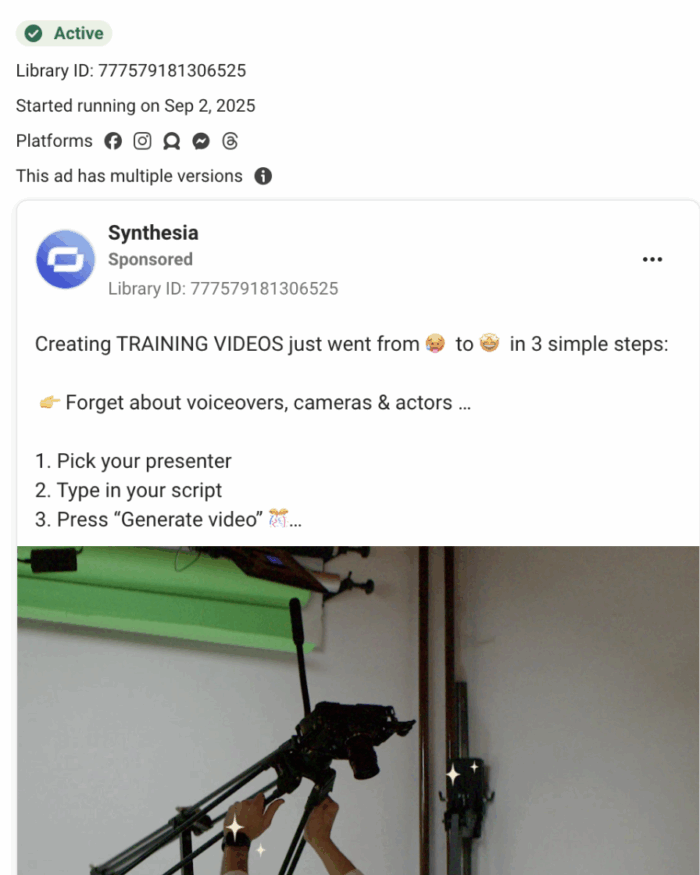
Competitive Ad Library Analysis: Leading brands invest millions testing paid advertisements. By accessing transparency databases such as the Meta Ad Library and LinkedIn Ads Transparency Center, strategists audit long-running competitor ads. In performance marketing, ad longevity correlates directly with profitability; an ad running continuously for months signals a proven pain point or high-converting hook that can inform broader content strategy.
Phase 2: Structural Architecture and Swipe Engineering
Once customer intelligence is organized, copywriters build structural outlines rather than attempting to write freely on a blank document.
Swipe File Curation: High-earning copywriters maintain structural "swipe files"—curated repositories of proven headlines, high-converting landing pages, and effective email sequences. Reference libraries, such as those maintained by industry experts like Neville Medhora, allow strategists to analyze why specific historical campaigns succeeded and adapt those underlying psychological frameworks to new markets.
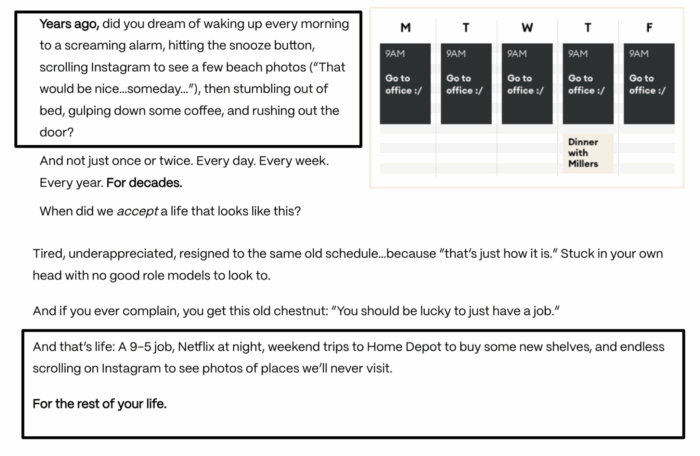
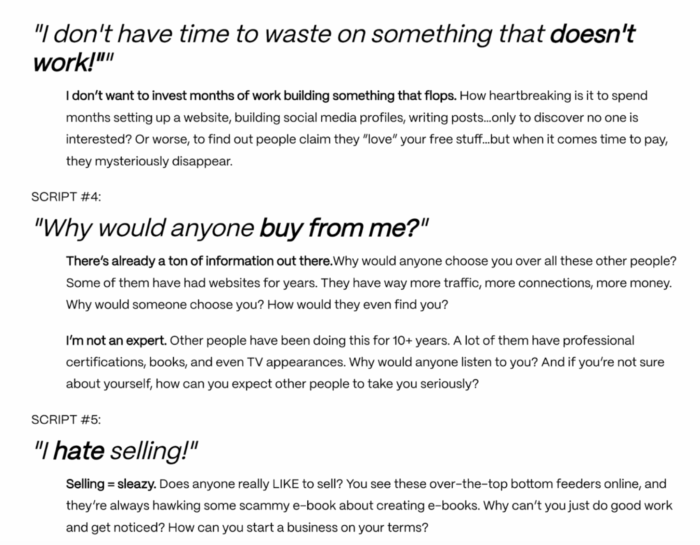
Objection Scripting and Mirroring: High-converting landing pages, such as Ramit Sethi’s Earnable campaign, demonstrate the power of mirroring target audience realities. Rather than relying on generic statements like "earn more money," effective copy precisely reflects daily routines (e.g., standard 9-to-5 schedules, evening media consumption) and explicitly addresses internal hesitation through preemptive "scripts" that defuse customer objections before they prevent a purchase.
Standardized Workflow Execution: Establishing a repeatable, step-by-step writing process reduces cognitive fatigue and eliminates writer’s block. A structured approach ensures that every piece of content fulfills its core objective: capturing immediate attention, establishing domain authority, providing actionable value, addressing purchase friction, and presenting a compelling call-to-action (CTA).
Phase 3: Field Execution and Practical Asset Ownership
To build true skill in persuasive writing, copywriters must test their copy against real market feedback where actual capital or attention is at stake.
In-Market Experiments: Writing practice is most effective when applied to real commercial assets. Developing personal digital properties—such as affiliate media sites, niche e-commerce stores, or personal LinkedIn brands—forces writers to confront market realities.
Intent vs. Traffic Nuance: Real-world testing highlights the critical distinction between informational web traffic and transactional purchase intent. For example, a case study involving a specialty cuckoo clock e-commerce store revealed that content focused on "cuckoo clock repair" generated inbound service calls rather than retail product sales. This demonstrated that driving online revenue requires targeting high-intent keywords aligned with immediate purchase behavior rather than chasing raw pageviews.
Supporting Context & Metrics: Quantifying Copywriting ROI
The core distinction between amateur content creation and professional copywriting lies in conversion attribution and measurable business impact. Content that generates high engagement metrics, such as likes or shares, can still fail to produce actual revenue if it fails to qualify its audience or communicate a strategic offer.
Evaluating Channel-Specific ROI Frameworks
Because content channels serve different stages of the customer acquisition funnel, analytical tracking must adapt to the platform’s native metrics and underlying economics.
Content Channel
Primary Vanity Metric (Misleading)
Performance Conversion Metric (Actionable)
Tracking & Attribution Methodology
B2B Social Ghostwriting(LinkedIn / X)
Total Impressions, Organic Likes
Qualified Sales Pipeline, Executive Engagement
Profile-driven CRM attribution, qualitative lead audit, "How did you hear about us?" form fields
Net Revenue, Customer Conversion Rate, Customer LTV
Direct Checkout Pixel Tracking, Cohort Analysis, Revenue per Subscriber
Qualifying Audience Intent over Vanity Engagement
In B2B ghostwriting and executive positioning, high volume does not automatically equal profitability. Analysis of high-performing campaigns shows that engagement from low-tier decision-makers or uninvolved users yields zero pipeline value.
Conversely, a post that receives modest quantitative engagement but attracts comments and inquiries from prospective VP-level executives or enterprise buying committees represents a far higher return on investment.
                                 THE CONVERSION FUNNEL

       VANITY METRICS                   QUALIFIED METRICS
 (Broad Traffic & Social Likes)    (High-Intent Leads & Sales ROI)

      +-------------------+
      |   Mass Audience   |  <--- High Impressions / Low Intent
      +-------------------+       (Students, Job Seekers, Browsers)
                       /
                      /
                     /
           +---------+
           | Qualified | <--- Focused Copywriting / High Intent
           | Prospects |      (VPs, Directors, Target Buyers)
           +---------+
                |
                v
       +-----------------+
       | REVENUE / DEALS | <--- True Performance ROI
       +-----------------+
Similarly, in search engine optimization (SEO), attracting thousands of casual informational visitors (e.g., students researching industry definitions) inflates server traffic without generating revenue. High-margin copywriters configure Google Analytics (GA4) event tracking to measure how effectively search content converts readers into trial users, demo requests, or paying customers.
Leveraging Artificial Intelligence as an Operational Force Multiplier
While early iterations of generative artificial intelligence (AI) yielded generic writing, modern performance writers use LLMs like ChatGPT as operational research assistants rather than replacement writers.
Key AI integration strategies include:
Automated Research Aggregation: Feeding customer forum data, raw survey feedback, or call notes into AI tools to identify dominant emotional triggers and recurring objections across large datasets.
Structural Clarity and Editing: Prompting AI models to reword draft passages specifically for structural clarity, conciseness, and readability without diluting the core message.
Expert Quote Sourcing: Utilizing AI search capabilities to locate verified quotes, industry statistics, and expert commentary from social media feeds (e.g., LinkedIn posts by verified subject-matter experts) to add third-party authority to cold draft content.
Official Statements & Industry Expert Insights
Industry veterans consistently emphasize that copywriting success depends on clear positioning, human empathy, and rigorous execution discipline rather than stylistic flourishes.
On the Definition of High-Converting Copy
"Becoming a better copywriter doesn’t mean you write more eloquently. In fact, the opposite is often true. Great copywriters are clear, concise, and ultimately convert readers into customers… If you can prove that your copywriting can generate a higher ROI than the market average, you’ll have a much more successful career."
— Copyblogger Leadership Team
On the Discipline of Long-Term Execution
"Be impatient with action, and patient with results."
— Naval Ravikant, Founder of AngelList and Technology Investor
This philosophy remains central to high-performing digital marketing operations. Successful writers execute daily output, client pitch campaigns, and asset testing with immediate urgency, while remaining patient enough to allow content engines, SEO domain authority, and brand equity to compound over extended timelines.
On Peer Review and Feedback Ecosystems
Industry experts agree that isolated writing often reinforces poor habits. High-converting content operations rely on structured peer review ecosystems, such as the Copyblogger Academy co-led by Charles Miller and Copyblogger’s leadership. Access to direct feedback from multi-million-dollar agency operators prevents beginner errors and significantly shortens the path to enterprise-grade output.
Future Outlook: Strategic Positioning in an Automated Content Ecosystem
As artificial intelligence tools continue to flood the internet with generic automated content, the market value of basic text generation will continue to decline. However, this shift elevates the economic value of strategic direct-response copywriting, audience empathy, and specialized platform expertise.
+-------------------------------------------------------------------------------+
|               THE EVOLVING VALUE CURVE IN CONTENT CREATION                    |
+-------------------------------------------------------------------------------+
|                                                                               |
|  COMMODITIZED (DECLINING VALUE)          STRATEGIC (HIGH MARGIN VALUE)       |
|  ------------------------------          -----------------------------       |
|  * Surface-Level Blog Posts              * High-Intent Audience Research     |
|  * Generic AI Text Generation            * Deep Voice-of-Customer Mining     |
|  * Vanity Engagement / "Like-Bait"       * Advanced Attribution & GA4 Setup  |
|  * Passive Informational Content         * Specialized Platform Mastery      |
|                                          * Peer-Reviewed Strategy & Testing  |
|                                                                               |
+-------------------------------------------------------------------------------+
The Shift Toward Specialized Platform Mastery: The era of the generalist writer is closing. Algorithms governing channels like LinkedIn, Google Search, and private email networks evaluate content based on audience engagement signals and author authority. High-earning copywriters will increasingly specialize in specific platforms, mastering the unique technical nuances, hook structures, and distribution rules native to each channel.
Community-Driven Feedback and Quality Control: As content production costs drop to near zero, elite writers will increasingly rely on professional masterminds, specialized academies, and direct feedback loops with senior operators to maintain high standards of persuasion and messaging.
Revenue-Tied Compensation Models: The market will continue to reward writers who directly tie their compensation to measurable business outcomes. Copywriters who understand conversion tracking, qualitative research, and customer unit economics will command high retainer rates and performance bonuses, outperforming competitors who rely purely on traditional vanity metrics.
Ultimately, mastering performance copywriting requires shifting from passive content creation to proactive revenue generation. Writers who build structured processes, embrace qualitative audience research, leverage AI for efficiency, and measure success through clear conversion metrics will continue to build resilient, scalable digital businesses in an increasingly automated economy.