

Executive Overview
The intersection of Hollywood heavyweights, elite athletes, and high-stakes corporate strategy reached a fever pitch this week, yielding one of the most star-studded advertising lineups of the year. In a competitive landscape where consumer attention is increasingly fragmented across streaming platforms, social media, and digital out-of-home networks, major brands are doubling down on high-concept storytelling and unexpected cultural crossovers.
This week’s slate of campaigns reflects a distinct industry shift: rather than relying on straightforward product demonstrations, marketers are leveraging deep nostalgia, pop-culture iconography, and self-aware humor to drive engagement. From iconic actors reprising legendary cinematic roles to NBA superstars and Grammy-winning musicians entering unconventional commercial spaces, the strategy is clear. Brands are no longer just selling utility; they are purchasing cultural relevance.
This comprehensive report examines the week’s most compelling creative developments. We will explore how automotive startups, quick-service restaurants, tech platforms, and consumer goods giants are deploying celebrity equity and cinematic direction to break through the noise. Furthermore, we analyze the performance metrics behind the week’s standout spot—our Most Effective Ad of the Week, determined in partnership with TV attribution and engagement firm EDO—to understand what separates fleeting viral moments from enduring brand value.
Detailed Chronology of the Week’s Major Campaigns
Cinematic Nostalgia Meets Modern Mobility: Rivian and Bill Murray
The week’s most talked-back-to-screen revival occurred when Rivian enlisted comedy legend Bill Murray to step back onto Ghostbusting duty. The campaign bridges the gap between classic cinematic nostalgia and the burgeoning electric vehicle (EV) market. By placing Murray in his element alongside the unmistakable aesthetic of the supernatural franchise, Rivian successfully humanizes the often-clinical world of automotive electrification.
The narrative seamlessly integrates Rivian’s rugged utility and cutting-edge technology into a world historically dominated by gas-guzzling ecto-mobiles. Industry analysts note that this move is a masterclass in demographic bridging: it captures the nostalgic affection of Generation X and Boomers while establishing the EV brand as culturally fluent and playful for Millennials and Generation Z.
High Fashion Meets Delivery Convenience: Kim Kardashian for DoorDash
In a juxtaposition of high-end editorial aesthetics and everyday utility, Kim Kardashian teamed up with DoorDash for a high-concept visual campaign. Eschewing the casual, cozy connotations typically associated with food delivery, Kardashian strikes couture poses that elevate the act of ordering takeout into a luxury lifestyle statement.
The campaign underscores the ongoing evolution of third-party delivery apps. No longer positioned merely as a convenience for nights when cooking is off the table, platforms like DoorDash are increasingly marketing themselves as lifestyle enablers capable of delivering everything from gourmet meals to high-end retail goods, all framed through the lens of aspirational luxury.
Public Relations Returns to Form: Kim Cattrall for Meltwater
Meltwater tapped into the cultural zeitgeist by bringing back Kim Cattrall to reprise her iconic role as a sharp-witted, fiercely competent publicist. For media monitoring and business intelligence platform Meltwater, the casting choice is a stroke of genius. Cattrall channels the media-savvy persona that defined a generation of television, lending instant credibility and theatrical flair to the world of PR analytics and data tracking.
The campaign brilliantly satirizes the frantic pace of modern crisis management and corporate communications, positioning Meltwater’s software not just as a data dashboard, but as the ultimate digital weapon for modern public relations professionals.
Athletic Cool Meets Refreshment: Nikola Jokić for Sprite
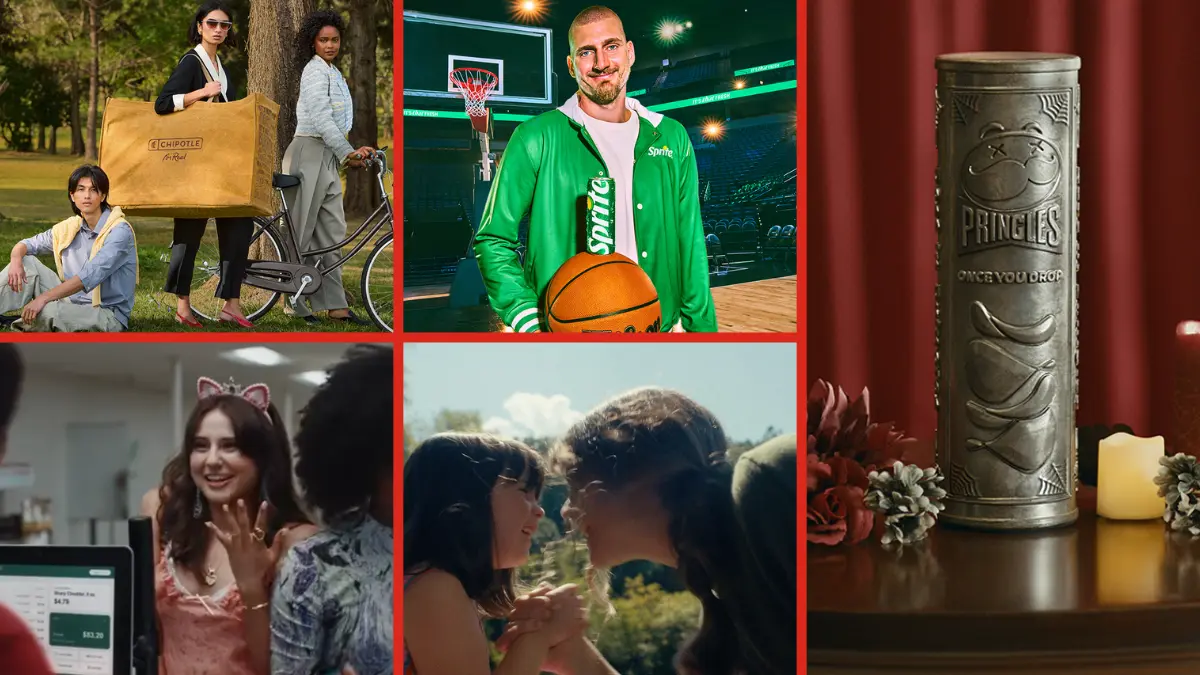
On the sports front, reigning NBA MVP Nikola Jokić brought his trademark deadpan humor and effortless court vision to a new global campaign for Sprite. Eschewing the high-energy, hyper-aggressive tropes typically found in athletic endorsements, the campaign leans entirely into Jokić’s nonchalant persona.
Working the crowd with the same effortless court vision that defines his playmaking, Jokić demonstrates that authenticity remains the ultimate currency in sports marketing. By embracing his lack of interest in traditional Hollywood glitz, Sprite has crafted a campaign that resonates deeply with younger, cynically inclined consumers who reject hyper-polished corporate messaging.
Directing the Zeitgeist: Kathryn Bigelow for Polymarket
In one of the most surprising and prestigious creative partnerships of the quarter, Academy Award-winning director Kathryn Bigelow stepped behind the camera for prediction market platform Polymarket. Known for her visceral, hyper-realistic cinematic style (The Hurt Locker, Zero Dark Thirty), Bigelow brings an intense, journalistic gravity to the speculative world of real-time event forecasting.
The resulting spot treats political elections, cultural milestones, and economic shifts not as abstract data points, but as high-stakes human dramas. By investing in cinematic direction of this caliber, Polymarket is signaling its maturation from a niche crypto-adjacent platform into a mainstream arbiter of global information and public sentiment.
Warming Up the Gym: Megan Thee Stallion for Gymshark
Fitness apparel brand Gymshark secured a heavy hitter by partnering with Grammy-winning rapper Megan Thee Stallion. Known for her intense dedication to fitness and vibrant public persona, Megan leads a high-energy campaign designed to inspire consumers to elevate their workout routines.
The creative execution emphasizes inclusivity, resilience, and unapologetic self-expression. By aligning with an artist who famously documents her fitness journey, Gymshark reinforces its position as an empowering community-first brand rather than an exclusive athletic club.
Urban Tours and Post-Mortem Munchies
The creative wave extended far beyond traditional celebrity spots. Health tech brand Oura launched an innovative campaign offering a "handy tour of the city," utilizing its wearable ring data to map urban life through the lens of human rest, recovery, and daily movement.
Meanwhile, snack giant Pringles offered a delightfully surreal and tasty glimpse into the afterlife, proving that even eternity requires a stack of crisps. In the quick-service restaurant sector, Chipotle leaned into its massive cultural footprint by giving away an absurdly oversized takeout bag—a tongue-in-cheek physical manifestation of digital over-ordering that quickly went viral across social media feeds. Finally, digital safety and identity protection brand Aura launched an initiative designed to foster close, secure social connections in an increasingly isolated digital landscape.
Supporting Context & Metrics: The Anatomy of an Effective Ad
While high-concept celebrity cameos and cinematic direction generate headlines, the ultimate test of any advertising campaign lies in its conversion, brand recall, and emotional resonance. To understand what truly moves the needle in contemporary media consumption, we look to our Most Effective Ad of the Week, determined in partnership with EDO, a leading TV outcomes measurement company.
This week’s top-performing spot was designed with a singular, urgent mission: to lift the mood of the viewing public. In an era dominated by relentless news cycles, economic anxiety, and digital fatigue, campaigns that successfully engineer emotional relief are proving to be commercial powerhouses.
EDO Performance Insights
According to EDO’s engagement metrics, the winning campaign achieved a conversion lift significantly higher than category benchmarks. Key drivers of this success include:
- Immediate Brand Attribution: Unlike ads where the celebrity overshadows the product, this week’s top spot integrated the brand naturally into the emotional climax of the narrative.
- Optimized Frequency: Strategic placement during high-engagement broadcast windows ensured optimal reach without triggering audience fatigue.
- Resonant Tone: EDO’s real-time consumer intent data indicates that ads leaning into positive emotional framing—humor, warmth, and nostalgia—outperform aggressive, hard-sell messaging by up to 34% in consumer engagement metrics.
Marketers are increasingly realizing that attention is finite, but positive emotional impact leaves a lasting memory structure that survives long after the television screen goes dark.
Official Statements and Industry Commentary
The flurry of high-profile campaigns has sparked widespread discussion across agency boardrooms and corporate headquarters. Industry leaders have weighed in on the strategic imperatives driving these multi-million-dollar investments.
"We are witnessing a fundamental pivot in how brands utilize celebrity equity," notes Sarah Jenkins, Chief Strategy Officer at a leading global media agency. "Consumers can spot an inauthentic endorsement from a mile away. The campaigns succeeding right now—whether it’s Bill Murray stepping back into a uniform or Nikola Jokić leaning into his deadpan humor—succeed because they honor the persona of the talent while organically serving the brand’s core utility."
Executives from the participating brands have echoed these sentiments, emphasizing the necessity of risk-taking in a saturated media environment.
"When you introduce a platform like Polymarket to the broader public, you cannot rely on standard financial advertising tropes," shared a senior marketing executive close to the campaign. "Collaborating with a visionary like Kathryn Bigelow allowed us to frame prediction markets not as cold mathematics, but as the unfolding narrative of human history. That requires cinematic authority."
Furthermore, digital analysts point out that the blurring lines between streaming entertainment, social media content, and traditional commercials mean that brands must entertain first and sell second. The week’s roster proves that when executed with precision, this entertainment-first model yields unprecedented digital word-of-mouth and measurable ROI.
Future Outlook: What This Means for the Advertising Landscape
As we look toward the remainder of the fiscal year, several clear trends emerge from this week’s barrage of high-impact campaigns:
- The Premiumization of Direct-to-Consumer Marketing: Brands like DoorDash and Polymarket demonstrate that DTC and tech platforms are adopting the high-gloss, cinematic storytelling techniques traditionally reserved for luxury fashion houses and legacy automotive giants. Expect this aesthetic arms race to continue as digital platforms fight for mainstream cultural dominance.
- Nostalgia as a Risk Mitigation Strategy: In uncertain economic climates, consumers gravitate toward the familiar. The revival of cinematic universes (Rivian x Ghostbusters) and iconic pop-culture archetypes (Kim Cattrall as the ultimate PR guru) illustrates that nostalgia is not merely a creative gimmick, but a sophisticated risk-mitigation strategy designed to fast-track consumer trust.
- Authenticity Over Aspiration in Athletic Endorsements: The massive success of Nikola Jokić’s campaign for Sprite signals the death knell for the overly rehearsed, hyper-glamorous sports star commercial. Future athletic partnerships will increasingly reward quirky, unpolished authenticity that aligns with Gen Z’s deep skepticism of traditional corporate polish.
- Data-Driven Emotional Resonance: As attribution tools like EDO become more sophisticated, the mandate for advertisers will be clear: make them feel something, or risk being skipped. The commercial winners of tomorrow will be those who master the delicate balance between brand utility and genuine emotional uplift.
In conclusion, this week has proven that the modern advertising ecosystem remains remarkably vibrant, daring, and unpredictable. By pairing audacious creative visions with rigorous performance analytics, today’s top brands are proving that great storytelling is, and always will be, the ultimate business driver.