

Executive Overview
The global rollout of enterprise artificial intelligence often plays out less like a calculated corporate strategy and more like a high-stakes corporate farce. If leadership teams deployed technologies with the same blundering lack of human-centric planning on the silver screen, movie critics would dismiss the plot as entirely unrealistic. Yet, enterprise boardrooms worldwide are currently repeating a playbook of organizational failures that experts warned against more than a decade ago.
According to digital strategist and author Paul Boag—who famously chronicled corporate missteps in his 2014 Smashing Magazine publication, Digital Adaptation—today’s rush toward AI adoption suffers from the exact same fundamental flaw that crippled early digital transformation initiatives: treating a profound cultural and structural evolution as a simple IT upgrade.
When senior management signs off on enterprise-wide software licenses, deploys generic training modules, and checks the box on artificial intelligence integration, they are merely scratching the surface of a deep organizational iceberg. Employees across industries are left grappling with heightened job insecurity, crushing workloads, restrictive governance policies, and inadequate tooling. Consequently, organizations are witnessing the resurgence of "shadow AI"—where frustrated knowledge workers bypass corporate firewalls to use unvetted consumer-grade applications—exposing enterprises to unprecedented security vulnerabilities.
To survive and thrive in the age of intelligent automation, modern leadership must pivot away from centralized technological mandates. Instead, they must cultivate an environment centered on psychological safety, intrinsic employee motivation, organic peer-to-peer learning, and flexible, adaptive governance frameworks.
Detailed Chronology: From the Digital Transformation Era to the AI Revolution
To understand why contemporary artificial intelligence rollouts are stumbling, one must examine the historical parallels of the digital transformation era that began in earnest during the early 2010s.
The 2014 Digital Adaptation Blueprint
Back in 2014, when Boag penned Digital Adaptation, the corporate world was scrambling to modernize. IT departments were tasked with deploying massive content management systems (CMS), complex customer relationship management (CRM) platforms, and internal enterprise intranets. Concurrently, customer-facing divisions rushed to launch responsive websites, early mobile applications, and nascent data personalization engines.
However, organizations overwhelmingly focused on the mechanics of code and server infrastructure while ignoring the end user—both internal staff and external customers. Internal systems were notoriously difficult to navigate, and customer-facing digital products frequently missed the mark because organizations built what was technologically feasible rather than what users actually demanded.
The Parallels of Modern AI Integration
Fast-forward to the present day, and the corporate reaction to generative AI follows this exact historical blueprint. Senior executives, captivated by media hype and promises of exponential efficiency gains, direct IT departments to roll out enterprise tools—such as company-wide Copilot Studio licenses—viewing the software deployment as the finish line rather than the starting gate.
Employees are handed generic, one-size-fits-all training videos and told to integrate AI into their daily routines. Stripped of context, support, or tailored use cases, workers feel immense pressure to deliver immediate productivity dividends while simultaneously harboring deep-seated fears that the very tools they are forced to learn will eventually render their positions obsolete. This friction mirrors the exact bottlenecks that doomed countless digital transformation projects a decade ago: an institutional failure to prioritize the human element over the technological stack.
Supporting Context & Metrics: The Human Element of Technological Change
The core challenge of AI adoption is not computational; it is cultural. When organizations view AI purely as an efficiency engine designed to squeeze more output from a standard forty-hour workweek, they fundamentally misunderstand human motivation.
The Productivity Trap and Employee Motivation
From the perspective of an average employee, corporate mandates to "embrace AI" offer very few personal incentives. Management celebrates artificial intelligence because it promises higher productivity—the ability for staff to produce more output in less time.
However, in standard corporate structures, this does not translate into shorter working hours, increased compensation, or genuine relief from administrative burdens. Instead, employees are expected to maintain their traditional schedules while absorbing heavier workloads. Under these conditions, resistance to AI is entirely rational.
To shift this dynamic, organizations must reframe the narrative. AI adoption must be presented not as an existential threat or a tool for corporate surveillance, but as an opportunity to eliminate the most tedious, hated aspects of daily work. By helping staff identify workflow friction points—such as automated data entry, routine formatting, or initial research synthesis—organizations can position AI as a catalyst for improving working lives. Furthermore, forward-thinking enterprises must tie AI proficiency to tangible career advancement, professional development, and genuine time-reclamation incentives.
The Myth of Instantaneous Procedural Adaptation
Adopting artificial intelligence requires individuals to dismantle and rebuild procedural knowledge and working habits built up over years, or even decades. This cognitive restructuring cannot be achieved via a generic, sixty-minute webinar.
Most knowledge workers are already operating at or above capacity, struggling daily to clear overflowing inboxes and meet relentless key performance indicators (KPIs). Expecting these employees to spontaneously carve out hours for experimentation, prompt engineering, and workflow redesign without altering their baseline responsibilities is a recipe for burnout.
Rather than relying on top-down directives or forcing employees through bureaucratic training hurdles, the most successful organizations lean into organic, peer-led adoption. In almost every enterprise, a vanguard of enthusiastic early adopters is already experimenting with AI tools independently. By gathering these enthusiasts, providing them with dedicated time and protected spaces to share their successes, and letting social proof spread naturally across departments, organizations can foster a culture of curiosity that top-down memos can never achieve.
Official Statements and Industry Insights: Safety, Governance, and Shadow IT
As organizations grapple with the realities of enterprise artificial intelligence, leadership teams frequently swing between two dangerous governance extremes: complete administrative paralysis or reckless, unmonitored deployment.
Fostering a Culture That Embraces Intelligent Failure
Learning to wield generative AI effectively requires trial, error, and frequent mistakes. Yet, many modern enterprises operate under an entrenched culture of fear where errors are treated as signs of professional incompetence.
During the digital transformation era, executives demanded sweeping modernization while simultaneously tying employees to rigid, legacy KPIs and penalizing minor missteps during annual reviews. This sent a toxic mixed message: Innovate rapidly, but do not dare fail.
Today, this paradox has intensified. Industry reports highlight instances where employees are reprimarded for exceeding API token limits just weeks after leadership ordered them to aggressively integrate AI into their daily routines. Elsewhere, workers are buried under extensive lists of compliance prohibitions, rendering them too terrified to attempt anything novel.

To break this cycle, management must make it genuinely safe to fail. This requires temporarily adjusting performance metrics, revising review structures, and offering psychological safety nets while staff navigate the steep learning curve of AI-augmented workflows.
Striking the Balance with Governance
Governance is undeniably necessary when deploying enterprise technologies, but organizations historically bungle its execution. Policies are either entirely absent—leaving data security exposed—or excessively draconian, creating bureaucratic mazes that grind innovation to a halt.
When internal policies dictate exhaustive lists of what cannot be shared with artificial intelligence tools without offering clear guidance on productive use cases, employees quickly realize that inaction is safer than compliance. Consequently, they abandon official enterprise channels altogether.
Just as the digital transformation era gave birth to "shadow IT"—where frustrated employees bypassed corporate software procurement by signing up for consumer cloud storage and document editors using personal credit cards—today’s workplace is overrun by Shadow AI. When an internal corporate tool cannot fulfill a specific departmental requirement, knowledge workers simply open a personal ChatGPT, Claude, or Gemini account on their smartphones or home laptops to get the job done.
This behavior introduces massive security liabilities. Proprietary company data, unmasked customer information, and trade secrets flow freely into consumer-grade tools completely outside the visibility or control of corporate security teams.
Rather than responding with heavy-handed disciplinary threats, blocked URLs, and draconian policy updates—tactics that only drive shadow behavior further underground—forward-thinking organizations view shadow AI as diagnostic feedback. By investigating why employees are turning to external tools and what functional gaps exist in official software, leadership can refine and expand their enterprise technology stack to meet genuine operational needs.
Future Outlook: Moving Beyond the Technological Fallacy
The ultimate danger facing modern organizations is not the software itself, but the persistence of the technological fallacy: the stubborn belief that digital evolution is strictly an IT procurement challenge rather than a profound test of human change management.
As the artificial intelligence landscape matures, corporate leaders must accept that maintaining rigid, centralized control over every micro-interaction with AI is no longer viable. While managing a messy, chaotic technology stack during the early stages of adoption is uncomfortable, the risk of moving too slowly—of paralyzing innovation through bureaucracy and fear—far outweighs the risk of calculated experimentation.
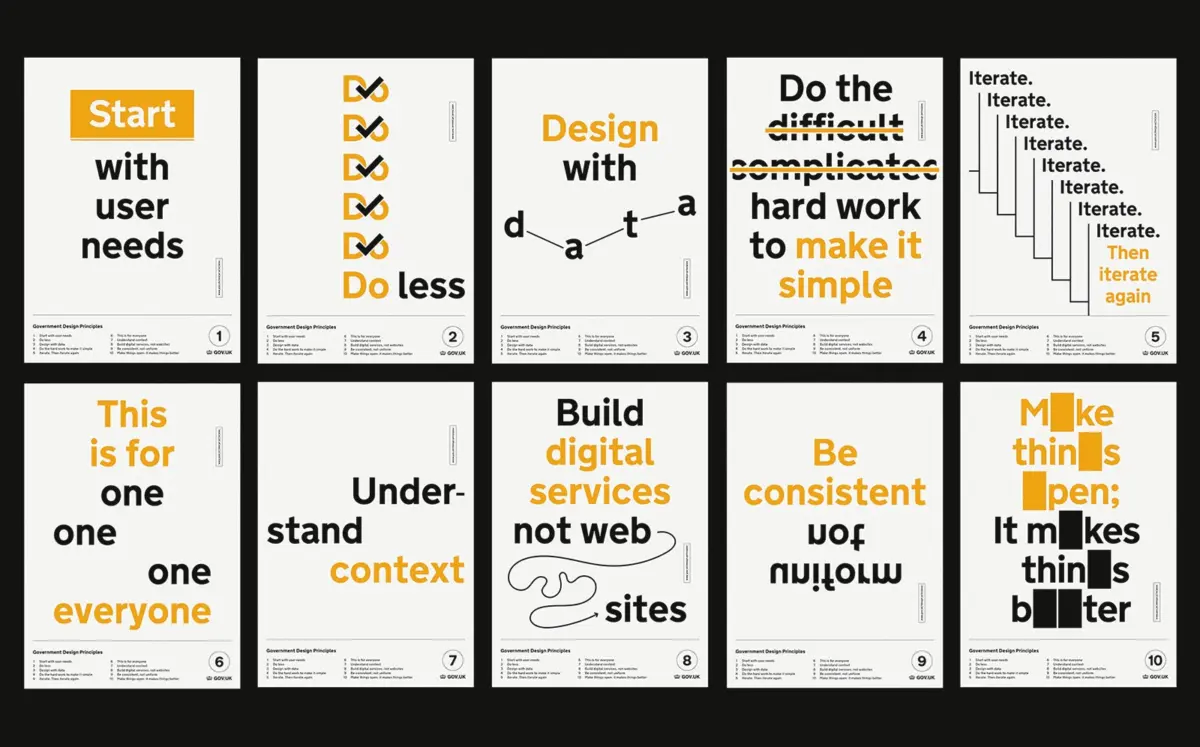
Organizations that succeed in the AI era will be those that embrace adaptive technological rollouts. They will establish concise, human-centric governance principles—modeled after frameworks like the UK government’s streamlined design principles—that fit on a single poster, relying on employee common sense rather than legalistic manuals. They will listen to the signals sent by shadow AI, protect their workforce from the paralyzing fear of failure, and treat AI adoption as a cultural journey rooted in trust, empathy, and continuous human development.
The lessons of digital transformation were written a decade ago in hard-earned corporate failures. It is time for modern leadership to open that history book before repeating its most costly chapters.