

Executive Overview
As organizations globally rush to integrate generative artificial intelligence into their core operations, a familiar and concerning pattern has emerged. C-suite executives and senior leadership teams are approaching AI integration as a straightforward technological upgrade—purchasing enterprise-wide software licenses, issuing generic training mandates, and declaring the job done.
However, this mechanical approach is fundamentally flawed. According to digital strategist and author Paul Boag, the current wave of enterprise AI adoption feels less like a calculated business strategy and more like an expensive farce. Drawing striking parallels to the mistakes made during the digital transformation boom of the 2010s, modern organizations are once again ignoring the human, cultural, and operational realities of technological change.
AI adoption is not merely an IT project; it is a profound cultural shift. When companies treat it purely as a software deployment, they invite predictable negative consequences: widespread employee apathy, crippling anxiety over job security, the rise of dangerous "Shadow AI" practices, and paralyzed innovation. To successfully navigate the AI era, organizations must pivot away from rigid, top-down bureaucratic control. Instead, they need to foster environments that prioritize psychological safety, incentivize meaningful workflow integration, and leverage organic peer-to-peer enthusiasm.
Detailed Chronology: From Digital Transformation to the AI Era
To understand why contemporary AI rollouts are faltering, one must look backward. The systemic errors companies are making today are nearly identical to those committed a decade ago during the height of the digital transformation era.
The 2014 Digital Adaptation Blueprint
Back in 2014, when Boag published his seminal book Digital Adaptation through Smashing Magazine, organizations were grappling with a massive technological pivot. IT departments were rapidly deploying Content Management Systems (CMS), Customer Relationship Management (CRM) platforms, and internal intranets. Simultaneously, consumer-facing teams were scrambling to launch mobile apps, responsive websites, and early personalization engines.
Yet, despite massive capital expenditures, failure rates were staggering. Why? Because organizations focused almost exclusively on the technology stack while ignoring how human beings would interact with it. Internal systems were designed with abysmal user experiences, forcing employees to navigate clunky interfaces. Meanwhile, customer-facing digital products failed to align with actual user needs. The core miscalculation was treating digital transformation as an IT hurdle rather than a holistic organizational evolution.
The 2026 AI Deja Vu
Fast-forward to the present day, and history is repeating itself with remarkable precision. Senior management teams, mesmerized by industry hype and productivity promises, are purchasing enterprise AI tools en masse. Corporations roll out enterprise-wide licenses for tools like Microsoft’s Copilot Studio, supplement them with generic, one-size-fits-all training webinars, and assume their workforce is ready to transform.
Instead of empowerment, this approach breeds confusion and anxiety. Employees are left staring at advanced language models and automation tools, wondering how these systems fit into their daily responsibilities. Worse yet, because they are handed these tools without adequate context, support, or time to experiment, staff view AI not as an assistant, but as an impending threat to their employment security.
Supporting Context & Metrics: The Human Cost of Poor AI Integration
The friction behind modern AI adoption stems from a fundamental mismatch between executive goals and employee reality. To fix this, organizations must evaluate the psychological and operational dynamics driving workplace resistance.
The Productivity Trap: For Whom Does AI Work?
The primary driver for executive enthusiasm around artificial intelligence is productivity. Leadership envisions a workforce capable of producing twice the output in half the time. However, from an employee’s perspective, this promise offers virtually zero personal benefit.
In a standard 9-to-5 corporate structure, increased productivity does not automatically translate to reduced working hours or higher compensation. Instead, it frequently translates to a heavier workload within the exact same timeframe. Employees are expected to achieve more without being given time back or seeing financial rewards. Consequently, asking workers to enthusiastically embrace tools that might eventually automate their roles—while simultaneously demanding higher output—creates deep resentment.

To overcome this hurdle, organizations must reframe the narrative. AI cannot be pitched merely as a corporate efficiency metric. Instead, leadership must work with staff to identify the most tedious, frustrating parts of their jobs—the administrative overhead and repetitive tasks they genuinely hate—and position AI as a mechanism to eliminate those specific friction points.
Procedural Knowledge and the Need for Time
Adopting AI requires dismantling and rebuilding procedural knowledge that workers have spent years, or even decades, perfecting. Changing deep-seated habits is mentally exhausting under the best of circumstances. When employees are already overworked, drowning in backlog tasks, and struggling to meet existing key performance indicators (KPIs), expecting them to spontaneously master complex generative tools is entirely unrealistic.
Furthermore, mastering AI requires experimentation, trial and error, and dedicated learning time. Standardized, generic training courses are insufficient. Staff require role-specific education—such as specialized training for UX designers, financial analysts, or customer support teams—alongside protected, unstructured time to discover how AI can genuinely augment their daily workflows.
The Power of Social Proof Over Top-Down Mandates
When it comes to driving internal adoption, traditional top-down memos hold very little weight. Employees rarely change their behaviors because a corporate vice president told them to via email.
Instead, the most effective catalyst for technological adoption is social proof. In almost every organization, there are early enthusiasts—individuals who are already experimenting with AI tools independently, driven by personal curiosity. Rather than trying to force laggards to adopt AI first, smart organizations identify these internal champions. By gathering these enthusiasts, providing them with platforms to showcase their successes, and letting them demonstrate practical use cases to their peers, companies can spark organic, contagious enthusiasm across departments.
Official Statements and Industry Insights
Experts and internal case studies consistently highlight that the primary barriers to AI adoption are cultural rather than technical. When bureaucratic hurdles clash with employee ingenuity, the results are predictable and dangerous.
The Bureaucratic Bottleneck
Consider the case of a modern User Experience (UX) team working within a major enterprise. Management is aggressively pushing for AI integration, and the design team is genuinely excited. They envision building an AI-powered research repository and dynamic AI personas to streamline their design pipelines.
However, reality quickly shatters these ambitions. The enterprise-approved AI tools—such as standard corporate Copilot installations—cannot support the specialized workflows required by the UX team. When the designers attempt to utilize alternative, more capable toolsets, they find themselves trapped in endless layers of bureaucratic friction. Their proposals must crawl through AI steering committees, security reviews, and compliance boards.
As months pass with zero progress, the team’s initial enthusiasm evaporates. The prevailing sentiment shifts from excitement to apathy: "Why bother trying to innovate when the system actively blocks progress?"
The Rise of "Shadow AI"
When official corporate channels fail to provide the tools necessary to do the job, ambitious employees do not simply give up—they find workarounds. Just as the digital transformation era gave rise to "Shadow IT" (with employees secretly using unauthorized cloud storage like Dropbox or personal Google Drive accounts), the AI era is witnessing an explosion of Shadow AI.
Frustrated by restrictive enterprise policies and inadequate official software, workers are opening personal ChatGPT, Claude, or Midjourney accounts on their mobile phones or home laptops to complete their daily tasks.

This behavior introduces severe organizational vulnerabilities. Sensitive company data, proprietary source code, and confidential customer information end up uploaded to external consumer-grade platforms completely outside corporate visibility or control.
When leadership discovers Shadow AI, their instinctive reaction is typically draconian: implementing stricter web filters, issuing disciplinary warnings, and threatening punitive action. Yet, this heavy-handed approach almost always backfires. It drives employee experimentation further underground and deepens the culture of fear. Organizations must instead view Shadow AI as a vital diagnostic symptom—a flashing neon sign pointing directly to where official enterprise tools are falling short.
Future Outlook: Building an Adaptive, Safe-to-Fail Culture
If organizations are to survive and thrive in the artificial intelligence era, leadership teams must execute a fundamental mindset shift. Moving forward, successful AI integration relies on three core pillars: psychological safety, lightweight governance, and adaptive technological rollouts.
1. Cultivating a "Safe to Fail" Environment
Innovation cannot coexist with fear. If an organization maintains a punitive culture where every mistake is treated as a sign of incompetence—or where employees are reprimanded for minor errors like exceeding token limits during experimental prompts—staff will naturally choose the safest path: doing nothing.
To foster real AI adoption, management must actively make it safe to fail. This requires temporarily adjusting KPIs, modifying annual review criteria to reward experimentation rather than immediate perfection, and granting teams the psychological safety to test boundaries without fear of professional repercussions.
2. Streamlining Governance Through Principles, Not Red Tape
Governance is necessary, but it must be handled with extreme care. Organizations cannot afford wild-west data practices, but neither can they afford thousand-page compliance manuals that paralyze action.
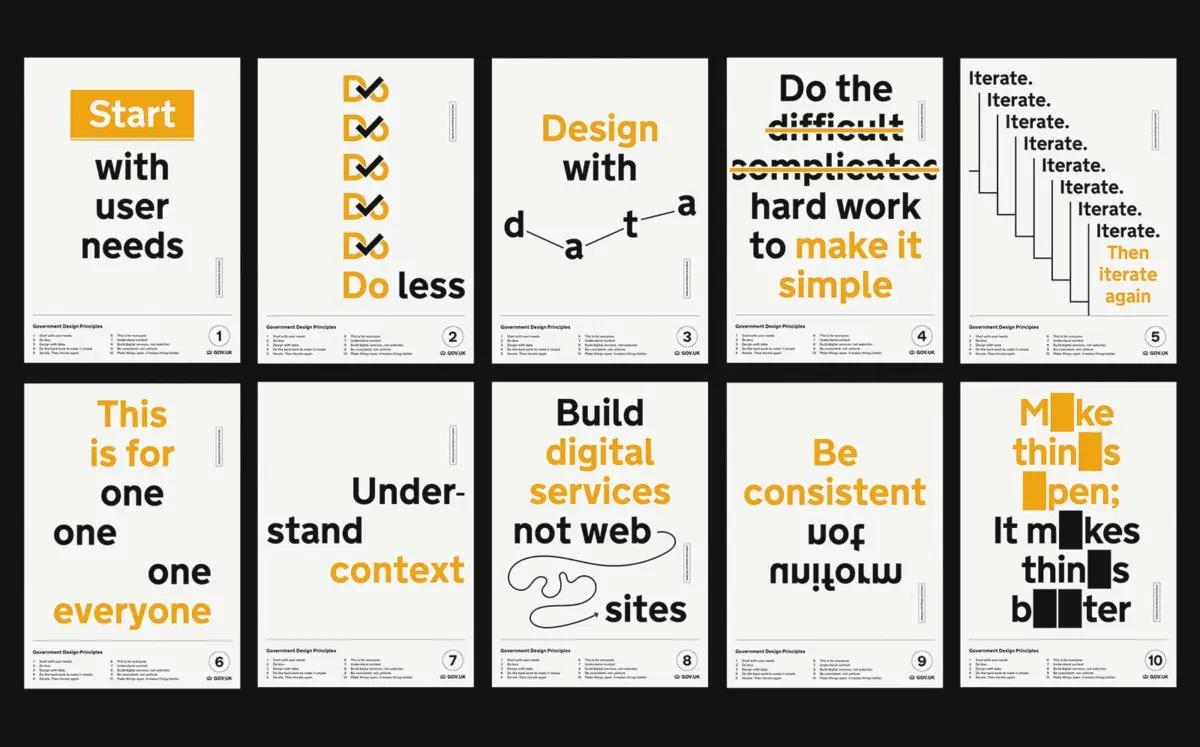
Forward-thinking companies are taking inspiration from frameworks like the UK Government Digital Service (gov.uk) design principles. By replacing restrictive, fear-inducing policy documents with a short, concise set of core principles that can fit on a handful of posters, organizations establish clear behavioral boundaries while simultaneously demonstrating trust in their employees’ common sense.
3. Embracing an Adaptive Tech Stack
Finally, IT departments must abandon the notion of a single, monolithic AI tool deployed universally across the enterprise. Different departments have radically different needs. An engineering team requires vastly different capabilities than a marketing department or a UX research group.
Organizations must adopt an adaptive technological rollout strategy. In the early stages of AI integration, some level of stack fragmentation and operational messiness is an unavoidable cost of innovation. Rather than trying to clamp down with ironclad restrictions from day one, leadership must allow teams the flexibility to explore diverse applications, learn what works best for their specific roles, and refine formal governance organically as real-world organizational requirements become clear.
Conclusion
The window to correct course is closing. Organizations that continue to view artificial intelligence purely as an IT upgrade will watch their initiatives stall, their employees disengage, and their data security bleed into the shadows of unmonitored consumer apps.
AI adoption is, and always has been, a human challenge. By learning the hard lessons of the digital transformation era—prioritizing culture over code, fostering psychological safety, respecting the necessity of experimentation, and honoring the human side of change—enterprises can finally move past the farce and turn artificial intelligence into a genuine catalyst for organizational growth.