

Executive Overview
In a strategic pivot signaling the next phase of enterprise artificial intelligence, Netomi—a prominent customer service AI startup backed by entertainment titan and former DreamWorks CEO Jeffrey Katzenberg—has announced a sweeping overhaul of its executive leadership team. The New York-based venture is actively attempting to shed the limitations of traditional, conversational chat interfaces. Instead, Netomi aims to embed its autonomous AI capabilities directly into the core infrastructure of digital websites and core business operations, bridging the gap between passive query resolution and active digital execution.
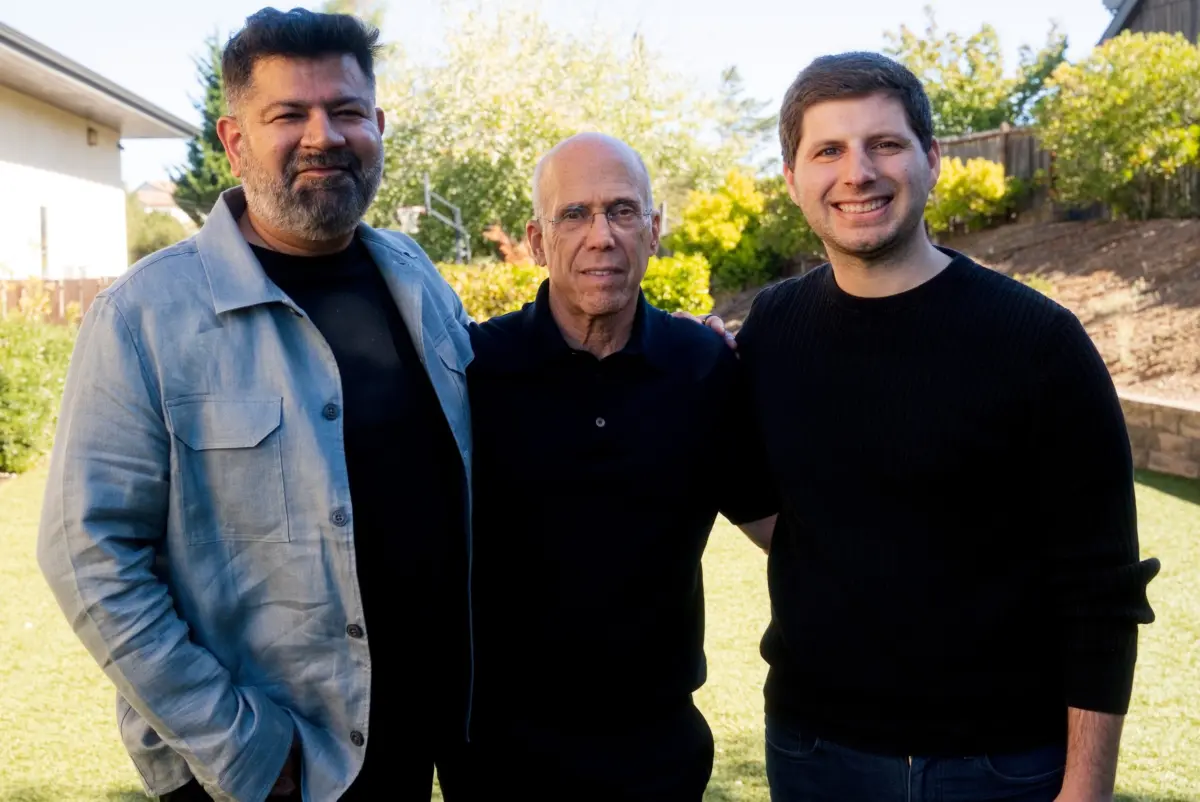
To spearhead this aggressive market transition, the company has elevated Justin Wexler, a seasoned general partner at Katzenberg’s venture capital firm WNDR and a five-year veteran of Netomi’s board of directors, to the role of president. Operating in a newly established leadership dyad, Wexler will work hand-in-hand with Netomi’s founder and Chief Executive Officer, Puneet Mehta. To accommodate this executive appointment, Wexler has transitioned into a venture partner role at WNDR, allowing him to dedicate his operational focus entirely to Netomi’s scaling initiatives.
Concurrently, Netomi has bolstered its commercial pipeline by appointing Ryan Boughan as senior vice president of growth. Boughan brings a wealth of executive experience to the team, having previously served as president and chief operating officer of PTTOW!, an exclusive network for Chief Marketing Officers and industry leaders.
This leadership restructuring occurs against a backdrop of intense competition within the generative AI and enterprise automation landscape. As corporations move past the initial novelty of conversational window widgets—often relegated to the bottom-right corner of consumer websites—market leaders are racing to deliver systems that can autonomously execute complex cross-platform workflows. Netomi’s latest strategic moves underscore an industry-wide realization: the future of enterprise software lies not in auxiliary chat windows, but in deeply integrated, context-aware artificial intelligence that redefines how users navigate and interact with digital enterprises.
Detailed Chronology
The Foundations of Netomi’s Conversational Genesis
Founded by Puneet Mehta, Netomi initially established itself within the customer experience (CX) sector by deploying advanced natural language processing (NLP) models designed to resolve customer inquiries efficiently. Early iterations of the platform focused heavily on automated ticket resolution, email response generation, and chat-based customer service automation for global brands across retail, travel, and financial services.
Like many early pioneers in the conversational AI space, Netomi’s primary touchpoint was the standard chat window—a reactive, text-based interface meant to deflect support tickets and reduce human agent workloads. While these tools proved effective at scale, market demands rapidly evolved. Enterprise clients no longer sought mere deflection; they demanded end-to-end resolution capabilities, seamless integrations with back-end enterprise resource planning (ERP) systems, and interfaces capable of taking proactive action on behalf of the user.
The WNDR Capital Partnership and Katzenberg’s Influence
A critical inflection point in Netomi’s corporate trajectory arrived through its alignment with high-profile investors, most notably Jeffrey Katzenberg’s WNDR capital vehicle. Katzenberg, renowned for his visionary leadership at Disney, DreamWorks Animation, and media venture Quibi, recognized the profound disruptive potential of AI-driven consumer and enterprise interactions.
Through WNDR, Katzenberg and his partners provided not only capital injections but also strategic guidance on scaling technology for global markets. Justin Wexler, operating as a general partner at WNDR, joined Netomi’s board of directors five years ago, serving as an institutional bridge between investor expectations and operational execution. Over half a decade on the board, Wexler gained granular insight into Netomi’s technological stack, market positioning, and enterprise client requirements, positioning him as an ideal internal candidate to steer the company through its next phase of growth.
The Strategic Leadership Pivot
As the generative AI boom transformed customer expectations following the late-2022 explosion of large language models (LLMs), Netomi recognized the imperative to modernize its product architecture. The traditional chat widget was rapidly becoming a legacy format, replaced by demand for generative user experiences (GenUX) that live natively within application interfaces.
To execute this vision, the company orchestrated a calculated leadership transition:
- Justin Wexler’s Appointment as President: By moving from WNDR’s general partner ranks into Netomi’s executive suite alongside CEO Puneet Mehta, Wexler brings institutional continuity combined with active day-to-day operational command. His transition to a venture partner role at WNDR ensures that Katzenberg’s firm maintains its close strategic alignment with Netomi while granting Wexler the bandwidth required to lead a high-growth tech enterprise.
- Ryan Boughan’s Arrival as SVP of Growth: To accelerate customer acquisition and market penetration, Netomi recruited Ryan Boughan. Having navigated the high-stakes world of executive networking and strategic partnerships as president and COO of PTTOW!, Boughan is tasked with scaling Netomi’s revenue engines and forging deep enterprise relationships across diverse industry verticals.
Supporting Context & Metrics
The Shift from Auxiliary Widgets to Core Digital Infrastructure
To fully understand the significance of Netomi’s leadership restructure, one must examine the broader evolution of enterprise software user interfaces. For over a decade, conversational AI was siloed into isolated UI elements: chat bubbles, floating help widgets, and pop-up support assistants. These tools operated independently of the websites housing them, often acting as glorified search bars with rudimentary conversational memory.
Today, enterprise buyers are demanding spatial and contextual integration. Moving AI "out of the chat window and into the website itself" implies several fundamental shifts:
- Contextual Awareness: Instead of requiring a user to explain their problem within a chat interface, the AI analyzes the user’s real-time journey across the website, proactively offering assistance based on cursor movement, dwell time, and historical account data.
- Autonomous Action: Rather than directing a user to a URL or generating a text-based instruction, the AI can manipulate the website’s underlying DOM (Document Object Model) or API layer to execute transactions—such as processing refunds, modifying flight itineraries, or updating subscription profiles—directly on the screen.
- Unified Brand Experience: By embedding intelligence into the core UI, the website transforms from a static repository of information into a dynamic, conversational application tailored uniquely to every visitor.
Market Dynamics and Competitive Pressures
Netomi operates in an intensely crowded ecosystem populated by both venture-backed startups and tech behemoths. Competitors ranging from specialized conversational AI platforms like Ada and Kore.ai to enterprise giants like Salesforce (with its Einstein platform) and Zendesk are all vying for dominance in autonomous customer engagement.
In this environment, venture backing from figures of Jeffrey Katzenberg’s stature provides more than just financial runway; it offers credibility in enterprise boardrooms. However, capital alone does not guarantee market share. Execution speed, product differentiation, and enterprise-grade security are the primary metrics by which companies like Netomi will be judged. By strengthening its executive bench with seasoned venture strategists and growth experts, Netomi is signaling to investors and enterprise clients alike that it possesses the leadership maturity required to compete at the highest levels of the enterprise software-as-a-service (SaaS) market.
Official Statements & Industry Implications
While formal corporate announcements often rely on measured public relations language, the structural adjustments at Netomi reveal a clear corporate mandate. Industry analysts note that moving a long-standing board member and venture partner directly into the president’s office is an uncommon maneuver that highlights urgency and deep mutual trust between founders and key investors.
In internal communications and public briefings surrounding the transition, leadership has emphasized that Netomi’s technological roadmap is no longer tethered to incremental chatbot improvements. Instead, the company is doubling down on the premise that websites must become intelligent, self-service ecosystems.
“The era of the isolated chat window is drawing to a close,” notes enterprise software analyst Marcus Vance. “Enterprise clients are no longer satisfied with bolt-on solutions that treat customer service as an isolated department. They want intelligence woven into the digital fabric of their brand. Netomi’s decision to pair Puneet Mehta with Justin Wexler—an operator deeply versed in their long-term vision—suggests they are preparing for a major product and market expansion.”
Furthermore, the addition of Ryan Boughan as senior vice president of growth indicates that Netomi is shifting from a product-led growth model to an aggressive, enterprise-scale go-to-market strategy. Boughan’s background in cultivating executive networks through PTTOW! provides Netomi with direct access to decision-makers, CMOs, and digital transformation leaders who are currently allocating substantial budgets toward generative AI integration.
Future Outlook
What Lies Ahead for Netomi
As Netomi enters this new chapter under the co-leadership of Puneet Mehta and Justin Wexler, several strategic milestones will define its trajectory over the next 12 to 24 months:
- Product Architecture Overhaul: The market will closely monitor Netomi’s upcoming product releases to evaluate how effectively the company transitions from conversational messaging interfaces to deeply embedded website intelligence. Success will be measured by the depth of integration Netomi can achieve with legacy enterprise stacks without compromising security or performance.
- Enterprise Penetration: With Ryan Boughan driving growth, Netomi is expected to aggressively target Fortune 500 enterprises in sectors characterized by high-volume digital interactions—specifically financial services, telecommunications, retail e-commerce, and hospitality.
- Potential Funding and M&A Dynamics: Backed by WNDR and Jeffrey Katzenberg, Netomi’s capitalization structure remains robust. However, as consolidation accelerates in the enterprise AI space, the company’s reinforced leadership team will also need to navigate potential strategic partnerships, secondary funding rounds, or long-term acquisition overtures from larger enterprise tech platforms looking to acquire native generative UI capabilities.
Conclusion
Netomi’s leadership shakeup is much more than a routine corporate shuffling of titles; it is a calculated bet on the future architecture of the internet. By aligning the visionary foundation of Puneet Mehta with the seasoned strategic execution of Justin Wexler and the growth acumen of Ryan Boughan—all under the supportive umbrella of Jeffrey Katzenberg’s investment ecosystem—Netomi is positioning itself at the vanguard of the next enterprise AI wave. As the boundary between static websites and dynamic artificial intelligence continues to dissolve, Netomi’s ability to execute this vision will serve as a bellwether for the entire customer experience industry.