

Executive Overview
In the high-stakes, fast-paced world of digital journalism and content marketing, time is not merely a metric of productivity—it is the direct determinant of profitability. For decades, the foundational reporting process for in-depth articles—conducting interviews with subject matter experts (SMEs)—has remained an excruciatingly manual bottleneck. A standard 20-minute conversational exchange between a writer and an industry expert routinely yields upwards of 3,000 words of rich, dense dialogue. Historically, capturing this raw audio accurately required an exhausting, multi-pass review process, consuming anywhere from 60 to 90 minutes of tedious manual labor for every single interview minute.
However, the rapid maturation of artificial intelligence and automated speech recognition (ASR) has permanently altered this workflow. Tools like Otter.ai, alongside emerging competitors such as Fireflies, Fathom, and Rev, have transitioned from novelties into essential infrastructure for independent writers, agencies, and enterprise publications.
This deep-dive investigation examines how AI transcription platforms have transformed the economics of freelance writing. By analyzing real-world workflows, return-on-investment (ROI) metrics, inherent technical limitations, and the broader macro-trends influencing digital publishing, this report explores whether a modest $100 annual software investment can genuinely serve as a force multiplier for modern creative professionals.
Detailed Chronology: The Evolution of Interview Workflows
To understand the profound impact of real-time AI transcription, one must first examine the historical timeline of interview-based writing and the friction points that plagued generations of journalists.
The Era of Analog and Manual Shorthand (Pre-2010s)
Before digital audio recording became ubiquitous, freelance writers relied on shorthand notebooks, microcassette recorders, and digital voice recorders with primitive storage capacities.
- The Process: Writers would sit across from a subject or dial into a landline, furiously scribbling notes while attempting to maintain organic eye contact or conversational flow.
- The Pain Point: Capturing verbatim quotes was nearly impossible. Writers routinely missed nuanced turns of phrase, forcing them to paraphrase experts or follow up via cumbersome email chains to confirm exact phrasing. The cognitive load was split between active listening and mechanical transcription, degrading the quality of both the conversation and the final editorial product.
The Digital Dictation and Outsourcing Boom (2010–2019)
As smartphones and cloud storage evolved, recording interviews became seamless. However, transcription remained a massive operational hurdle.

- The Process: Writers uploaded MP3 or WAV files to digital storage, then chose between two inefficient paths: spending hours manually scrubbing through audio files with foot-pedal software, or outsourcing the task to human transcription agencies (such as Rev, Scribie, or offshore contractors).
- The Pain Point: Manual self-transcription wasted valuable billable hours. Human outsourcing services offered high accuracy (often 99%), but came with significant financial costs and turnaround times ranging from 24 hours to 5 business days. For freelancers working under aggressive weekly publication schedules, waiting days for a transcript represented a critical operational bottleneck.
The Real-Time AI Revolution (2020–Present)
The convergence of advanced neural networks, natural language processing (NLP), and cloud computing ushered in the era of instantaneous, automated speech-to-text engines.
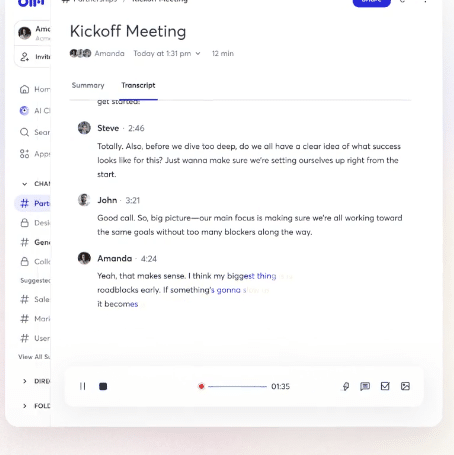
- The Process: Platforms like Otter.ai integrated directly with virtual meeting software (Zoom, Microsoft Teams, Google Meet) or ran locally via mobile and desktop applications. Utilizing cloud-based AI models, these tools generate searchable, speaker-diarized transcripts the exact second a conversation concludes.
- The Current State: Writers no longer choose between speed and accuracy. While AI transcription platforms still hover around an 80% to 85% real-world accuracy threshold—requiring light human verification—they deliver immediate cognitive relief. The writer’s focus is preserved entirely for the interview, and the post-call production timeline is compressed from hours to mere minutes.
Supporting Context & Metrics: The Economics of Time and AI
For independent professionals operating on strict margins, every minute allocated to non-writing administrative tasks represents a direct reduction in effective hourly earnings. To evaluate the true value of AI transcription, we must examine the micro-economics of a standard freelance writing assignment.
The ROI Math: Breaking Down an Article’s Lifecycle
Consider a standard freelance commission: a 1,000-word deep-dive article for a prominent fintech publication, commanding a flat rate of $1,200. The traditional workflow breaks down across several distinct phases:
- Research & Sourcing: 1 hour
- SME Interview Preparation & Execution: 0.5 hours
- Manual Transcription & Re-listening: 1 hour to 1.5 hours
- Outlining & Drafting: 3 hours
- Editing & Polish: 1 hour
Total time invested under a manual or semi-manual workflow equates to roughly 6.5 hours, yielding an effective hourly rate of approximately $184.61.
By introducing an AI transcription tool into this exact same pipeline, the transcription phase is compressed. Rather than re-listening to the audio multiple times, the writer reviews an immediately available transcript while referencing linked audio playback points, cutting the verification and cleanup time to roughly 10 minutes.
- Total Time with AI: ~5.2 hours
- Effective Hourly Rate: $230.76
When scaled across an active monthly output of three to four complex, interview-heavy articles, the cumulative time savings approach 4 to 6 hours monthly. At an annual subscription cost of approximately $100 (for a professional-tier plan), the software pays for itself within the first assignment of the month, representing an extraordinary return on investment.
Feature Utility and Workflow Integration
Modern AI transcription suites offer far more than simple speech-to-text conversion. Several core capabilities drive their utility for professional writers:
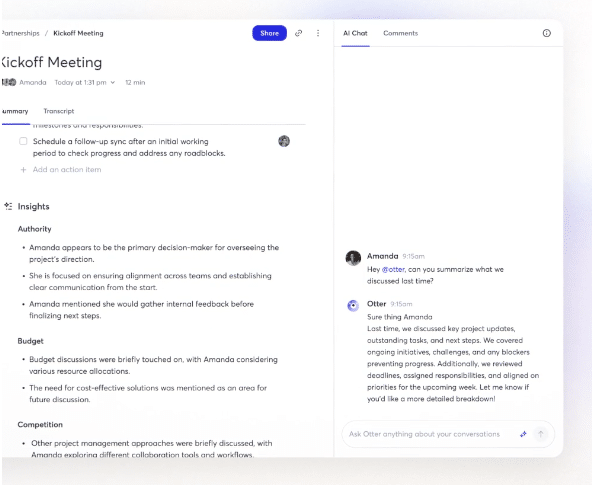
- AI Chat Search & Querying: Rather than manually scanning a 5,000-word transcript for a specific reference, users can query the transcript via integrated conversational AI. Asking questions such as "Where did the expert discuss credit card fraud metrics?" or "Summarize the points made regarding AI personalization" allows writers to instantly retrieve, contextualize, and extract relevant passages.
- Audio-to-Text Cross-Referencing: Because AI speech engines occasionally mangle specialized industry terminology, acronyms, or proper nouns, top-tier platforms link the text directly to the underlying audio file. Clicking any sentence within the transcript instantly triggers audio playback from that exact millisecond, allowing for rapid verification and editing.
- Ecosystem Accessibility: The availability of robust free tiers—typically offering 300 monthly minutes with 30-minute individual recording caps—allows freelancers to test tool integration without financial risk before committing to paid tiers.
Technical Limitations and Real-World Caveats
Despite the transformative advantages of AI transcription, rigorous investigation reveals notable technical limitations and operational friction points that prospective users must navigate.
1. Speaker Mode and Audio Routing Constraints
A frequent pain point for remote workers involves hardware configurations. Due to operating system audio-routing limitations, if a user conducts an interview with headphones plugged into their device, many transcription tools capture only the user’s voice, failing to record the remote respondent’s audio. Overcoming this requires relying on computer speakers to pick up both sides of the conversation or utilizing virtual audio cable drivers. This introduces acoustic leakage, making the tool less viable for writers operating in shared workspaces, coffee shops, or non-private environments.
2. Accuracy Thresholds and Domain-Specific Jargon
While software marketing materials routinely boast up to 95% transcription accuracy, real-world conditions tell a different story. In specialized niches—such as financial technology, healthcare, legal, or complex engineering—accuracy typically hovers between 80% and 85%. Niche acronyms, regional accents, rapid conversational overlap, and overlapping cross-talk frequently result in mangled proper nouns or misheard phrases. Consequently, relying blindly on unverified AI transcripts for published quotes introduces significant journalistic and legal liabilities. Human verification remains non-negotiable.
3. Speaker Diarization Inconsistencies
Multi-speaker identification—known as speaker diarization—remains an ongoing technical hurdle for conversational AI. When recording panel discussions, webinars, or interviews involving individuals with similar vocal timbres, algorithms frequently misattribute dialogue, labeling participants arbitrarily as "Speaker 1," "Speaker 2," and so on. Editors must manually cross-examine attribution logs to ensure quotations are ascribed to the correct experts.
Future Outlook: The Next Wave of Editorial AI
As speech recognition and generative artificial intelligence continue to converge, the landscape of digital publishing is poised for even more radical disruption over the next three to five years.
Predictive Interview Assistance
Future iterations of transcription software will likely move beyond passive recording and post-call analysis to offer real-time, in-call predictive prompting. By analyzing conversational context on the fly as an interview unfolds, integrated AI assistants could display real-time follow-up question suggestions on the writer’s screen, flagging logical contradictions in an expert’s testimony or prompting the interviewer to dive deeper into emerging talking points before the call concludes.
Automated Rough-Draft Synthesis
We are rapidly approaching an operational inflection point where transcription platforms will seamlessly integrate with long-form writing environments. Rather than exporting raw transcripts into separate word processors, future workflows will enable automated synthesis—transforming structured transcript highlights, verified quotes, and thematic summaries directly into structured article outlines with a single keystroke.
The Democratization of Niche Reporting
Ultimately, tools like Otter.ai and its contemporaries are democratizing high-level investigative and expert-driven journalism. By removing the mechanical drag of manual transcription, independent creators are empowered to compete directly with legacy media institutions in terms of depth, sourcing, and publication velocity. For the modern freelance writer, adopting these technologies is no longer a matter of mere convenience; it is a fundamental prerequisite for survival and economic viability in a hyper-competitive digital marketplace.